
Waking up with burning pain between your shoulder blades can turn restful nights into eight-hour battles. Upper back pain doesn’t just steal your sleep—it can make every morning feel like you’ve aged decades overnight. The good news? Your sleeping position might be the key to unlocking pain-free mornings.
This guide reveals the exact strategies physical therapists use to help patients sleep comfortably despite thoracic spine pain. You’ll discover which positions actually work, how to arrange pillows like a pro, and the pre-bed routine that can cut your morning stiffness in half.
Side Sleeping Setup That Eliminates Upper Back Pain
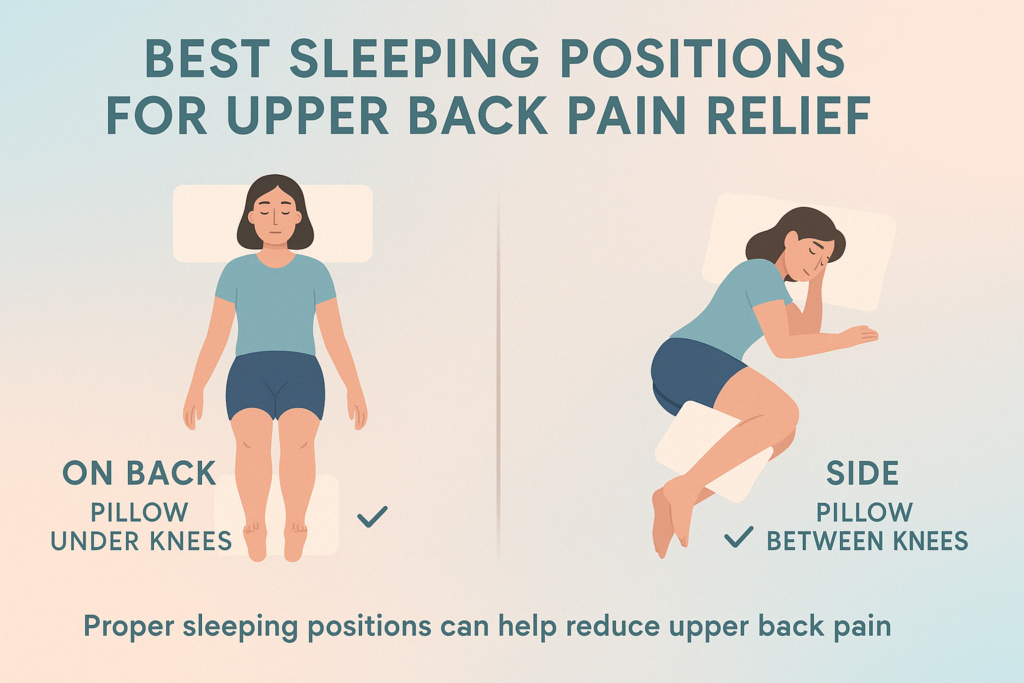
Side sleeping remains the gold standard for upper back pain relief, but only when done correctly. Lie on either side—left or right works equally well—and immediately place a firm pillow between your knees. This simple addition prevents your top leg from pulling your spine out of alignment, reducing tension across your upper back.
Your head pillow needs to fill the gap between your ear and shoulder completely. Too thin, and your neck drops; too thick, and your neck cranes upward. Both mistakes transfer stress directly to your upper back. Pro tip: Hug a body pillow against your chest. This prevents your upper body from rolling forward, which can twist your thoracic spine into painful positions. For extra support, tuck a small rolled towel into your waist curve—this maintains your spine’s natural S-curve and prevents collapse.
Specific Side Sleeping Fixes for Common Pain Triggers
For disc-related pain: Sleep on the side opposite your pain. Place a lumbar roll pillow directly under your lower ribs to support the thoracic curve. Avoid curling too tightly into a fetal position, as this can compress discs.
When shoulder pain accompanies back pain: Position your affected shoulder up, not down. Place a pillow under your arm to prevent it from collapsing backward. This reduces strain on the rotator cuff muscles that connect to your upper back.
For nighttime breathing issues: Slightly elevate your upper body while side sleeping. This reduces pressure on your diaphragm and prevents the hunched position that strains upper back muscles during sleep.
Back Sleeping Modifications That Actually Relieve Pressure

Back sleepers need strategic pillow placement to succeed with upper back pain. Start with a pillow that supports your neck’s natural curve without pushing your head forward. Place a second pillow under your knees—this reduces pressure on your thoracic spine by maintaining your lower back’s natural arch.
For severe pain, elevate your upper body using a wedge pillow or adjustable bed set to 30-45 degrees. Critical warning: Skip the extra pillow under your head when using a wedge. The incline already elevates your head, and doubling up can create neck strain that worsens upper back pain.
Back Sleeping Solutions for Specific Conditions
Thoracic outlet syndrome: Sleep on your back with arms resting at your sides, palms up. Place small pillows under each forearm to keep shoulders relaxed. Avoid letting your arms fall toward your body, which compresses nerves.
Disc herniation: Use a thin pillow under your neck and elevate your upper body 30-45 degrees. Place a small lumbar roll directly under your thoracic curve—not your lower back—to maintain proper spinal alignment.
Morning stiffness: Add a soft pillow under your upper arms while back sleeping. This prevents your shoulder blades from sliding downward and creating tension in the muscles between them.
Strategic Pillow Placement for Immediate Relief
Head and Neck Alignment That Works
Your pillow choice makes or breaks your upper back pain relief. Memory foam pillows contour to your neck’s shape, providing consistent support throughout the night. Cervical pillows with built-in neck rolls work exceptionally well for maintaining proper alignment.
Height rules:
– Side sleepers: Pillow height equals ear-to-shoulder distance
– Back sleepers: Pillow supports neck without pushing head forward
– The pillow should fill your neck-mattress gap without tilting your head
Targeted Pillow Positions for Upper Back Support
Transform your bed into a therapeutic space with these pillow positions:
- Lumbar roll: Small cylindrical pillow at your thoracolumbar junction
- Knee pillow: Between knees for side sleepers, under knees for back sleepers
- Body pillow: Full-length pillow for side sleepers to maintain alignment
- Chest pillow: Hug against chest to prevent forward rolling
Pro tip: When side sleeping, place a small pillow behind your back to prevent rolling onto your stomach—a position that severely stresses the upper back.
Mattress Factors That Influence Upper Back Pain
Finding Your Perfect Firmness Level
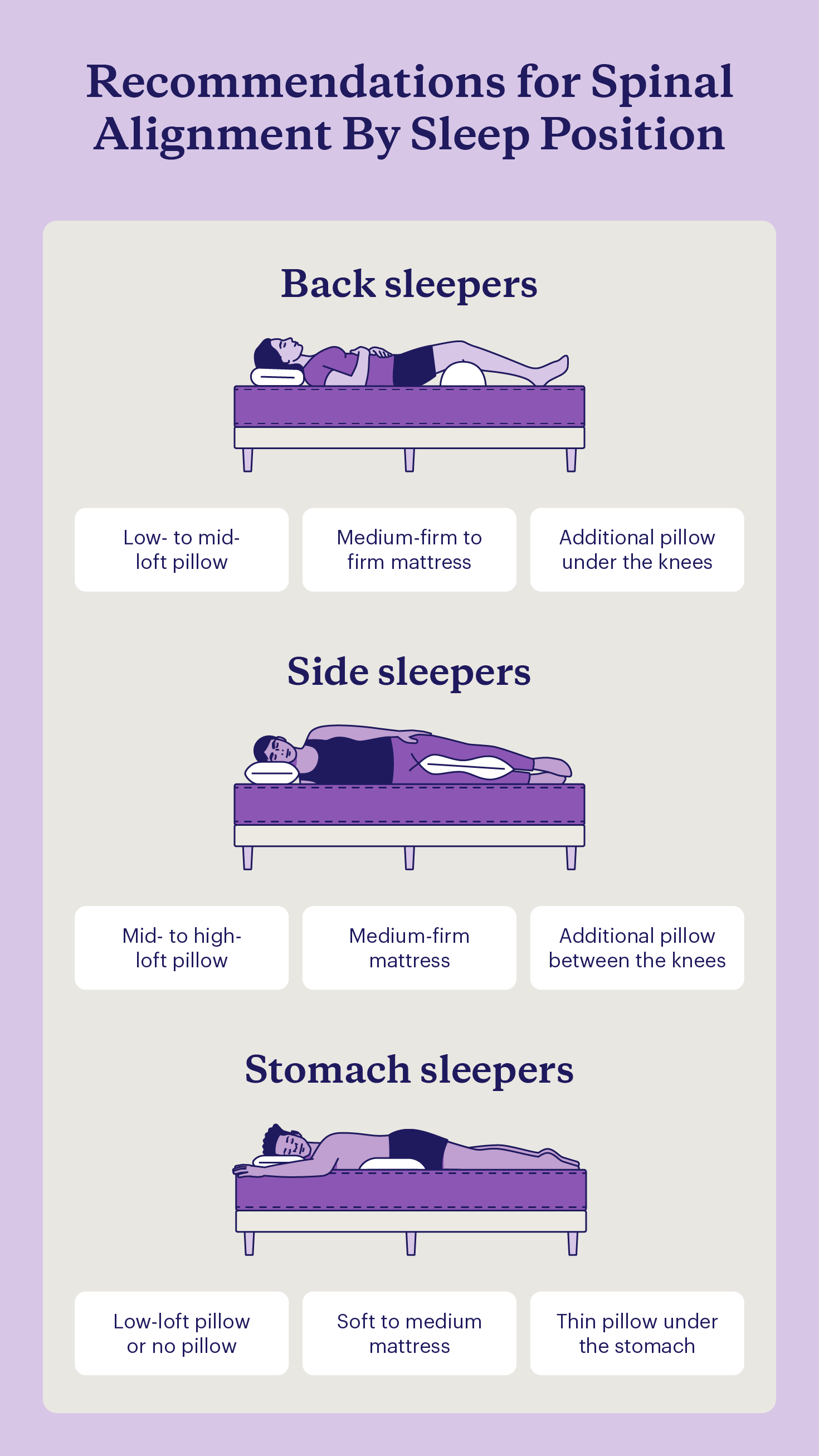
Medium-firm mattresses typically provide the best balance for upper back pain. They support your thoracic curve while contouring to your body’s natural shape.
Body weight adjustments:
– Over 230 pounds: Consider firmer options to prevent excessive sinking
– Under 130 pounds: Medium-firm still works, avoid overly soft choices
Warning: If your mattress creates a “hammock effect” where your body sinks deeply, it’s likely worsening your upper back pain by misaligning your spine.
When to Replace Your Mattress for Pain Relief
Replace immediately if you notice:
– Sagging deeper than 1.5 inches
– Visible lumps or uneven surfaces
– Morning pain that improves once you’re up
– Squeaking springs or broken support
Quality mattresses last 7-10 years. Budget options may need replacement in 5-7 years. Pro tip: Test mattresses in your usual sleeping position—stores often have you lie on your back, which doesn’t reveal how it will affect your upper back when side sleeping.
Pre-Bed Pain Relief Routine That Works
Heat Therapy Protocol for Upper Back
Apply heat for 15-20 minutes before bedtime using:
– Heating pad on low-medium setting
– Warm, damp towels for deeper penetration
– Hot shower or bath to relax thoracic muscles
Safety note: Never fall asleep with heating pads—set a timer to prevent burns. Moist heat penetrates deeper than dry heat, making it more effective for upper back muscles.
Essential Stretching Sequence Before Sleep
Perform these stretches 30-60 minutes before bed, never right before sleep:
Thoracic Extension:
– Sit on a firm chair, clasp hands behind neck
– Gently arch over the chair back
– Hold 15-30 seconds, repeat 3-5 times
Doorway Chest Stretch:
– Forearms on doorframe, step forward
– Hold 30 seconds, repeat 3 times
– Opens chest muscles that pull shoulders forward
Scapular Retraction:
– Squeeze shoulder blades together
– Hold 5 seconds, repeat 10-15 times
– Strengthens postural muscles
Sleep Hygiene That Prevents Morning Pain
Position Maintenance Strategies Through the Night
- Use the “log roll” technique when changing positions
- Keep core engaged during movement
- Place pillows as barriers to prevent rolling into painful positions
- Keep a pillow between knees even when shifting
Pro tip: Place a small pillow behind your neck while side sleeping—it prevents your head from dropping forward and straining upper back muscles.
Partner Considerations for Pain-Free Sleep
For couples sharing a bed:
– Choose mattresses with minimal motion transfer
– Use separate blankets to prevent position disruption
– Communicate about positioning needs
– Consider a body pillow as a barrier for space
Critical warning: If your partner’s movements consistently wake you, consider separate beds. Poor sleep quality worsens pain perception and delays healing.
Red Flags: When Upper Back Pain Requires Medical Attention
Seek immediate medical attention for:
– Progressive weakness in arms or legs
– Numbness or tingling in arms, chest, or abdomen
– Severe pain unrelieved by rest
– Pain following trauma or injury
– Fever accompanying back pain
– Unexplained weight loss
Pro tip: Document your pain pattern before seeing a doctor—note when it’s worst, what positions help, and any related symptoms. This helps healthcare providers diagnose the cause more accurately.
Travel and Temporary Solutions for Pain Relief
When sleeping away from home:
– Bring familiar pillows or pillowcases
– Request extra pillows for positioning
– Use rolled towels for lumbar support
– Portable mattress toppers work wonders
– Book rooms with adjustable beds when possible
Pro tip: Pack a travel-sized heating pad and a small rolled towel in your luggage—they take minimal space but provide maximum relief.
Long-Term Prevention Strategies for Upper Back Pain
- Strengthen postural muscles 2-3 times weekly
- Set up an ergonomic workspace
- Maintain healthy weight to reduce spinal load
- Practice stress management techniques
- Schedule regular check-ups with healthcare providers
Key takeaway: The best way to sleep with upper back pain isn’t just one position—it’s a complete system involving proper positioning, strategic pillow use, and consistent pre-bed routines. Start with side sleeping using the pillow placements described, maintain your mattress quality, and establish a calming pre-sleep routine. Most people see improvement within 3-7 nights of implementing these strategies consistently. When morning stiffness decreases and you wake without that familiar ache between your shoulder blades, you’ll know you’ve found your personal best way to sleep with upper back pain.