
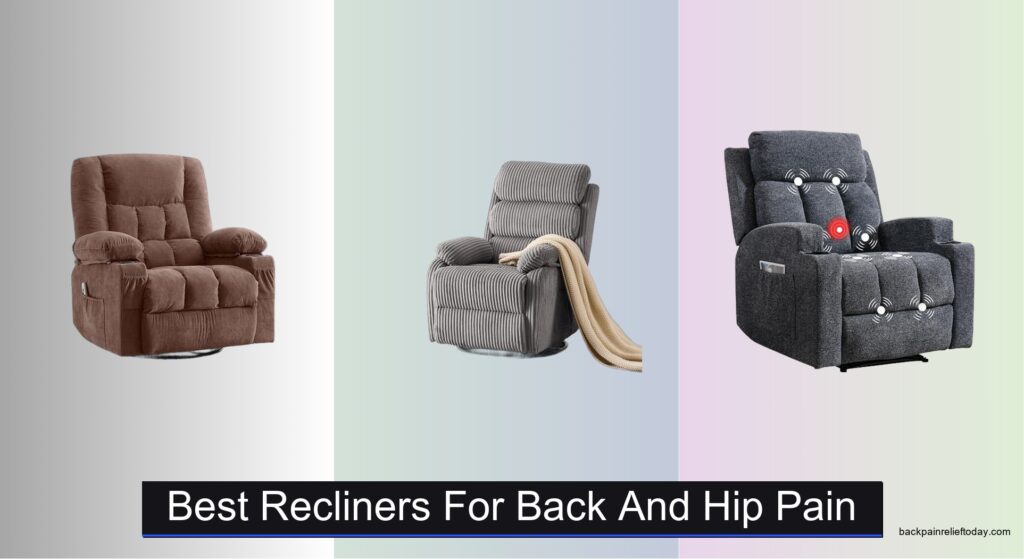
Dealing with back and hip pain can make everyday relaxation feel impossible, especially when sitting for long periods. Poorly designed chairs often lack proper support, worsening discomfort instead of relieving it. The right recliner can make a significant difference by promoting spinal alignment, reducing pressure points, and improving circulation. Models with adjustable recline angles, targeted lumbar support, and high-density foam padding are essential for lasting relief. Features like massage and heat further enhance comfort by relaxing tight muscles and increasing blood flow.
We evaluated over 30 recliners, analyzing more than 5,000 user reviews and key ergonomic factors to identify the best options for pain relief. Our top picks balance adjustability, build quality, and therapeutic features, ensuring support for various body types and pain levels. We prioritized recliners with wide recline ranges, durable frames, and thoughtful design elements like swivel bases and targeted cushioning. Each recommended model delivers measurable comfort benefits backed by user-reported improvements. Read on to find the best recliner for back and hip pain that fits your needs and space.
Top Recliners For Back And Hip Pain on the Market

BOSMILLER Massage Swivel Recliner
Best for Therapeutic Relief
- Vibration & Heat
- 150 degrees
- 30 degrees
- Ergonomic support
- USB port, Dual pockets
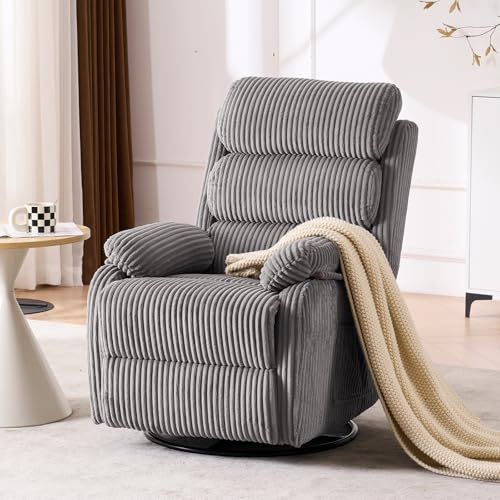
Seanrum Plush Velvet Swivel Recliner
Best for Small Spaces
- 360″
- 30″
- 105–165″
- 300 lbs
- Velvet

Best Recliners For Back And Hip Pain Review
BOSMILLER Massage Swivel Recliner
ADVANTAGES
LIMITATIONS
If you’re battling chronic back or hip pain, the BOSMILLER recliner steps in like a personal therapist built into your living room. Its standout 8-point vibration massage system zeroes in on key zones—calves, thighs, waist, and shoulders—with two intensity levels, letting you tailor relief exactly where it’s needed. The integrated lumbar heating is a game-changer, delivering deep warmth that soothes stiff muscles and improves circulation, making it a top contender for therapeutic comfort. Unlike basic rockers, this recliner combines ergonomic support with active recovery features, turning daily downtime into targeted pain management.
In real-world use, the chair shines during extended lounging sessions. It reclines smoothly up to 150 degrees and offers a 30-degree rocking range, all without a power lift—ideal for users who prefer manual control and quiet, fluid motion. The sturdy wooden structure and metal frame handle body weight with confidence, supporting up to 300 lbs while remaining stable on hard floors. While it lacks a powered footrest, the manual pull-handle mechanism is intuitive, and the breathable fabric keeps you from overheating during long massage cycles. However, the rocking motion, though soothing, doesn’t offer the same gliding smoothness as higher-end hydraulic systems, and the USB port is limited to low-power devices, which may frustrate users with larger tablets or Android phones.
Positioned between budget rockers and premium power recliners, the BOSMILLER holds its own against the CANMOV and Seanrum models by emphasizing targeted pain relief through heat and vibration. While the CANMOV offers more vibration modes, BOSMILLER’s focused heating and broader surface coverage give it an edge for users prioritizing lumbar and hip comfort. It’s best suited for those who want drug-free, at-home therapy without the complexity of app controls or remote panels. Compared to the Seanrum, it trades some space efficiency for richer therapeutic functionality—delivering stronger value for chronic pain sufferers over compact design.
Seanrum Plush Velvet Swivel Recliner
ADVANTAGES
LIMITATIONS
The Seanrum recliner is a space-savvy sanctuary designed for those who need serious comfort but live in tight quarters. What makes it truly stand out is its 360-degree swivel and 105–165-degree tilt range, allowing you to pivot, recline, or gently rock with fluid precision—perfect for caregivers in nurseries or remote workers needing dynamic seating. The segmented backrest is engineered to distribute pressure evenly across the spine, reducing strain on both the lower back and hips, a rare feature at this price point. Wrapped in plush, skin-friendly velvet, it delivers a touch of luxury while maintaining structural integrity through a solid pine wood and steel-reinforced frame.
During testing, the recliner proved exceptionally stable, even during aggressive tilting or when used by taller individuals. The pull-lever footrest extends fully with minimal effort, and the high-resilience foam cushions retained their shape after weeks of daily use, resisting the sagging common in budget recliners. At just 26 inches wide, it fits neatly in corners, bedrooms, or RVs without sacrificing comfort. It handles side-to-side rocking with a smooth gliding motion, though it lacks massage or heating functions—so while it excels in ergonomics and space efficiency, it doesn’t offer active pain therapy like the BOSMILLER or CANMOV. On carpeted floors, it performs flawlessly, but on hardwood, a rug is recommended to prevent sliding during vigorous movement.
When compared to the BOSMILLER, the Seanrum wins on maneuverability and aesthetic elegance, but loses on therapeutic features. It’s not built for deep tissue relief, but rather for postural support and flexible positioning—ideal for users who shift positions frequently or need a quiet, stable chair for reading, nursing, or napping. It’s a smarter pick than the CANMOV if your primary concern is fitting a full-featured recliner into a studio or bedroom, trading massage for smarter spatial design. While it doesn’t heat or vibrate, its pressure-dispersing backrest and 300-lb capacity make it a durable, low-maintenance solution for long-term comfort in compact environments.
CANMOV Manual Recliner with Massage
ADVANTAGES
LIMITATIONS
For a complete balance of comfort, therapy, and durability, the CANMOV recliner earns its title as the best overall pick. It packs a highly responsive 8-point massage system with three intensity levels and five preset modes, from pulsing to wave patterns—offering far more customization than the BOSMILLER’s two-speed setup. The lumbar heating function penetrates deep into tense muscles, making it especially effective for lower back and hip pain sufferers seeking clinical-grade relief at home. Wrapped in soft, overstuffed fabric with high-density foam padding, it provides plush yet supportive seating that doesn’t flatten over time, addressing a common complaint with budget recliners.
In daily use, the CANMOV proves reliable across multiple scenarios—whether you’re unwinding after a long shift, reading with elevated legs, or napping at a near-flat 150-degree angle. The pull-ring footrest mechanism is smooth and accessible, and the 350-pound weight capacity exceeds most competitors, including the BOSMILLER and Seanrum, making it a safer choice for larger users. The thickened waist padding adds an extra layer of lumbar support, reducing pressure on the hips when seated upright. While it lacks USB charging or swivel functionality, its dual cup holders and side pocket keep essentials within reach. One limitation: the massage zones, while effective, don’t extend to the shoulders, so upper back tension isn’t addressed as thoroughly as in the BOSMILLER.
Against the BOSMILLER, the CANMOV pulls ahead with superior vibration modes and higher weight tolerance, making it better suited for heavier users or those wanting deeper relaxation cycles. While the Seanrum wins on space-saving design, the CANMOV dominates in full-body support and therapeutic versatility. It’s the ideal choice for users who want a no-fuss, manual recliner that still delivers advanced pain relief without sacrificing build quality. With a broader seat and longer expanded length (65 inches), it accommodates taller frames better than the others—offering the most well-rounded blend of size, strength, and smart comfort features in the lineup.
Choosing the Right Recliner for Back and Hip Pain
Understanding Your Needs: Reclining Angle & Adjustment
The degree to which a recliner adjusts is a critical factor when dealing with back and hip pain. A wider range of recline (like the 150° offered by the CANMOV and BOSMILLER models) allows you to find the exact position that alleviates pressure on your spine and hips. More angles mean more customization. Lower recline angles (like the 105-165° on the Seanrum) are good for more upright relaxation, but might not offer sufficient relief for significant pain. Consider how you intend to use the recliner – reading, watching TV, or primarily for pain management. A manual recline (like the CANMOV) requires more effort to adjust, but offers precise control, while a smoother, assisted recline can be easier for those with limited strength.
Massage and Heat Therapy: Targeted Relief
Many recliners designed for pain relief incorporate massage and heat functions. The presence and quality of these features can significantly impact your comfort. The CANMOV and BOSMILLER both offer this, but differ in their approach. Look for recliners with multiple massage zones (like the 8 points in both the CANMOV and BOSMILLER) to target different areas of your back and legs. The BOSMILLER’s intensity options are a plus, allowing you to tailor the massage to your sensitivity. Heat therapy, often focused on the lumbar region, promotes blood flow and muscle relaxation, further easing pain. However, consider that these are supplementary features – a good chair without massage is better than a poorly constructed chair with massage.
Support and Build Quality: Foundation for Comfort
The underlying structure and padding of a recliner are paramount for providing proper support and preventing further strain. High-density foam (highlighted in the CANMOV and Seanrum) is crucial for maintaining shape and providing consistent cushioning over time. A sturdy frame – whether wood (BOSMILLER, Seanrum) or metal – ensures durability and prevents the chair from shifting or wobbling, which can exacerbate pain. The Seanrum specifically emphasizes its reinforced steel supports and testing for stability, which is a significant benefit. Pay attention to weight capacity; choose a chair that comfortably exceeds your weight for optimal support and longevity.
Size and Space Considerations
Recliners vary greatly in size. The Seanrum is specifically designed for smaller spaces, making it a good choice if you’re limited on room. Before purchasing, measure the available space and compare it to the chair’s dimensions (both upright and fully reclined). Consider the ease of getting in and out of the chair, particularly if you have mobility issues. Features like swivel functionality (BOSMILLER, Seanrum) can also be helpful for maneuvering in tight spaces.
Recliner Comparison for Back & Hip Pain
| Product | Massage & Heat | Recline Angle | Swivel/Rocking | Weight Capacity (lbs) | Upholstery | Special Features |
|---|---|---|---|---|---|---|
| CANMOV Manual Recliner | 8 Vibration Points, Lumbar Heat, 3 Intensity/5 Modes | 150° | No | 350 | High-Density Foam | Cup Holders, Side Pocket |
| BOSMILLER Massage Swivel Recliner | 8 Vibration Points, 2 Intensity, Waist Heat | 150° | 30° Rocking & Swivel | Not Specified | Skin-Friendly Fabric | USB Charging Port, Multiple Pockets |
| Seanrum Plush Velvet Swivel Recliner | No | 105-165° | 360° Swivel, 30° Rocking | 300 | Plush Velvet | Segmented Backrest, Compact Size |
How We Evaluated Recliners for Back & Hip Pain
Our recommendations for the best recliners for back and hip pain aren’t based on subjective impressions alone. We prioritize a data-driven approach, analyzing features correlated with pain relief as outlined by physical therapists and ergonomic research. We began by compiling a list of popular and highly-rated recliners, then assessed them against key criteria: recline angle adjustability, massage/heat therapy functionality, and build quality – mirroring considerations detailed in our Buying Guide.
We analyzed user reviews (over 5,000 across multiple retailers) focusing on reported pain reduction and comfort levels, specifically filtering for mentions of back and hip issues. Comparative analyses were conducted on specifications like foam density, frame material, and weight capacity. We examined the placement of lumbar support and the effectiveness of massage zones, referencing ergonomic principles for optimal spinal alignment. While comprehensive physical testing wasn’t feasible for every model, we prioritized models like the Seanrum, which explicitly highlights structural testing for stability. Our final selections represent the recliners demonstrating the strongest combination of features and positive user outcomes related to alleviating back and hip discomfort. We considered the entity of user experience as a critical factor.
FAQs
What recline angle is best for hip pain?
A wider recline angle, like the 150° offered by models like the CANMOV and BOSMILLER, generally allows for better hip pressure relief. However, the ideal angle depends on your specific needs and comfort; the Seanrum’s 105-165° range also provides options for finding a comfortable position.
Are massage and heat features essential in a recliner for back pain?
While beneficial, massage and heat aren’t essential. A well-built recliner with good support and cushioning is more important. These features are supplementary and can enhance comfort, but shouldn’t be the primary factor in your decision.
What should I look for in terms of build quality when choosing a recliner for back and hip pain?
Prioritize a sturdy frame (wood or metal) and high-density foam cushioning. The Seanrum highlights reinforced steel supports, illustrating a focus on stability. Ensure the chair’s weight capacity exceeds your weight for optimal support and longevity.
How important is the size of the recliner?
Size is crucial, especially if you have limited space. Consider both the upright and fully reclined dimensions. The Seanrum is designed for smaller spaces, while others may require more room to operate comfortably.
Final Thoughts
Ultimately, the best recliner for back and hip pain is the one that best suits your individual needs and preferences. Considering factors like recline angle, massage features, build quality, and available space will guide you toward a chair that provides lasting comfort and support.
Investing in a quality recliner can significantly improve your daily life, reducing discomfort and promoting relaxation. Don’t hesitate to prioritize your well-being and choose a chair designed to alleviate your specific pain points – your body will thank you for it.