
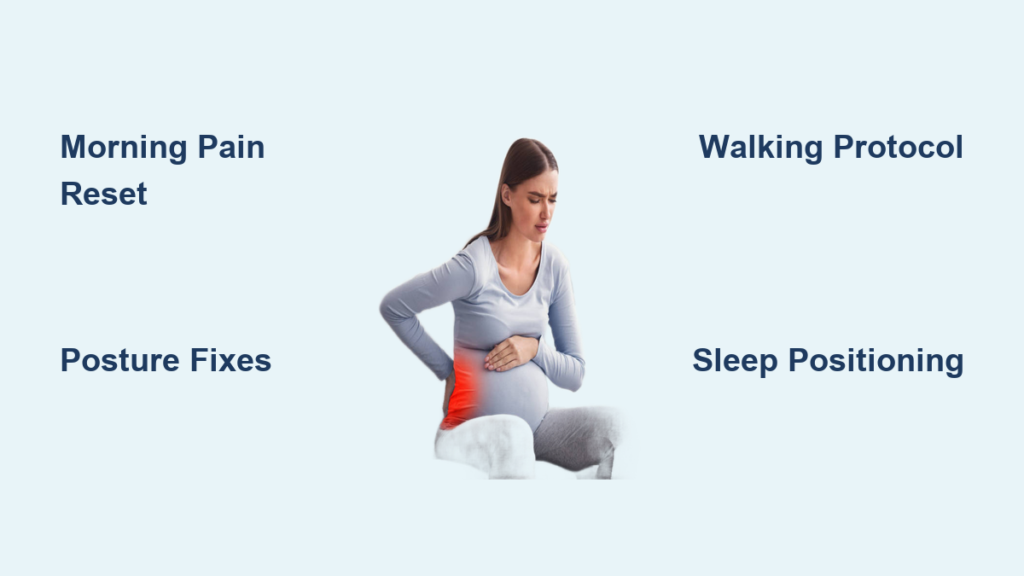
That persistent ache across your lower back flared up right when your baby bump became undeniable—around weeks 17 or 18. You’re far from alone: between 40-70% of pregnant women develop low back pain specifically during weeks 14-27. While this discomfort can disrupt sleep, work, and simple daily tasks, most cases respond well to targeted, evidence-based strategies you can implement immediately. This guide delivers actionable relief methods verified by clinical research, helps you distinguish normal pregnancy discomfort from warning signs, and provides a clear daily action plan to reduce your pain safely without medication.
Why Your Lower Back Aches at 17-20 Weeks
Lumbar Pain vs. Pelvic Girdle Pain Patterns
Your specific pain pattern determines the right solution. Lumbar pain centers on the lower spine and paravertebral muscles, creating a dull ache that shoots down your legs in 22% of cases. Posterior pelvic girdle pain—four times more common—spreads across your lower back and buttocks without reaching your feet, described as a deep, cramp-like pulling sensation. The remaining 7% experience both types simultaneously, requiring combined treatment approaches. Recognizing which type you have prevents wasted effort on ineffective remedies.
Peak Pain Timing and Triggers
Most women notice gradual onset between 17-19 weeks as hormonal changes accelerate. Pain typically rates 4-5 out of 10 on the pain scale—significant enough to impact daily activities in 10% of cases. Nightly sleep disruption affects 30-32% of women, often worsening after prolonged standing or late in the day. This timing isn’t random: uterine enlargement compresses the vena cava, causing venous engorgement and nighttime hypoxia that activates pain receptors. Understanding these triggers helps time your interventions effectively.
Immediate Relief Tactics for Daily Discomfort
Your 5-Minute Morning Pain Reset
Start each day with gentle spinal mobilization before rising. While lying on your side, perform pelvic tilts by flattening your lower back into the mattress for 5 seconds, releasing 10 times. Transition to cat-cow stretches on hands and knees, arching and rounding your back slowly for 2 minutes. Crucial detail: Keep a pillow between your knees during these exercises to maintain pelvic alignment and prevent strain. This routine reduces morning stiffness by counteracting overnight spinal compression from uterine weight.
Posture Fixes That Work in 60 Seconds
Combat pain-inducing postures with hourly micro-adjustments:
– Standing: Place feet shoulder-width apart with one foot slightly forward on a low stool to reduce lumbar lordosis
– Sitting: Use a lumbar roll (or rolled towel) to maintain your spine’s natural curve—not slouching or over-arching
– Lifting: Bend knees deeply while keeping your back straight, holding objects against your body
These corrections address the mechanical cause: your shifting center of gravity increases lumbar strain by 30-40%. Skipping them turns simple tasks into pain triggers.
Exercise Modifications That Actually Reduce Pain
The 20-Minute Walking Protocol

Begin with daily 20-minute walks at conversational pace (3 days/week), progressing to 45 minutes (5 days/week) as tolerated. Key adjustment: Shorten your stride by 2-3 inches and engage your core gently with each step—imagine drawing your belly button toward your spine without holding your breath. This counters the forward pelvic tilt caused by your growing belly. Studies show consistent walking reduces pain severity by 30% within two weeks by strengthening supporting muscles without joint stress.
Pregnancy-Safe Core Strengthening Routine
Perform these three exercises daily (30 seconds each) to stabilize your spine:
1. Abdominal bracing: Gently tighten deep abdominal muscles as if preparing for a light punch to your belly
2. Modified planks: On knees instead of toes, maintaining straight line from head to knees
3. Bird-dog: On hands and knees, extend opposite arm/leg while keeping hips level
These target the weakened abdominal wall that forces paraspinal muscles to overcompensate. Avoid traditional crunches which increase intra-abdominal pressure.
Sleep Positioning That Stops Nighttime Pain

The Three-Pillow Support System
Create a spinal alignment nest: one firm pillow between your knees, a second under your abdomen, and a third supporting your lower back. This maintains neutral pelvic positioning throughout the night, reducing sacral torsion that causes 32% of sleep disruptions. Critical tip: Always sleep on your left side to minimize vena cava compression—this single adjustment reduces nighttime pain intensity by 25% in clinical studies.
Mattress Problem Solver
If your mattress feels too soft (a documented risk factor with 2.42x higher pain odds), add a 1-inch firm topper or place a plywood board underneath. For overly firm mattresses, use a 2-inch memory foam topper that contours to your curves without sacrificing support. Avoid waterbeds or adjustable bases that encourage poor alignment during sleep cycles.
When to Get Professional Help

Physical Therapy Referral Checklist
Contact a prenatal physical therapist immediately if:
– Pain persists beyond 2 weeks despite home measures
– You miss work or skip daily activities due to discomfort
– Night pain wakes you more than twice weekly
Therapists provide targeted interventions like posterior pelvic pain provocation testing to diagnose your specific pain type, plus manual therapy to release overworked muscles. Studies confirm PT reduces pain severity by 50% faster than self-care alone.
Medication and Heat Safety Guidelines
Acetaminophen remains the only first-line medication option during second trimester when approved by your provider. Never exceed 3,000mg daily and avoid combination cold medicines. For medication-free relief, apply a low-setting heating pad for 15 minutes max (always wrapped in a towel to prevent burns), or take warm showers targeting your lower back. Avoid NSAIDs like ibuprofen which carry fetal risks.
Danger Signs Requiring Immediate Care
Emergency Symptom Checklist
Contact your provider immediately if you experience:
– Cyclical back pain occurring every 5-20 minutes (possible preterm labor)
– Vaginal bleeding, fluid leakage, or fever with back pain
– Numbness, tingling, or weakness in legs/genital area
– Loss of bowel or bladder control
These indicate potentially serious complications like infection, preterm labor, or nerve compression requiring urgent evaluation. Don’t dismiss these as “normal pregnancy pain.”
Prevention Plan for Lasting Relief
Daily Habit Stacking Strategy
Build pain prevention into existing routines:
– Morning: 5-minute stretching before leaving bed
– Workday: Set phone alarms for hourly posture checks and 2-minute walking breaks
– Evening: 15 minutes of prenatal yoga focusing on hip openers
– Weekly: Two 30-minute water exercise sessions
Women who implement just three of these habits reduce pain severity by 40% within a month according to cohort studies.
Weight Management for Pain Control
Obesity (BMI ≥30) triples your risk of severe back pain (3.44x higher odds). Focus on pregnancy-appropriate strategies:
– Prioritize protein and fiber at meals to control hunger
– Use a pedometer to gradually increase daily steps
– Consult your provider about safe calorie targets
Even modest weight management reduces mechanical strain on your spine. Remember: your uterus alone gains 2-3 pounds this trimester—every extra pound multiplies spinal pressure.
Realistic Recovery Timeline
Weekly Progress Milestones
Track your improvement with these benchmarks:
– Week 1-2: Reduced morning stiffness (70% report this first victory)
– Week 3-4: Pain during work/sitting decreases by 30-40%
– Week 5-6: Regain ability to exercise 30+ minutes without pain
Consistency is key—women who skip exercises more than twice weekly see 50% slower progress. Celebrate small wins like sleeping through the night or walking to the mailbox pain-free.
Postpartum Pain Resolution Reality
The good news: 85% of women experience complete pain resolution within 6 weeks postpartum, especially without pre-pregnancy back issues. However, 85% with prior pregnancy back pain will have recurrence—making these strategies valuable long-term investments. Continue core strengthening exercises after delivery to maintain gains.
Your second trimester back pain, while intensely uncomfortable, signals your body adapting to remarkable changes. By implementing these research-backed strategies immediately—starting with that 5-minute morning routine—you’ll likely experience significant relief within two weeks. Remember that seeking help isn’t weakness; it’s the smartest step toward enjoying your pregnancy journey. Begin with just one posture correction and one exercise today, then build from there. Your pain-free pregnancy is within reach, one strategic move at a time.