
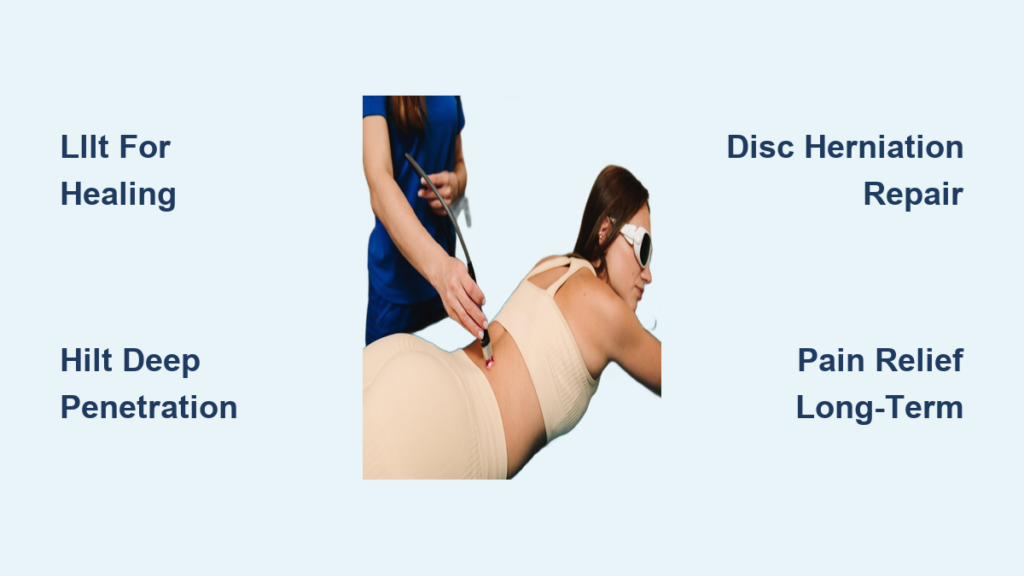
That sharp twinge when you bend to tie your shoes. The constant ache that steals your sleep. If you’re among the 65 million Americans currently battling back pain—or part of the 80% of adults who’ll face chronic lower back pain in their lifetime—you’ve likely exhausted ice packs, painkillers, and physical therapy. Laser treatment for back pain offers a promising non-invasive alternative, but separating genuine medical benefits from marketing claims is critical. This guide cuts through the confusion using only peer-reviewed evidence and clinical data to show exactly how laser therapy works, who benefits most, and whether it deserves a spot in your pain management plan.
Unlike surgery or opioids, laser therapy targets the root cause of pain without incisions or addiction risks. But it’s not a magic wand—it requires realistic expectations and the right candidate profile. You’ll discover which specific back conditions respond best to laser treatment, how to spot clinics using evidence-based protocols, and why insurance coverage remains spotty despite FDA-cleared devices like the Erchonia FX 635. Most importantly, you’ll learn how to integrate this therapy into a comprehensive strategy for lasting relief.
Why 80% of Adults Experience Debilitating Back Pain
Back pain isn’t just inconvenient—it reshapes lives. Chronic pain (lasting over three months) affects 8 million Canadians alone, triggering job insecurity, social isolation, and mental health struggles. In the U.S., 49% of adults dealt with back pain in 2017, with spinal issues costing the healthcare system billions annually. The real crisis? Many endure ineffective treatments for years before exploring options like laser treatment for back pain. When conservative care fails, patients face a painful choice: risky surgery or lifelong medication dependence. Understanding these stakes helps explain why non-invasive alternatives are gaining traction.
Laser Therapy Types That Actually Target Back Pain
How Low-Level Laser Therapy (LLLT) Triggers Cellular Repair
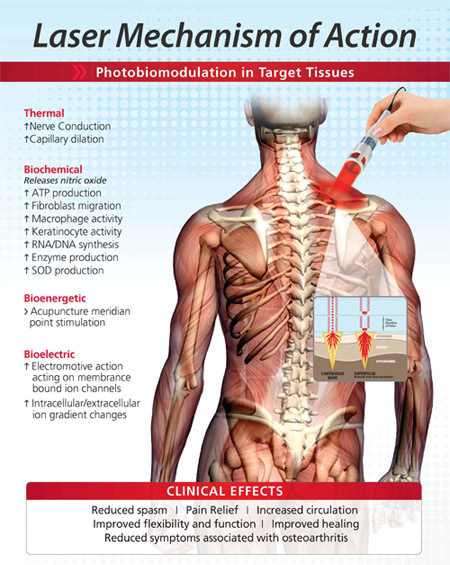
LLLT—also called cold laser therapy—uses non-thermal light at 635 nm wavelength (like the FDA-cleared Erchonia FX 635) to stimulate healing. During sessions, you’ll feel only gentle warmth as photons penetrate 2-5 cm deep. This activates mitochondria in damaged cells, boosting ATP energy production by up to 70%. Crucially, healthy cells ignore the light—only dysfunctional tissues absorb it. For chronic lower back pain, this means reduced inflammation and accelerated tissue repair without downtime. Patients with degenerative disc disease or sciatica often see results after 8-12 sessions.
When High-Intensity Laser Therapy (HILT) Penetrates Deeper
HILT delivers 5-10x more power than LLLT to reach muscles and joints 10+ cm deep. Ideal for severe facet joint syndrome or herniated discs unresponsive to LLLT, sessions last 15-30 minutes with noticeable warmth. Research shows HILT significantly reduces pain scores for chronic nonspecific low back pain within 3 months, though it requires fewer sessions (typically 6-10) than LLLT. The trade-off? Slightly higher cost per session ($150-$200 vs. LLLT’s $30-$100).
Minimally Invasive Laser Procedures for Disc Damage
When discs herniate, endoscopic laser discectomy offers a middle ground between LLLT and open surgery. Through a 1-inch incision, surgeons vaporize bulging disc material using laser ablation—reducing pressure on nerves. Recovery takes 2-4 weeks versus 6+ months for traditional discectomy. Similarly, laser nucleoplasty shrinks disc tissue through intradiscal biacuplasty. These procedures suit patients with MRI-confirmed disc issues unhelped by conservative care.
How Laser Light Actually Heals Your Spine
The 3-Step Cellular Healing Process
Laser therapy works through photobiomodulation:
1. Light photons penetrate skin and reach mitochondria (cell power plants)
2. Cytochrome c oxidase enzymes absorb light, triggering ATP energy production
3. This jumpstarts cellular repair—boosting collagen, endorphins, and blood flow
Unlike painkillers that mask symptoms, this process regenerates damaged bone, cartilage, and ligaments. You’ll notice reduced inflammation within days as nitric oxide release improves circulation to starved tissues.
Why Pain Relief Outlasts Medication Effects
Laser therapy tackles pain through dual pathways: increasing natural endorphins while suppressing inflammatory cytokines like TNF-α. The 2022 meta-analysis confirmed effects last 3+ months post-treatment—far longer than NSAIDs. For sciatica patients, this means decreased nerve root compression as swelling subsides. Expect cumulative benefits: most require 8-15 sessions before significant relief, as cellular changes build incrementally.
Clinical Evidence: What Studies Really Prove
The Landmark Erchonia FX 635 Trial (2020)
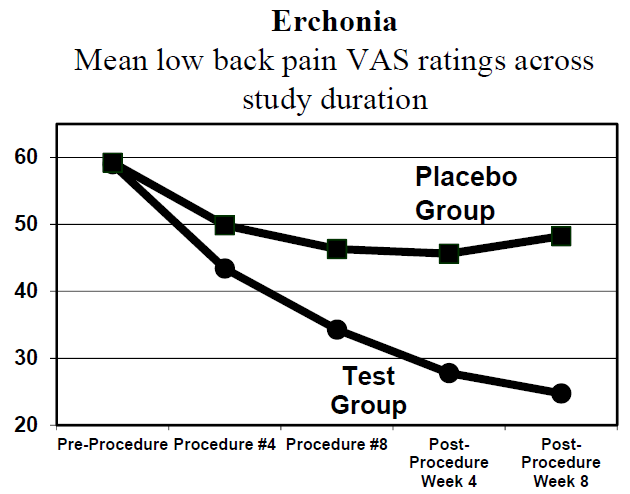
In this double-blind study, 72.4% of real-laser patients achieved clinically significant pain reduction versus 27.6% in the sham group. Crucially, benefits held at 12-month follow-up with 100% patient satisfaction. But beware: the lead researcher worked for Erchonia, highlighting potential bias. Still, it remains the only FDA-cleared device specifically for lower back pain.
Independent Research Verdicts
The 2022 meta-analysis of 28 studies confirms short-term efficacy (≤3 months) but stresses “low-to-moderate evidence quality.” A 2017 double-blind trial found combining 650nm and 850nm wavelengths worked best for improving spinal mobility. The consensus? Laser therapy shows statistically significant results for chronic musculoskeletal pain, but long-term data beyond 12 months remains scarce.
Laser Therapy Candidates: Who Benefits Most?
Ideal Candidates for LLLT/HILT
You’re likely a strong candidate if you have:
– Chronic low back pain (>3 months) from muscle strains or degenerative disc disease
– Failed 3+ months of physical therapy or medications
– No spinal instability requiring fusion surgery
– Desire to reduce opioid dependence
Sciatica patients with mild nerve compression often respond well, while those with severe spinal stenosis may need combined approaches.
Absolute Dealbreakers to Avoid
Skip laser therapy if you:
– Are pregnant (due to unknown fetal effects)
– Have cancerous lesions near the treatment area
– Suffer active infections or severe spinal deformities
– Expect instant results (it requires patience and multiple sessions)
Your Laser Treatment Timeline: Session by Session
LLLT Protocol Breakdown
- Weeks 1-2: 3x weekly 10-minute sessions targeting pain points
- Weeks 3-6: Reduce to 2x weekly as pain decreases
- Total: 8-15 sessions ($240-$1,500 out-of-pocket)
- Sensation: Mild tingling; zero downtime—you drive home immediately
Track progress with a pain diary: 65% of patients report >30% improvement by session 8. For lasting results, pair sessions with core-strengthening exercises.
Minimally Invasive Procedure Recovery
Endoscopic laser discectomy involves:
1. Local anesthesia and 1-inch incision
2. 45-minute outpatient procedure
3. 2-week incision healing with light activity
4. Full recovery in 3-4 weeks (vs. 6+ months for open surgery)
Ideal for contained disc herniations, it avoids general anesthesia risks but costs $5,000-$10,000—often partially covered by insurance.
Laser vs. Traditional Treatments: The Real Trade-offs
Why Laser Beats Pills and Surgery for Many
| Treatment | Recovery Time | Risks | Long-Term Relief |
|---|---|---|---|
| LLLT | Immediate | None | 3-12 months |
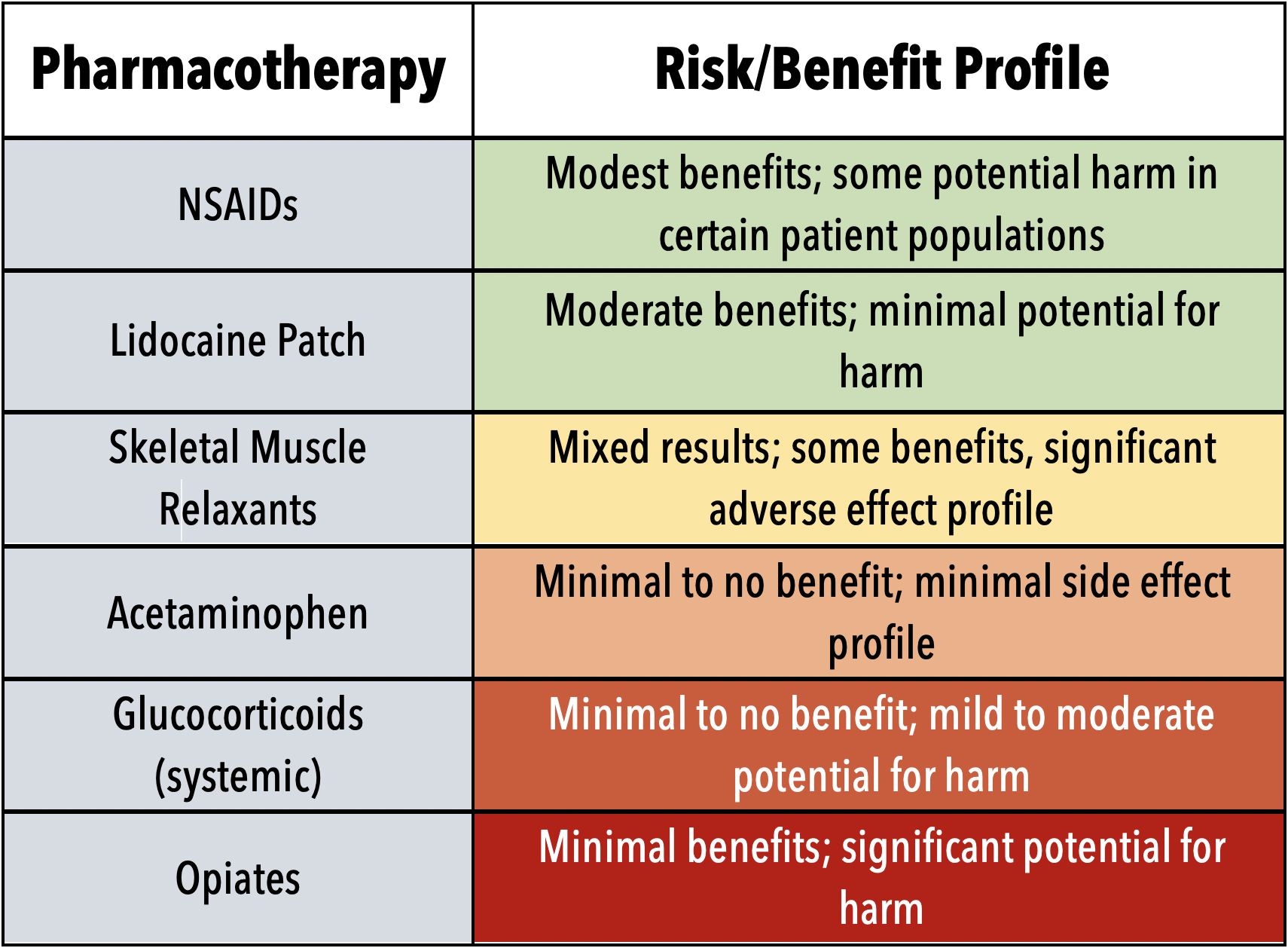
| NSAIDs | None | GI bleeding, kidney damage | Temporary |
| Epidurals | 24-48 hrs | Infection, nerve damage | 1-6 months |
| Surgery | 3-6 months | Paralysis, failed back syndrome | Variable |
Laser therapy’s sweet spot? Patients wanting drug-free relief without surgical risks. It outperforms physical therapy alone for acute pain reduction but works best combined with movement therapy.
Cost, Risks, and Reality Checks You Need
The $300-$2,400 Out-of-Pocket Reality
Most clinics charge $50-$150 per LLLT session. With 8-15 sessions typically needed, expect $400-$2,250 total. Medicare and most insurers deny coverage citing “insufficient evidence,” though some private plans cover HILT. Before committing:
– Demand a written treatment plan with session estimates
– Ask about package discounts (e.g., 10 sessions for $1,000)
– Verify if your clinic offers trial sessions ($50-$75)
Managing Side Effect Risks
Rare temporary side effects include:
– Mild soreness at treatment site (15% of patients)
– Transient nerve tingling (resolves in 48 hours)
– Zero serious complications in 10,000+ documented LLLT cases
The biggest risk? Wasted money on clinics using underpowered devices. Ensure providers use FDA-cleared systems (like Erchonia FX 635) with documented protocols.
Your Laser Therapy Decision Checklist
3 Critical Questions to Ask Providers
- “Which specific FDA-cleared device do you use, and what wavelength targets my condition?” (Avoid clinics vague on technical specs)
- “What percentage of your chronic back pain patients achieve >40% pain reduction?” (Demand outcome data)
- “Do you integrate laser with physical therapy for long-term results?” (Standalone laser rarely suffices)
When to Choose Laser Over Other Options
Prioritize laser treatment for back pain if:
– You’ve tried 3+ conservative treatments without success
– Your pain is chronic (>3 months) and non-specific
– You can commit to 2-3 months of sessions
– Cost fits your budget (or clinic offers payment plans)
Avoid if you expect a “cure”—it manages symptoms while you address root causes like poor posture or weak core muscles.
Your Action Plan: Starting Laser Therapy Right
Begin with a consultation requiring:
1. Medical records review: Bring MRI/X-rays and treatment history
2. Trial session: Test responsiveness before full commitment
3. Combined plan: Ensure they coordinate with your physical therapist
Track daily pain scores using a 0-10 scale. If no improvement after 6 sessions, pivot to other options. For sustained results, pair laser therapy with daily core exercises and ergonomic adjustments. While not a miracle cure, laser treatment for back pain delivers measurable relief for many when used strategically—making it a valuable tool in your pain management arsenal.