
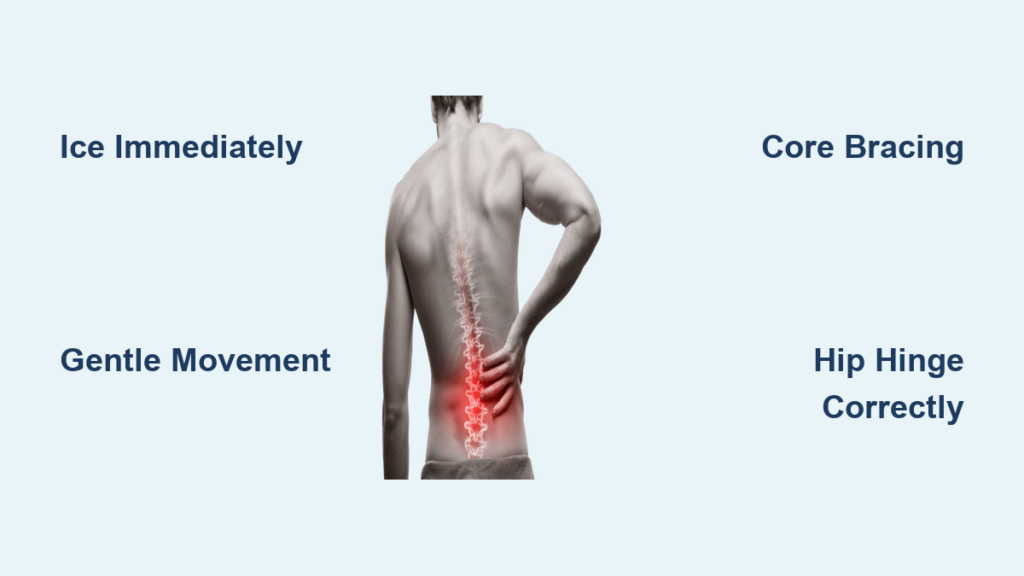
That sharp twinge in your lower back after deadlifts isn’t just soreness—it’s your body signaling a problem. Whether you’re a weekend warrior who felt something pop while moving furniture or a dedicated lifter whose form slipped on the last rep, low back pain from lifting can derail your entire routine. The good news? Most lifting-related back injuries heal completely with the right approach, and you’ll learn exactly how to get there.
This guide walks you through everything from immediate pain relief to building a bulletproof back that won’t fail you again. You’ll discover specific techniques to reduce pain today, progressive exercises to restore strength, and long-term strategies to prevent reinjury. Understanding how to fix low back pain from lifting starts with correctly identifying what’s wrong and taking the right actions at the right time.
How to Tell If You Have a Muscle Strain or Disc Injury

Spotting the Key Differences in Your Back Pain
The location and quality of your pain tells you exactly what’s damaged. Muscle strains create localized soreness that worsens with movement—you’ll feel it directly in the muscle tissue along your spine. Disc injuries, however, cause sharp, shooting pain that may radiate down your legs, often accompanied by numbness or tingling. A lumbar strain typically produces pain right above your belt line that intensifies when bending or twisting, while a herniated disc often causes pain that travels down one or both legs.
Critical Warning Signs Needing Emergency Care
Stop reading and get medical help immediately if you experience:
– Loss of bladder or bowel control
– Numbness or weakness in both legs
– Fever over 101°F with back pain
– Pain so severe you can’t stand or walk
These symptoms indicate serious nerve compression or infection requiring immediate medical intervention. While most lifting injuries are muscular and heal with proper care, recognizing these red flags could prevent permanent damage.
First 48 Hours: Stop Back Pain Immediately
Ice Protocol for Acute Lifting Injuries
Apply ice immediately after injury to reduce inflammation. Wrap ice packs in a thin towel and apply for 15-20 minutes every hour during waking hours for the first 48 hours. Target the specific area where you feel pain most intensely—usually right above your belt line. After the initial 48 hours, switch to heat therapy for 20-30 minutes at a time to increase blood flow to the injured area. Never sleep with a heating pad on your back, as this can cause burns.
Safe Movement Strategy for Back Pain Relief
Complete bed rest kills your recovery. Instead, perform gentle movements every few hours:
– Walk slowly for 2-3 minutes every hour you’re awake
– Stand and perform gentle pelvic tilts (tuck your tailbone under slightly)
– Avoid sitting longer than 30 minutes at a time
These micro-movements prevent stiffness while giving your damaged tissues time to heal. If pain spikes during any movement, stop immediately and return to rest.
Smart Medication Approach for Back Pain
Take 400-600mg ibuprofen every 6-8 hours for the first 3 days to control inflammation. Add 500mg acetaminophen every 6 hours for breakthrough pain. Never exceed recommended dosages, and stop immediately if you experience stomach pain or other side effects. For severe muscle spasms, your doctor might prescribe muscle relaxants, but these should only be used short-term under medical supervision.
Days 2-7: Safe Exercises to Reduce Back Pain

Gentle Movement Patterns for Early Recovery
Start these exercises as soon as you can move without sharp pain:
– Glute bridges: Lie on your back, knees bent, lift hips 10-15 times
– Cobra pose: Lie face down, push up on elbows, hold 10-30 seconds
– Deep core activation: Lie on back, gently draw belly button toward spine
Perform each movement slowly, stopping if pain increases beyond mild discomfort. These exercises maintain mobility without stressing injured tissues. Avoid crunches, sit-ups, and any exercises that lift both legs off the ground during this phase.
Daily Stretching Routine for Back Mobility
Add these stretches to regain range of motion:
– Hamstring stretch: Sit with one leg straight, reach toward toes for 30 seconds
– Child’s pose: Kneel and sit back on heels, arms stretched forward
– Cat-cow: On all fours, alternate arching and rounding your back
Hold each stretch for 15-30 seconds, breathing deeply throughout. Tight hamstrings often contribute to back pain, so focusing on this area can provide significant relief.
Week 2-4: Rebuild Core Strength to Prevent Re-Injury
Progressive Core Strengthening Exercises
Strengthen your core’s deep stabilizers before returning to heavy lifting:
– Front planks: Start with 20 seconds, build to 60 seconds
– Side planks: Hold 15-30 seconds each side
– Bird-dog: On all fours, extend opposite arm and leg, hold 5 seconds
These exercises create a natural weight belt around your spine, protecting it during future lifts. Your core muscles—including the transverse abdominis, multifidus, and pelvic floor—work together to stabilize your spine during movement.
Lower Back Strengthening Techniques
Add specific back exercises once core strength improves:
– Back extensions: Lie face down, lift chest off ground 10-15 times
– Dead bugs: Lie on back, alternate extending opposite arm and leg
– Hip thrusts: Progress from glute bridges by adding weight across hips
Start with bodyweight only, focusing on perfect form before adding resistance. These exercises strengthen the erector spinae muscles that run alongside your spine, providing essential support during lifting activities.
How to Lift Properly to Avoid Future Back Pain
Master the Hip Hinge Before Deadlifts
Perfect your hip hinge before returning to deadlifts:
1. Stand with feet hip-width apart
2. Push hips back while maintaining straight spine
3. Keep weight close to your body throughout movement
4. Drive through heels to return to standing
Practice this movement pattern daily with a broomstick along your spine to ensure proper alignment. The hip hinge is the foundation of all safe lifting movements—it transfers the load from your vulnerable lower back to your powerful glutes and hamstrings.
Core Bracing Technique for Every Lift
Before every lift, create internal pressure to protect your spine:
– Take a deep breath into your belly
– Brace as if someone will punch your stomach
– Maintain this tension throughout the entire lift
– Exhale forcefully at the top of the movement
This technique transforms your core into a rigid cylinder that transfers force safely through your body. Proper bracing reduces spinal compression by up to 30% compared to lifting without core engagement.
Week 4-6: Safe Return to Weightlifting
Gradual Loading Protocol for Pain-Free Lifting
Follow this graduated approach to resume lifting:
– Start with 50% of previous weight
– Perform 3 sets of 5-8 reps focusing on perfect form
– Increase weight by 5-10% weekly if pain-free
– Stop immediately if pain returns
Test each movement pattern: bodyweight → light weight → moderate weight → working weight. Rushing this process is the #1 cause of re-injury. If pain returns at any stage, drop back to the previous step and hold there for another week.
Movement Screen Before Heavy Lifting
Pass these tests before returning to max effort:
– Touch toes without pain during hip hinge
– Perform 20 bodyweight squats without discomfort
– Hold 60-second plank without back tension
– Walk for 10 minutes without increased symptoms
These benchmarks ensure your tissues can handle heavy loads safely. If you can’t pass these tests, continue strengthening and mobility work before adding significant weight.
Daily Routine to Prevent Back Pain When Lifting
5-Minute Morning Mobility Sequence
Spend 5-10 minutes daily on these preventive measures:
– Hip flexor stretch: Combat sitting-induced tightness (30 seconds each side)
– Thoracic spine mobility: Foam roll upper back 10-15 passes
– Glute activation: 15 bodyweight bridges before workouts
This micro-routine addresses common imbalances that lead to back pain. Tight hip flexors pull your pelvis forward, increasing stress on your lower back during lifting movements.
Ergonomic Work Setup for Spinal Health
Modify your environment to support spinal health:
– Use rolled towel for lower back support when sitting
– Set monitor at eye level to prevent forward head posture
– Stand up every 30 minutes for movement breaks
– Adjust chair height so hips are slightly above knees
Small environmental changes dramatically reduce daily spinal stress. For every inch your head moves forward from proper alignment, the stress on your neck and upper back increases by 10 pounds.
When to See a Physical Therapist for Lifting Injuries
Physical Therapy Benefits for Back Pain
Consider professional help if:
– Pain persists beyond 2 weeks despite following this protocol
– You can’t perform daily activities without significant discomfort
– Symptoms worsen or new symptoms develop
– You’re unsure about exercise technique or progression
Physical therapists provide hands-on treatment and personalized exercise programs that accelerate healing. They can identify subtle movement dysfunctions that might be contributing to your pain and tailor a recovery program specific to your body.
Realistic Recovery Timeline Expectations
Understand realistic healing timeframes:
– Mild strains: 1-2 weeks for full recovery
– Moderate injuries: 4-8 weeks with consistent rehab
– Disc-related pain: 3-4 months for significant improvement
– Severe cases: 6+ months with potential for flare-ups
Patience and consistency beat aggressive treatment every time. Rushing back to heavy lifting too soon can turn a minor strain into a chronic problem.
Final Note: Most lifting-related back pain resolves completely with proper management. Your spine is incredibly resilient when you give it the right stimulus at the right time. Start with gentle movements today, progress systematically through strengthening phases, and you’ll return to lifting stronger and more knowledgeable than before your injury. By applying these techniques consistently, you’ll transform how to fix low back pain from lifting from a recurring problem into a rare exception in your training journey. Remember that prevention is always better than cure—implement these strategies before you experience pain for the best long-term results.