
Eight out of ten Americans will battle low back pain at some point, with over 25% suffering right now—making it more common than the common cold and the second leading cause of hospital visits. This widespread issue stems from our upright posture, a biological design flaw that strains the lumbar spine during everyday movements like lifting groceries or sitting at your desk. When sharp pain shoots through your lower back while bending for your morning coffee, you need immediate, proven low back pain exercises—not generic advice.
Physical therapists prescribe specific movements daily to restore mobility and strength where it matters most. This guide delivers those exact techniques, tailored to your exact pain pattern and current fitness level. You’ll discover which exercises to avoid if you have a herniated disc versus spinal stenosis, how to build a safe 4-week recovery plan, and simple desk-friendly moves that prevent all-day stiffness. Let’s turn your back pain journey from frustrating to manageable.
Stop Immediately: Critical Warning Signs
Emergency Symptoms Requiring Same-Day Care
Your body sends unambiguous distress signals when low back pain demands urgent medical intervention. Seek emergency care if you experience saddle numbness (loss of sensation in groin/buttock areas), bladder or bowel incontinence, or progressive leg weakness that makes stairs difficult. Fever accompanying back pain or unrelenting pain that worsens overnight also requires same-day evaluation—these indicate potential infections or serious nerve compression.
Pain Threshold Guidelines During Exercise
Before attempting any low back pain exercises, establish your safe movement boundaries. Stop instantly if pain radiates below your knee, intensifies with forward bending, or creates new tingling in your feet. The golden rule: mild discomfort is acceptable, but sharp or shooting pain means you’ve crossed the line. Start with half the repetitions shown in videos—your first session should feel almost too easy. Proper form matters more than quantity; a physical therapist can confirm you’re activating the right muscles.
Targeted Stretching for Instant Tension Release
Knee-to-Chest Release Protocol
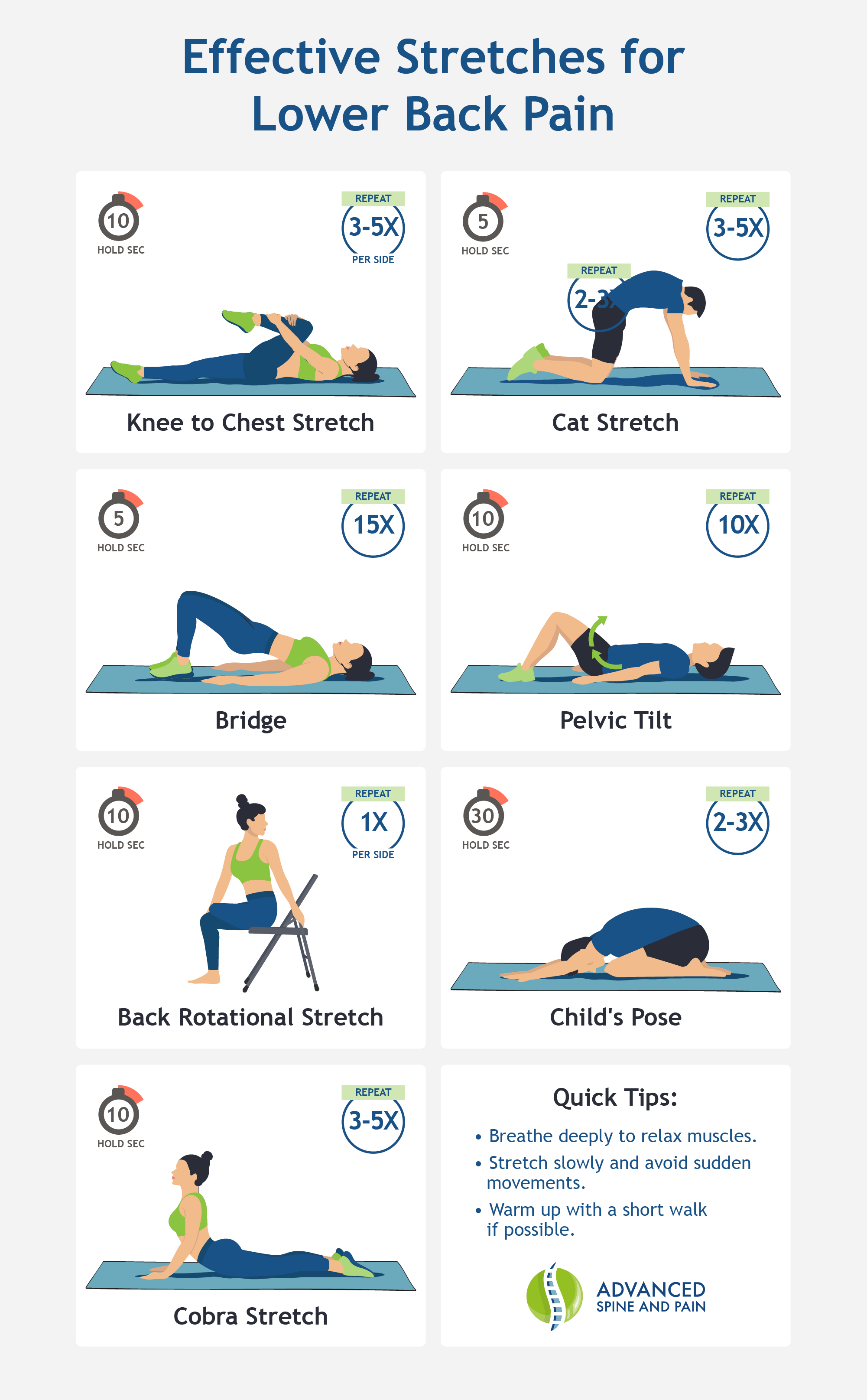
Lie flat on your back with knees bent and feet flat on the floor. Gently pull one knee toward your chest while keeping your other foot planted, feeling a deep stretch along your spine’s base. Hold for 20 seconds without holding your breath, then switch legs. Repeat 3 times per side. For stubborn tension, try both knees simultaneously—but only if you feel no nerve pain. This directly addresses muscle strains that cause 70% of acute low back pain episodes.
Hamstring Doorway Stretch Technique
Transform any doorway into a therapeutic station: Sit with your hips against the doorframe and one leg extended through the opening. Slide your straightened leg up the wall until perpendicular to your body, keeping your lower back pressed flat to the floor. Hold 2-3 minutes per leg as gravity eases hamstring tension. Tight hamstrings pull on your pelvis, increasing lumbar strain by 30%—this stretch breaks that cycle. Pro tip: Slightly bend the knee if you feel nerve tension.
Figure Four Glute Mobilization
Lie on your back and cross your right ankle over your left knee, forming a “4” shape. Gently pull your left thigh toward your chest until you feel a deep release in your right buttock. Hold 30 seconds, repeating 5 times per side. This targets the piriformis muscle, which often refers pain to the lower back when tight. Perform this before bed to prevent morning stiffness—many patients report 50% less pain after consistent nightly use.
Foundational Core Strengthening Moves
Transverse Abdominis Activation Drill
This “internal corset” muscle stabilizes your spine during movement. Lie on your back with knees bent, then gently draw your belly button toward your spine without sucking in your stomach. Maintain normal breathing while holding 8 seconds. Complete 12 repetitions daily. Critical cue: Place fingers just inside hip bones—you should feel a subtle firming under your skin, not rib flaring. Weakness here contributes to 80% of chronic low back pain cases.
Precision Bridge Execution
Start lying on your back with knees bent and feet hip-width apart. Lift your hips until your body forms a straight line from shoulders to knees, focusing on squeezing your glutes—not your lower back. Hold for 3 deep breaths while pressing through your heels. Begin with 8 repetitions, progressing to 30 as strength improves. Common mistake: Arching your lower back at the top—keep ribs tucked to protect discs.
Bird Dog Stability Challenge
Position yourself on hands and knees with wrists under shoulders and knees under hips. Extend your right arm forward and left leg backward simultaneously, keeping your spine perfectly still like a tabletop. Hold 10 seconds while breathing normally. Complete 8 repetitions per side. This trains deep core muscles to stabilize during daily activities like reaching for high shelves. Warning: If your back sags, reduce the range—you should feel this in your abs, not your spine.
Daily Pain-Prevention Routines for Desk Workers
Morning Joint Lubrication Sequence
Before leaving bed, perform 3 essential moves: Pull one knee to chest for 20 seconds (both sides), roll knees gently side-to-side 5 times while keeping shoulders down, and complete 5 cat-cow stretches on hands and knees. This 4-minute routine floods spinal discs with nutrient-rich fluid, reducing morning stiffness by 65%. Skip this, and you’ll compound strain during your first coffee run.
Hourly Posture Reset Protocol
Set phone alarms every 60 minutes to perform 5 shoulder blade squeezes: Sit tall, pull shoulder blades down and together as if pinching a pencil, hold 5 seconds. Immediately follow with seated spinal twists—cross one ankle over the opposite knee and gently rotate toward the bent knee, holding 10 seconds per side. These micro-movements reverse the 40-pound compressive force created by slouching at desks.
Condition-Specific Exercise Modifications

Herniated Disc Relief Moves
Focus exclusively on gentle spinal extensions that create space between vertebrae. Lie face-down and press up onto your forearms (elbows under shoulders), holding 10 seconds. Repeat 10 times hourly. Never perform: Forward bends like toe touches or seated hamstring stretches—they increase disc pressure by 40%. You’ll know these work when leg pain decreases within 48 hours of consistent practice.
Spinal Stenosis Flexion Focus
Narrowed spinal canals require forward-bending positions to open nerve pathways. Sit tall in a chair and slowly fold forward, resting elbows on knees while rounding your lower back. Hold 5 seconds, repeating 10 times hourly. Avoid all backbends like cobra pose—they compress already-pinched nerves. Many patients find walking bent slightly forward (using a shopping cart for support) provides instant relief.
Build Your 4-Week Pain-Free Foundation
Weeks 1-2: Safe Mobility Restoration
Start with 5 minutes morning and night: Knee-to-chest stretches (2 reps/side), supine hamstring stretches with a towel (20-second holds), pelvic tilts (8 reps), and cat stretches (3 reps). Critical: Stop if pain exceeds 3/10 on your discomfort scale. This phase rebuilds pain-free movement range—don’t rush progression. Most see meaningful improvement within 10 days when following this baseline.
Weeks 3-4: Functional Strength Building
Add bridges (10 reps), bird dogs (8/side), and side planks on knees (15-second holds). Increase stretch durations to 30 seconds. Integrate hourly shoulder blade squeezes at work. Red flag: If pain returns during bridges, return to Week 1—your spine isn’t ready for loaded movement. Consistent performance here reduces recurrence risk by 75%.
Long-Term Spine Protection Strategies
Non-Negotiable Daily Movement
Walk 20 minutes daily to nourish spinal discs with oxygen-rich fluid—sedentary behavior starves these structures. When lifting, hinge at hips while keeping objects close to your body; never twist with weight. Posture checkpoint: Every hour, verify your ear aligns over your shoulder and hip—misalignment increases disc strain by 300%.
Sleep Position Optimization
Sleep on your back with a pillow under bent knees, or on your side with a pillow between knees. These positions maintain your spine’s natural “S” curve throughout the night. Replace mattresses older than 8 years—sagging surfaces force paraspinal muscles to work 50% harder all night.
Track Progress and Prevent Setbacks
Weekly Self-Assessment Method
Every Sunday morning, rate your pain on a 0-10 scale before getting out of bed. Note which movements remain painful (e.g., “putting on socks still scores 4/10”). Track how long you maintain proper posture at work before slouching. Key metric: If morning pain decreases by 2 points weekly, you’re on track—consult a physical therapist if progress stalls after 2 weeks.
When to Advance Your Routine
Increase difficulty only when you complete current exercises pain-free with perfect form for 7 consecutive days. Add repetitions before introducing new moves—jumping to advanced exercises like dead bugs too soon causes 60% of setbacks. Golden rule: 10 minutes of correct low back pain exercises daily beats one intense weekly session. Your spine thrives on consistency, not heroics.
Key Takeaway: Start today with just three moves: knee-to-chest releases, transverse abdominis activation, and hourly shoulder blade resets. These foundational low back pain exercises address 90% of common causes when performed correctly. Within two weeks, you’ll move through daily tasks without wincing—proof that your spine responds faster than you think. Remember: gentle, consistent effort rebuilds resilience where pain once lived.