
That shooting pain radiating down your leg isn’t just annoying—it’s your body signaling serious nerve compression. Nearly 40% of people will experience sciatica at some point, transforming simple activities like sitting at your desk or getting out of bed into painful challenges. The good news? Targeted sciatica back exercises can relieve pressure on your sciatic nerve and reduce lower back pain significantly within weeks.
This guide delivers specific stretches and strengthening movements proven to address the root cause of your discomfort. You’ll learn exactly which sciatica back exercises work best, how to perform them correctly, and when to seek professional help—so you can return to pain-free movement faster.
Why Sciatic Nerve Compression Causes Radiating Leg Pain
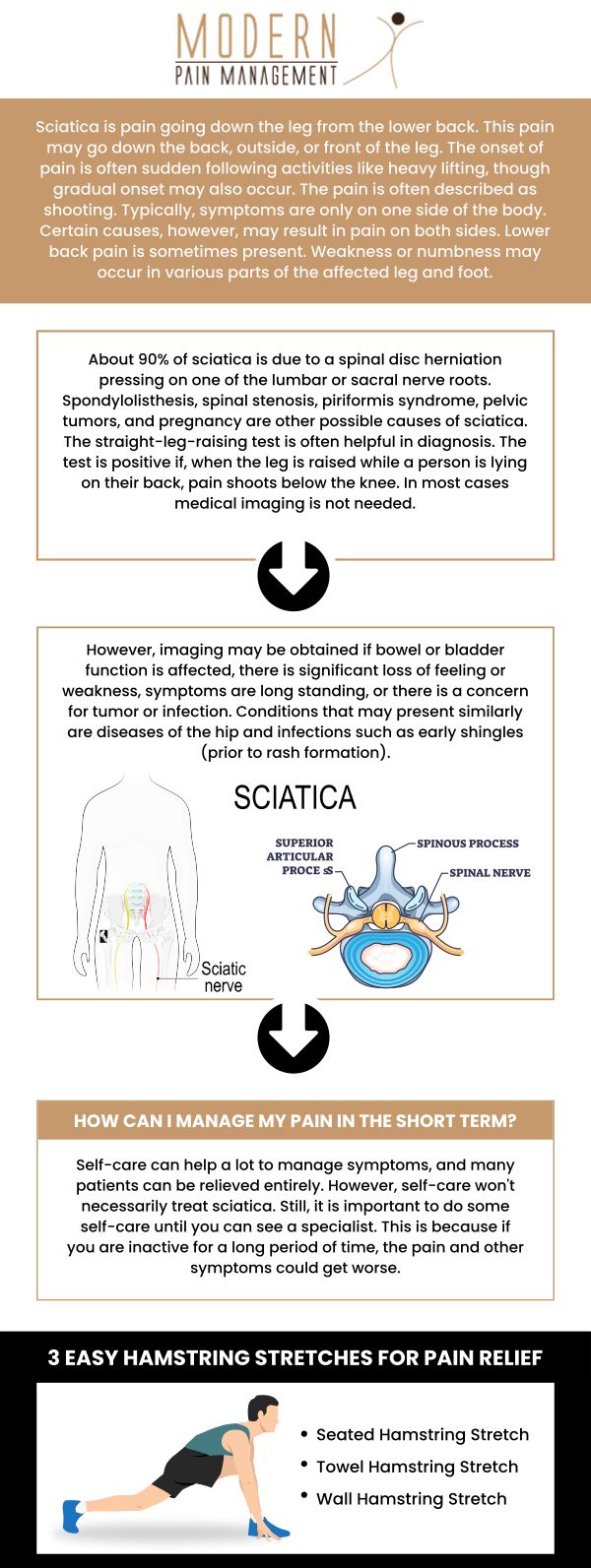
Sciatica occurs when your sciatic nerve—running from your lower spine through your hips and down your legs—gets pinched anywhere along its pathway. This compression creates the signature symptoms: burning, shooting, or electric-like pain traveling from your lower back down one leg, often accompanied by numbness or tingling.
Mechanical compression happens when herniated discs, bone spurs, or tight muscles directly squeeze the nerve. Inflammatory sciatica develops from swelling due to injury or pregnancy. Piriformis syndrome is a specific condition where your hip muscle spasms and traps the sciatic nerve.
Be alert for red flag symptoms requiring immediate medical attention: fever with back pain, loss of bladder control, or sudden severe weakness. These could indicate cauda equina syndrome, a medical emergency requiring surgery within 48 hours.
Immediate Relief Stretches That Reduce Nerve Pressure
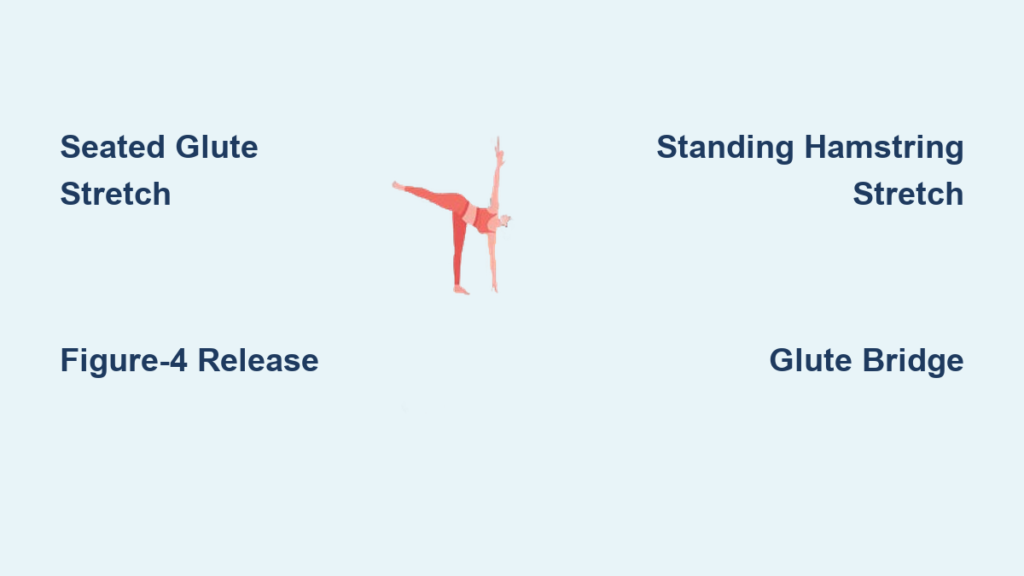
Seated Glute Stretch for Quick Pain Reduction
Sit on a sturdy chair with feet flat on the floor. Cross your right ankle over your left knee, keeping your spine tall. Gently lean forward from your hips (not your waist) until you feel a stretch in your right glute. Hold for 20 seconds while breathing deeply—never force this movement. Return to upright position slowly and repeat 3 times before switching legs.
This stretch directly targets the piriformis muscle, a common culprit behind sciatic nerve compression. Perform this multiple times throughout the day, especially after prolonged sitting periods.
Figure-4 Piriformis Release for Deep Relief
Lie on your back with knees bent and feet flat on the floor. Cross your right ankle over your left thigh, creating a “4” shape with your legs. Place your hands behind your left thigh and gently pull it toward your chest. You should feel a deep stretch in your right glute—keep your head and shoulders relaxed on the floor throughout. Hold for 30 seconds, release slowly, and repeat 3 times per side.
Pro tip: If you can’t reach your thigh comfortably, loop a yoga strap or towel around it for assistance. This modification makes the stretch more accessible during acute pain phases.
Standing Hamstring Stretch to Reduce Nerve Tension
Place your right foot on a low step or sturdy chair at or below hip height. Keep your leg straight but not locked at the knee. Hinge forward at your hips (not your waist), allowing your hands to rest on your standing leg for balance. You’ll feel the stretch along the back of your thigh where your hamstring connects to your hip bone. Hold for 30 seconds, then switch legs.
Tight hamstrings pull on your pelvis through the sacrotuberous ligament, increasing tension on the sciatic nerve. This standing version is safer than floor stretches when your pain is severe.
Core Strengthening Moves That Support Your Spine

Glute Bridge Progression for Spinal Stability
Lie on your back with knees bent and feet hip-width apart. Press through your heels while squeezing your glutes to lift your hips until your body forms a straight line from shoulders to knees. Hold for 5 seconds, then lower slowly with control. Start with 10 repetitions daily, gradually increasing to 15 as your strength improves.
Critical form check: Your weight should rest on your upper back and feet—not your neck. If you feel strain in your lower back, you’re lifting too high. Keep your core engaged throughout the movement to maximize spinal support.
Bird-Dog Stability for Balanced Core Activation
Begin on your hands and knees with wrists under shoulders and knees under hips. Extend your right arm forward and left leg back simultaneously while keeping your back perfectly flat like a table. Hold for 5 seconds while maintaining steady breathing, then return to starting position. Repeat 10 times before switching sides.
This exercise uniquely trains your deep core muscles to stabilize your spine without twisting or compressing the sciatic nerve. Focus on quality over quantity—better to do 5 perfect repetitions than 10 with poor form.
Clamshell for Targeted Hip Strength
Lie on your left side with knees bent at 90 degrees and feet together. Keeping your hips stacked, lift your top knee like opening a clamshell while maintaining contact between your heels. Hold for 5 seconds, then lower slowly. Complete 10-12 repetitions before switching sides.
Modification: Press your back against a wall to prevent rolling backward during the movement. This variation provides extra stability when your symptoms are severe.
Daily Movement Strategies to Prevent Flare-Ups
Walking Protocol for Nerve Mobilization
Begin with 10-15 minutes of gentle walking on flat surfaces, increasing by 5 minutes every few days as tolerated. Focus on maintaining upright posture with a slight forward lean from your ankles—not your waist. Swing your arms naturally to reduce tension through your lower back.
Walking tip: If pain increases during your walk, stop immediately and perform the standing hamstring stretch before continuing. Consistent daily walking is more effective than occasional long walks for sciatica relief.
Posture Reset Technique Every 20 Minutes
Set a timer to remind you to stand up and walk for 2 minutes every 20 minutes while working. During this break, perform 5 gentle pelvic tilts: standing tall, tuck your pelvis slightly under as if zipping up tight jeans, then release slowly. This simple movement breaks up prolonged sitting that aggravates sciatic nerve compression.
Optimal Sleeping Position Guide
Sleep on your side with a pillow between your knees to maintain proper spinal alignment. If you prefer sleeping on your back, place a pillow under your knees to reduce pressure on your lower back. Avoid sleeping on your stomach, which increases lumbar spine curvature and compresses nerve roots.
Warning Signs That Require Immediate Exercise Modification
Stop any exercise immediately if you experience:
– Sharp pain instead of gentle stretching sensation
– Numbness or tingling that intensifies during the movement
– Sudden muscle weakness in your leg
– Pain that radiates further down your leg than usual
These warning signs indicate increased nerve irritation. Rest for 24-48 hours before attempting gentler variations. If symptoms persist, consult a physical therapist before continuing exercises.
When to Seek Professional Treatment
Most sciatica cases improve within 4-6 weeks with consistent exercise, but don’t wait too long for professional help. Schedule an evaluation if:
– Pain persists beyond 1 month despite daily exercises
– Symptoms worsen progressively over several days
– You notice foot drop (trouble lifting the front of your foot)
– You experience new bowel or bladder changes
Physical therapists provide manual techniques and personalized exercise programs that accelerate healing. They can identify your specific nerve compression pattern and adjust your sciatica back exercises accordingly—often producing relief when self-treatment fails.
Long-Term Prevention Strategies That Work

Daily Maintenance Routine
Perform 5 minutes of sciatica stretches every morning and evening, focusing on the seated glute stretch and figure-4 release. Include glute bridges (15 reps) and bird-dog holds (10 each side) three times weekly. This simple routine maintains muscle balance and prevents nerve compression from recurring.
Essential Lifestyle Modifications
- Maintain a healthy weight to reduce spinal load
- Use proper lifting technique: bend at your knees, keep loads close to your body
- Invest in an ergonomic chair with adjustable lumbar support
- Replace worn-out mattresses every 8-10 years
Strategic Exercise Programming
Week 1-2: Focus solely on gentle stretches 3-4 times daily. Walk 10-15 minutes daily on flat surfaces.
Week 3-4: Add strengthening exercises every other day. Increase walking to 20-30 minutes.
Week 5+: Combine all exercises into a complete routine, progressing to more challenging variations as pain allows.
Remember: consistency trumps intensity. Performing these sciatica back exercises gently but regularly produces better results than occasional intense sessions. Your sciatic nerve needs time to heal—give it the patience it deserves.
Final note: If these exercises don’t provide noticeable improvement within 2 weeks, or if pain escalates, schedule an evaluation with a physical therapist specializing in spine conditions. Early professional intervention prevents chronic problems and gets you back to normal activities faster.