
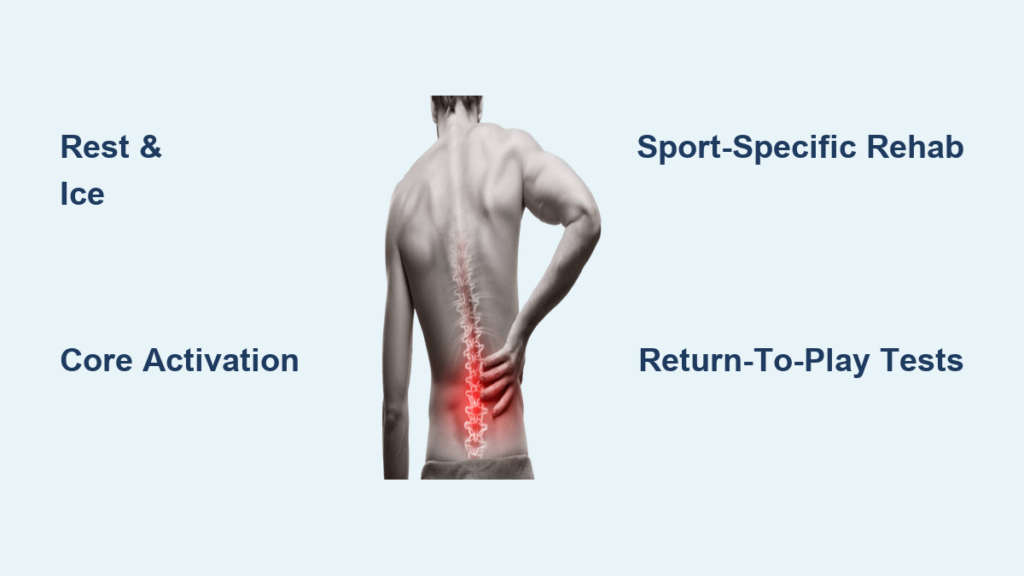
That sharp twinge during your final golf swing. The persistent ache after practice that makes lacing your shoes painful. Lower back pain affects 10-40% of athletes depending on their sport, with gymnasts facing an 11% injury rate and football linemen experiencing back issues at rates as high as 50%. Whether you’re a weekend warrior or elite competitor, knowing how to treat lower back pain in athletes properly means the difference between a quick comeback and season-ending setbacks.
Most athletic back pain stems from muscle strains, ligament sprains, or sport-specific conditions like spondylolysis in gymnasts. General back pain advice fails athletes because your training demands, movement patterns, and performance pressures require specialized treatment. This guide delivers exactly what you need: a step-by-step recovery plan tailored to your specific injury, sport, and competitive timeline.
Pinpoint Your Exact Back Injury Type
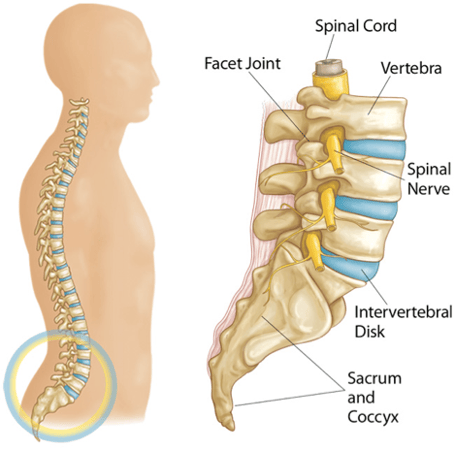
Spot Muscle Strain vs. Disc Herniation Symptoms
Muscle strains create localized lower back soreness that sometimes spreads to your buttocks. You’ll feel this pain when moving or pressing on the affected area. Disc problems send burning or electric sensations down one leg, potentially reaching your toes. Bending forward or lifting your straight leg while lying down intensifies disc-related pain.
Seek immediate medical attention if you experience:
– Fever alongside back pain
– Loss of bladder or bowel control
– Numbness in your groin area
– Severe leg weakness
– Pain that worsens at night
Match Your Sport to Common Back Injuries
Your athletic discipline determines your injury risk. Gymnasts develop spondylolysis from repetitive hyperextension during skills. Football linemen face up to 50% back injury rates due to constant forward-leaning positions. Professional golfers suffer 90% neck/back injury rates from rotational stress. Weightlifters battle muscle strains from poor lifting mechanics. Recognizing your sport-specific risk helps target treatment.
First 72 Hours: Stop Pain Before It Becomes Chronic
Modified RICE Protocol for Active Athletes
Rest means stopping sport-specific movements but maintaining gentle walking to promote blood flow. Ice immediately for 15-20 minutes every 2-3 hours using gel packs or ice massage—never apply ice directly to skin. Compression with elastic wraps provides support during daily activities. Skip elevation for back injuries; instead lie flat with knees bent on a pillow to reduce spinal pressure.
Smart Pain Management Strategies
Apply cold therapy for the first 48 hours using ice packs wrapped in a thin towel. After day 2, alternate with heat therapy using warm compresses or hot baths to increase blood flow. NSAIDs help reduce inflammation but avoid them if you suspect stress fractures—they delay bone healing. Athletic taping provides crucial support during unavoidable movements like walking to class or work.
Pro tip: Freeze water in a paper cup for targeted ice massage. Peel back the edges and massage painful areas for 8-10 minutes to reduce inflammation without numbing surrounding tissue.
Hands-On Recovery Techniques You Can Do Yourself
Self-Myofascial Release Methods
Foam rolling targets tight paraspinal muscles—roll slowly from mid-back to hips, avoiding direct spine pressure. For stubborn trigger points, use tennis ball therapy: place the ball between your back and wall, applying gentle pressure for 30-60 seconds per tender spot. Focus on areas where your muscles feel knotted or restricted during sport movements.
Joint Mobility Restoration Exercises
Cat-camel stretches restore spinal mobility: start on hands and knees, arch your back up like a cat, then drop your belly down. Perform 10 slow repetitions twice daily. Hip flexor stretches reduce compensatory back stress—kneel on one knee, push hips forward gently while keeping your torso upright. Hold each stretch for 30 seconds and repeat 3 times per side.
Progressive Exercise System: From Bed Rest to Competition
:max_bytes(150000):strip_icc()/Bird-DogExcercise_annotated-b5dc709422df45589a9cb06730213b43.jpg)
Week 1-2: Reawaken Your Core Muscles
Transverse abdominis activation:
1. Lie on your back with knees bent
2. Draw your belly button toward your spine without holding your breath
3. Hold 10 seconds, repeat 10 times, 3x daily
Pelvic tilts:
– Flatten your lower back against the floor by tightening abs
– Hold 5 seconds, release slowly
– Perform 2 sets of 15 reps before training
Week 2-4: Build Foundational Stability
Bird-dog exercise:
– Start on hands and knees
– Extend opposite arm and leg simultaneously
– Hold 5 seconds, alternate sides
– Build to 3 sets of 10 reps with perfect form
Glute bridges:
– Lie on your back, feet hip-width apart
– Lift hips to create straight line from knees to shoulders
– Squeeze glutes at top, lower slowly
– Progress to single-leg variations when pain-free
Week 4+: Sport-Specific Movement Integration
Modified squats:
– Start with front squats to reduce spinal load
– Progress to goblet squats holding weight at chest
– Add rotational elements mimicking sport movements
Hip thrust variations:
– Begin with bodyweight on floor
– Advance to elevated surface
– Add weight plates across hips once pain-free
Return-to-Play Decision Making Based on Injury Type
Sport-Specific Recovery Timelines
Muscle strains: Return when you achieve full pain-free range of motion. This typically takes 1-3 weeks for grades 1-2 strains. Football linemen should demonstrate pain-free blocking positions before clearance.
Spondylolysis (grade 1): Rest 4-6 weeks minimum. You must demonstrate full extension without pain and complete core stabilization program. Gymnasts need pain-free handstands and back walkovers.
Disc herniations (conservative): 79% return in 4.7 months average. Focus on progressive loading without leg pain. Golfers should achieve pain-free rotational swings.
Critical Performance Tests Before Competition
Week 4 assessment:
– Single-leg bridges: 15 reps each side without compensation
– Side planks: 60 seconds both sides
– Bird-dog holds: 10 reps with 10-second holds
Week 6 clearance tests:
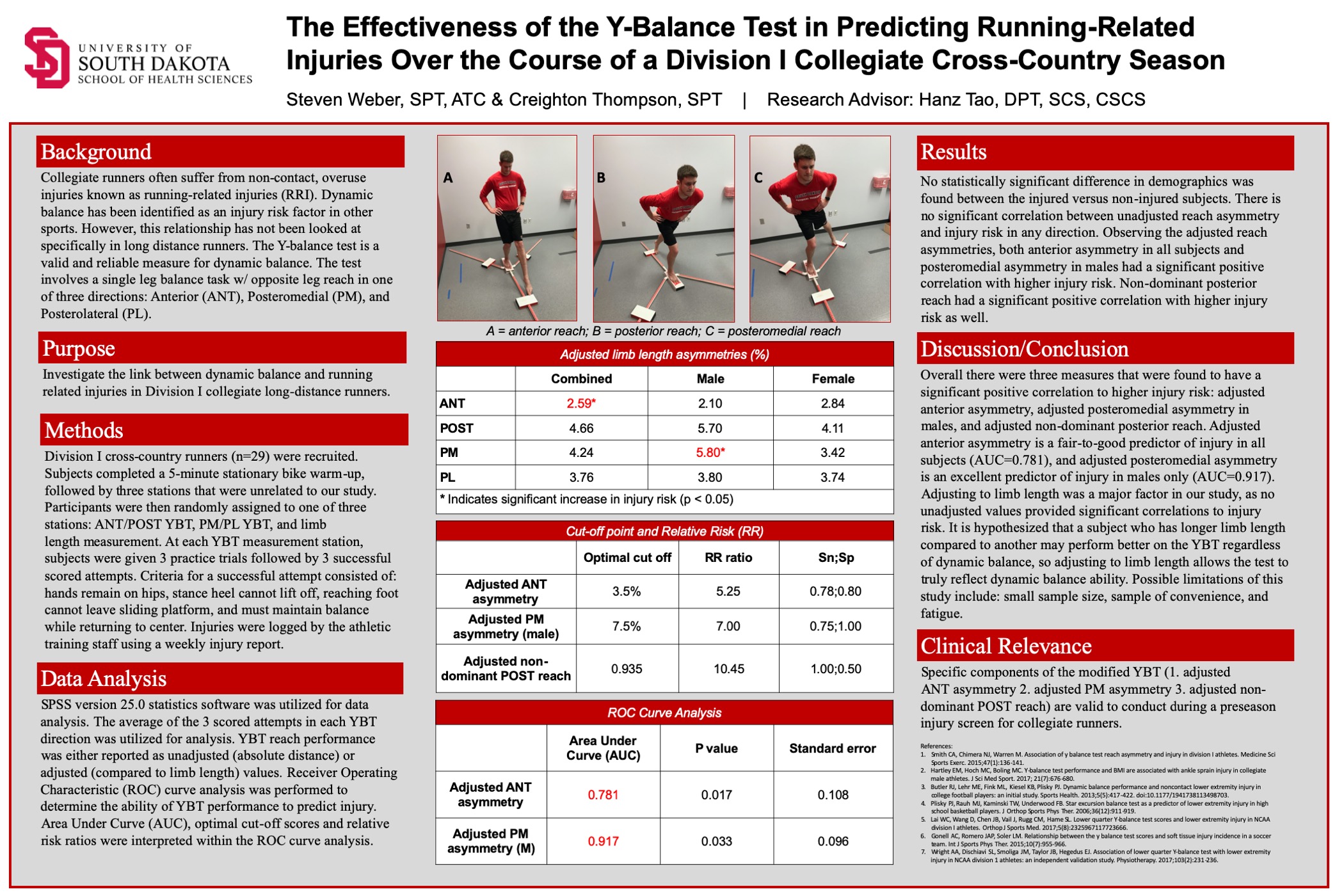
– Y-balance test: Reach within 4cm of non-injured side
– Single-leg squats: 10 reps to 60 degrees without pain
– Sport-specific movements: Pain-free at game speed
Prevent Future Back Injuries With These Proven Strategies
Daily 15-Minute Maintenance Routine
Morning activation (5 minutes):
– Cat-camel: 10 reps
– Bird-dog: 5 each side
– Glute bridges: 15 reps
Pre-training warm-up (10 minutes):
– Dynamic hamstring sweeps: 10 each leg
– Hip flexor lunges with rotation: 5 each side
– Bodyweight squats focusing on form: 15 reps
Smart Training Load Management
Follow the 10% rule—never increase training volume by more than 10% weekly. Implement recovery weeks every 4th week with 20-30% volume reduction. Replace 20% of training time with form-focused drills to prevent technique breakdown under fatigue.
Equipment Tweaks That Reduce Back Stress
Use weightlifting belts for heavy lifts over 80% 1RM. Replace athletic shoes every 300-500 miles to maintain proper support. Adjust benches to proper height for your sport movements—football linemen need lower bench heights than Olympic lifters.
Long-Term Back Health Maintenance System
Monthly Self-Assessment Protocol
Week 1: Core strength testing—plank to failure, side planks for time. Week 2: Movement screen—overhead squat assessment for compensations. Week 3: Sport-specific drills—monitor for form breakdown. Week 4: Load progression—gradual increases based on symptoms.
Warning Signs That Require Professional Help
Track these weekly:
– Morning stiffness lasting >30 minutes
– Pain traveling below knee
– Weakness in single-leg movements
– Night pain disrupting sleep
Final Note: Treating lower back pain in athletes requires matching treatment to your specific injury and sport demands. Start with rest, ice, and gentle movement, then progress systematically through core activation, stability building, and sport-specific training. Most athletes return stronger by addressing root causes—poor movement patterns, inadequate core strength, and improper load management. Your athletic longevity depends on consistent application of these principles, not just quick fixes when pain strikes. Implement the daily maintenance routine immediately, even when pain-free, to build the resilient back that keeps you competing at your highest level.