
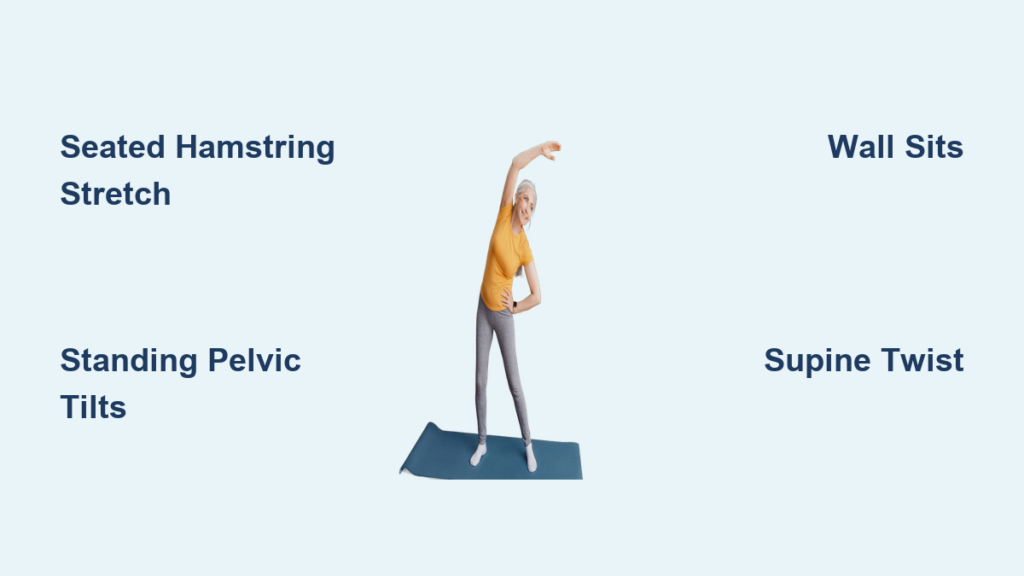
That familiar ache when rising from your favorite armchair or the sharp twinge limiting your morning walk? You’re far from alone. National data shows one in four seniors battles lower back pain every three months—a rate that skyrockets after age 60 due to natural spinal changes. The good news? Targeted back pain exercises for seniors can significantly reduce discomfort and restore independence without expensive equipment. These science-backed movements counteract age-related stiffness while strengthening the core muscles that protect your spine.
Unlike generic routines, these senior-specific exercises address osteoarthritis and spinal stenosis—the top causes of back pain after 60. You’ll discover immediate-relief stretches you can do in your living room and progressive strengthening moves that prevent future flare-ups. Most require only a sturdy chair and 10 minutes daily. Let’s transform your pain management starting today.
Warning Signs Requiring Immediate Medical Attention
Don’t begin exercises if you experience these critical symptoms indicating possible nerve compression or serious conditions:
Stop and consult your physician immediately if you notice:
– Shooting pain radiating down one or both legs
– Numbness, tingling, or weakness in your legs or feet
– Sudden changes in bladder or bowel control
– Pain persisting beyond seven days despite rest
– Discomfort preventing basic self-care like dressing
Safety checklist before starting:
– Get written clearance from your doctor
– Begin only with pain-free movements
– Use chair or wall support for balance
– Stop instantly if pain increases during exercise
– Start with shorter holds (10-15 seconds) and lower repetitions
Ignoring these red flags risks worsening spinal compression. Proper diagnosis ensures your exercises target the actual cause—whether osteoarthritis inflammation or spinal stenosis nerve pressure.
Essential Home Equipment for Senior Back Pain Relief

You likely already own everything needed for effective back pain exercises for seniors:
- Sturdy armless chair (dining chairs work perfectly—avoid rolling office chairs)
- Firm bed or carpeted floor for supine exercises
- Clear wall space providing stable support
- Pillows or rolled towels for joint cushioning
Pro safety tip: Position your chair against a countertop during standing moves. This dual support prevents dangerous balance struggles while allowing proper spinal alignment. Never use unstable furniture like ottomans or sofas with deep cushions.
Gentle Stretching Routine for Immediate Pain Relief
Seated Hamstring Stretch for Spinal Decompression
Sit on the edge of your chair with feet flat. Extend one leg straight, heel on floor, toes pointing up. Keeping your back straight, gently lean forward from the hips until you feel tension behind your thigh—not in your lower back. Hold 20-30 seconds. Repeat 2-3 times per leg. Why this works: Tight hamstrings pull your pelvis forward, increasing spinal disc pressure. This stretch relieves that strain within minutes.
Standing Lumbar Extension Against Countertop
Place hands on lower back, fingers pointing down. Lean gently backward while bracing against your kitchen counter, keeping knees straight. Hold 3-5 seconds. Return slowly to neutral. Repeat 5 times. Critical cue: Only move within pain-free range—never force backward motion. This counters slumped sitting posture that compresses spinal joints.
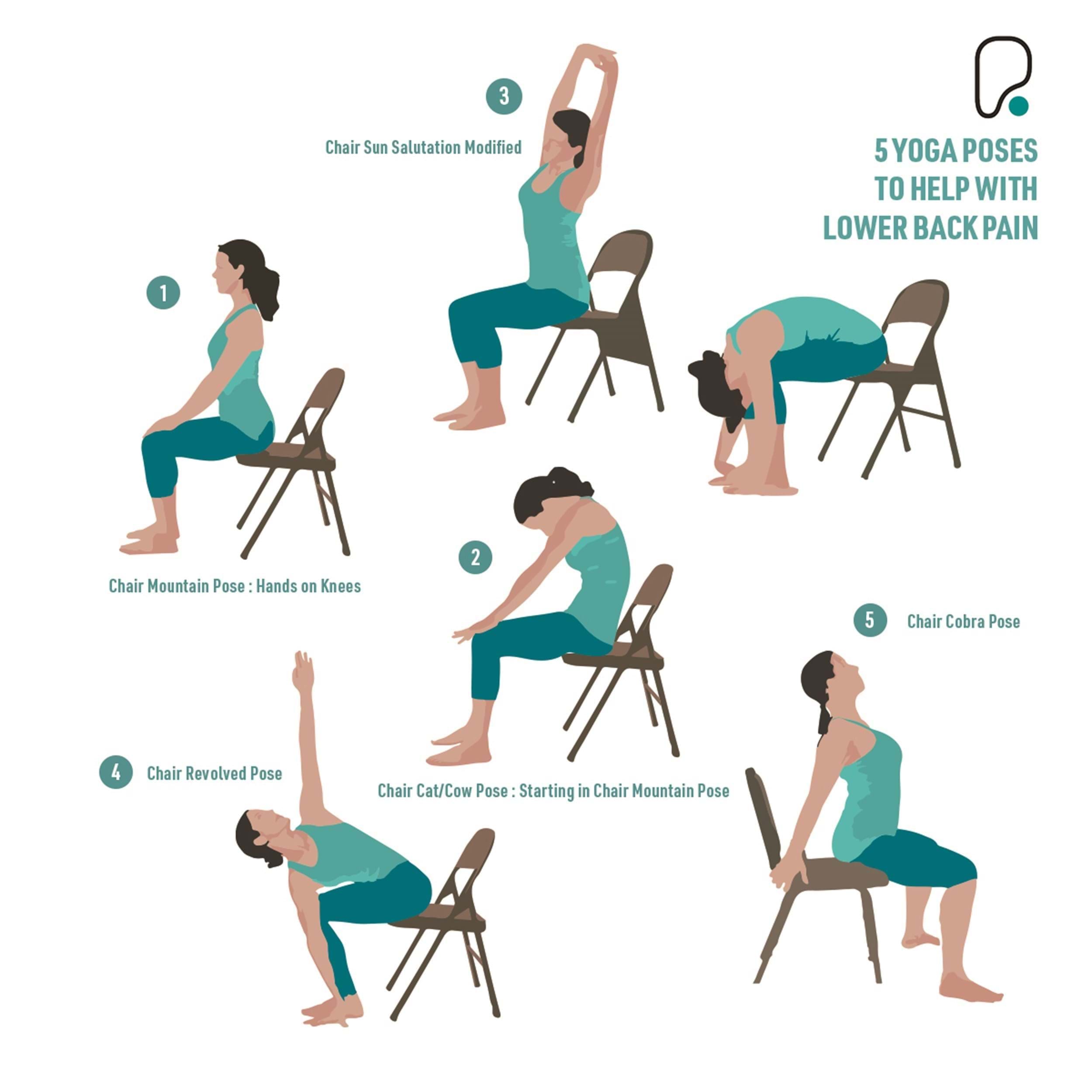
Seated Cat-Cow for Spinal Mobility
Sit tall with feet flat. Inhale while arching your back (cow pose), lifting your chest toward the ceiling. Exhale while rounding your spine (cat pose), tucking your chin toward your chest. Flow smoothly for 5-10 repetitions. Focus: Coordinate movements with breath—this oxygenates stiff spinal tissues for deeper relief.
Core Strengthening Without Floor Work

Standing Pelvic Tilts for Spinal Stability
Hold your chair back for balance. Gently tuck your tailbone under, flattening your lower back against an imaginary wall. Release to a neutral position. Perform 10-12 slow repetitions. Common mistake: Avoid arching your back during release—maintain slight abdominal engagement throughout. This builds the deep core muscles that act as a natural corset for your spine.
Wall Sits for Functional Strength
Stand 10-12 inches from a wall. Slide down until knees form 90-degree angles, pressing your entire back against the wall. Hold 10-30 seconds. Beginner modification: Only lower halfway down. This mimics the muscle activation needed for safe chair-rising while protecting spinal discs from shear forces.
Floor Exercises for Advanced Senior Practice
Modified Bridge Exercise for Glute Activation
Lie on your back with knees bent, feet flat hip-width apart. Place a pillow under your head. Tighten your abdomen, then lift hips until your body forms a straight line from shoulders to knees. Hold 2-3 seconds. Lower slowly. Repeat 10 times. Why glutes matter: Weak gluteal muscles force your lower back to overcompensate during walking—this move restores proper biomechanics.
Supine Twist for Spinal Rotation
Lie on your back with knees bent. Gently roll both knees to one side while keeping shoulders flat on the floor. Place a pillow between your knees for comfort. Hold 5 seconds. Return to center. Repeat 5 times per side. Caution: Never force rotation—only move within pain-free range. This maintains spinal joint mobility often lost with age.
Daily Movement Breaks for Cumulative Relief
Morning Bed Exercises Before Rising
Perform these before putting weight on your spine:
– Ankle pumps: Point and flex feet 10 times to improve circulation
– Single knee hug: Gently pull one knee toward chest, hold 10 seconds
– Pelvic tilts: Flatten lower back to mattress, hold 3 seconds, release
Kitchen Counter Routine During Meal Prep
While waiting for the kettle:
– Standing cat-cow: Hands on counter, alternate arching and rounding back 5 times
– Hip circles: Shift weight gently in small circles 5 times each direction
– Calf raises: Rise onto toes 10 times to engage posterior chain muscles
Week-by-Week Progression Plan for Lasting Results
Weeks 1-2: Pain-Reduction Foundation
Focus exclusively on seated stretches. Hold positions for 10-15 seconds. Complete the routine once daily. Key indicator: Discomfort should decrease within 48 hours of consistent practice. If pain increases, return to shorter holds.
Weeks 3-4: Strength Building Phase
Add standing exercises like wall sits. Increase stretch holds to 20-30 seconds. Perform 2 sets of each move. Introduce 5-minute walking breaks. Warning sign: Muscle soreness is normal; sharp pain means regress to previous week’s routine.
Week 5+: Maintenance Mode for Spinal Health
Combine stretching and strengthening 3-4 times weekly. Build walking to 20-30 minutes daily. Continue as lifelong habit—these back pain exercises for seniors prevent age-related deconditioning.
Preventing Future Back Pain Episodes
Daily Habits That Protect Your Spine
- Chair ergonomics: Use lumbar rolls during prolonged sitting
- Lifting technique: Bend knees, keep objects close to your body
- Sleep positioning: Place pillow between knees if side-sleeping
- Footwear: Wear supportive shoes with low heels daily
Warning Signs to Scale Back Immediately
- Increased pain during or after exercises
- New numbness or tingling sensations
- Muscle spasms lasting over 24 hours
- Discomfort disrupting sleep
Pro tip: Track pain levels (1-10 scale) in a notebook. Consistent reduction confirms you’re on the right path.
Long-Term Success Strategies for Senior Spinal Health
Consistency beats intensity: Performing 3-5 minutes of seated stretches daily yields better results than infrequent longer sessions. Pair exercises with existing habits—do pelvic tilts while brushing teeth or seated twists during TV commercials. Critical reminder: Never push through sharp pain—modify using pillows or reduce range of motion. Consider one physical therapy session for personalized form checks, especially if you have diagnosed spinal stenosis.
These back pain exercises for seniors work because they specifically counteract age-related spinal changes. Within weeks, you’ll notice easier chair-rising, more comfortable walking, and reduced morning stiffness. Remember: Your spine thrives on movement, not rest. Start with just two exercises today—your future self will thank you for every gentle rep that builds lifelong resilience.