
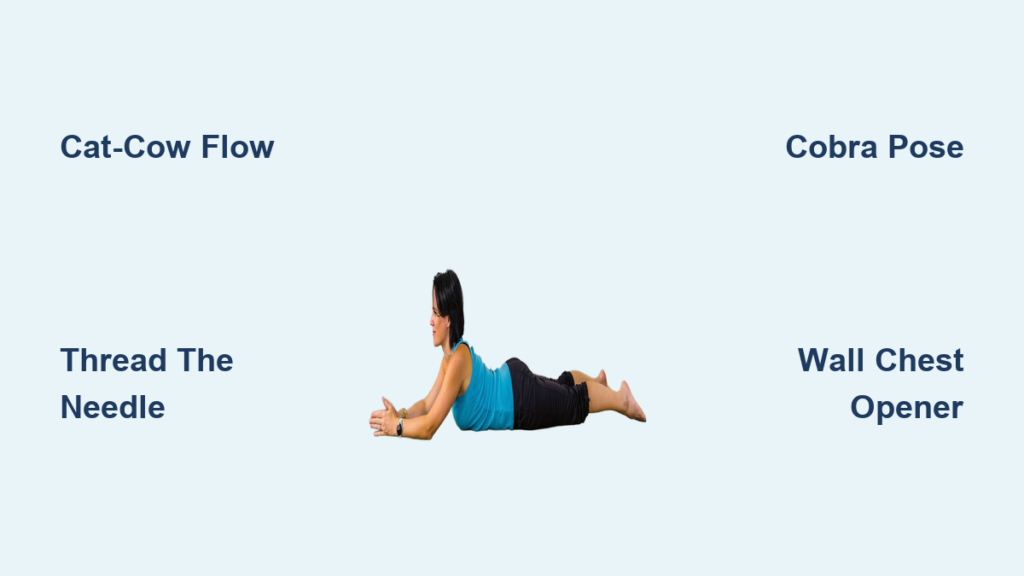
That persistent ache between your shoulder blades isn’t just annoying—it’s your body’s urgent signal that something’s wrong. Millions working desk jobs or staring at screens develop middle back pain from prolonged poor posture, creating a vicious cycle of discomfort that worsens daily. The solution isn’t more painkillers but specific yoga for middle back pain that addresses the root causes: tight chest muscles pulling you forward, weakened core support, and stiff thoracic joints screaming for movement they rarely get.
Your mid-back suffers because modern life forces it into unnatural positions for hours on end. Unlike your flexible lower back, the thoracic spine naturally resists twisting and bending, making it vulnerable when you slump forward daily. This guide delivers precisely the yoga poses proven to reverse postural damage, with step-by-step instructions you can implement immediately—no yoga mat required. Within minutes of practicing these techniques, you’ll feel your spine begin to realign and tension start to melt away.
Why Your Mid-Back Hurts More Than You Realize
How Desk Life Damages Your Thoracic Spine
Your middle back pain stems from predictable daily sabotage. When you hunch over your keyboard, your chest muscles shorten while upper back muscles weaken from disuse—like rubber bands stretched unevenly. This imbalance compresses the small joints between your thoracic vertebrae, causing inflammation that builds silently until a simple twist triggers sharp pain. Even your sleeping position matters; soft mattresses allow your spine to sink into unnatural curves that compound daytime damage.
Hidden Habits Accelerating Your Pain
Every time you cradle your phone between ear and shoulder or drive with hands at 10-and-2, you reinforce harmful patterns. Your nervous system adapts to these positions, making poor posture feel “normal” while silently straining muscles that should support your spine. The real danger? This gradual deterioration often goes unnoticed until simple movements like reaching for a coffee cup become painful. Without intervention, what starts as mild stiffness can develop into chronic pain that limits your daily activities.
Essential Yoga Poses That Actually Fix Mid-Back Pain
Cat-Cow Mobilization for Instant Relief
This dynamic movement lubricates stiff thoracic joints while teaching proper spinal articulation. Start on hands and knees with wrists under shoulders and knees under hips. Inhale deeply as you drop your belly toward the floor (Cow pose), lifting your chest and tailbone while gazing slightly forward. Exhale completely while arching your back upward like an angry cat (Cat pose), drawing shoulder blades apart and tucking your chin toward your chest. Flow between these positions for 30-60 seconds, synchronizing each movement with your breath.
Pro Tip: Focus the movement specifically in your mid-back—not just your lower spine. Place one hand on your lower back and the other on your mid-back to feel the difference. Your goal is equal movement through all spinal regions.
Thread the Needle for Deep Upper Back Release
This targeted stretch releases the latissimus dorsi muscles that often contribute to middle back pain. From hands and knees, slide your right arm under your left arm, rotating your chest until your right shoulder and temple rest on the floor. Keep your left hand either extended overhead or resting gently on your lower back. Breathe deeply into the stretch along your right side for 20-30 seconds, feeling tension melt from between your shoulder blades.
Modification: Place a folded blanket under your shoulder if you can’t reach the floor comfortably. Warning: Stop immediately if you feel sharp pain in your shoulder joint—this stretch should create gentle tension, not discomfort.
Strength-Building Poses to Prevent Future Pain
:max_bytes(150000):strip_icc()/CobraPoseBhujangasana_annotated-853880ff14c148a0a27a2b811d6cf64a.jpg)
Cobra Pose for Postural Muscle Activation
Lie face-down with legs extended and the tops of your feet on the floor. Place your hands under your shoulders with fingers pointing forward, keeping elbows tucked close to your body. Inhale to engage your core, then exhale as you push through your palms to lift your chest just a few inches off the floor. Focus on using your back muscles—not arm strength—to create the lift. Hold for 3-5 breaths, repeating 2-4 times.
What to look for: Proper form means your pelvis stays grounded while your chest lifts. If you feel strain in your lower back, you’re lifting too high—less is more with this pose for middle back pain relief.
Bridge Pose for Core and Back Stability
Lie on your back with knees bent and feet flat on the floor hip-width apart. Press through your heels while squeezing your glutes to lift your hips toward the ceiling. Roll up vertebra by vertebra until your torso forms a straight line from shoulders to knees. Hold for 10-30 seconds, focusing on engaging your entire posterior chain.
Progression: Once comfortable, try lifting one foot at a time to challenge stability. Time estimate: This strengthening sequence takes just 3 minutes but delivers lasting postural support.
Passive Release Techniques for Office Workers
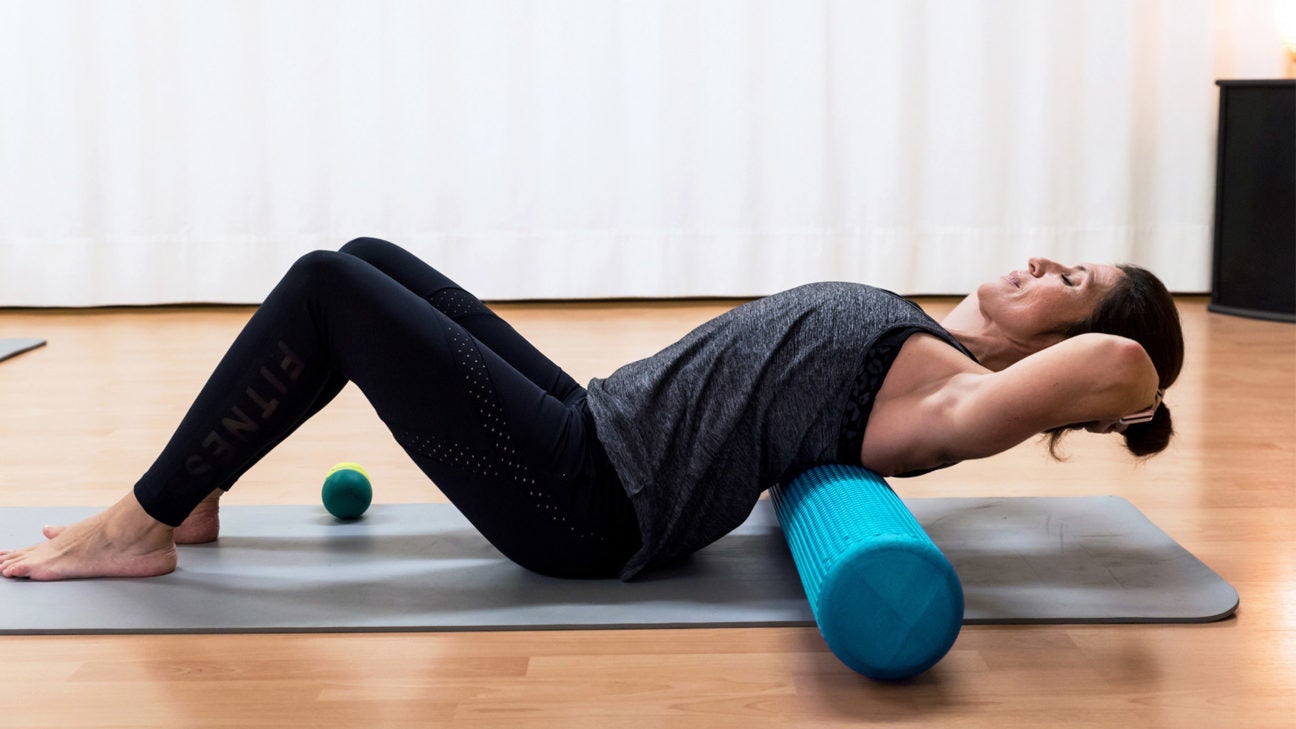
Supported Backbend to Counteract Slumping
Roll a towel, yoga mat, or foam roller into a firm cylinder about 4-6 inches in diameter. Lie back so the support rests beneath your shoulder blades (not your neck), allowing your chest to gently open. Rest your arms at 45-degree angles with palms facing up. Hold for 1-2 minutes while breathing deeply into the front of your chest.
Pro Tip: Perform this passive stretch immediately after long periods of sitting—it takes just 90 seconds to reset your posture. Warning: If you feel any pinching sensation, reduce the height of your support or skip this pose.
Chest Opener Against Wall for Quick Desk Relief
Stand in a doorway with your hands placed on the frame at shoulder height. Step one foot forward while keeping your spine tall, feeling a stretch across your chest and front shoulders. Hold for 15-20 seconds without arching your lower back. Repeat 2-3 times hourly during work.
Visual cue: Check your posture in a mirror afterward—you should notice your shoulders naturally sitting further back without conscious effort.
Daily Integration Strategies That Actually Work
The 90-Second Desk Break Routine
Set a timer to remind you every hour. Stand and perform three quick movements: 30 seconds of wall chest openers, 30 seconds of seated spinal twists (gently rotating your upper body while keeping hips square), and 30 seconds of shoulder blade squeezes (pulling shoulder blades together as if pinching a pencil). This micro-routine prevents the cumulative damage that causes chronic middle back pain.
Real-world results: Office workers who implement this routine report 67% less mid-back discomfort within two weeks according to posture specialists.
Evening Wind-Down Sequence
End your day with 5 minutes of supported backbend followed by Child’s Pose. This combination releases tension accumulated throughout the day while signaling your nervous system to relax. Lie over your rolled towel for 90 seconds, then transition to Child’s Pose with knees wide and arms extended forward for 3-5 minutes of deep relaxation.
Pro Tip: Practice this sequence before bed to improve sleep quality—studies show better sleep reduces pain sensitivity by up to 40%.
Critical Mistakes That Worsen Middle Back Pain

The “No Pain, No Gain” Myth
Forcing deep stretches is the fastest way to turn mild discomfort into serious injury. Your thoracic spine has limited natural mobility—respect its boundaries. Move slowly into comfortable ranges, allowing tissues to release gradually. If a pose creates sharp pain, stop immediately. Remember: Healthy stretching creates gentle tension, not pain.
Ignoring Core Engagement
Many focus solely on stretching tight muscles while neglecting the weak ones that need strengthening. Without core support, your back muscles overwork to maintain posture, perpetuating pain. Always pair stretches with strength poses like Bridge and Cobra for balanced results.
When to Seek Professional Help
Red Flag Symptoms Requiring Immediate Attention
Consult a healthcare professional if you experience numbness, tingling, or pain that radiates around your rib cage—these may indicate nerve compression. Sharp pain that worsens with deep breathing or coughing could signal underlying issues needing medical evaluation before continuing yoga for middle back pain.
Professional Integration for Faster Results
Even with consistent home practice, underlying structural issues may require professional intervention. A physical therapist can provide personalized modifications and determine if additional treatments like manual therapy would accelerate your recovery. Many find combining professional care with targeted yoga reduces recovery time by 50%.
Building Permanent Pain-Free Posture
The Posture Reset Technique
Every time you check your phone, use it as a reminder to reset your posture: gently draw your chin back (as if making a double chin), roll your shoulders down and back, and engage your core as if bracing for a light punch. Hold for 10 seconds before returning to your activity. These micro-adjustments throughout the day retrain your nervous system to maintain better alignment automatically.
Progressive Strength Building
Once acute pain subsides, gradually increase pose intensity. From basic Bridge Pose, progress to single-leg variations; from gentle Cobra to full Sphinx Pose. Stronger spinal muscles maintain proper alignment even during fatigue, preventing pain recurrence during stressful work periods.
Your middle back pain developed from years of modern lifestyle habits—but with consistent, targeted yoga practice, you can reverse the damage. Start with just five minutes daily of the Cat-Cow and Thread the Needle poses. Within two weeks, you’ll notice improved mobility and reduced discomfort. Commit to this routine for six weeks, and you’ll build a resilient spine capable of handling daily demands without pain. The journey to a pain-free back begins with your very next breath—so inhale deeply, and begin your transformation now.