
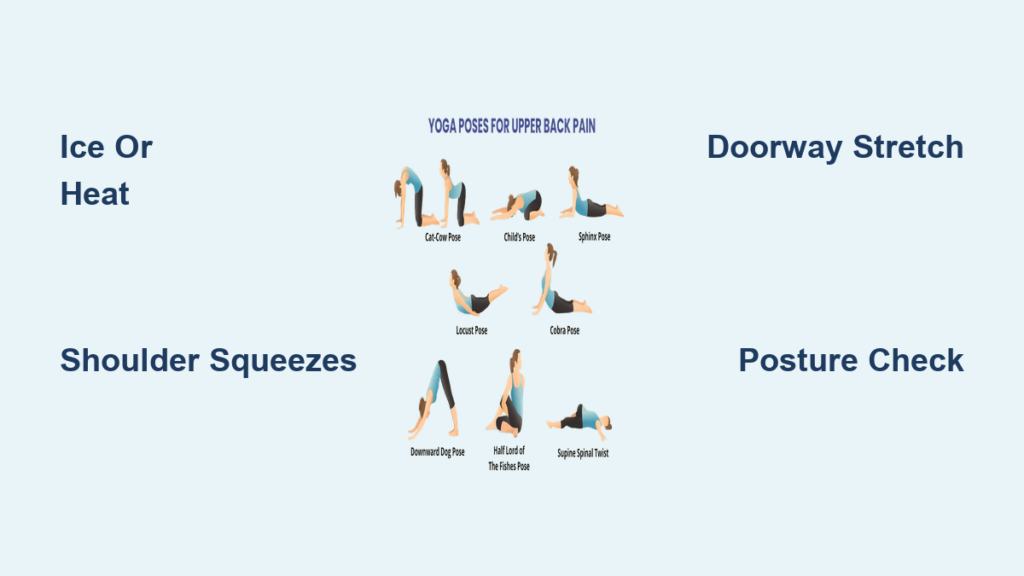
That persistent ache between your shoulder blades won’t let you focus on work or enjoy your evening. You’re not imagining things—upper back pain affects millions daily, often from hunching over devices or carrying heavy bags. The good news? Most cases respond well to targeted home treatments within days. This guide delivers science-backed methods to eliminate your discomfort and prevent recurrence.
You’ll discover immediate relief techniques, posture fixes, and strengthening exercises specifically designed for the thoracic spine region. Forget generic advice—these strategies address your exact pain points from the base of your neck to your rib cage. By the end, you’ll have a clear action plan to finally relieve upper back pain without expensive treatments.
Identify Your Pain Source Immediately
Your upper back pain differs from neck or lower back issues because the thoracic spine connects to 12 rib pairs, creating stability but limiting movement. This unique structure means pain often stems from muscular tension rather than serious spinal damage. Recognizing your specific pain pattern helps target treatment effectively.
Critical symptoms to note:
– Burning sensation between shoulder blades after computer work
– Throbbing tightness that worsens with deep breathing
– Numbness radiating down arms (requires medical attention)
– Stiffness that improves with movement but returns after sitting
Most cases originate from muscle strain caused by poor posture, weak supporting muscles, or repetitive movements—not disc problems. If your pain increases when pressing on tender spots but improves with gentle movement, muscular issues are likely the culprit.
Apply Proven Relief Techniques Within Minutes
Temperature Therapy Done Right
For sudden, sharp pain (first 48 hours):
– Apply ice pack wrapped in thin towel to most tender area
– Limit sessions to 15-20 minutes every 2-3 hours
– Avoid direct skin contact to prevent frostbite
For chronic stiffness and tightness:
– Use heating pad or warm shower for 15-20 minutes
– Apply before stretching for better results
– Combine with gentle movement immediately after
Important note: Some people respond better to heat even for recent injuries. Test both methods for 2 days to determine your optimal approach.
Emergency Movement Reset Protocol
When pain strikes unexpectedly at work or home:
- Shoulder blade squeezes: Pull shoulder blades together firmly for 5 seconds, release slowly. Repeat 10 times while sitting upright.
- Neck releases: Gently tilt head toward shoulder (not past centerline), hold 15 seconds each side. Never force range of motion.
- Wall angels: Stand with back against wall, slowly raise and lower arms in snow angel motion. Complete 8 repetitions.
These movements restore blood flow to tight muscles and disrupt pain-spasm cycles within 10 minutes. Perform them hourly during acute pain episodes.
Essential Daily Stretching Routine
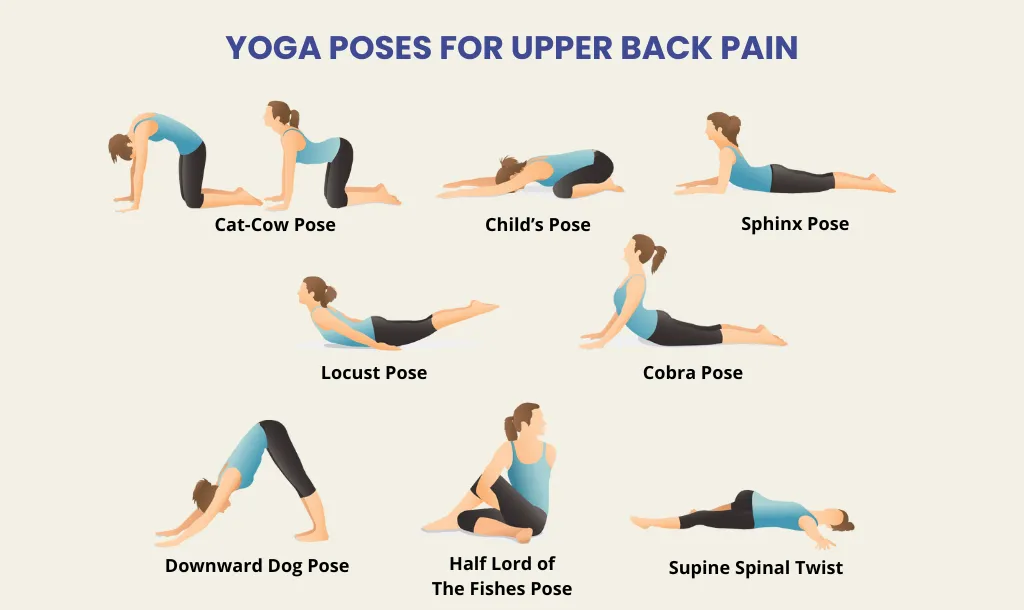
Proper Warm-Up Sequence (2 Minutes)
Never stretch cold muscles. Begin with:
– Marching in place: 45 seconds to increase circulation
– Arm circles: 15 forward, 15 backward with controlled motion
– Shoulder rolls: 10 backward then 10 forward rolls
Targeted Upper Back Stretches
Child’s Pose Modification
– Kneel on floor, sit back on heels
– Walk hands forward until forehead touches surface
– Breathe deeply for 30 seconds, feeling shoulder blades separate
Levator Scapulae Release
– Turn head 45 degrees to right
– Look down toward right armpit
– Gently assist with right hand
– Hold 20 seconds, repeat 3 times before switching sides
Doorway Stretch
– Place forearms on doorframe at 90-degree angle
– Step forward until stretch felt across chest
– Maintain neutral neck position
– Hold 30 seconds, repeat 3 times throughout day
Perform this sequence 2-3 times daily, especially after prolonged sitting. Stop immediately if you experience sharp pain.
Build Supportive Muscle Strength
Beginner Strength Circuit (Start Today)
Wall Push-Up Progression
– Stand arm’s length from wall, hands at shoulder height
– Bend elbows to 90 degrees, slowly return to start position
– Complete 2 sets of 10-12 repetitions
– Progress to lower surfaces as strength improves
Shoulder Blade Squeeze Hold
– Sit tall with hands in lap
– Squeeze shoulder blades together as if holding pencil
– Hold 5 seconds, release slowly
– Perform 3 sets of 15 daily
Resistance Band Rows
– Anchor band at waist height
– Pull toward lower ribs while squeezing shoulder blades
– Maintain elbow position close to body
– Complete 2 sets of 12 repetitions
Posture-Specific Strengthening
Chair Rotation Exercise
– Sit sideways in sturdy chair
– Place hands behind head
– Rotate torso toward chair back, hold 10 seconds
– Complete 3 repetitions each direction
Foam Roller Extension
– Position foam roller horizontally under upper back
– Support head with hands, gently extend over roller
– Hold 5 seconds, roll slightly upward
– Repeat 5 times along thoracic spine
Perform strengthening exercises every other day, allowing muscles time to recover. Stop if pain increases during movements.
Fix Your Workspace in 5 Minutes
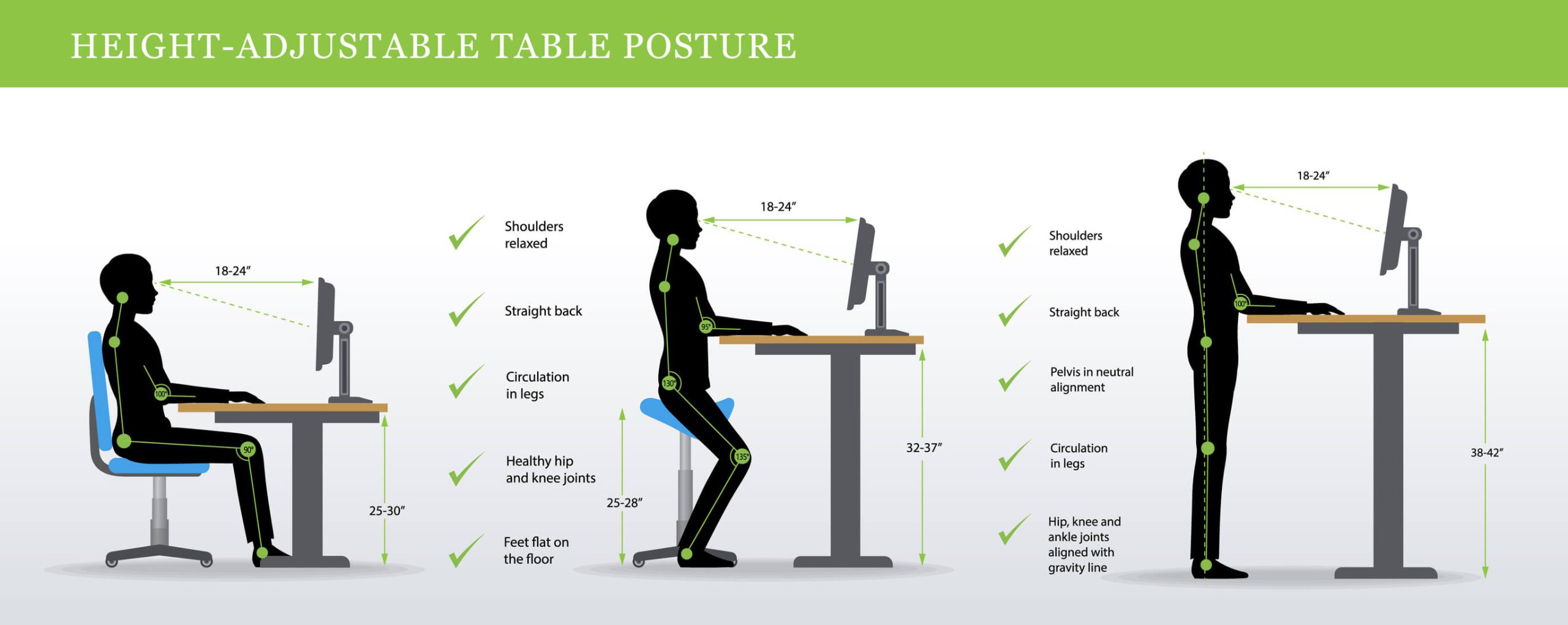
Computer Setup Checklist
Monitor Position
– Top of screen at eye level (use books or stand)
– Distance of 20-26 inches from eyes
– Directly in front of you (no twisting)
Chair Adjustments
– Roll towel for lumbar support at lower back curve
– Feet flat on floor with knees at 90 degrees
– Armrests adjusted so elbows rest comfortably
Phone and Tablet Use
– Hold devices at eye level (never look down)
– Use voice-to-text for extended messaging
– Set hourly reminders to check posture
Implement these changes immediately—they address the root cause of 70% of upper back pain cases. Noticeable improvement typically occurs within 48 hours of proper ergonomic setup.
Recognize When to Seek Professional Help
Critical Warning Signs
Seek immediate medical attention if you experience:
– Numbness or tingling in arms or hands
– Bowel or bladder control changes
– Unexplained weight loss with back pain
– Fever accompanying discomfort
– Sharp pain that worsens with breathing
Effective Professional Treatments
Physical Therapy
– Personalized posture analysis and correction
– Targeted exercises for your specific pain pattern
– Manual therapy for tight muscles (6-8 sessions typically)
Chiropractic Care
– Gentle spinal adjustments for joint restrictions
– Combined with home exercise prescription
– Most see improvement within 3-5 sessions
Don’t wait more than 2 weeks if home treatments provide less than 50% improvement. Early professional intervention prevents chronic issues.
Prevention Habits That Actually Work
Daily Maintenance Routine
Morning:
– 10 shoulder blade squeezes before leaving bed
– 1 minute of deep breathing while stretching
Workday:
– Set phone timer for posture checks every 30 minutes
– 2-minute walking break every hour
– Shoulder rolls during commercial breaks
Evening:
– 5 minutes of gentle stretching
– Foam roll upper back while watching TV
Pro tip: Track your pain level (1-10 scale) daily in your phone notes. This reveals patterns and measures progress objectively.
Realistic Recovery Timeline
Days 1-3: Focus on pain reduction with ice/heat and gentle movement. Expect 30-40% improvement with consistent treatment.
Days 4-7: Add strengthening exercises as pain decreases. Most experience 60-70% improvement during this phase.
Weeks 2-4: Return to normal activities while maintaining daily stretches. Complete resolution typically occurs within 14-28 days with proper care.
Remember: Consistency matters more than intensity. Ten minutes daily outperforms one hour weekly. Start with the emergency movement reset today, then gradually incorporate other techniques. If pain persists beyond 3 weeks or worsens despite home treatment, consult a healthcare professional for personalized assessment—most upper back pain resolves completely with the right approach.