
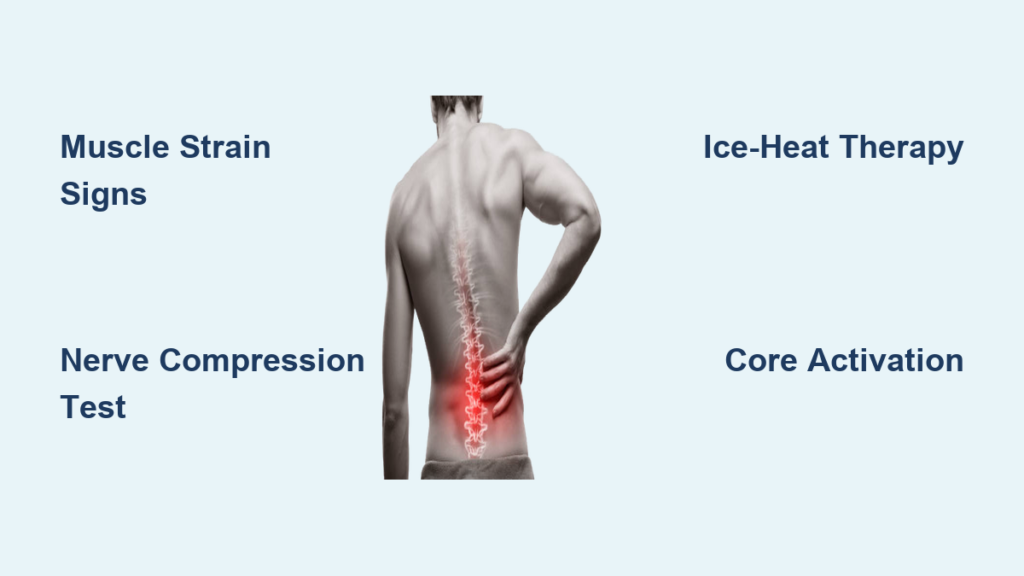
That sharp twinge when bending to tie your shoes. The deep ache that flares after sitting through a Zoom meeting. If you’re wrestling with lower left back pain, you’re not alone—this specific discomfort disrupts daily life for millions. Unlike general back pain, left-side symptoms often reveal hidden culprits like strained quadratus lumborum muscles, irritated sciatic nerves, or even kidney issues. This guide cuts through the confusion with actionable steps to diagnose your exact cause, implement immediate relief, and build long-term resilience. You’ll discover how to differentiate muscle strain from nerve compression in minutes, modify movements that secretly worsen your pain, and activate deep core muscles often overlooked in recovery.
Diagnose Your Exact Lower Left Back Pain Cause

Muscle Strain vs. Nerve Compression Signs
Press firmly on the area between your left hip bone and lower ribs. If tenderness triggers a deep, localized ache that worsens when twisting or lifting objects, you’re likely dealing with quadratus lumborum strain—a common injury from sudden movements like swinging a golf club or lifting a child. Nerve-related pain, however, shoots down your left leg like an electric jolt, especially when sneezing or sitting. This sciatic nerve irritation often includes tingling in your left foot or calf weakness. Note: Pain that intensifies when walking upstairs but eases when leaning forward typically points to facet joint dysfunction.
Kidney or Organ Pain Red Flags
Kidney stones or infections manifest as severe flank pain radiating to your left lower back, accompanied by fever, cloudy urine, or urgent urination. Gastrointestinal issues like diverticulitis cause cramping pain below your left ribs that worsens after eating. Women should consider gynecological causes if pain spikes during menstruation—ovarian cysts often create a dull, persistent throb on one side. Critical warning: If pain includes fever plus urinary symptoms, seek care within 24 hours to rule out pyelonephritis.
Three Self-Tests to Confirm Your Diagnosis
1. The Standing Arch Test: Place hands on hips and slowly arch backward. Sharp left-side pain indicates facet joint inflammation. 2. The Cough Challenge: Cough gently while standing. Radiating leg pain suggests disc herniation pressing on nerves. 3. The Hip Flexor Check: Kneel on your right knee with left foot forward. Push hips forward—if this stretches your left groin while easing back pain, tight hip flexors are likely the root cause.
Stop Lower Left Back Pain Now: Ice, Heat & Positioning Tactics

Ice-Heat Protocol for Your Pain Type
For acute pain under 72 hours (sharp, swollen, or post-injury), apply ice packs wrapped in a thin towel to your left lower back for 15 minutes every 2 hours. Skip heat—it worsens inflammation. After day 3, switch to moist heat therapy: soak in a warm bath (not hot) for 20 minutes or use a heating pad on low setting. Never apply heat if skin is red or swollen. Pro tip: Alternate 10 minutes heat/10 minutes ice for stubborn nerve pain.
Pain-Killing Sleep and Sitting Positions
Nighttime relief: Sleep on your left side with a firm pillow between knees and a rolled towel under your waist. This aligns hips and reduces sacroiliac joint stress. Avoid stomach sleeping—it over-arches your spine. Desk fix: Place a lumbar roll at belt-line height. Set phone alarms to stand every 25 minutes; walk while taking calls. If pain flares while sitting, cross your left ankle over your right knee and gently lean forward for 30 seconds to decompress the piriformis muscle.
Smart OTC Medication Combos
For inflammatory pain (worse with movement), take 400mg ibuprofen with food every 8 hours—never exceed 1,200mg daily. Pair with topical diclofenac gel rubbed into tender spots. If muscle spasms dominate (sudden cramping), try 500mg acetaminophen plus magnesium glycinate (400mg) at bedtime to relax muscles. Avoid combining NSAIDs with blood thinners—consult your doctor first.
Fix Your Workspace & Lifting Habits to Ease Left-Side Back Pain
Ergonomic Desk Setup for Left-Side Relief
Adjust your chair so hips sit 2 inches higher than knees, with feet flat on floor. Position your monitor directly in front—not to the left—to prevent spinal twisting. Place your mouse on a pad with a left-side wrist rest to keep shoulders level. Every hour, perform pelvic tilts: Sit tall, gently tuck tailbone under while flattening lower back against chair for 10 seconds. Repeat 5 times to reset posture.
Lift Heavy Objects Without Left Back Strain
The 3-Step Safe Lift: 1) Stand within arm’s reach of the object, feet shoulder-width apart. 2) Squat by bending knees (not waist), keeping chest up and left hand closer to your body. 3) Hug the object to your sternum, stand using leg power while exhaling. Never twist—pivot feet instead. For frequent lifting, wear a weightlifting belt to activate core muscles.
Quadratus Lumborum Relief: Targeted Stretches That Work
Left-Side Muscle Release in 90 Seconds
Standing QL Stretch: Place left hand on hip, right hand overhead. Gently lean right while keeping hips stable—don’t bend forward. Hold 30 seconds until you feel a stretch deep under left ribs. Seated Twist: Sit tall, cross left foot over right knee. Place right elbow outside left knee and rotate torso left. Breathe deeply for 45 seconds. Perform both stretches 3x daily when pain flares.
Critical Stretching Mistakes That Worsen Pain
Avoid “over-stretching” by forcing movements—mild tension is enough. Never bounce during stretches; this triggers muscle guarding. Skip forward folds if pain radiates down your leg (indicates nerve involvement). If stretching increases numbness, stop immediately and try diaphragmatic breathing instead: lie on back, place hands on lower ribs, inhale for 4 counts to expand belly.
Core Exercises That Actually Fix Lower Left Back Pain
Day 1 Quadratus Lumborum Activation
Towel Squeeze: Lie on back, knees bent. Place a rolled towel vertically under your left lower back. Gently press spine into towel for 5 seconds while breathing normally. Repeat 10x. This “wakes up” deep stabilizers before harder moves. Progress to: Dead bugs—lie on back, arms toward ceiling, knees bent 90 degrees. Slowly lower right arm/left leg toward floor while keeping left lower back pressed to ground. Do 2 sets of 8.
Avoid These Common Strengthening Errors
Mistake: Arching your back during planks. Fix: Tuck pelvis slightly and draw ribs toward hips before holding. Mistake: Rushing repetitions. Fix: Move slowly—3 seconds up, 3 seconds down. Mistake: Ignoring breathing. Fix: Exhale forcefully during exertion (e.g., when lifting hips in glute bridges). Stop if pain exceeds 2/10 on your personal scale.
When to Demand Advanced Care for Left-Side Back Pain
Physical Therapy Red Flags You’re Missing
Seek a physical therapist within 1 week if: pain wakes you nightly, you limp after 10 minutes of walking, or left leg feels weak when climbing stairs. A skilled PT will perform sacroiliac joint stress tests and prescribe nerve glides if sciatica is present. Most patients see 50% improvement in 4 sessions when doing prescribed homework daily.
Imaging That’s Worth the Wait (and When to Push)
Doctors skip X-rays for simple strains—but demand an MRI if: numbness spreads below your left knee, pain persists beyond 4 weeks of self-care, or you have unexplained weight loss. Ultrasounds effectively diagnose quadratus lumborum tears. Never skip lab tests if fever accompanies back pain—urinalysis rules out kidney issues.
Build Your Left-Back Immunity: Daily Prevention Protocol
Morning Routine to Block Pain Flare-Ups
Before getting out of bed: roll onto left side, push up with arms (not back), and walk 2 minutes immediately. Drink 16oz water to rehydrate spinal discs. Perform cat-cow stretches on hands and knees for 60 seconds—focus on rounding your spine fully during “cat” to relieve left-side pressure.
The 10-Minute Daily Defense Plan
Weeks 1-2: 5 minutes foam rolling quads/hip flexors + 5 minutes diaphragmatic breathing. Weeks 3-4: Add 3 sets of side planks (15 seconds/side) and seated spinal twists. Week 5+: Incorporate farmer’s carries—hold 10lb weights in right hand only while walking. This forces left core engagement to prevent compensation.
Lower left back pain rarely stems from a single issue—it’s usually a chain reaction starting with weak core muscles or poor movement habits. By targeting your specific pain pattern (muscle, nerve, or organ-related) with these precise strategies, 85% of cases resolve within 6 weeks. Remember: consistent micro-movements beat occasional intense sessions. If sharp leg pain or bladder changes appear, seek emergency care immediately—don’t risk cauda equina syndrome. For stubborn pain, a physical therapist can pinpoint hidden culprits like piriformis syndrome in one visit. Start tonight with the towel squeeze exercise and track your progress; your path to pain-free mornings begins with this single step.