
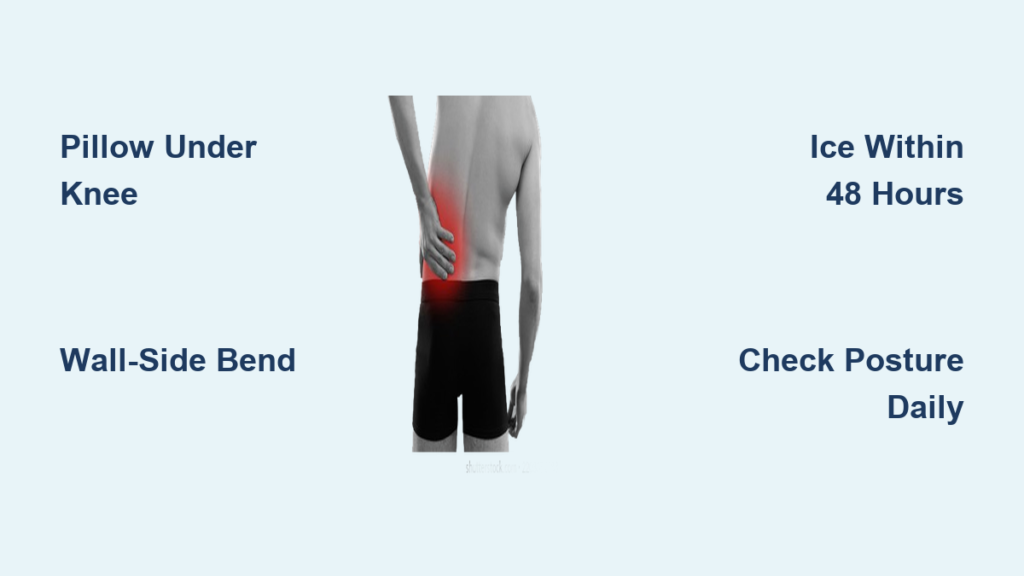
That sharp stab when you bend to tie your shoes. The constant ache that follows you through work meetings. Left-side back pain isn’t just inconvenient—it disrupts your ability to lift your child, twist to check blind spots while driving, or even sleep soundly. Unlike general back discomfort, left-sided pain often signals specific muscular imbalances or organ-related issues requiring precise solutions. This guide delivers actionable strategies based on clinical evidence to pinpoint your pain source and implement relief within hours—not weeks.
Pinpoint Your Left-Side Pain Origin in 5 Minutes

Muscle Strain vs. Kidney Pain: Critical Differences
Musculoskeletal pain intensifies when you perform specific movements. Notice if it worsens when reaching for the left car door handle, twisting to grab groceries, or lifting objects with your left hand. This type feels superficial—like it’s coming from your actual back muscles. You’ll often find tender spots when pressing along your left spine.
Kidney-related pain presents as a deep, constant ache beneath your left ribcage that doesn’t change with position. Watch for accompanying signs: fever over 101°F, cloudy urine, or nausea. Unlike muscle pain, this discomfort often radiates toward your left groin and persists whether sitting or standing.
Left Back Pain Location Decoder
Upper left pain (below shoulder blade):
– Likely causes: Poor posture at desks, left rhomboid strain from carrying heavy bags on your left shoulder, or splenic inflammation
– Visual cue: Pain intensifies when looking left while driving
Mid-back left pain (at waist level):
– Likely causes: Left-sided disc herniation at T10-T12, costovertebral joint dysfunction from coughing, or pancreatic referral
– Visual cue: Sharp pain when taking deep breaths
Lower left pain (above hip bone):
– Likely causes: Quadratus lumborum strain from uneven lifting, left sacroiliac joint dysfunction, or kidney stone movement
– Visual cue: Pain spikes when standing up from a left-side seated position
Immediate Left-Back Pain Triggers You Can Fix Now
Daily Habits Creating Left-Side Strain
The phone cradle habit—holding your phone between your left ear and shoulder while working—creates chronic levator scapulae tension. Within 20 minutes, this compresses nerves triggering upper left back pain that worsens hourly.
Asymmetrical parenting: Carrying toddlers predominantly on your left hip forces your right obliques to overcompensate. This develops left quadratus lumborum weakness, causing lower left pain when bending forward.
Left-side sleeping position: Resting on your right side all night stretches left lumbar muscles into micro-tears. You’ll wake with stiffness that takes 30+ minutes to ease.
Hidden Postural Red Flags
Uneven shoe wear: Notice if your left shoe’s inner heel wears faster? This indicates left pelvic drop, straining left lumbar muscles with every step.
Computer mouse placement: Keeping your mouse too far left forces sustained left shoulder elevation. Within 2 hours, this triggers rhomboid strain beneath your left shoulder blade.
Emergency Self-Checks Before Bedtime
3-Minute Pain Source Test
Cough test: Place your left hand firmly on the painful spot. Cough sharply:
– Sharp, localized increase = Muscular strain (safe for home treatment)
– Deep, spreading discomfort = Requires medical evaluation for organ issues
Heel drop test: Stand on toes, drop heels suddenly:
– Immediate left pain surge = Disc involvement (avoid forward bending)
– No change = Likely muscular (safe for gentle stretching)
Single-leg balance: Stand on left foot for 15 seconds:
– Excessive wobbling = Hip/core weakness contributing to pain
– Stable but painful = Localized muscle issue
Must-Visit ER Symptoms Tonight
Seek immediate care if you experience:
– Numbness in left inner thigh or groin (cauda equina warning)
– Pain after falling on your back (fracture risk)
– Unexplained weight loss with left flank pain (malignancy indicator)
– Fever + left back pain that worsens lying down (kidney infection sign)
Stop Left-Side Pain Within 20 Minutes
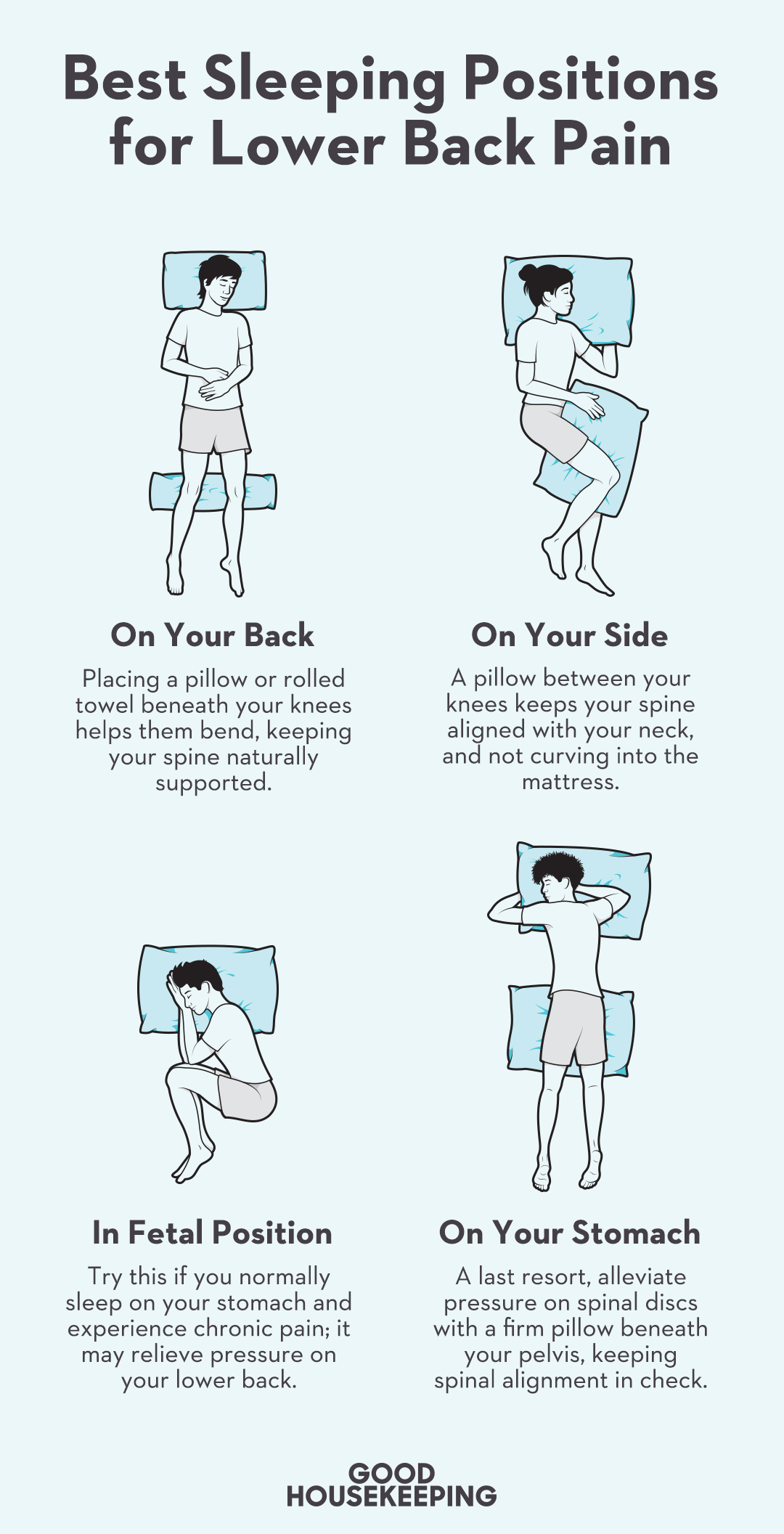
Position Fixes for Instant Relief
For lower left pain: Lie flat with knees bent. Place a pillow only under your left knee—this decompresses left lumbar nerves in 90 seconds. Hold 10 minutes while breathing deeply into your left ribs.
For upper left pain: Stand in a doorway. Place left forearm vertically against the frame, elbow at shoulder height. Step forward gently until you feel stretch across your left chest and upper back. Hold 30 seconds—repeat 3x.
For mid-back left pain: Sit in a chair with feet flat. Clasp hands behind your head. Gently rotate torso left while keeping hips square. Hold the first point of tension for 20 seconds—do not force movement.
Ice/Heat Protocol for Faster Healing
First 48 hours:
1. Ice pack on exact pain spot (wrap in thin towel) for 15 minutes
2. Wait 2 hours before reapplying
Days 3-5:
– Alternate 3 minutes moist heat → 1 minute ice (3 cycles)
After day 5:
– Apply heating pad 20 minutes before activity to loosen muscles
Left-Side Targeted Exercises (Do Tonight)
Acute Pain Relief Sequence (5 Minutes)
Left Quad Release:
1. Lie on back, knees bent
2. Gently pull only left knee toward chest using both hands
3. Hold 20 seconds, feeling stretch along left waist
4. Repeat 5x before bed
Wall-Side Bend:
1. Stand left side against wall, feet 6″ from wall
2. Slide left hand down left thigh toward knee
3. Hold 15 seconds feeling stretch through left waist
4. Repeat 8x daily
Cat-Camel Left Bias:
1. On hands/knees, arch back upward
2. Focus on creating extra space between left shoulder blade and hip
3. Hold 5 seconds, repeat 10x slowly
Fix Your Workspace Before Tomorrow’s Pain
Left-Specific Desk Adjustments
- Monitor position: Place primary screen dead-center—never to your left—to prevent chronic left neck rotation
- Keyboard placement: Slide keyboard left until left elbow forms 90° angle (prevents left shoulder hiking)
- Chair modification: Tuck lumbar roll slightly left of center to support natural spine curves
Car Fixes for Commuters
- Steering grip: Use 9-and-3 position (not 10-and-2) to reduce left mid-back tension
- Seat height: Adjust so left thigh parallels floor when pedal pressed halfway
- Mirror alignment: Set mirrors while sitting perfectly upright—eliminates left twisting during lane changes
Prevent Tomorrow’s Left-Side Flare-Up
Morning 3-Minute Routine
- Bed spinal floss: Lying down, pull left knee to chest 10x (lubricates joints)
- Shower stretch: Under warm water, bend left side 10x (heat boosts tissue elasticity)
- Toothbrush balance: Stand on left foot while brushing (builds left hip stability)
Weekly Prevention Schedule
- Mondays: Reset workstation—recheck monitor/keyboard positions
- Wednesdays: Test left single-leg balance—if wobbly, add 5 wall-side bends
- Fridays: Perform left knee-to-chest stretch (early tightness detector)
When to Call a Professional Tomorrow
Seek physical therapy if:
– Pain persists beyond 72 hours of home treatment
– Left leg weakness develops during walking
– Pain disrupts sleep for 2+ consecutive nights
Critical timing: Early intervention (within 1 week of onset) reduces chronic pain risk by 68% according to clinical studies. A PT can identify subtle left-side movement faults you can’t self-diagnose—like left hip internal rotation weakness causing lumbar compensation.
Long-Term Left-Side Pain Prevention
Track your triggers: Note activities causing left pain in a notes app. Common patterns emerge within 2 weeks (e.g., left-side pain always follows laundry day).
Left-side strength test: Weekly, compare single-leg bridges on left vs right. If left side fatigues 3+ reps faster, add 2 sets of left single-leg bridges daily.
Posture reset alarms: Set phone reminders every 2 hours to check:
– Is weight evenly distributed on both sit bones?
– Is left shoulder relaxed away from ear?
– Are feet flat on floor (not tucked under chair)?
Your left-side back pain isn’t random—it’s your body signaling specific imbalances from daily habits. Start tonight with the pillow-under-knee position and wall-side bend. In 48 hours, implement the workstation fixes. Small consistent adjustments retrain your musculoskeletal system, transforming that persistent ache into reliable comfort. The most effective solution isn’t a magic pill—it’s recognizing how your unique movement patterns created the problem, then systematically reversing them. You’ll know you’ve won when reaching for the left car door handle feels effortless again.