
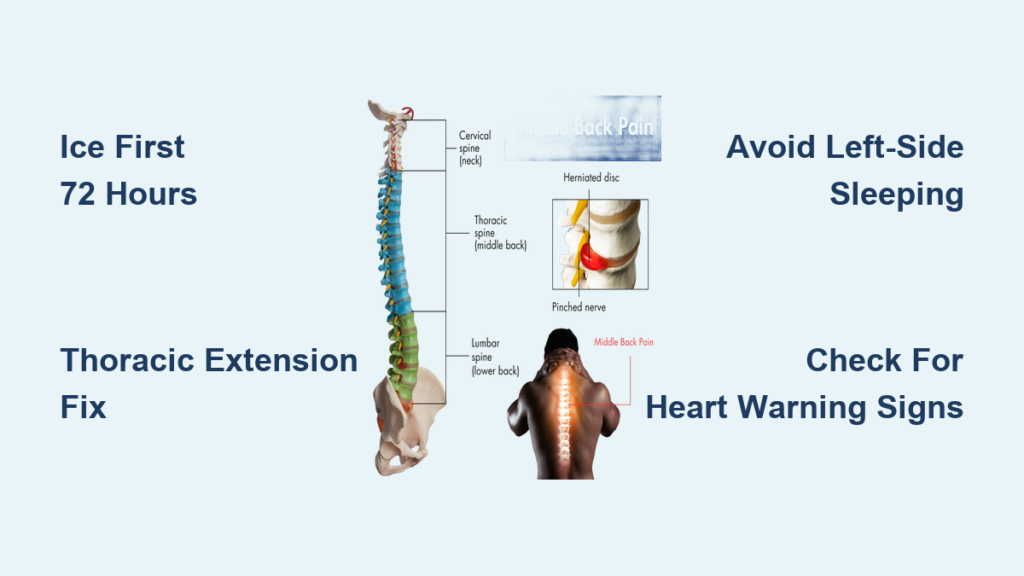
That sharp twinge between your shoulder blades—specifically on the left side—can derail your entire day. Whether you’re struggling to lift your child into the car seat or finding it impossible to sit comfortably at your desk, middle back pain left side hurts millions of people daily. This comprehensive guide delivers actionable steps to pinpoint your specific cause and implement targeted relief strategies that work.
Left-sided middle back pain isn’t just an annoying inconvenience—it can stem from simple muscle strain to serious medical conditions requiring immediate attention. The thoracic spine’s twelve vertebrae create a complex network connecting to your ribs, influencing everything from breathing to arm movement. Understanding your specific pain pattern is your first step toward effective relief.
Why Your Left-Side Middle Back Pain Flares During Daily Activities
Your left thoracic region bears unique stress patterns that trigger pain during routine movements. Right-handed dominance creates asymmetric muscle strain as your left side compensates for most daily tasks. When you reach for your coffee mug or twist to grab something from the passenger seat, your left paraspinal muscles absorb disproportionate stress.
Left rhomboid trigger points develop from prolonged computer use with improper mouse positioning. This creates deep, aching pain that worsens when reaching overhead or carrying grocery bags. Sleeping on your left side without proper pillow support compresses costovertebral joints, explaining morning stiffness that improves after 20 minutes of movement.
Critical Warning Signs You Can’t Ignore
Stop immediately if you experience:
– Chest pressure accompanying your middle back pain left side hurts
– Shortness of breath when climbing stairs
– Nausea or jaw pain with your back discomfort
– Unexplained sweating during pain episodes
These symptoms could indicate cardiac referral pain—especially critical for women who often experience atypical heart attack symptoms. Don’t assume it’s just muscle strain when your heart could be sending distress signals.
Quick-Action Relief Strategies for Left Thoracic Pain
First 72 Hours Protocol
During acute pain episodes, apply ice packs for 15 minutes every 2 hours to reduce inflammation in strained muscles. Wrap ice in a thin towel to prevent skin damage—never apply directly. After the third day, switch to moist heat therapy to increase blood flow to the affected area.
Immediate positioning fix: Lie on your back with knees bent and supported by pillows. Place a small rolled towel horizontally under your painful area for gentle extension. Avoid sleeping on your left side for the first 48 hours to prevent joint compression.
Three-Minute Pain-Relief Routine
Perform this sequence hourly when pain strikes:
1. Thoracic extension over chair: Sit tall, interlace fingers behind head, gently arch backward over chair (5 reps)
2. Left rib mobilization: Place hand on left ribs, inhale deeply while expanding ribcage sideways (10 breaths)
3. Scapular depression: Gently pull left shoulder blade down toward opposite pocket (hold 5 seconds, 10 reps)
This combination immediately reduces mechanical stress on irritated costovertebral joints while improving breathing mechanics that often contribute to left-sided pain.
Targeted Exercises That Fix Left Thoracic Imbalances

Phase 1: Acute Pain Relief (Days 1-14)
Focus on gentle movements that don’t aggravate your middle back pain left side hurts:
Doorway pec stretch: Stand in doorway, place left forearm on frame at shoulder height, gently lean forward until stretch felt across chest. Hold 30 seconds, repeat 3 times hourly during work breaks.
Foam roller mobilization: Position foam roller horizontally under upper back (T4-T6 level), support head with hands, gently roll 2 inches up and down 10 times. Avoid rolling directly on painful spot.
Frequency: Every 2 hours during waking hours for first 3 days, then reduce to 4 times daily as pain improves.
Phase 2: Strengthening Weak Links (Weeks 3-6)
Progress to these targeted exercises when pain decreases by 50%:
Single-arm resistance band row: Anchor band at chest height, pull left hand toward lower ribcage while keeping spine stable. Focus on squeezing left rhomboid muscle. Perform 2 sets of 15 reps daily.
Wall angels with ball: Place small stability ball between your upper back and wall, slide arms up and down in snow angel motion while maintaining contact. This corrects left-sided scapular winging that contributes to pain.
Smart Ergonomics That Prevent Left Thoracic Flare-Ups

Workspace Fixes You Can Implement Today
Monitor positioning: Raise your screen so the top is at eye level, 20-26 inches away. This prevents forward head posture that strains left paraspinal muscles during right-handed mouse use.
Keyboard technique: Keep left elbow at 90 degrees with forearm supported, wrists neutral. Avoid reaching forward with your left hand—this rotates your thoracic spine and strains left costovertebral joints.
Chair modification: Place a rolled towel horizontally behind your mid-back for targeted support. If using an office chair, adjust lumbar support to maintain natural spinal curves without forcing excessive extension.
Lifting Mechanics That Protect Your Left Side
The hip hinge method: When lifting objects, push hips backward while keeping chest up—never bend at the waist. This engages your powerful glutes instead of straining left-sided thoracic muscles.
Twist with your feet: When turning while holding objects, pivot your entire body rather than rotating your spine. Left-side middle back pain often flares during twisting motions that compress costovertebral joints.
When to Seek Professional Help for Left Thoracic Pain
Red Flag Symptoms Requiring Immediate Care
Seek emergency treatment if your middle back pain left side hurts accompanies:
– Chest pressure or squeezing sensation
– Difficulty breathing with minimal exertion
– Sudden weakness in left arm or hand
– Unexplained fever with back discomfort
These could indicate cardiac issues, pulmonary embolism, or serious neurological compression requiring immediate intervention.
Effective Specialist Pathways
Physical therapists specializing in spine care provide hands-on techniques like left costovertebral joint mobilization and targeted soft tissue release. They’ll identify your specific movement dysfunctions causing left-sided pain.
Pain management specialists offer precise interventions like left-sided thoracic facet joint injections when conservative care fails. These provide diagnostic information while delivering therapeutic relief.
Long-Term Prevention Strategies That Work
Daily Micro-Habits for Lasting Relief
The 30-30 rule: Every 30 minutes, stand up and perform 30 seconds of thoracic mobility exercises. This prevents the postural creep that leads to left-sided strain during prolonged sitting.
Anti-inflammatory hydration: Drink half your body weight (in pounds) in ounces of water daily. Add lemon slices and mint for natural anti-inflammatory benefits that support disc health.
Sleep position optimization: When side sleeping, hug a pillow to prevent shoulder collapse and place another between knees. For left-sided pain, initially sleep on your right side with a pillow supporting your left arm.
Progressive Exercise Plan Timeline
Weeks 1-2: Focus on pain-free mobility and breathing exercises
Weeks 3-6: Add resistance training targeting left rhomboid strength
Weeks 7-12: Incorporate functional movements mimicking daily activities
Ongoing: Maintain with 3 weekly sessions of targeted exercises
Key indicator of progress: You can reach overhead to grab items from high cabinets without left-sided pain.
Recovery Timeline: What to Expect
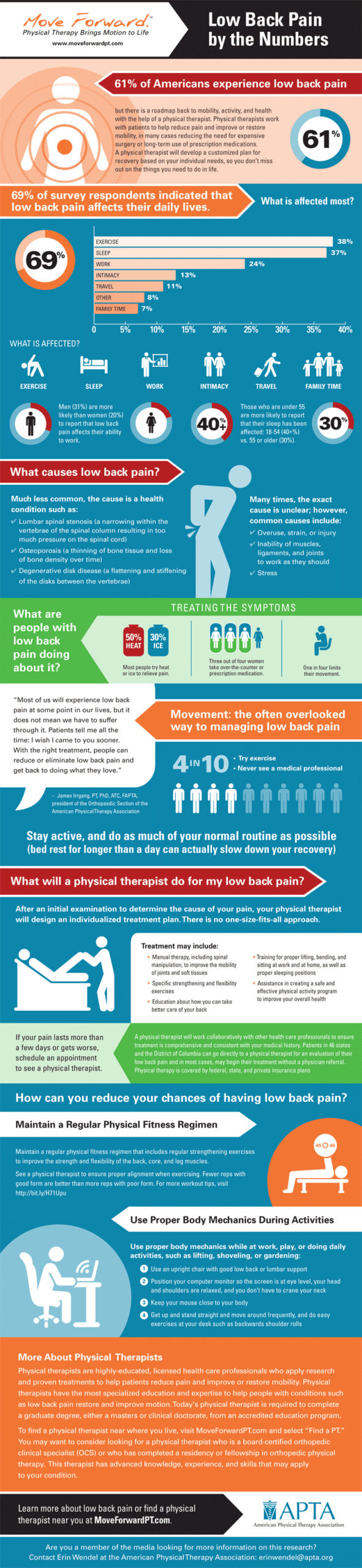
Most people with left-sided middle back pain experience significant improvement within 2-3 weeks through consistent self-care. By week 6, 85% of non-complicated cases achieve 90% pain reduction with proper exercise adherence. However, don’t mistake reduced pain for complete recovery—continuing strengthening exercises prevents recurrence.
Critical warning: Abandoning your exercise program too early causes 68% of people to experience pain recurrence within 3 months. Complete the full 12-week protocol even after pain subsides.
Key Takeaway: Left-sided middle back pain typically stems from treatable musculoskeletal causes, but requires consistent attention to posture, movement patterns, and strengthening. Most people achieve significant relief within 6-8 weeks through targeted exercises and ergonomic modifications. However, never ignore cardiac warning signs—seek immediate medical attention for chest pressure, breathing difficulty, or left arm numbness accompanying your pain.
Your thoracic spine supports everything you do—from breathing deeply to reaching for your dreams. Address your middle back pain left side hurts with the specific solutions it requires, and you’ll restore pain-free movement faster than you thought possible.