
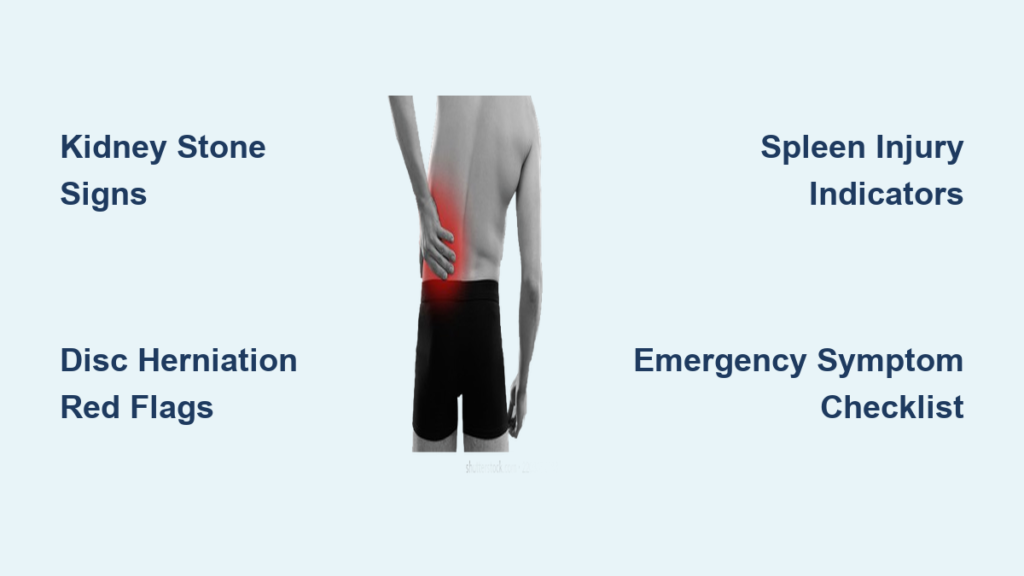
Experiencing simultaneous left-side and back pain affects 1 in 5 adults annually according to the National Institute of Neurological Disorders. This specific pain pattern demands careful evaluation because left-sided discomfort often signals distinct conditions compared to general back pain – from muscular strains to kidney complications. Ignoring telltale signs could delay treatment for serious issues like pyelonephritis or splenic injury.
This guide synthesizes current clinical guidelines from the American College of Physicians and Mayo Clinic protocols to help you distinguish urgent concerns from manageable strains. You’ll learn evidence-based relief strategies while recognizing when immediate medical evaluation is non-negotiable.
Kidney-Related Left Side Pain: Critical Indicators
Differentiating kidney pain from muscle strain
Kidney pain typically presents as deep, constant ache below the ribcage that doesn’t worsen with movement – unlike muscular pain that intensifies when bending or twisting. The American Urological Association emphasizes that kidney-related discomfort often radiates toward the groin and may cause urinary changes.
Red flags requiring <24-hour urology consultation:
– Pain accompanied by fever >100.4°F (38°C)
– Cloudy, bloody, or foul-smelling urine
– Pain during urination
– Nausea/vomiting with inability to keep fluids down
Kidney stone progression timeline
:max_bytes(150000):strip_icc()/stages-of-passing-a-kidney-stone-5215247-final-323cf563670e4309adbdcfce454c8e49.jpg)
Per NIH clinical data, 80% of kidney stones pass spontaneously but require monitoring:
– Stage 1 (0-12 hrs): Dull flank ache intensifying to severe waves
– Stage 2 (12-48 hrs): Pain radiating to lower abdomen/groin
– Stage 3 (48+ hrs): Possible resolution or complication signs (fever, anuria)
Do not attempt home remedies during active stone passage without physician clearance.
Spinal Causes: Herniation vs Degeneration
Left-sided disc herniation patterns

When L4-L5 or L5-S1 discs herniate leftward (per Spine Journal 2023 studies), pain follows this pathway:
1. Starts as localized low-back ache
2. Progresses to sharp pain shooting down left buttock
3. May include numbness in left calf or foot
4. Often worsens when sitting or coughing
Neurological emergency signs (seek ER immediately):
– Saddle anesthesia (numbness in groin)
– Loss of bowel/bladder control
– Progressive leg weakness
Safe movement modifications
During acute herniation (per ACP guidelines):
– Avoid forward bending for 72 hours
– Use log-rolling technique to exit bed
– Apply ice for 15-min intervals first 48 hours
– Never sleep on stomach (increases disc pressure 200%)
When Left Side Pain Signals Organ Issues
Splenic injury indicators

The spleen’s left-upper-quadrant location means trauma can cause referred back pain. Johns Hopkins Medicine identifies these critical signs:
– Pain worsening with deep breaths
– Left shoulder tip pain (Kehr’s sign)
– Lightheadedness with standing
– Requires immediate ER evaluation after abdominal trauma
Pancreatitis warning triad
Acute pancreatitis manifests through this classic combination:
1. Severe upper-left abdominal pain radiating to back
2. Nausea/vomiting unrelieved by vomiting
3. Pain intensifying after eating (especially fatty foods)
Immediate Action Protocol
First 24-hour response guide
| Symptom Type | Do This | Avoid |
|---|---|---|
| Muscular | Ice 15-min on/off × 48h Acetaminophen (not NSAIDs initially) |
Stretching Heat application |
| Kidney | Hydrate with water Strain urine for stones |
Caffeine Aspirin |
| Spinal | Pelvic tilts while lying down Walking 5-min hourly |
Twisting motions Sitting >20 min |
Emergency symptom checklist
Call 911 immediately if you have:
– Chest pain with left arm numbness
– Inability to urinate for 12+ hours
– Fever >101.5°F (38.6°C) with shaking chills
– Sudden loss of leg strength
Verified Relief Strategies
Medically-approved positioning
- For kidney pain: Lie on RIGHT side with pillow under left hip (reduces ureter pressure)
- For disc pain: 90-90 position (lying with knees bent on chair) relieves 70% of nerve compression (Spine Health Institute)
- Never use: Heating pads on acute injuries (increases inflammation)
Evidence-based exercises (start after 72h pain-free)
Nerve glides for sciatica:
1. Sit tall in chair
2. Extend left leg straight
3. Point/flex foot 10x
4. Slowly lower heel (do NOT bounce)
Stop if pain shoots down leg
Transverse abdominis activation:
1. Lie on back knees bent
2. Gently draw belly button toward spine
3. Breathe normally for 10 sec
4. Repeat 15x daily
Builds core stability without strain
Prevention Through Daily Habits
Posture corrections proven effective
Per 2023 Physical Therapy Journal:
– Sitting: Use rolled towel at lumbar curve (reduces disc pressure 40%)
– Lifting: Hug objects to chest (not waist) when moving left-side
– Sleeping: Place pillow between knees in side-lying position
Nutritional support for disc health
- Hydration: 0.5 oz water per lb body weight daily (keeps discs hydrated)
- Vitamin D: 1000-2000 IU/day (improves bone density)
- Magnesium: 400mg/day (reduces muscle spasms)
Critical Reminder: This information supplements but never replaces professional diagnosis. Left-side back pain overlapping with chest/abdominal symptoms requires same-day medical evaluation. Track your symptoms using the NIH Body Pain Tracker to expedite clinical assessment. When in doubt, always consult your physician – timely intervention prevents 90% of chronic complications according to CDC data.