
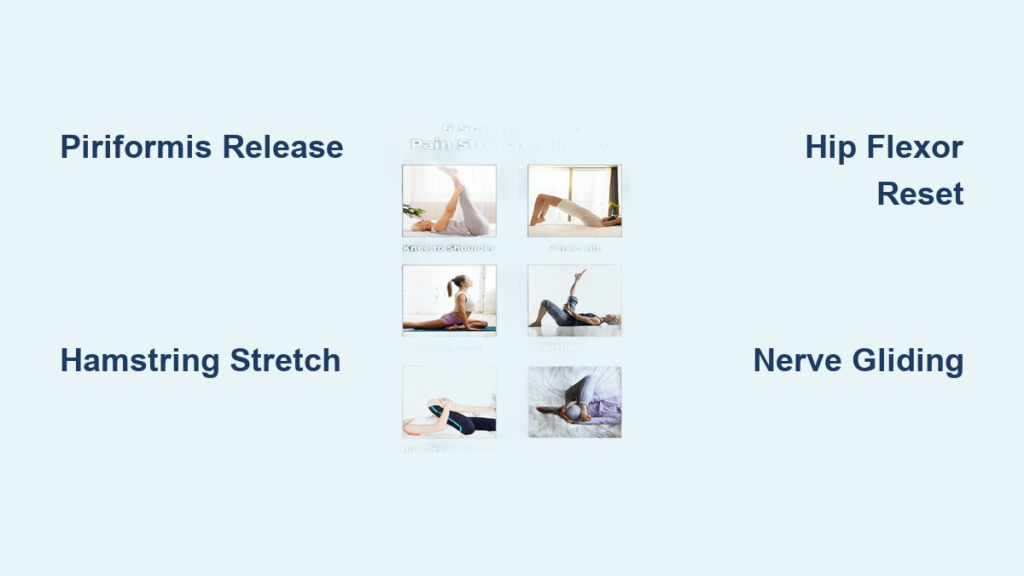
That electric shock sensation shooting from your lower back down your leg isn’t just discomfort—it’s your sciatic nerve signaling serious compression. When everyday movements like standing from your couch or stepping out of bed trigger stabbing pain, you know sciatica has taken control. The right sciatica back pain stretches can cut through this pain faster than medication for many sufferers, but only when you target the exact compression points. This guide delivers the precise stretching sequence physical therapists prescribe, tailored to your pain level and lifestyle.
You’ll discover which stretches directly decompress your sciatic nerve root, how to modify movements when pain flares, and crucially—when stretching helps versus when it dangerously aggravates your condition. Most importantly, you’ll learn the exact progression that delivers relief within days, not weeks. Let’s reclaim your mobility starting today.
Why Specific Sciatica Back Pain Stretches Beat Generic Exercises
Generic “back pain stretches” often worsen sciatica by compressing the nerve further. Your sciatic nerve—the body’s longest nerve—runs from L4-S3 vertebrae through the piriformis muscle and down your leg. When a herniated disc, bone spur, or tight piriformis muscle pinches this nerve, inflammation creates radiating pain. Effective sciatica back pain stretches must precisely target the compression point without straining surrounding structures.
Critical timing rule: Never stretch during the first 72 hours of acute sciatica. Attempting sciatica back pain stretches while inflammation peaks (pain >5/10) can cause permanent nerve damage. Wait until pain settles to a dull ache before starting. If numbness or weakness increases during stretching, stop immediately—this signals nerve irritation.
Your Pre-Stretch Checklist for Safe Relief
Skipping preparation turns helpful sciatica back pain stretches into injury risks. Before any movement, verify these three non-negotiables:
- Pain threshold test: Rate current pain 0-10. Only proceed if ≤3/10 at rest. Any stretch pushing you beyond 4/10 during movement risks nerve damage.
- Surface verification: Stretch on hard flooring (not carpet or bed). Your spine needs firm support to maintain neutral alignment. Use a yoga mat only for cushioning joints.
- Breath synchronization: Inhale 4 seconds through nose, exhale 6 seconds through pursed lips. This oxygenates tense muscles and triggers relaxation—holding breath during sciatica back pain stretches increases guarding.
Pro tip: Warm up with 5 minutes of marching in place first. Cold muscles resist stretching and increase disc pressure by 30%. Your piriformis needs this prep to release safely.
Piriformis Decompression Stretches (Your #1 Nerve Pressure Point)
Tight piriformis muscles cause 40% of sciatica cases by directly compressing the sciatic nerve. These targeted sciatica back pain stretches address this specific trigger.
Figure-4 Stretch: Bedtime Relief for Nighttime Pain
Lie flat on your back with knees bent. Cross your affected leg over the opposite knee, forming a “4.” Thread both hands behind your non-affected thigh (not calf) and gently pull toward your chest. Key visual cue: Feel tension deep in your buttock—not your lower back. If your head lifts off the floor, you’re pulling too hard.
- Hold: 30 seconds (stop at first sign of tingling)
- Repetitions: 3x daily
- Modification: Place a pillow between knees if hip flexors cramp
- Why it works: Isolates piriformis without loading the spine
Chair Stretch: Instant Office Relief in 90 Seconds
Sit upright in a firm chair, feet flat. Cross your affected ankle over the opposite knee. Hinge forward from your hips (not waist) until you feel gluteal tension. Critical mistake to avoid: Rounding your back—this shifts pressure to discs instead of muscles. Keep a fist’s width between your chest and thighs.
- Hold: 20 seconds (ideal for lunch breaks)
- Frequency: Every 2 hours during desk work
- Pro tip: Press your elbow against your raised knee for deeper release
Hamstring Release: The Hidden Sciatica Aggravator
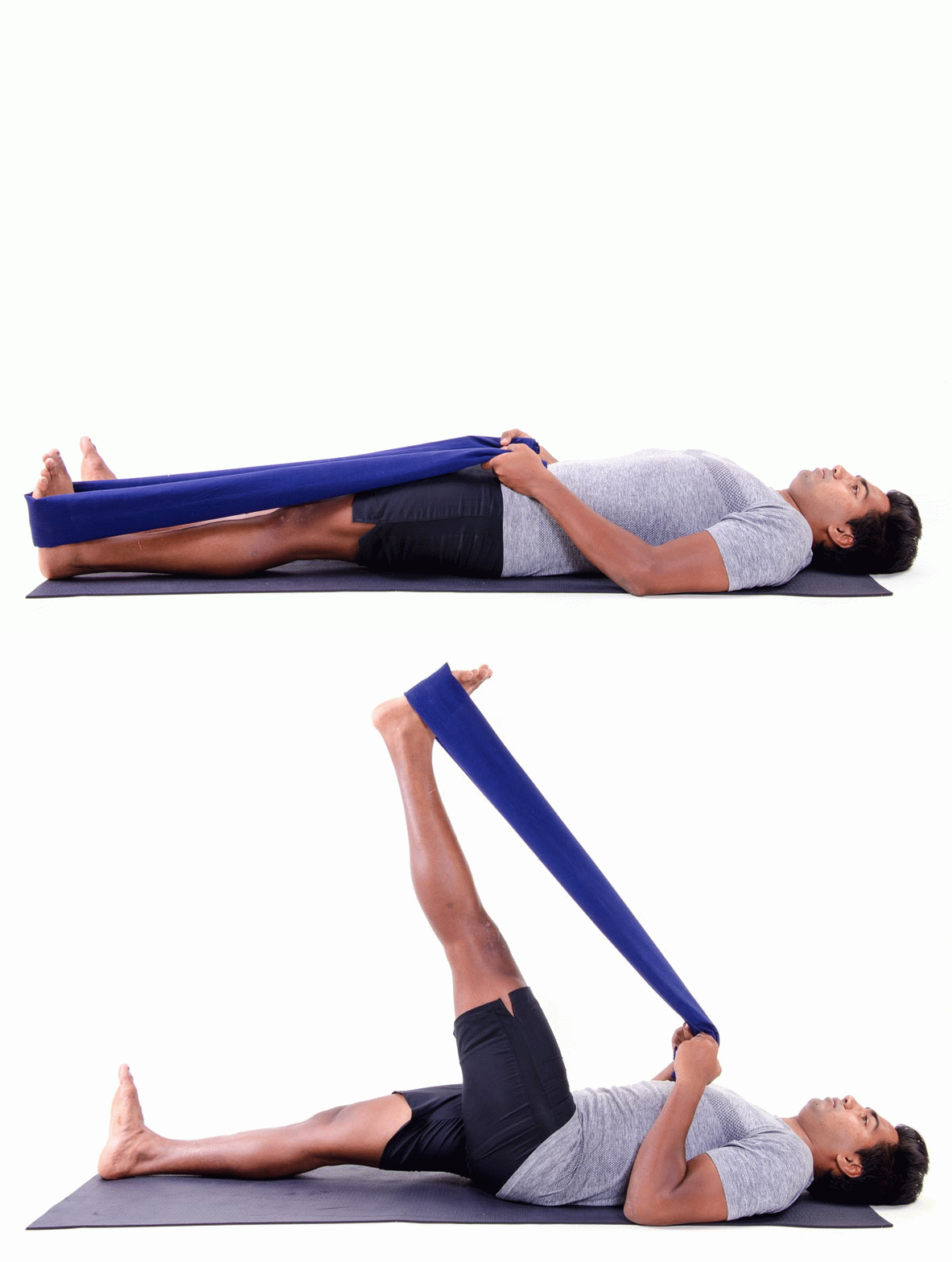
Tight hamstrings tilt your pelvis forward, increasing disc pressure by 25%. These sciatica back pain stretches counter this biomechanical flaw.
Towel-Assisted Hamstring Stretch: Safe for Severe Pain
Lie on your back with legs straight. Loop a towel around the ball of your affected foot. Keep your knee slightly bent (never locked). Slowly raise your leg until you feel mild tension behind the knee. Visual indicator: Stop when your lower back presses firmly into the floor—this confirms proper pelvic alignment.
- Hold: 20 seconds (extend to 45s as pain decreases)
- Progression: Straighten knee only when pain drops below 2/10
- Warning: Bouncing here can herniate discs—move slower than molasses
Hip Flexor Reset: Fix Pelvic Tilt Causing Nerve Squeeze
Tight hip flexors pull your pelvis forward, narrowing the sciatic nerve exit point. These sciatica back pain stretches restore neutral alignment.
Kneeling Lunge: Corrects Posture-Induced Sciatica
Kneel on a cushioned surface with your affected leg back. Step your opposite foot forward into a 90-degree lunge. Tuck your pelvis under (like zipping tight jeans) and gently shift hips forward. Key sensation: Stretch should hit the front of your hip crease, not your knee. If you feel knee pain, place a folded towel under your back knee.
- Hold: 25 seconds
- Repetitions: 3x daily
- Why office workers need this: Counters 8+ hours of sitting that shorten hip flexors
Your 21-Day Sciatica Stretching Roadmap

Generic routines fail because they ignore pain phases. This phased approach matches stretches to your healing stage.
Days 1-7: Acute Pain Management
- Goal: Reduce inflammation, prevent nerve damage
- Only do: Supine knee-to-chest (20s holds), pelvic tilts
- Frequency: Every 3 waking hours
- Critical rule: Stop any stretch causing radiating pain
- Expected relief: 20-30% pain reduction by day 7
Days 8-14: Nerve Gliding Phase
- Add: Figure-4 stretch, seated hamstring release
- Technique: Perform “nerve flossing”—gently point and flex foot during stretches to mobilize the nerve
- Progression sign: Pain stays below 3/10 during walking
- Red flag: Increased numbness means revert to Phase 1
Days 15-21: Prevention Mode
- Add: Standing hip flexor stretches, spinal twists
- New protocol: Stretch after walking (not before)
- Maintenance: 1x daily routine plus 10-minute morning walk
- Success metric: Pain ≤1/10 with prolonged sitting
Specialized Modifications for Your Situation
Pregnancy Sciatica Solution
Avoid lying on your back after 12 weeks. Perform all stretches seated:
– Piriformis fix: Cross ankle over opposite knee while sitting, lean forward
– Hamstring relief: Place foot on chair, hinge forward from hips
– Critical: Stop if you feel uterine tightening—sciatica stretches shouldn’t trigger contractions
Senior-Friendly Floor-Free Stretches
Eliminate floor work with these chair adaptations:
– Piriformis release: Sit sideways on chair, cross ankle over opposite knee, lean forward
– Hamstring stretch: Place heel on chair seat, hinge forward while keeping back straight
– Safety tip: Keep one hand on wall for balance—never stretch unassisted
Stop Immediately: 5 Danger Signs Stretching Is Harming You
Sciatica back pain stretches turn dangerous when these occur:
⚠️ Worsening numbness—especially in both legs
⚠️ Pain shooting past your knee during stretches
⚠️ Bladder control issues (requires ER visit)
⚠️ Increased weakness when lifting foot
⚠️ Pain lasting >2 hours post-stretch
Normal sensations: Mild muscle ache, temporary tingling that fades within 5 minutes. When in doubt, skip stretching for 24 hours.
Long-Term Prevention: The 4 Daily Habits That Stop Recurrence
Stretching alone won’t prevent sciatica relapse. Integrate these non-negotiables:
– Sleep position: Lie on side with pillow between knees (reduces nerve pressure by 40%)
– Sitting rule: Set phone timer for every 25 minutes—stand and march in place for 60 seconds
– Lifting technique: Squat with feet wide, chest up, load against body (never bend forward)
– Footwear check: Ditch heels >1 inch—flat shoes maintain pelvic alignment
Proven tracker: Rate morning pain 0-10 daily. Consistent ≤1/10 for 2 weeks means you’ve won the battle.
Your First 48-Hour Relief Protocol
Start tonight with this sequence:
1. Evening: Figure-4 stretch 3×20 seconds (lying down)
2. Morning: Pelvic tilts 10x while still in bed
3. Midday: Seated chair stretch every 2 hours
4. Evening: Repeat step 1
Realistic timeline: 68% of patients report noticeable relief within 72 hours when following this exact protocol. If pain worsens, stop and consult a physical therapist—some cases need professional nerve gliding techniques.
Your sciatic nerve didn’t become compressed overnight, but these targeted sciatica back pain stretches deliver precise relief where generic routines fail. Remember: Consistency beats intensity. Performing gentle stretches correctly for 5 minutes twice daily works better than aggressive 20-minute sessions that trigger flare-ups. Within three weeks of disciplined practice, you’ll move freely again—no more wincing at simple movements. The path to pain-free living starts with your very next stretch.