
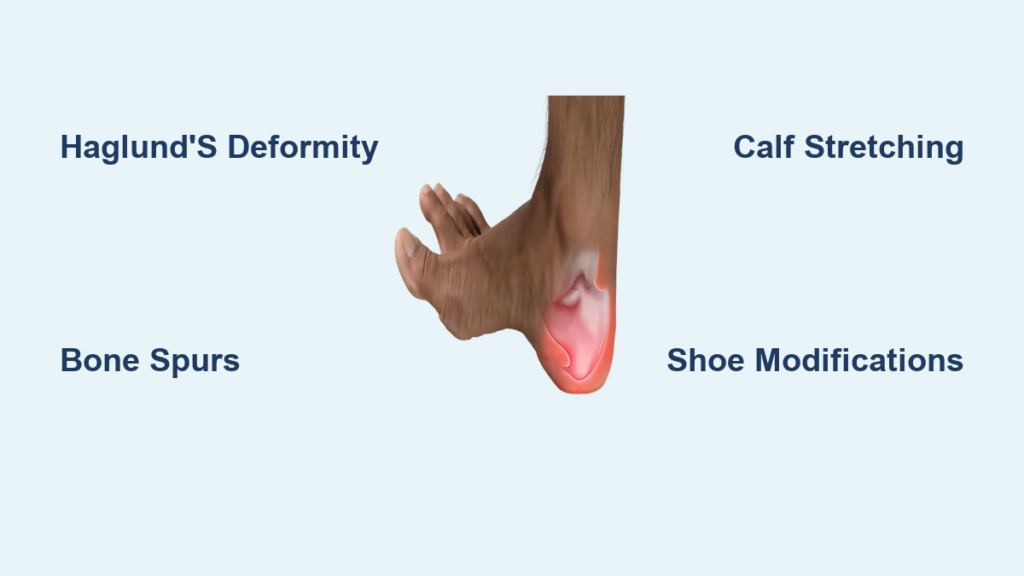
That stabbing pain when you slide your foot into shoes isn’t normal—it’s your heel bone screaming for help. If every step sends sharp jolts through the back of your foot or you wince when socks touch your heel, you’re experiencing classic back side heel pain. This isn’t just discomfort—it’s a warning sign that bone deformities, tendon damage, or inflammation are attacking your foot’s foundation. Left untreated, this condition can sideline you from daily activities and turn simple errands into agony. You’ll discover exactly why your heel bone rebels against pressure, how to pinpoint whether Haglund’s deformity or bone spurs are to blame, and proven strategies—from shoe swaps to surgical fixes—that restore pain-free movement.
Why Your Heel Bone Screams When Walking
Back side heel pain isn’t random—it’s your body reacting to specific mechanical assaults. When bone spurs grow inside your Achilles tendon or a bony protrusion grinds against your shoe, every step becomes torture. This pain strikes hardest during activities that strain your heel bone: climbing stairs, running, or even walking on uneven pavement. The culprit is often chronic overuse where repetitive stress forces your heel bone to remodel itself abnormally. Unlike plantar fasciitis (which hits the bottom of your heel), posterior heel pain targets the precise spot where your Achilles tendon anchors to your heel bone—making rest alone ineffective.
Bone Spurs Eating Into Your Achilles Tendon
You’ll feel this as deep, drilling pain when pushing off with your toes. A bony growth forms inside your Achilles tendon where it attaches to your heel bone. This exostosis develops from years of tendon pulling, creating a sharp internal spur that worsens with activity. Unlike surface-level heel pain, this feels like stepping on broken glass with every stride. Runners and athletes often miss this diagnosis because swelling is minimal—yet the bone spur progressively damages tendon fibers.
Haglund’s Deformity: The Shoe-Ruining Bump
Spot this by pressing the back corner of your heel—you’ll find a hard, painful lump that throbs when squeezed. Haglund’s deformity creates a prominent bony bump where your heel bone angles sharply upward. This isn’t just cosmetic: when stiff shoe backs (like pumps or dress shoes) grind against this bump, it inflames the protective bursa sac underneath. Women suffer most from this “pump bump” due to frequent high-heel use, but anyone with naturally high-angled heel bones is vulnerable. The friction turns ordinary shoes into torture devices.
Inflamed Bursa: The Hidden Pain Amplifier
You’ll notice heat and redness at your heel’s back edge—this fluid-filled sac rarely causes pain alone but magnifies existing bone problems. When Haglund’s deformity or bone spurs irritate the retrocalcaneal bursa, it swells like a water balloon under pressure. This transforms mild discomfort into fiery pain that makes even sock-wearing unbearable. The bursa’s inflammation often appears after bone issues develop, explaining why initial heel pain suddenly intensifies without new injury.
Haglund’s Deformity vs Bone Spurs: Spot the Difference

Don’t guess—your treatment depends on accurate diagnosis. While both cause back side heel pain, their origins demand different solutions. Your podiatrist uses these key identifiers to distinguish them during your exam.
Your Doctor’s 3-Step Physical Examination
First, they’ll palpate your heel bone while you stand—Haglund’s deformity reveals a distinct, tender bump at the shoe-line level. Bone spurs feel deeper, with pain radiating up your Achilles tendon when they squeeze your calf. Next, they’ll check your shoe wear pattern: Haglund’s shows excessive rubbing only at the back upper edge, while bone spur damage affects the entire heel cup. Finally, they’ll assess ankle mobility—tight calf muscles worsen both conditions but are the primary driver for bone spur formation.
Scans That Expose the Real Culprit
X-rays are non-negotiable for diagnosis. They’ll reveal Haglund’s deformity as a pronounced “hook” on your heel bone’s posterior edge, while bone spurs appear as jagged growths within the Achilles tendon attachment. If your pain seems disproportionate to the visible deformity, an ultrasound checks for bursa inflammation or tendon tears. Crucially, scan results don’t predict pain severity—some patients with massive bone spurs feel minimal discomfort, while minor deformities can cause debilitating agony.
Immediate Relief Tactics That Beat Painkillers
Skip the temporary fixes—target the root cause. While anti-inflammatories ease symptoms, these strategies attack the mechanical triggers of back side heel pain. Implement all three simultaneously for maximum impact.
Shoe Swaps That Stop the Grind

Immediately ditch any closed-heel shoes with rigid backs. Switch to open-back clogs or sandals that eliminate pressure on your heel bone. For work shoes, choose models with soft, padded heel counters (like certain athletic brands) or modify existing shoes by stretching the back seam. Never wear flat shoes—heel lifts (1/4-inch silicone inserts) reduce Achilles tension by 20%. This simple fix often provides relief within 48 hours.
Calf Stretching Protocol for Tendon Relief
Tight calves pull relentlessly on your heel bone—this 2x daily routine eases the strain:
1. Stand facing a wall, hands at shoulder height
2. Step affected foot back 18 inches, keeping heel flat
3. Bend front knee while pressing back heel into floor
4. Hold 30 seconds, 3 reps per session
5. Add towel stretches: Sit with leg straight, loop towel around ball of foot, gently pull toes toward you
Do this before shoes in the morning and after activity. You’ll feel reduced tendon pull within 2 weeks.
Ice Compression That Targets Deep Inflammation
Skip generic ice packs—use precision cooling. Fill a paper cup with water, freeze solid, then peel back the top inch of cup. Rub the ice cylinder directly over your painful heel bone for 5 minutes, 3x daily. The cup’s rim prevents hand numbness while the moving ice penetrates deeper than static packs. Stop immediately if skin turns bright red—this indicates excessive cold exposure.
When Surgery Becomes Your Only Option
Conservative care fails 30% of severe cases—don’t endure years of pain waiting it out. If you’ve tried 6 months of shoe modifications, stretching, and physical therapy with no improvement, surgery may be necessary. Key triggers include: inability to wear any closed shoes, pain disrupting sleep, or visible deformity worsening on follow-up scans.
Exostosis Removal: Cutting Out the Bone Spurs
This 45-minute procedure targets bone spurs inside your Achilles tendon. Surgeons detach the tendon, scrape away the abnormal bone growth, then reattach the tendon with anchor sutures drilled into your heel bone. You’ll wake with a knee-high cast. Recovery is lengthy—up to 12 months—but essential when spurs damage tendon structure. Critical note: Persistent pain may occur if your tendon quality is poor, making pre-surgery strength assessments vital.
Haglund’s Bump Excision: Smoothing the Painful Protrusion
For that shoe-rubbing bony bump, surgeons make a 6cm incision near your Achilles tendon. They remove the protruding bone section, temporarily detaching part of your tendon to access the deformity completely. After reattaching the tendon, you’ll wear an Aircast walker (removable for rest). Pro tip: Ask about the “minimal incision” technique—some surgeons now use 3-4cm cuts through specialized tools, reducing scarring and speeding recovery.
Cast Care Mistakes That Delay Healing 6 Weeks

Your recovery lives or dies by cast management. Most setbacks come from preventable errors during the crucial first 6 weeks when bones and tendons reattach.
Blood Clot Prevention You Can’t Skip
Non-weight bearing dramatically increases DVT risk. You must give yourself daily heparin injections in your abdomen using the tiny needles provided. Rotate injection sites (2 inches apart) to minimize bruising. Never skip doses—even if bruising occurs. Continue until fully weight-bearing, typically 6-8 weeks. Watch for calf pain or shortness of breath—these signal pulmonary embolism and require ER care immediately.
Waterproofing That Saves Your Sanity
Purchase an M100 Limbo cast cover before surgery—it’s your lifeline for bathing. Standard plastic bags fail within days. This $25 device creates an airtight seal above your knee. Critical step: Dry the cast area thoroughly after every shower with a hairdryer on cool setting. Trapped moisture breeds infection under casts, adding months to recovery.
Why Smoking Adds 20% More Recovery Time
This isn’t scare tactics—it’s surgical fact. Nicotine constricts blood vessels, starving healing tissues of oxygen. Smokers face:
– 20% higher risk of non-union (bones failing to heal)
– 3x greater infection rates
– Delayed tendon reattachment by 4-6 weeks
Action step: Quit smoking at least 4 weeks pre-surgery. Even vaping harms recovery—nicotine is the enemy, not just smoke. Your surgical team can provide cessation resources—use them. This single change slashes complication risks more than any other patient-controlled factor.
Back side heel pain won’t magically resolve—it demands targeted intervention. Start aggressive conservative care now with shoe modifications and calf stretching before deformities worsen. But if pain persists past 3 months despite consistent effort, consult a podiatric surgeon immediately. Modern procedures like minimally invasive Haglund’s excision offer 85% success rates when performed early, before tendon damage becomes irreversible. Remember: your heel bone carries your entire body weight daily—ignoring its distress signals risks permanent disability. Book that specialist appointment today; your pain-free future starts with this single step.