
You bend to pick up a dropped pen and a familiar electric jolt locks your lower back. For 570 million people worldwide with chronic low back pain, this isn’t an occasional annoyance—it’s a daily prison. When stretching, medication, and physical therapy fail to deliver lasting relief, many face a grim choice: live with the pain or risk invasive surgery. Shockwave therapy for back pain offers a third path. Clinical evidence shows this non-invasive treatment delivers measurable pain reduction within weeks by jumpstarting your body’s natural healing systems. This guide cuts through the hype to show exactly how shockwave therapy works, what results you can realistically expect, and whether it’s your solution for reclaiming pain-free movement.
How Shockwave Therapy Targets Back Pain at the Source
Micro-Jets Break Down Pain-Causing Adhesions
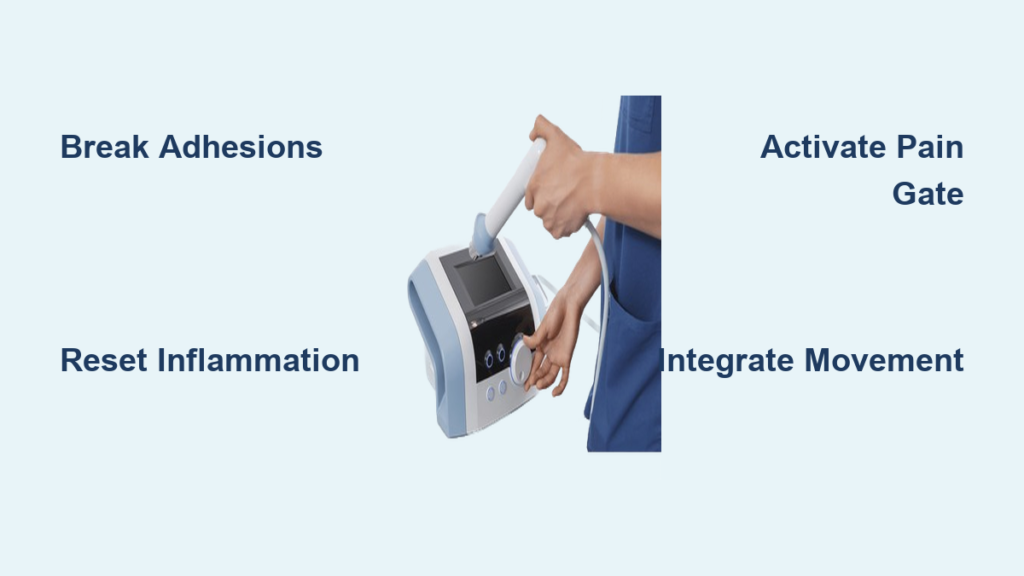
Shockwave therapy for back pain doesn’t mask symptoms—it attacks the root cause. High-energy acoustic pulses create controlled micro-trauma in damaged tissues through cavitation. As these micro-bubbles expand and collapse, they generate targeted micro-jets that dissolve scar tissue and adhesions binding your spinal muscles and fascia. This mechanical action reopens clogged capillaries, flooding stiffened areas with oxygen-rich blood while flushing out inflammatory waste. Unlike steroid injections that suppress inflammation temporarily, shockwave therapy physically remodels damaged structures causing your pain.
Neurological Pain Gate Activation
During your first shockwave therapy session, you’ll immediately experience a distinct tapping sensation as pulses penetrate deep tissue. This isn’t just discomfort—it’s therapeutic. The rapid pressure waves stimulate pain receptors, triggering your body’s natural “gate control” mechanism that blocks pain signals from reaching your brain. Simultaneously, shockwave therapy activates unmyelinated C and A-δ nerve fibers, causing an endorphin surge while reducing substance P—a key pain messenger. Clinical studies confirm this dual action raises your pain threshold within hours, explaining why many patients report noticeable relief before leaving the treatment room.
Inflammation Reset Without Drugs
While the immediate pain gate effect provides quick relief, shockwave therapy’s real power lies in its long-term anti-inflammatory action. Over weeks following treatment, it systematically down-regulates destructive molecules like IL-1, TNF-α, and matrix metalloproteinases (MMPs) that perpetuate back pain. These are the same inflammatory markers targeted by cortisone shots—but shockwave therapy achieves this reduction naturally, without needles or drugs. By calming this biochemical storm, damaged spinal tissues finally get the chance to rebuild stronger, breaking the cycle of chronic pain and muscle spasm.
Proven Shockwave Therapy Protocols for Back Pain

Radial vs Focused: Matching Technology to Your Pain Pattern
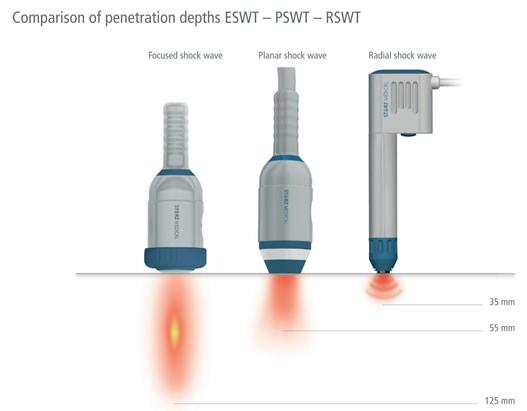
Radial shockwave therapy (r-ESWT) delivers divergent pressure waves ideal for broad muscle spasms across your lower back. Clinical protocols use 1,000-4,000 pulses at low energy densities (0.01-0.16 mJ/mm²) over 3-6 weekly sessions. Focused shockwave therapy (f-ESWT) concentrates energy at precise depths—critical for pinpointing deep trigger points near vertebrae. This approach typically requires fewer sessions (3-5) but uses higher intensities (0.1-0.2 mJ/mm²). Research shows both methods significantly outperform exercise alone for pain reduction, with your specific pain pattern determining the optimal choice.
Session Schedule That Delivers Results
Successful shockwave therapy for back pain follows a precise progression:
– Sessions 1-2 (Weeks 1-2): Target primary pain generators with 2,000-4,000 pulses
– Sessions 3-4 (Weeks 3-4): Address residual trigger points using adjusted energy settings
– Follow-up (Week 6): Consolidate gains with a single maintenance session
Each treatment lasts 15-20 minutes total, with actual shockwave application taking just 5-10 minutes after skin preparation. The critical factor isn’t session count—it’s using evidence-based energy parameters matched to your condition.
Energy Settings That Maximize Healing

| Condition | Pulses | Energy Density | Frequency | Sessions |
|---|---|---|---|---|
| General muscle tightness | 2,000-4,000 | 0.03-0.1 mJ/mm² | 4-5 Hz | 3-4 |
| Deep spinal trigger points | 1,200-2,000 | 0.1-0.2 mJ/mm² | 7-9 kV* | 3-5 |
| Chronic adhesions | 1,500-2,000 | 0.15 mJ/mm² | 4-5 Hz | 4-6 |
*High-voltage settings specific to focused devices. Using incorrect energy density is the #1 reason for treatment failure—too low lacks therapeutic effect, too high causes excessive micro-trauma.
Real-World Results from 632 Back Pain Patients
Pain Reduction You Can Measure
Shockwave therapy for back pain delivers statistically significant pain relief:
– 4 weeks: Average 1.04-point drop on 10-point pain scale (95% CI -1.44 to -0.65)
– 12 weeks: Sustained 0.85-point reduction (95% CI -1.30 to -0.41)
These numbers translate to real-life improvements—patients moved from “moderate pain interfering with daily activities” to “mild pain manageable with movement.” Seven of twelve clinical trials documented continued improvement beyond the treatment period, confirming shockwave therapy isn’t just a temporary fix.
Functional Gains That Restore Daily Life
Beyond pain scores, shockwave therapy significantly improves functional mobility. Oswestry Disability Index scores showed:
– 4 weeks: 4.22-point improvement (95% CI -7.55 to -0.89)
– 12 weeks: 4.51-point gain (95% CI -8.58 to -0.44)
Patients reported tangible results like sitting through full workdays without standing breaks, resuming walking routines, and sleeping through the night without pain interruptions. This functional recovery matters more than pain scores alone—it’s the difference between existing and living.
Mental Health Impact: What the Data Shows
While shockwave therapy effectively reduces physical pain, its impact on mental health remains uncertain. Analysis of 5 clinical trials using SF-36, PHQ-9, and BDI scales showed no statistically significant improvement in psychological symptoms (SMD 1.17, 95% CI -0.10 to 2.45, p=0.07). This confirms shockwave therapy should be combined with movement retraining and stress management—not used as a standalone solution for pain with strong psychological components.
Safety Profile: Why Zero Serious Events Matters
What to Expect During Treatment
During shockwave therapy sessions, you’ll feel rapid tapping sensations as pulses penetrate deep tissue. While uncomfortable, this isn’t sharp pain—most describe it as intense vibration. Crucially, clinical trials involving 632 patients reported zero serious adverse events across all studies. Minor soreness similar to post-exercise muscle ache may occur but typically resolves within 24 hours, indicating the desired healing response.
Absolute Contraindications to Avoid
Shockwave therapy for back pain is unsafe if you have:
– Active infections near the treatment area
– Blood clotting disorders or anticoagulant use
– Pregnancy
– Spinal tumors, fractures, or cauda equina syndrome
– Severe osteoporosis with compression risk
These exclusion criteria (from rigorous clinical trials) protect vulnerable tissues from unintended energy exposure.
Stop Treatment Immediately If You Experience:
- Severe sharp pain beyond normal discomfort
- Numbness or tingling radiating to legs
- Skin blistering or bruising at treatment site
- Dizziness or nausea during the session
Maximizing Your Shockwave Therapy Results
Movement Integration Is Non-Negotiable
Shockwave therapy breaks down restrictions, but poor movement patterns will recreate them. Pair treatment with:
– Weeks 1-2: Gentle range-of-motion exercises to maintain new mobility
– Weeks 3-4: Progressive core strengthening (e.g., bird-dog, dead bug)
– Week 6+: Functional movement retraining specific to your daily activities
Without this, pain often returns within months as tissues re-adhere—a key reason some patients report “shockwave therapy didn’t work.”
Cost vs Long-Term Value
While insurance rarely covers shockwave therapy for back pain ($200-$400 per session), consider:
– Typical protocol costs $600-$2,400 for 3-6 sessions
– Compared to ongoing physical therapy ($100-$150/session) or daily NSAIDs
– Most patients achieve cost parity within 6-12 months through reduced medication and therapy needs
When Shockwave Therapy Isn’t Your Best Option
Avoid If Your Pain Originates From:
- Spinal stenosis or nerve compression
- Widespread inflammatory arthritis (e.g., ankylosing spondylitis)
- Recent trauma or acute injury (<12 weeks)
- Psychological factors dominating pain perception
Shockwave therapy targets soft tissue dysfunction—not structural or neurological issues.
Seek Immediate Medical Evaluation For:
- Progressive leg weakness or foot drop
- Bowel/bladder dysfunction
- Fever with back pain
- Unexplained weight loss
These indicate serious conditions requiring urgent intervention.
Your Next Steps Toward Pain-Free Movement
Shockwave therapy for back pain delivers moderate-quality pain relief and functional improvement without serious risks—but it’s not magic. The evidence shows it works best when:
1. Your pain stems from soft tissue dysfunction (not nerve compression)
2. Treatment uses evidence-based energy parameters
3. You combine it with movement retraining
Start with a thorough evaluation to confirm you’re a candidate. If cleared, commit to 3-4 sessions while tracking both pain scores and functional goals. Remember: chronic back pain rarely has a single solution. Shockwave therapy is most powerful as part of your comprehensive strategy—alongside movement, stress management, and lifestyle adjustments. For the 570 million suffering worldwide, it offers something crucial: a non-invasive path to break the pain cycle and reclaim your life. When back pain strikes next time, you’ll have a smarter solution than “wait and see” or “take another pill.”