
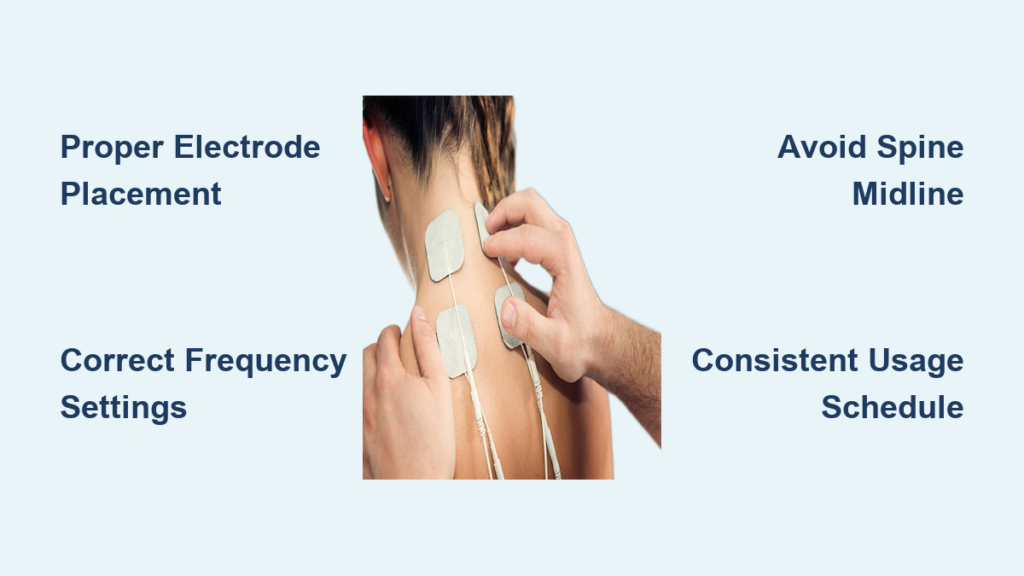
That sharp, persistent ache in your lower back makes every movement feel like a chore. Whether it’s from hours at your desk, an old injury flaring up, or simply the weight of daily stress, back pain can hijack your entire day. You need relief—fast. A TENS machine might be your ticket back to comfort, but only if you know how to use it properly.
This guide walks you through exactly how to harness this pocket-sized device to target your specific back pain. You’ll discover optimal electrode placement, the right settings for different types of pain, and the common mistakes that can sabotage your results. By the end, you’ll have a clear, actionable system for turning those electrical pulses into real relief.
Why Your TENS Machine Works for Back Pain Relief
TENS therapy interrupts pain signals traveling to your brain through two distinct mechanisms. The electrical pulses create sensory competition, essentially overwhelming your nervous system with non-painful input that blocks pain messages from getting through. This immediate effect works particularly well for sudden, sharp back pain that catches you off guard.
Your body also responds to TENS stimulation by releasing natural pain-relieving chemicals called endorphins. These powerful neurotransmitters function similarly to opioids but without the side effects or risk of addiction. For chronic back pain sufferers, this endorphin release provides longer-lasting relief that builds with consistent use over several days.
Critical Pre-Use Setup for Maximum Effectiveness
Battery and Pad Readiness Checklist
Before applying any electrodes, verify your TENS unit has sufficient power. Weak batteries deliver inconsistent current that won’t penetrate deep enough to affect back pain. Install fresh batteries or fully charge your unit according to manufacturer instructions. Inspect your electrode pads for proper adhesion—replace any that have lost their stickiness or show signs of wear.
Channel Configuration for Back Coverage
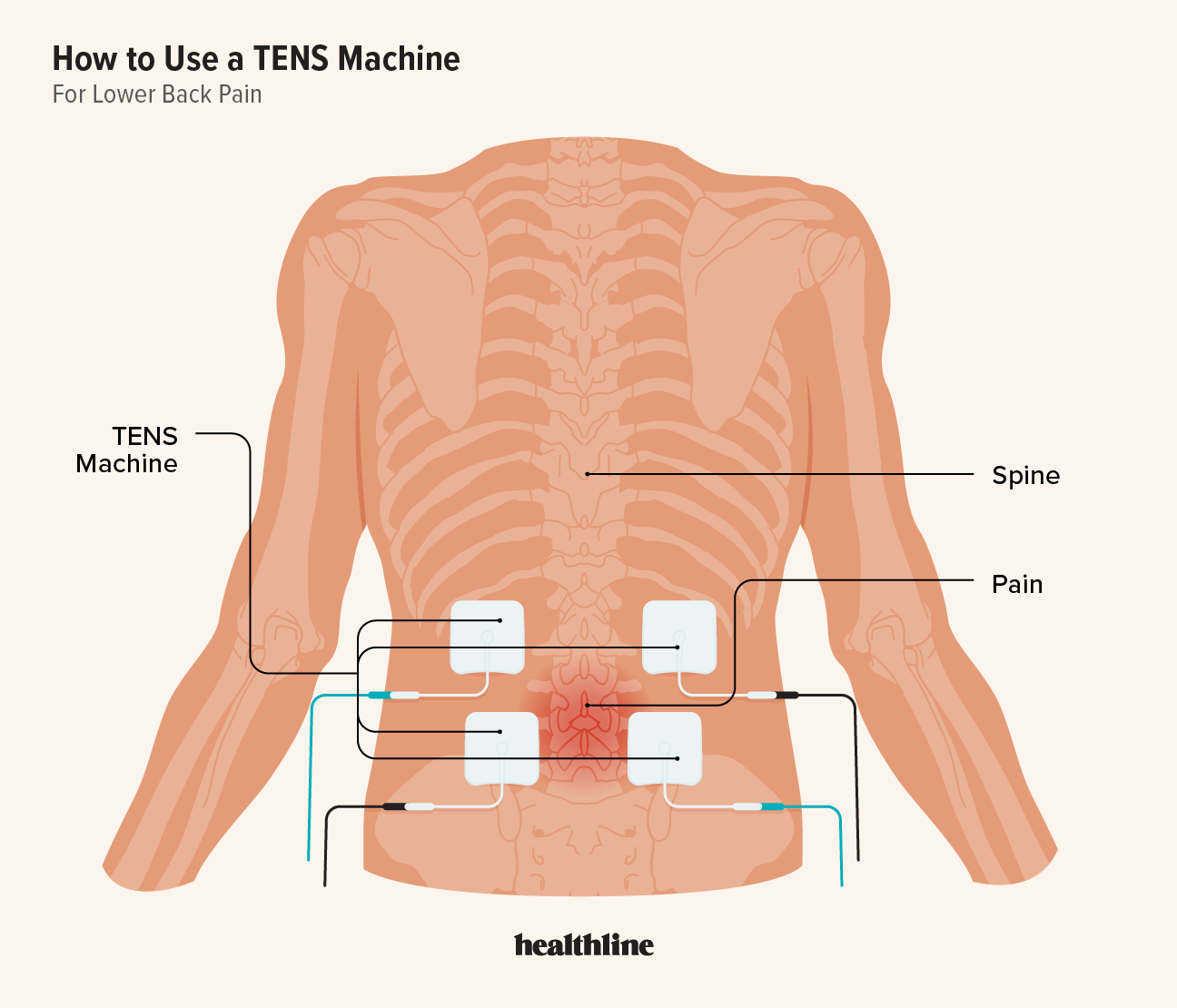
Most TENS units offer two or four output channels. For comprehensive back pain coverage, utilize all four pads to create a cross-pattern around your pain area. Match the positive and negative channels correctly on your device to ensure balanced stimulation across your back muscles. Incorrect channel pairing creates uneven current distribution that reduces effectiveness.
Precision Electrode Placement Techniques for Back Pain
Targeting Lower Back Discomfort
Position two electrodes parallel to your spine, maintaining a 2-3 inch distance from the vertebral column on either side. Place these at the exact level where your pain feels most intense. Add the remaining two pads horizontally across your lower back, forming a diamond shape that completely surrounds the pain source. This strategic placement ensures the electrical current flows directly through the affected tissue.
Upper Back and Shoulder Blade Pain Solutions
For tension between your shoulder blades, place electrodes diagonally along the muscle fibers. Position one pad near your spine and the other toward your shoulder tip, creating an angle that follows the natural direction of your trapezius muscles. This alignment targets common trigger points responsible for upper back stiffness without risking nerve irritation.
Areas to Avoid for Safe TENS Application
Never place electrodes directly over your spine’s midline, as this can cause uncomfortable nerve stimulation. Steer clear of broken or irritated skin, the upper left back near your heart, and any regions with reduced sensation. These precautions prevent potential complications while ensuring your TENS therapy remains both safe and effective.
Customizing Settings for Your Specific Back Pain
Immediate Relief Protocol for New Back Pain
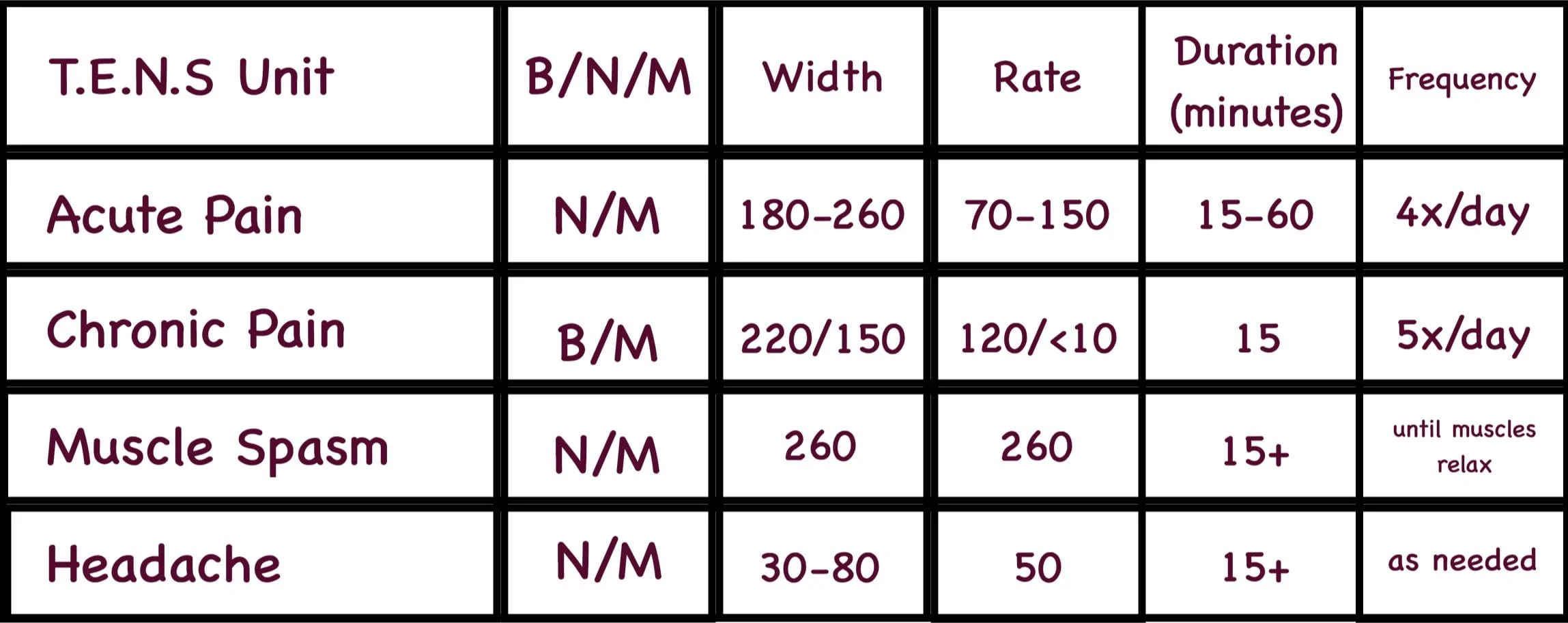
When dealing with recent strains or sudden back pain, select high-frequency settings between 80-120 Hz. Begin at the lowest intensity level and gradually increase until you feel a strong but comfortable tingling sensation—never painful. Limit initial sessions to 15-20 minutes, repeating 3-4 times daily until acute discomfort subsides.
Long-Term Management Strategy for Chronic Back Pain
For persistent back pain lasting weeks or months, switch to low-frequency mode (2-10 Hz) with moderate intensity. This setting promotes endorphin release for extended pain relief. Activate burst or modulation mode if available, as these varying pulse patterns prevent your nervous system from adapting to the stimulation. Gradually increase session duration up to 45 minutes, using the device 2-3 times daily during initial treatment phases.
Muscle Spasm Intervention Techniques
When your back muscles lock up in painful spasms, combine very low frequency (2-4 Hz) with gentle intensity. The rhythmic pulsing encourages tight muscles to relax without triggering further contraction. Start with brief 10-minute sessions, monitoring your body’s response before gradually extending treatment time as your muscles respond positively.
Step-by-Step TENS Application Process
Begin by identifying your precise pain location through gentle palpation. Clean the target area thoroughly with soap and water, ensuring no lotions or oils remain that could interfere with electrode adhesion. Carefully peel the backing from each electrode without touching the conductive gel surface.
Apply pads firmly to your skin, smoothing from the center outward to eliminate air pockets that disrupt electrical flow. Connect all lead wires before powering on your device to prevent unexpected stimulation. Start at zero intensity, then slowly increase until you feel that distinctive tingling sensation—strong but never uncomfortable.
Remain still during treatment to prevent electrode displacement. After your session ends, gradually reduce intensity to zero before switching off the unit. Remove pads gently by pulling parallel to your skin rather than straight up. Rinse electrodes with water only and allow them to air dry before storing.
Critical Mistakes That Undermine TENS Effectiveness

Over-intensification represents the most common error—users mistakenly believe stronger stimulation equals better results. Excessive intensity actually fatigues nerves and muscles, potentially worsening pain. If you notice visible muscle twitching or pinching sensations, immediately reduce the intensity level.
Electrode spacing errors significantly impact results. Pads placed too far apart create weak current paths that don’t adequately cover your pain area, while pads positioned too closely concentrate stimulation uncomfortably. Maintain consistent 2-4 inch spacing between adjacent electrodes, adjusting based on your body size.
Inconsistent treatment schedules prevent cumulative benefits. Using TENS only during severe pain episodes misses the opportunity to build neurological tolerance to discomfort. Establish regular treatment times—same duration, settings, and placement—to train your nervous system for optimal response.
Troubleshooting Your TENS Treatment
If you experience minimal relief after several sessions, first verify your electrode placement accuracy. Shift pads incrementally by half an inch in different directions to find the optimal nerve pathway coverage. Many users discover significant improvement simply by fine-tuning pad positioning.
Skin irritation beneath electrodes typically indicates pad replacement time or placement rotation needs. Alternate treatment locations slightly with each session to give skin adequate recovery time. Persistent redness may signal sensitivity to electrode materials—consider switching to hypoallergenic options.
Safety Protocols and Maintenance Practices
Replace electrode pads after 10-15 uses or immediately when adhesion weakens. Degraded pads create uneven current distribution that can cause skin irritation or hot spots. Store your TENS unit in a temperature-controlled environment, as extreme heat damages internal components and battery performance.
Inspect your skin after each session for normal versus concerning reactions. Mild temporary redness indicates proper stimulation, while persistent discoloration, blistering, or numbness requires immediate treatment cessation and medical consultation. Never operate your TENS unit while driving, bathing, or sleeping.
Building Your Personalized TENS Treatment Schedule
Initiate treatment with twice-daily sessions for the first week to establish therapeutic momentum. As pain decreases, transition to once-daily maintenance sessions followed by as-needed usage. Maintain a simple log tracking settings, placement, and pain levels to identify patterns and optimize your approach.
Combine TENS therapy with gentle stretching exercises performed during or immediately after treatment. The electrical stimulation temporarily reduces muscle guarding, making stretching more effective. Focus on movements like knee-to-chest stretches, pelvic tilts, and gentle side bends to enhance your pain relief.
Maximizing Your TENS Machine’s Pain-Relieving Potential
Your TENS machine offers a drug-free solution for back pain when used correctly. Start with settings matching your pain type—high frequency for acute discomfort, low frequency for chronic issues. Precision placement around (never on) your spine creates optimal current flow through affected tissues.
Consistency proves more valuable than intensity—regular sessions at moderate levels outperform sporadic, aggressive treatments. Pair your TENS therapy with movement to prevent stiffness from prolonged sitting. Most users experience noticeable improvement within the first few sessions when following these evidence-based protocols.
Your path to back pain relief begins with proper electrode placement and appropriate settings. Power on your device, follow this guide’s specific instructions, and experience how targeted electrical stimulation can restore your comfort and mobility. With consistent application, your TENS machine becomes a reliable ally against back pain.