
Back pain transforms simple movements like bending to tie shoes or sitting at your desk into daily battles. If you’ve tried countless remedies with little relief, properly executed pilates ball exercises for back pain offer a scientifically-backed solution that addresses the root causes rather than masking symptoms. These dynamic stability exercises strengthen your deep core muscles while gently decompressing spinal discs—providing both immediate comfort and long-term resilience.
Most people experience noticeable improvement within two weeks when performing these specific movements correctly. The beauty of using a stability ball lies in its ability to challenge your body’s natural stabilizers while providing enough support to prevent strain. By the end of this guide, you’ll know exactly which exercises target your specific pain points, how to perform them with perfect form, and when to progress to more advanced variations.
Select Your Perfect Pilates Ball Size

Using the wrong size ball creates biomechanical strain that worsens back pain. Your ideal ball allows hip and knee joints to form precise 90-degree angles when seated. Check your current ball by sitting upright with feet flat—your thighs should create a perfect horizontal line parallel to the floor.
Quick Sizing Guide by Height
- Under 5’4″: 55cm ball (22 inches)
- 5’4″ to 5’11”: 65cm ball (26 inches)
- 6’0″ and taller: 75cm ball (30 inches)
Pro tip: Find your perfect inflation level by sitting on the ball with feet flat, then mark the stem with permanent marker once you’ve achieved the ideal “L” shape position. This ensures consistent setup for every session.
Stop These Dangerous Mistakes Before They Worsen Your Pain
Many people unknowingly aggravate their back pain through improper exercise technique. Recognizing these critical warning signs prevents setbacks in your recovery journey.
Immediate Red Flags Requiring Exercise Cessation
- Sharp or shooting pain (distinct from muscle fatigue)
- Numbness or tingling in legs or feet
- Pain radiating below the knee
- Morning stiffness lasting longer than 30 minutes
Critical clearance requirements: Consult your physiotherapist before starting if you’ve had recent back surgery, are pregnant, have osteoporosis, or are experiencing an acute flare-up. These pilates ball exercises for back pain work best when medically cleared for your specific condition.
Find Your Neutral Spine in 30 Seconds

Your neutral spine position serves as the foundation for all effective back pain relief exercises. This optimal alignment creates maximum disc space while activating the right muscles to support your spine.
Pinpoint Your Natural Spinal Curves
- Sit tall on your ball with feet hip-width apart
- Roll forward slightly, creating a rounded back position
- Roll backward, arching your lower back
- Stop exactly at the midpoint between these extremes
- You’ve found neutral spine—your natural curves without strain
Visual cue: Imagine a string gently pulling upward from the crown of your head, making you 2 inches taller while keeping shoulders relaxed. Maintain this position throughout all exercises.
Master Basic Ball Movements Before Targeting Pain
Skipping these foundational exercises leads to poor form and potential injury. Spend your first week building confidence on the unstable surface before progressing to pain-specific movements.
Pelvic Tilts for Spinal Awareness
Sit upright with feet flat, keeping your upper body completely still. Use only your abdominal muscles to roll the ball forward into gentle spinal flexion. Reverse direction by engaging your lower back muscles to roll backward. Perform 8-10 slow cycles daily to rebuild essential movement patterns.
Common mistake: Moving from the shoulders instead of isolating pelvic motion. Place hands on hips to feel proper movement initiation.
Hip Circles for Joint Mobility
While seated tall, draw slow circles with your hips clockwise for 8-12 repetitions. Reverse direction and repeat. Focus on smooth hip joint articulation rather than large movements. This simple exercise enhances pelvic mobility crucial for spinal health.
Time commitment: Just 3 minutes daily delivers significant improvements in movement quality.
Targeted Core Strengthening for Back Support
Weak core muscles force your spine to bear excess load—these exercises rebuild the natural “corset” that supports your back.
Roll-Up with Ball Assistance
Lie on your back with knees bent, feet flat. Place the ball high on your thighs with hands positioned near your knees. Engage your abs while exhaling, using the ball to guide your head and shoulders off the floor. Keep your neck long—imagine holding an orange under your chin. Hold for 2 seconds, then slowly lower.
Pro tip: If you feel neck strain, place one hand gently under your occipital bone for support without pulling.
Lower Abdominal Ball Curl
Lie on your back with legs extended, ankles resting on the ball. Press your lower back gently into the floor. Roll the ball toward your chest by bending your knees, keeping your hips stable. Pause briefly, then extend back with control. Perform 8-12 repetitions.
Modification: Place arms alongside your torso if your back arches excessively during the movement.
Bridge Variations That Strengthen Your Back’s Natural Support System
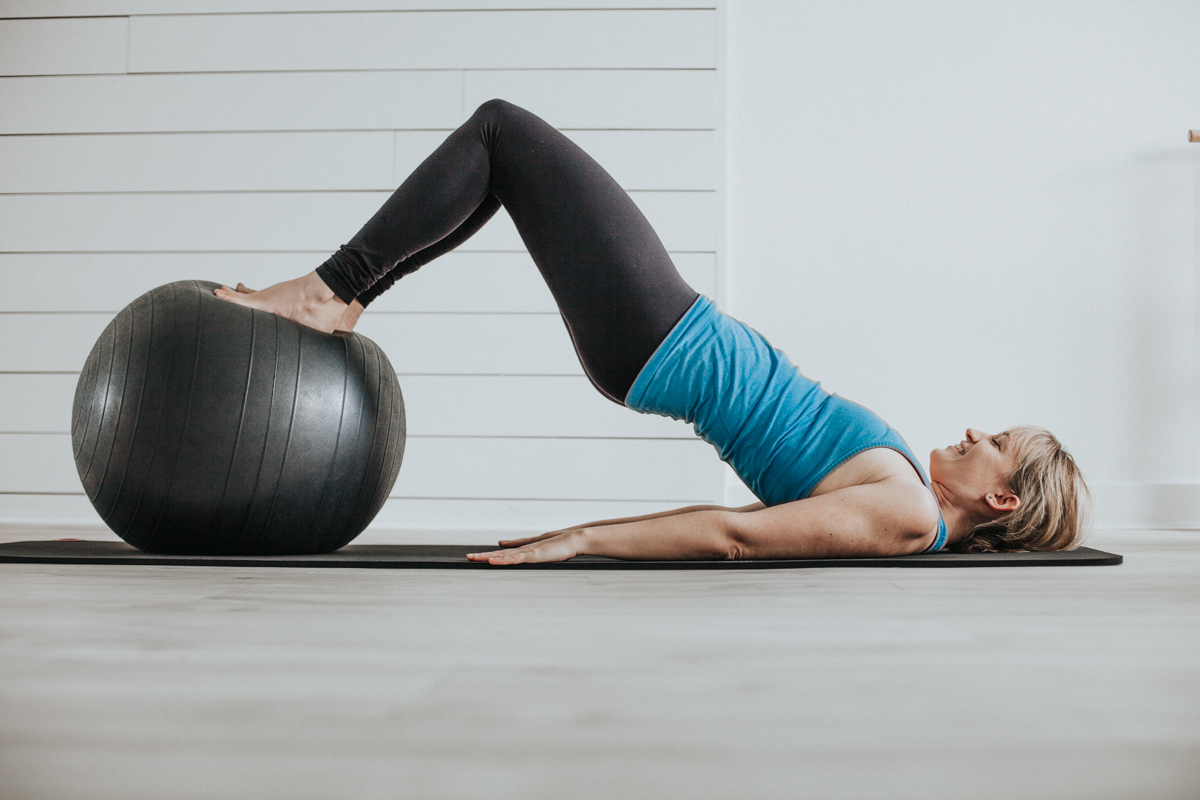
This exercise builds your posterior chain—the critical muscle group that supports your spine during everyday movements.
Basic Bridge Position
Lie with calves resting on the ball (progress to heels for challenge). Press arms into the floor for stability. Engage your abs by drawing your navel toward your spine. Lift your hips until shoulders, hips, and knees align. Hold for 6 seconds while breathing normally. Lower with control.
Advanced Bridge with Curl
Once basic bridges feel stable, maintain the elevated position while rolling the ball toward your glutes using your heels. Return to bridge position without lowering your hips. This compound movement integrates hip extension with lower abdominal control.
Progression indicator: You’re ready for this variation when you can hold a basic bridge for 30 seconds without hip sagging.
Quadruped Stability Exercises for Real-World Movement
These floor-based exercises rebuild the connection between your upper and lower body essential for pain-free movement.
Praying Mantis Position
Kneel upright with the ball in front. Place clasped hands on the ball. Gradually lean forward, rolling the ball away while maintaining a straight back. Your weight shifts through your arms as you feel your core engage. Return to starting position with control.
Form check: Stop immediately if you feel lower back compression—this indicates improper core engagement.
Wall Squats That Build Leg Strength Without Spinal Pressure
This functional exercise develops pain-free squatting mechanics essential for daily activities.
Ball Wall Squats
Stand with ball between your mid-back and wall, feet 12 inches in front of hips. Engage your core and slowly squat, rolling down the ball. Keep knees behind toes and hold the bottom position for 6 seconds. Press through your heels to return to standing.
Key alignment: Your knees should track directly over your second toes throughout—never let them collapse inward.
Gentle Spinal Decompression for Immediate Relief
These restorative movements provide instant comfort after long periods of sitting.
Child’s Pose with Ball
Kneel upright with ball in front. Exhale while rolling the ball forward, lowering your chest toward the floor as your hips move toward your heels. Hold for 20-30 seconds while breathing deeply. This provides gentle traction for compressed spinal discs.
When to use: Perform this immediately after prolonged sitting or before bed for optimal recovery.
Follow This Proven 6-Week Progression Plan
Rushing through exercises causes setbacks. This timeline ensures steady, sustainable improvement.
Weeks 1-2: Master ball familiarity and neutral spine
– Perform pelvic tilts and hip circles daily
– Focus on breath control during movements
Weeks 3-4: Add supine exercises
– Introduce roll-ups and ball curls
– Build to 2 sets of 12 repetitions
Weeks 5-6: Incorporate bridge variations
– Master basic bridge before adding curls
– Progress to 3 sets of 8-10 repetitions
Week 7+: Integrate functional patterns
– Add wall squats and quadruped exercises
– Challenge stability with longer holds
Daily 8-Minute Routine for Lasting Results
Consistency beats intensity when managing back pain. This science-backed routine delivers maximum benefit with minimal time investment.
Morning activation (5 minutes):
– 10 pelvic tilts
– 5 bridge holds (10 seconds each)
– 2 child’s pose stretches
Evening decompression (3 minutes):
– 20 hip circles each direction
– Gentle spinal roll-ups on floor
– Child’s pose with deep breathing
Warning Signs That Require Professional Help
These pilates ball exercises for back pain work remarkably well—but knowing when to seek expert guidance prevents serious complications.
Consult a physiotherapist immediately if:
– Pain increases after 2 weeks of consistent practice
– You experience numbness or tingling in legs
– Pain radiates below your knee
– Morning stiffness lasts over an hour
Remember, proper form beats quantity every time. Start with just 5 minutes daily of these targeted pilates ball exercises for back pain—most people notice reduced discomfort within days. As your core strength rebuilds, you’ll discover movements once painful become effortless. The key is consistency with perfect technique, not pushing through pain. Your pain-free future starts with today’s first controlled pelvic tilt.