
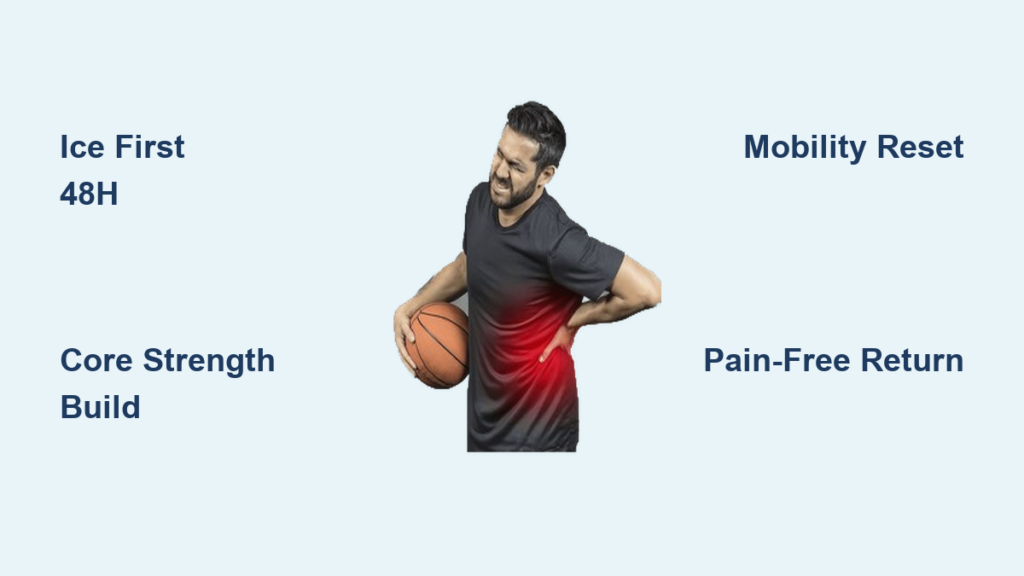
Every time you jump for a rebound or pivot for a steal, your spine absorbs forces that can trigger debilitating back pain. Basketball’s explosive movements—jumping, twisting, and sudden direction changes—place exceptional strain on your lumbar spine, with studies showing 5-10% of all athletic injuries relate specifically to the lower back. If you’re wincing when tying your shoes or struggling to finish games due to back pain, you’re not alone. This guide delivers a proven 7-day recovery plan specifically designed for basketball players to eliminate pain and return to the court stronger.
Unlike generic back pain advice, these science-backed strategies target basketball-specific stressors. You’ll learn exactly how to identify your pain source, implement immediate relief techniques that work within 48 hours, and build a prevention system that keeps you in the game all season. No more guessing at treatments or risking permanent damage—just actionable steps that address the root causes of basketball-related back pain.
Identifying Your Basketball Back Pain Source

Musculoligamentous Strain Warning Signs
Soft tissue injuries account for most basketball back pain cases, resulting from overstretched muscles, tendons, or ligaments around your spine. You’ll notice deep soreness that intensifies during jumps or sudden direction changes, with these specific indicators:
– Dull ache during warm-up that worsens during play
– Stiffness when rising from the bench or after sitting
– Tenderness along your spine when pressed
– Pain radiating outward from your central back area
Spondylolysis Red Flags for Players
This stress fracture in the spine’s pars interarticularis develops from basketball’s repetitive hyperextension during layups and rebounds. Watch for these basketball-specific warning signs:
– One-sided lower back pain after shooting or blocking
– Pain that temporarily improves with rest but returns during play
– Tight hamstrings that resist stretching despite efforts
– Increased discomfort when arching backward for jump shots
Herniated Disc Emergency Indicators
Disc injuries create distinct nerve-related symptoms beyond typical muscle pain. Stop playing immediately if you experience:
– Shooting pain radiating down one leg (sciatica)
– Numbness or tingling in feet during defensive slides
– Weakness when pushing off for jump shots
– Pain worsening when bending forward to tie shoes
Immediate Basketball Back Pain Relief (First 72 Hours)
Ice and Heat Treatment Protocol
Apply ice for 15-20 minutes every 2-3 hours during the first 48 hours to reduce inflammation from basketball impact. Switch to heat therapy after initial swelling subsides—use a heating pad for 15 minutes before stretching to relax tight muscles. Never apply ice directly to skin; always use a thin towel barrier to prevent tissue damage.
Smart Anti-Inflammatory Approach
Take over-the-counter NSAIDs like ibuprofen (400-600mg) or naproxen (220mg) with food to prevent stomach irritation. Limit medication use to 7-10 days maximum while addressing underlying causes. Remember: painkillers mask symptoms but don’t heal injuries—combine with movement restoration techniques for complete recovery.
Basketball-Specific Mobility Reset
Lie on your back with knees bent and feet flat. Slowly rock knees side-to-side for 30 seconds to release spinal tension, then gently pull one knee toward your chest for 15 seconds. Repeat this sequence 3-5 times daily to restore movement without aggravating injured tissues. This gentle mobilization specifically targets stiffness from defensive stances and jumping mechanics.
Core Strengthening for Basketball Spine Stability

Three Basketball-Specific Core Exercises
Build spinal stability with these three moves performed 3x weekly:
Dead Bug Progression (3 sets of 10 each side)
Lie on your back with arms extended toward ceiling and knees bent 90 degrees. Slowly extend opposite arm and leg while pressing lower back into floor. This directly mimics core control needed during jump shots and landing mechanics.
Bird Dog Holds (3 sets of 30 seconds)
Start on hands and knees. Extend opposite arm and leg while maintaining a completely flat back. Builds anti-rotation strength essential for maintaining defensive positioning without spinal strain.
Side Plank Variations (3 sets of 20-30 seconds)
Progress from knees to feet, then add leg lifts. Specifically targets lateral core muscles stressed during crossover dribbles and defensive slides that commonly trigger back pain.
6-Week Progressive Loading Timeline
Week 1-2: Master basic movements with perfect form, focusing on quality over quantity
Week 3-4: Add light resistance bands to simulate game-like forces
Week 5-6: Incorporate unstable surfaces (foam pad) to challenge balance
Week 7+: Add basketball-specific movements while maintaining core engagement
Basketball-Specific Flexibility Routine
Pre-Game Dynamic Warmup (5 Minutes)
Standing T-Spine Rotations (10 each side)
Lunge forward with arms extended. Rotate upper body toward front leg while maintaining hip stability. This opens rotational capacity needed for shooting and passing without straining your lower back.
Hip Flexor Stretch Series (30 seconds each position)
Half-kneeling position, tilt pelvis backward to stretch hip flexors tight from defensive stance. Add arm overhead reach for deeper stretch—critical since tight hip flexors pull on lumbar spine during play.
Post-Game Recovery Sequence (7 Minutes)
Child’s Pose Breathing (2 minutes)
Sit back on heels with arms extended. Focus on breathing into lower back to promote relaxation and tissue recovery after absorbing court impact.
Supine Hamstring Stretch (45 seconds each leg)
Lie on back, loop towel around foot. Straighten leg until gentle stretch felt in back of thigh. Tight hamstrings directly contribute to lower back strain during basketball movements.
Safe Return-to-Basketball Protocol
Pain-Free Movement Testing Before Play
Before returning to full basketball activity, complete these tests without pain:
– 20 bodyweight squats maintaining neutral spine
– 10 single-leg Romanian deadlifts each side
– 30 seconds of high-knee running in place
– Full court layup line without compensating movements
Gradual Basketball Reintroduction Schedule
Day 1-3: Shooting form work only (no jumping)
Day 4-6: Light jogging and ball handling drills
Day 7-10: Half-speed scrimmage with restrictions
Day 11-14: Full practice participation if symptom-free
Day 15+: Full game play with pain monitoring
Basketball-Specific Pain Monitoring
Rate pain 1-10 during and after activity. Stop immediately if pain exceeds 3/10 or worsens the next morning. Never push through pain—temporary rest prevents permanent damage to your basketball career.
Basketball Back Pain Prevention System
Court-Specific Conditioning (Twice Weekly)
Defensive Slide Progression
Start with 10-second intervals focusing on maintaining neutral spine without rounding. Progress to 30-second continuous slides while keeping core engaged—this directly prevents the spinal stress that causes most basketball back pain.
Jump Landing Mechanics Training
Practice soft landings from 6-inch box jumps, emphasizing hip and knee flexion to absorb impact through lower body rather than spine. Proper landing technique reduces spinal compression forces by up to 50%.
Basketball Load Management System
Track weekly basketball hours including practice, games, and pickup play. Keep total under 15 hours weekly during season, reducing by 25% if back pain develops. Alternate high-impact days (games) with low-impact recovery (swimming or cycling) to allow spinal tissues to regenerate.
Basketball Shoe and Equipment Assessment
Replace basketball shoes every 3-4 months during heavy play—worn cushioning increases spinal impact forces. Choose models with adequate midsole cushioning and ankle support to reduce forces transmitted to spine. Consider custom orthotics if you have flat feet, as improper foot mechanics directly affect spinal alignment during play.
Emergency Signs Requiring Immediate Medical Attention
Stop playing and contact a sports medicine physician immediately if you experience:
– Bowel or bladder control issues (indicating cauda equina syndrome)
– Progressive leg weakness affecting your jump shot
– Numbness in groin area (saddle anesthesia)
– Pain preventing sleep for multiple consecutive nights
Persistent back pain beyond 2 weeks requires professional evaluation. Treatment may include physical therapy for movement analysis, diagnostic imaging to rule out structural damage, or prescription anti-inflammatories for severe inflammation. Remember: 80% of the general population experiences back pain at some point—don’t let fear of missing games lead to permanent damage.
Relieve your basketball back pain by addressing the specific spinal stressors of the game, not just masking symptoms. Start with the 72-hour pain relief protocol today, implement core strengthening within your current training routine, and build long-term prevention habits that keep you on the court. Your spine bears the impact of every jump, cut, and collision—invest in its health to elevate both your game and your career longevity.
Remember: the most successful basketball players understand that temporary rest beats permanent damage. Prioritize your spinal health now to dominate the court for seasons to come.