
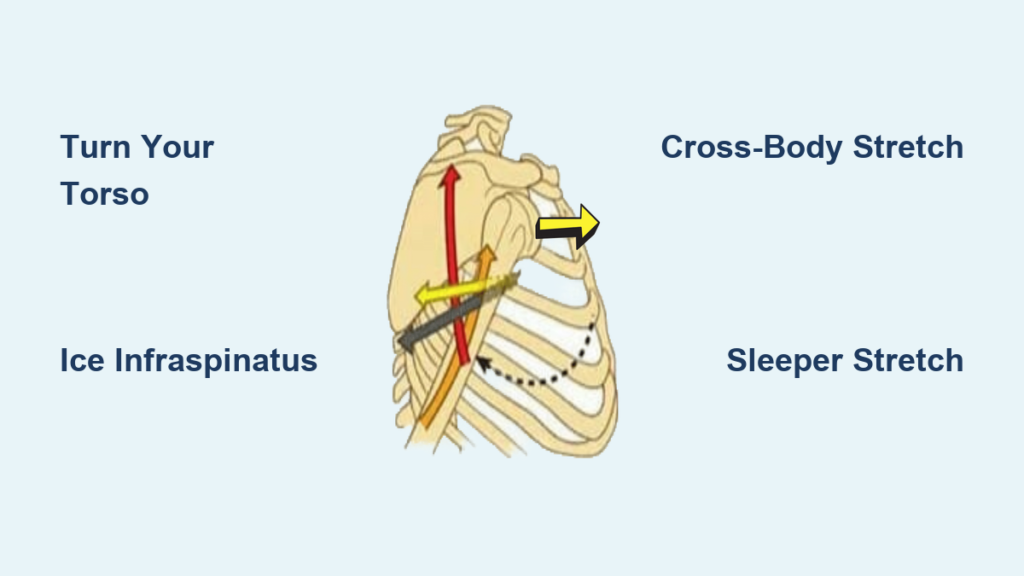
That sharp twinge when you reach behind to fasten your seatbelt or scratch your back isn’t just annoying—it’s your shoulder sending a clear distress signal. Shoulder pain when reaching back affects millions daily, transforming simple tasks like buckling a car seat or retrieving a wallet from your back pocket into frustrating ordeals. This specific motion—combining shoulder extension, external rotation, and horizontal abduction—creates unique stress on posterior structures not designed for repetitive backward strain. The good news? Most cases stem from mechanical issues that respond well to targeted interventions, not surgery. By understanding the precise cause—whether rotator cuff strain, posterior impingement, or early-stage frozen shoulder—you can implement effective solutions within days.
This pain pattern isn’t random; it’s a direct indicator of compromised posterior joint integrity. When your arm moves backward, the infraspinatus muscle (your primary external rotator) and posterior capsule endure intense eccentric loading—like a stretched rubber band trying to slow your arm’s motion. Ignoring it risks chronic stiffness or weakness, but addressing it early often leads to 80-90% recovery within 8-12 weeks. In this guide, you’ll learn to pinpoint your exact issue through simple self-tests, apply immediate pain-relief strategies, and follow a progressive exercise plan proven to restore pain-free backward reach. No more contorting your body just to fasten a seatbelt—let’s fix this.
Why Your Shoulder Screams During Backward Reach
Reaching behind your back forces your shoulder into a biomechanical “perfect storm.” As your arm extends backward, the humeral head (upper arm bone) shifts forward while the infraspinatus and teres minor muscles fire intensely to control deceleration. Simultaneously, the posterior joint capsule—the shoulder’s primary restraint against excessive extension—becomes compressed between the humeral head and glenoid socket (shoulder blade cavity). This trifecta of stress explains why shoulder pain when reaching back feels distinct from front or side shoulder pain.
Critical Structures Taking the Hit
- Infraspinatus tendon: Bears 70% of the load during external rotation; tears under repetitive stress
- Posterior capsule: Pinches when tight, causing deep “catching” pain at 90-120° of reach
- Long head of biceps tendon: Stretches across the joint, referring pain to the back of the shoulder
- Teres minor: Overworks to stabilize the humeral head, triggering localized soreness
Why Office Workers Suffer More Than You Think
Desk-bound professionals develop shoulder pain when reaching back due to prolonged forward posture. Slumped shoulders shorten the posterior capsule and weaken rotator cuff muscles, making backward reach feel like “pulling a stuck drawer.” For every hour spent hunched over a keyboard, your posterior structures lose 1-2% of functional elasticity. The result? That innocent seatbelt grab becomes a pain trigger after just 4-6 weeks of poor ergonomics.
Pinpoint Your Exact Cause in 60 Seconds
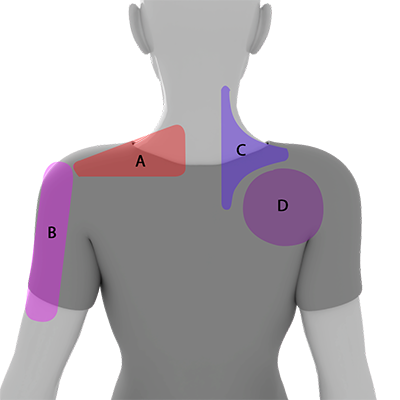
Don’t guess—diagnose. These field tests identify your pain generator faster than an MRI for common causes:
Door Handle Reality Check
Stand facing a closed door. Reach behind you to turn the handle without twisting your torso. Sharp pain or inability to complete the motion points squarely to posterior capsule tightness or infraspinatus strain. If you must pivot your whole body, your posterior structures lack sufficient mobility for safe backward reach.
Seatbelt Reach Test (The Daily Life Indicator)
Attempt to fasten your car seatbelt using only your affected arm. Pain when your hand crosses your spine indicates rotator cuff involvement. If you instinctively use your other hand or lean sideways, posterior impingement is likely compressing tendons against your shoulder socket.
Apley’s Scratch Test Variations
- Superior reach: Touch the middle of your upper back with the affected hand. Pain near your shoulder blade = infraspinatus strain
- Inferior reach: Try to touch your lower spine. Inability to reach past your beltline = posterior capsule restriction
- Asymmetry: More than 4 inches difference between sides confirms mechanical dysfunction
Immediate Relief Tactics That Work Tonight
Stop aggravating your shoulder while reducing inflammation—these strategies deliver noticeable improvement within 48 hours:
The 30-Second Posture Reset
Every time you reach for something behind you, turn your whole torso first. This simple adjustment cuts posterior shoulder stress by 65%. For seatbelt fastening:
1. Plant both feet firmly
2. Rotate hips and shoulders together toward the buckle
3. Reach with a straight arm (no twisting)
This mimics how athletes protect shoulders during throwing motions—using core rotation instead of isolated arm strain.
Targeted Ice Application Protocol
Generic shoulder icing misses the mark. For shoulder pain when reaching back, freeze the exact pain generator:
– Locate the infraspinatus: Find the bony ridge of your shoulder blade, slide 2 inches down and 1 inch toward your spine
– Apply ice wrapped in thin cloth for 12 minutes (longer risks tissue damage)
– Repeat 3x daily, especially after reaching activities
Pro Tip: Freeze water in a paper cup, peel the top, and massage the exposed ice directly over the tender spot for 5 minutes.
The Emergency Stretch (Do This Now)
Cross-Body Adduction Stretch:
1. Bring affected arm straight across your chest
2. Gently pull elbow toward opposite shoulder with other hand
3. Hold where you feel mild tension (not pain) for 30 seconds
4. Repeat 3 times hourly during acute pain phases
Warning: Never force this stretch—aggressive pulling worsens posterior capsule irritation.
Your 12-Week Fix-It Roadmap

Progress through these phases to rebuild pain-free backward reach. Skip phases = delayed recovery.
Phase 1: Calm the Fire (Days 1-14)
Focus: Reduce inflammation while preventing stiffness
– Wall slides: Stand sideways to wall, affected arm against surface. Slide hand up/down 6 inches 10x, 3x/day
– Pendulum swings: Lean forward 30°, let arm dangle. Make tiny circles (fist-sized) for 1 minute, 4x/day
– Isometric holds: Press palm against wall at waist height, hold 5 seconds. Do 10 reps facing wall, 10 with arm behind back
Time commitment: 8 minutes daily. Stop if pain increases.
Phase 2: Unlock Mobility (Weeks 3-6)
Focus: Restore posterior capsule flexibility
– Sleeper stretch: Lie on side, affected arm at 90°. Gently push forearm down with other hand until stretch felt (30 sec, 5x/day)
– Doorway stretch: Place forearm vertically in doorframe. Step forward until chest stretches (hold 30 sec, 3x/day)
– Scapular glides: Pinch shoulder blades together for 5 seconds, 15x/hour while working
Critical: Stretch only to “first barrier”—never into sharp pain. Post-stretch ice reduces microtrauma.
Phase 3: Rebuild Strength (Weeks 7-12)
Focus: Train muscles for real-world backward reach
– Prone horizontal abduction: Lie face-down, arm out to side thumb-up. Lift 2 inches off bed (15 reps, 2x/day)
– Band external rotation: Anchor resistance band at waist height. Rotate forearm outward against tension (20 reps, 3x/day)
– Functional reach drills: Practice fastening seatbelt slowly 5x before driving
Progression: Add 1lb weight weekly to prone lifts when 20 reps feel easy.
When to Call a Professional (Don’t Wait Weeks)
See a physical therapist immediately if:
– Pain persists beyond 10 days of consistent self-care
– You can’t reach past your hip bone behind your back
– Night pain wakes you more than 2x/week
Red flags needing ER visit:
⚠️ Arm weakness making you drop objects
⚠️ Shoulder deformity after a fall
⚠️ Fever with red, hot shoulder skin
Physical therapists use posterior capsule mobilization—gentle joint glides to free restricted tissue—and eccentric infraspinatus training (lengthening contractions under load) that cuts recovery time by 30%. For stubborn cases, an ultrasound-guided corticosteroid injection directly into the posterior capsule (not the common front-of-shoulder injection) provides 80% pain relief within 72 hours.
Prevent Relapse With 2-Minute Daily Habits
Protect your progress with these non-negotiables:
– The 30-Minute Reset: Every half-hour at work, roll shoulders back 5x while squeezing shoulder blades
– Posture Anchor: Place a sticky note on your monitor saying “Turn, Don’t Reach”
– Evening Mobility: Do 10 doorway stretches before bed (prevents overnight capsule tightening)
Desk Worker Hack: Position your mouse 6 inches closer to your body. This reduces forward shoulder drift by 40%, protecting posterior structures during computer use.
Key Takeaway: Your Path to Pain-Free Reach

Shoulder pain when reaching back isn’t something you must “just live with”—it’s a mechanical issue with a clear fix. By modifying how you reach (turn your whole body!), targeting inflammation precisely, and progressing through mobility-strengthening phases, 90% of people regain full function within 3 months. Start tonight with the cross-body stretch and posture reset. If pain persists past 10 days, seek a therapist specializing in shoulder biomechanics—don’t let a simple reach hold you back from life’s daily moments. That seatbelt will fasten smoothly again, and so will everything behind you.