
Waking up with a knife-like jab between your shoulder blades? You’re trapped in a brutal cycle: upper middle back pain shatters your sleep, and poor sleep prevents your thoracic spine from healing. Research confirms 15–30% of people experience this mid-back agony, where every position shift feels like rearranging broken glass. But here’s the breakthrough—strategic sleep positioning breaks this cycle in as little as 3 nights. By aligning your T4-T8 vertebrae and eliminating pressure points, you can transform restless nights into deep, restorative rest. This guide delivers exact techniques backed by orthopedic research—not theory—to finally sleep through the night with upper middle back pain.
Back Sleeping with Knee Support: Reduce Thoracic Compression by 30%

Skip the flat-on-your-back agony. This modified supine position maintains spinal neutrality while unloading your mid-back discs. Lie on a medium-firm mattress (5–7/10 firmness) and slide a medium-loft pillow under your knees, bending them 20–30 degrees. Instantly, you’ll feel reduced pressure as this angle decompresses your thoracic spine. Now check for a gap between your lower back and mattress—if your fist fits there, roll a towel to 2–3 inches thick and tuck it under your lumbar curve.
Why Your Pillow Height Makes or Breaks Relief
Your cervical pillow isn’t optional—it’s non-negotiable for upper middle back pain relief. If your head tilts up or down, it torques your entire thoracic spine. Test this now: lie back and have someone check if your ears, shoulders, and hips form a straight line. If not, swap pillows immediately. Opt for a contoured cervical pillow 3–5 inches high (taller if broad-shouldered) that fills the natural curve behind your neck. Memory foam or latex with 4+ lb/ft³ density prevents sinkage that misaligns your spine.
Critical Mistake That Worsens Pain
Never sleep flat without knee support. Research shows this increases thoracic disc compression by 30–40%, grinding vertebrae together all night. You’ll wake with sharper pain and muscle spasms. If you wake stiff, your pillow is likely too high—lower it by 1 inch tonight.
Side Sleeping with Pillow Between Knees: Stop Spinal Torsion in 60 Seconds
Side sleeping is your secret weapon against upper middle back pain—if done correctly. Start flat on your back, then roll toward your preferred side while keeping knees stacked vertically. Now slide a firm pillow between your knees up to hip height. This prevents your top leg from dragging your pelvis out of alignment, which strains the thoracic muscles anchoring your ribs.
Perfect Position Checkpoints for Pain-Free Nights
Your head pillow must keep your neck parallel to the mattress—not tilted toward your shoulder. If you wake with jaw tension or shoulder numbness, your pillow is too thick. For the knee pillow, choose an hourglass-shaped design that stays wedged all night. Broad-shouldered sleepers need extra-thick cervical support; measure from shoulder to neck crease to pick the right height.
Why Switching Sides Weekly Prevents New Pain
Sleeping only on your right side? You’re overloading muscles on that side while weakening opposing fibers. Alternate sides nightly to balance strain across your rhomboids and trapezius. If you have scoliosis with a right thoracic curve, prioritize left-side sleeping to unload the convexity—but still alternate weekly.
Reclined Sleep Setup: Off-Load Discs for Scoliosis or Stenosis
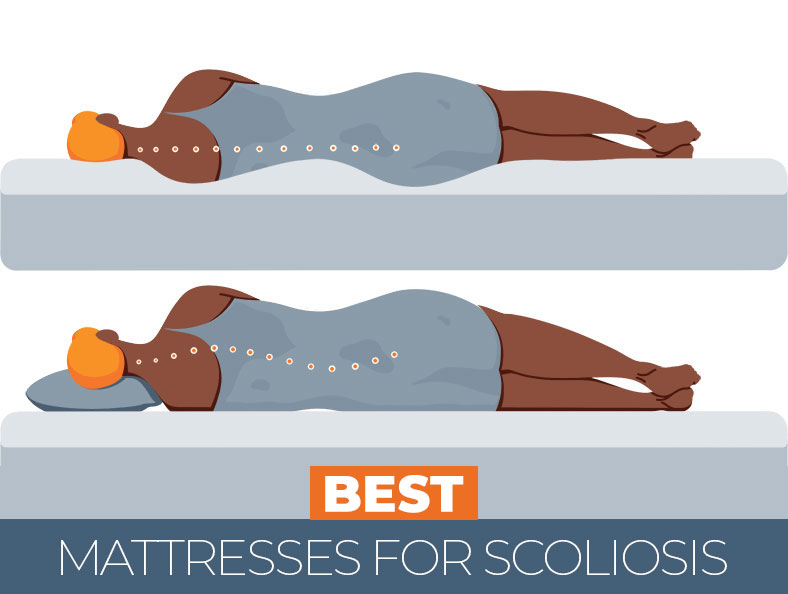
When flat positions fail, elevate your torso 30–45 degrees using an adjustable bed base or wedge pillow. This reclined position slashes disc pressure by up to 40%, critical for degenerative disc disease or spinal stenosis. Key detail: bend knees 10–15 degrees with a small pillow underneath—never let hips flex beyond 90 degrees, or hip flexors tighten and pull your spine forward.
Wedge Pillow vs. Adjustable Bed: Which Wins?
For true relief, wedge pillows must be 10–12 inches high with a gradual 30–45° slope. Cheap foam wedges collapse under weight, forcing neck flexion. If using an adjustable base, set torso elevation first, then knee lift—never reverse the order. Add a horseshoe pillow to cradle your neck without rotation. This setup is ideal if GERD triggers your upper middle back pain, as it prevents acid reflux.
Emergency Fix for Nighttime Pain Spikes
Wake up gasping from mid-back spasms? Immediately sit up and recline using stacked pillows. Place one under your torso, another under bent knees. Stay reclined 15 minutes until muscles relax—this breaks the pain-spasm cycle faster than lying flat.
Mattress Firmness Test: Why 5-7/10 Prevents Morning Pain
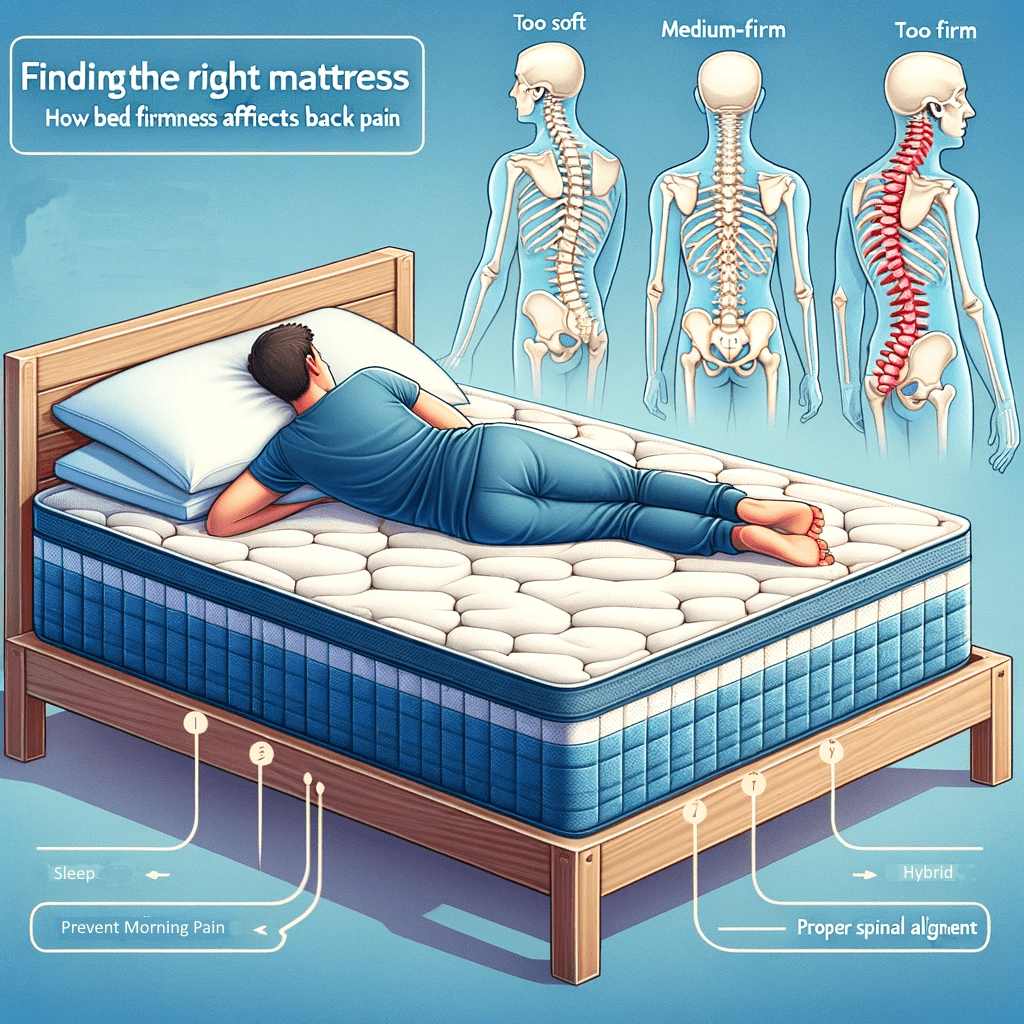
Your mattress is either healing you or hurting you—there’s no middle ground. Lie down for 10 minutes on a medium-firm option (5–7/10 scale). If you sink deeper than 1 inch, it’s too soft and lets your thoracic spine collapse into a C-curve. Memory foam must exceed 4 lb/ft³ density to contour without trapping you; latex offers responsive support that won’t sag near scoliosis curves.
Pillow Replacement Schedule You’re Ignoring
Cervical pillows lose support after 12 months, forcing your neck into compromising angles. Test yours: fold it in half—if it doesn’t spring back in 30 seconds, replace it tonight. Knee pillows need swapping every 18 months; if they flatten overnight, upgrade to high-density polyfoam. Your body pays the price for worn-out sleep gear with amplified upper middle back pain.
5-Minute Pre-Bed Stretch Sequence That Unlocks Spinal Mobility
Skip this routine, and no pillow will help. Perform these stretches 30 minutes before bed to relax hypertonic thoracic muscles:
- Thoracic Extension Over Foam Roller: Lie with roller under shoulder blades (T4-T8). Gently roll 10 times while breathing deeply—this glides stiff vertebrae.
- Doorway Pec Stretch: Place forearm on doorframe, step forward 30 seconds per side—reverses hunched posture pulling on mid-back.
- Single Knee-to-Chest Hold: 30 seconds per leg—decompresses lumbar discs that refer pain upward.
Environment Tweaks That Cut Pain by 22%
Set your thermostat to 65–68°F—cooler temps boost growth hormone release for tissue repair. Run white noise above 40 dB to mask disruptive sounds that fragment sleep. Most crucial: apply a heating pad to your mid-back for 15 minutes pre-bed. Heat relaxes paraspinal muscles by 22% according to clinical studies, but never exceed 20 minutes to avoid skin burns.
Red-Flag Symptoms: When to Skip Positions and Call a Doctor
Stop adjusting pillows if you have:
– Night pain unchanged by position shifts (possible tumor or infection)
– Progressive arm weakness or numbness (nerve compression worsening)
– Unexplained weight loss + back pain (systemic condition)
– Pain lasting >4 weeks despite correct positioning
These demand immediate evaluation. Physical therapists use manual techniques to mobilize stuck thoracic segments, while epidural injections target severe inflammation. Don’t tough it out—early intervention prevents chronic disability.
Long-Term Prevention: Daily Habits That Erase Nighttime Pain
Your daytime habits dictate nighttime pain. Set hourly phone alerts to reset posture—slumping compresses discs 40% more than standing tall. Three times weekly, strengthen scapular stabilizers with rows and prone Y-T-I raises; weak muscles fatigue overnight, triggering spasms. Each extra pound you carry increases spinal load by 4 pounds—weight management is non-negotiable for lasting relief.
Tonight’s Action Plan:
✓ Slide a pillow under your knees if back sleeping
✓ Place a firm pillow between knees if side sleeping
✓ Run heating pad on mid-back 15 minutes pre-bed
✓ Set thermostat to 68°F
✓ Swap cervical pillow if ears/shoulders/hips aren’t aligned
Most people feel relief within 3 nights when implementing just one position fix. Track morning pain levels for 5 days—you’ll pinpoint your optimal setup. Stop letting upper middle back pain steal your rest; your spine heals fastest in deep sleep, and tonight’s the night to start.