
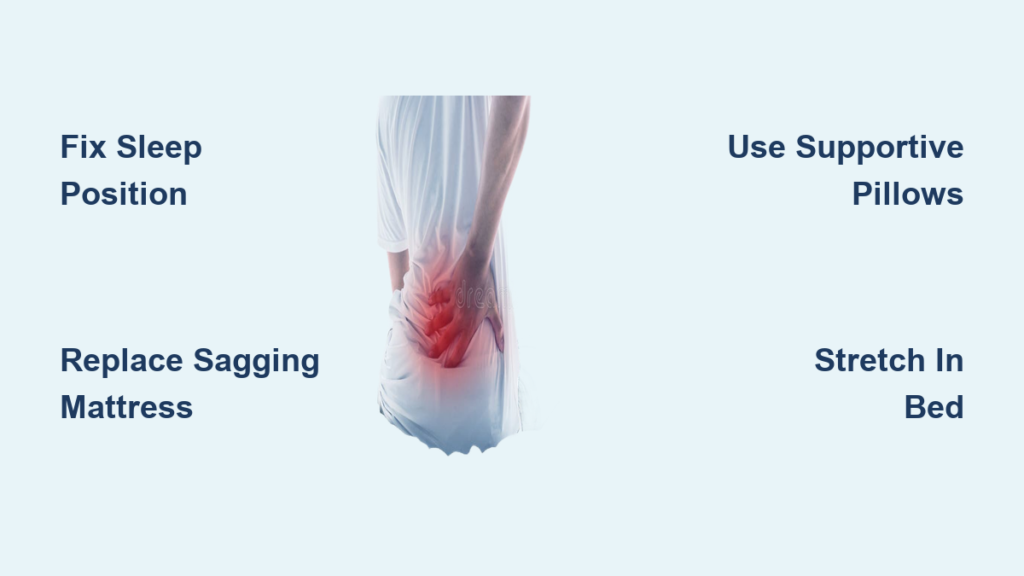
You swing your legs out of bed only to feel that familiar, stabbing ache in your lower back—the kind that makes you move like you’re 90 years old before your first cup of coffee. If you’ve ever wondered “why does my back hurt every morning,” you’re part of a massive club: 8 out of 10 people experience back pain at some point, with morning stiffness hitting hardest right after waking. The good news? Most dawn discomfort stems from preventable causes directly tied to your sleep habits and environment. This guide reveals exactly how to avoid morning back pain using evidence-based fixes you can implement tonight for relief tomorrow.
Why Your Back Screams at Sunrise
Mechanical Triggers You Can Fix Tonight
Your spine endures 7-9 hours of static pressure while you sleep, and poor positioning concentrates this force on vulnerable joints. Stomach sleeping is the worst offender—it hyperextends your lumbar spine while twisting your neck like a corkscrew for hours. But even side or back sleeping causes problems without proper support. A mattress older than 5-7 years loses up to 50% of its supportive properties, creating spinal misalignment that translates to morning agony. Clinical studies confirm medium-firm surfaces reduce pain scores by approximately 50%, yet 60% of people sleep on mattresses past their prime.
Critical mechanical fixes:
– Replace sagging mattresses showing visible dips (common after 7 years)
– Eliminate pillow height mismatches causing cervical misalignment
– Prevent hip rotation during side sleeping with knee support
– Maintain lumbar curve during back sleeping with knee elevation
Medical Red Flags Requiring Professional Attention
While most morning back pain is mechanical, certain conditions need expert evaluation. Degenerative disc disease affects over 90% of adults over 65, causing increased intradiscal pressure overnight that peaks at dawn. Herniated discs may create radiating leg pain alongside stiffness, while inflammatory conditions like ankylosing spondylitis cause morning stiffness lasting more than 30 minutes that improves with movement.
Seek immediate care if you experience:
– Pain persisting beyond morning hours
– Numbness or tingling radiating down legs
– Bowel/bladder changes
– Severe night pain that wakes you
– Unexplained weight loss or fever
Perfect Your Sleep Position Tonight
Side Sleeping for Spinal Alignment
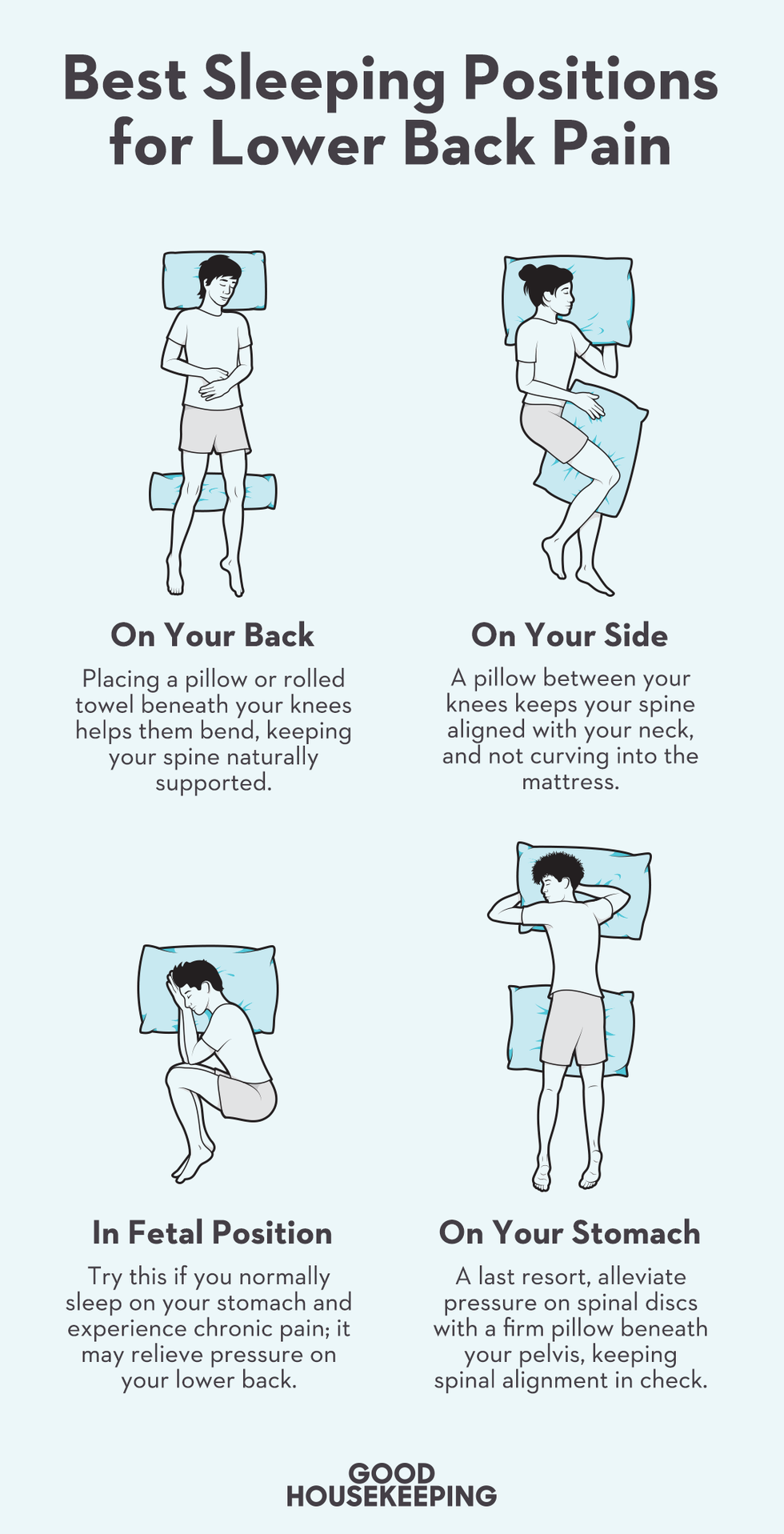
Transform your side position into a pain-prevention powerhouse with these precise adjustments. Place a firm pillow between your knees to prevent hip rotation that twists your lumbar spine—this reduces rotational force by up to 40%. Your neck pillow must fill the exact space between your shoulder and ear (typically 4-6 inches thick for side sleepers). Stack hips vertically and relax shoulders downward rather than hunching them toward your ears.
Pro adjustment: If you wake with shoulder pain, place a small rolled towel under your waist to maintain hip alignment with your spine.
Back Sleeping Modifications for Lumbar Support
Back sleepers need strategic support to maintain your spine’s natural S-curve. Slide a firm pillow under your knees to offload posterior disc pressure by 25-30%. Add a small rolled towel (2-3 inches diameter) under your lower back curve for targeted lumbar support. For neck alignment, choose a pillow that keeps your head in neutral position—no chin tucking or overextension.
Critical tip: If you snore, elevate your head slightly with an adjustable pillow base rather than stacking pillows, which strains your cervical spine.
Stomach Sleeping Damage Control
If you can’t break the stomach sleeping habit, minimize damage immediately. Remove your head pillow entirely or use an ultra-thin option (under 1 inch). Place a thin pillow under your pelvis/lower abdomen to reduce lumbar hyperextension. Rotate your head side-to-side hourly to prevent cervical strain. Begin transitioning to side sleeping by placing a body pillow along your back to discourage rolling.
Upgrade Your Sleep Environment Now
Mattress Selection Criteria That Works
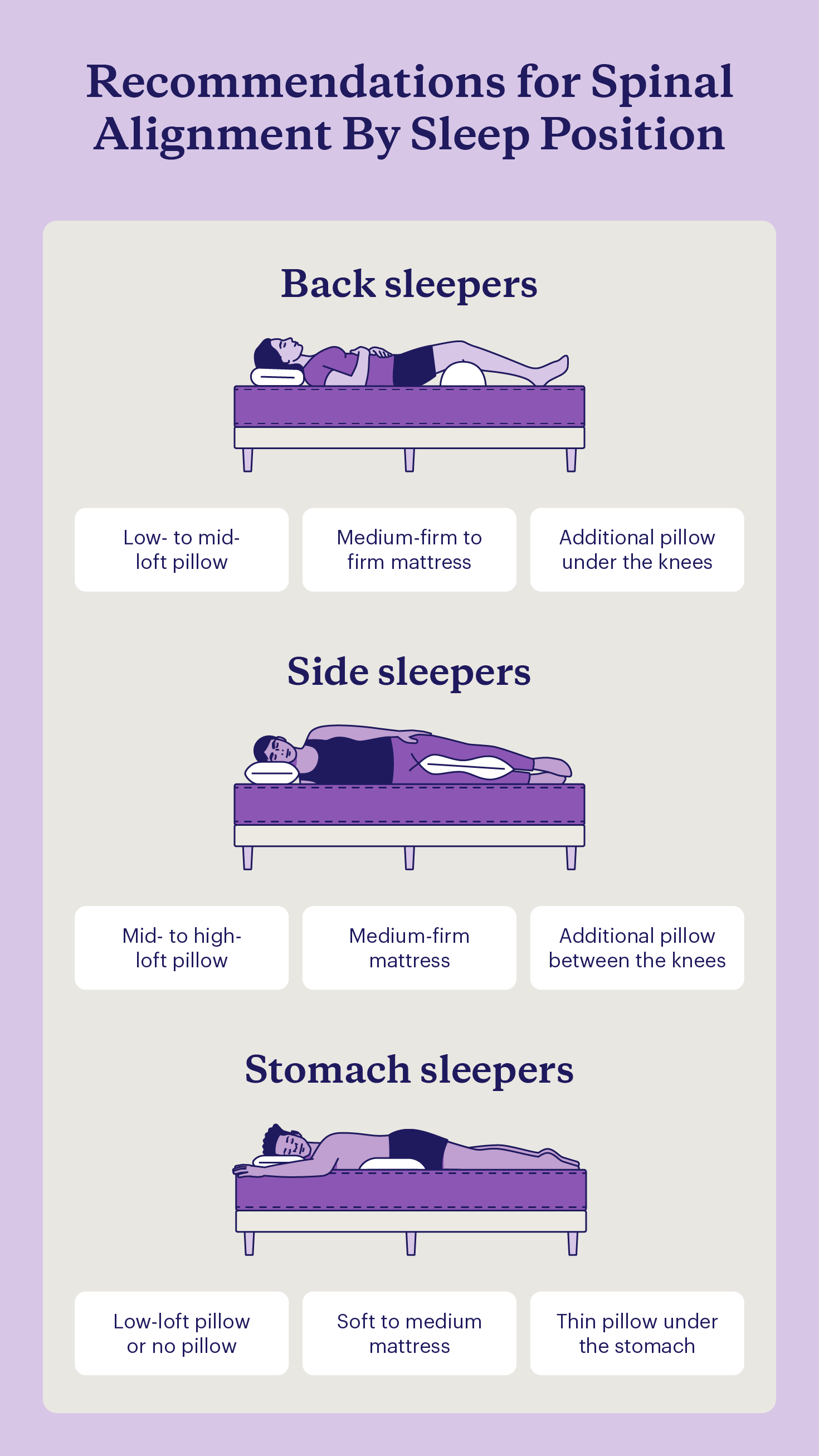
Replace mattresses immediately if sagging exceeds 1.5 inches deep or if they’re older than 7-10 years. Medium-firm memory foam, latex, or hybrid designs provide optimal balance—soft enough for pressure relief but firm enough for spinal alignment. When testing mattresses, lie in your usual sleep position for 15 minutes and check for gaps between your lumbar curve and the surface. Your spine should maintain its natural S-shape from head to hips with no pressure points.
Budget hack: Extend your mattress life with a 2-3 inch medium-firm topper if sagging is minor.
Position-Specific Pillow Guide
| Sleep Position | Pillow Thickness | Material | Critical Feature |
|---|---|---|---|
| Side | 4-6 inches | Memory foam | Contoured neck support |
| Back | 3-4 inches | Latex or buckwheat hull | Lumbar curve maintenance |
| Stomach | <1 inch or none | Soft down alternative | Minimal loft to reduce neck twist |
5-Minute Morning Mobility Routine
In-Bed Stretching Sequence Before Standing
Perform these movements before your feet hit the floor when your spine is most vulnerable. Hold each stretch 20 seconds for 2-3 repetitions:
- Full-body reach: Arms overhead, toes pointed—lengthens entire spine
- Single knee-to-chest: Alternate legs, then both together
- Pelvic tilts: Flatten lower back into mattress, then release
- Supine twist: Drop knees side-to-side gently
- Bridge: Feet flat on bed, lift hips to engage glutes
- Mini-cobra: Forearms push-up to extend thoracic spine
Pro tip: Breathe deeply into your diaphragm during each stretch to enhance muscle relaxation.
Standing Activation After Rising
Continue the routine once upright:
– Overhead reach: Interlace fingers, palms up—opens tight chest muscles
– Side bends: Gentle lateral stretches each direction
– Hip circles: Small rotations to lubricate stiff joints
Daytime Habits That Prevent Dawn Discomfort

Weight Management Impact on Spinal Load
Every extra pound adds 4 pounds of pressure to your lumbar spine. Even modest weight loss reduces compressive forces significantly. Combine 150+ minutes weekly of moderate cardio (brisk walking, swimming) with 2-3 core-strengthening sessions. Focus on planks and bird-dog exercises to build natural spinal support.
Movement Micro-Breaks Every 30 Minutes
Sitting concentrates pressure on lumbar discs—stand and walk for 2 minutes every 30 minutes. Target 10,000 steps daily using a pedometer. At your desk:
– Use a lumbar roll to maintain lordotic curve
– Add a footstool if feet don’t rest flat
– Position monitors at eye level to prevent forward head posture
Sleep Hygiene Essentials for Pain Prevention
Your sleep quality directly impacts morning pain levels. Maintain consistent bedtime/wake-time within 30 minutes daily. Create a 60-90 minute wind-down routine: dim lights, no blue light, calming activities only. Keep bedroom temperature between 60-67°F (16-19°C) with complete darkness—blackout curtains or an eye mask are non-negotiable.
Immediate Morning Relief Tactics
Heat vs. Cold Therapy Timing
Apply heat within 15 minutes of waking for chronic stiffness—use a heating pad on low setting for 15-20 minutes targeting paraspinal muscles. For new acute strains (first 24-48 hours), alternate with cold therapy: ice pack wrapped in cloth for 10-15 minutes. Never apply ice directly to skin.
Smart Over-the-Counter Solutions
NSAIDs (ibuprofen 200-400mg) provide short-term relief but limit use to under 10 days. Topical capsaicin cream (0.025-0.075%) applied 3-4 times daily reduces pain signals effectively. For drug-free relief, use a TENS unit with electrodes placed along paraspinal muscles for 15-30 minute sessions upon waking.
When to Seek Professional Help
Non-Negotiable Red Flag Symptoms
Contact a healthcare provider immediately if you experience:
– Progressive leg weakness
– Loss of bowel/bladder control
– Severe pain unrelieved by position changes
– Fever accompanying back pain
– Morning stiffness lasting over 30 minutes
Diagnostic Pathway Explained
Expect a physical exam assessing range of motion and nerve function. If red flags exist, imaging (X-ray or MRI) may follow. Blood tests can identify inflammatory conditions like ankylosing spondylitis. Physical therapy is often the first-line treatment for mechanical causes.
Your Tonight-Only Action Plan
- Mattress audit: Check for sagging >1.5 inches—replace if older than 7 years
- Pillow correction: Add knee pillow (side sleepers) or knee elevation (back sleepers)
- Set phone alarm: For 5-minute in-bed stretching routine tomorrow
- Schedule micro-breaks: Every 30 minutes of sitting starting at work
- Prep sleep environment: Set thermostat to 65°F and gather blackout materials
Proven shortcut: Focus first on sleep position correction—most users report 50%+ pain reduction within 3 nights. Implement one change tonight, then add strategies gradually for sustainable, pain-free mornings. Consistent application of these evidence-based methods transforms your dawn experience from agony to vitality, giving you the powerful start you deserve.