
You sink onto your bed after a long day, ready to unwind with a book or movie—only to stand up 30 minutes later with a sharp ache radiating from your lower back. That sinking feeling? It happens because beds lack the lumbar support of proper seating, forcing your spine into unnatural curves. When you sit on bed without back pain prevention, disc pressure spikes by 40% as your pelvis tilts backward and your neck juts forward. But you don’t need to abandon your favorite relaxation spot. With targeted adjustments to your posture, pillow placement, and movement habits, you can transform your mattress into an ergonomic throne. This guide delivers science-backed strategies to keep your spine happy during late-night scrolling, work-from-bed sessions, or lazy weekend reading.
Fix Your Spinal Alignment Before Pain Starts
Maintain Your Natural Lumbar Curve
Your lower back’s gentle inward curve (lordosis) acts like a shock absorber for daily movements. Slumping flattens this curve, overloading discs and straining the multifidus muscles that stabilize your spine. To sit on bed without back pain, sit fully against your backrest with your belt line slightly arched—not pressed flat against pillows. Imagine a string pulling your tailbone down toward the mattress while your crown lifts toward the ceiling. This creates optimal alignment where weight distributes evenly across your sit bones instead of concentrating on vulnerable lumbar joints.
Position Your Head Over Your Shoulders
Every inch your head drifts forward adds 10 extra pounds of strain on your neck. Avoid craning toward your phone or book by ensuring your ears stay vertically aligned with your shoulders. If you catch yourself jutting your chin out, gently retract it as if making a “double chin.” This simple micro-adjustment reduces cervical disc compression and prevents the tension headaches that often accompany back pain during prolonged bed sitting.
Achieve 90-Degree Hip and Knee Angles
Dangling feet or knees positioned higher than hips creates a pelvic tuck that rounds your lower back. Place a sturdy footrest (like a phone book or shoebox) under your feet if they don’t reach the floor. This 90-degree rule forces your pelvis into neutral alignment, transferring body weight through your femurs rather than compressing lumbar discs. Never cross your legs while sitting up—it rotates your pelvis and unevenly loads spinal joints, triggering sacroiliac pain within minutes.
Build a Pillow Support System for Pain-Free Sitting

Choose Pillows That Resist Collapse Under Pressure
Fluffy pillows that flatten within minutes guarantee back pain. Opt for medium-firm support (ILD 35-45) using memory foam or high-density polyurethane that maintains thickness during long sessions. Behind your lower back, use a 4-6 inch thick pillow; for neck support, select 3-5 inches of loft to keep your head neutral. Cooling gel-infused options prevent heat buildup that tightens muscles—critical if you sit on bed without back pain management during hot nights.
Master the Two-Pillow Stack Technique
Place two king-sized pillows vertically against your headboard to support your entire upper back. Then slide a small bolster or tightly rolled towel precisely at belt-line height to fill the gap between your lumbar curve and the mattress. This dual-layer system stops posterior pelvic tilt—the #1 cause of sudden lower back pain when sitting up in bed. For neck support, add a contoured cervical pillow that cradles your neck without lifting your head. Pro tip: Wedge pillows (12-inch triangular designs) accomplish this in one piece while preventing that frustrating slide downward.
Strengthen Mattress Edge Support Immediately
Reinforce Soft Mattresses With a Firm Topper
Plush mattresses let your hips sink, rounding your lower back until discs scream in protest. Add a 2-inch firm latex topper if your current bed rates below 6/10 on the firmness scale. This creates a stable “seat” that prevents pelvic sinkage while still cushioning pressure points. Hybrid mattresses (pocketed coils with 2-3 inches of memory foam) offer the ideal balance—firm enough for sitting but soft enough for comfort.
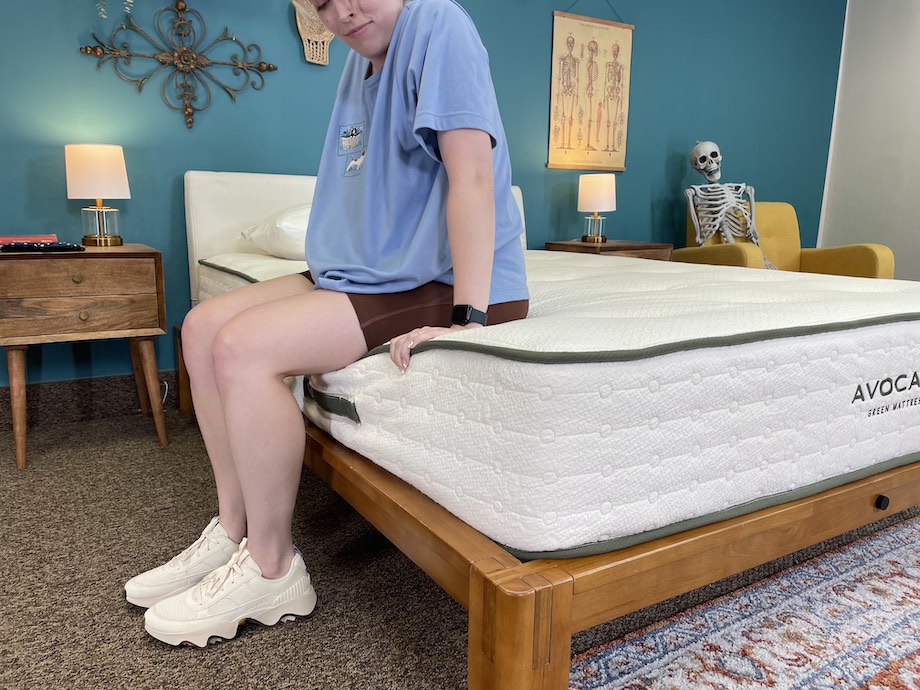
Test and Upgrade Edge Support
Press down firmly on your bed’s edge—if it collapses inward, you lack critical perimeter stability. This “hammock effect” forces your feet off the floor, disrupting hip-knee alignment. Reinforced coil edges or high-density foam rails (common in premium hybrids) keep your pelvis level. If buying new, prioritize models with edge support ratings above 8/10 to sit on bed without back pain while keeping feet flat.
Add Targeted Ergonomic Accessories

| Accessory | Why It Prevents Pain | Smart Implementation |
|---|---|---|
| Adjustable Bed Base | Fine-tune head elevation to 30-60° for reading/laptop work, reducing disc pressure by maintaining lumbar curve | Use zero-gravity preset (120° hip angle) for maximum relief during long sessions |
| Sit-Up Pillow with Armrests | Wings unload shoulder strain and prevent forward slump that causes upper-back pain | Choose models with side pockets to avoid awkward reaching for remotes |
| Adjustable Lap Desk | Raises screens to eye level, cutting neck strain by 50% | Opt for 0-35° tilt range and built-in cooling fans to maintain neutral wrist posture |
Execute This 7-Step Bed Setup Routine
- Prep your surface – Add a firm topper if your mattress feels too soft
- Anchor vertical support – Stack pillows flush against the headboard
- Lock lumbar position – Insert rolled towel precisely at belt-line height
- Sit fully back – Hips touch pillows first; never perch on the edge
- Support feet – Place firm footrest under dangling feet
- Arm positioning – Rest forearms on pillows so shoulders stay relaxed
- Set micro-alarm – Program phone timer for 15-minute adjustment checks
Implement the 30-Minute Pain Prevention Reset
Set a silent timer for every half hour of sitting. When it buzzes, perform these three moves without leaving your bed:
– Seated pelvic tilts: Arch and round your lower back 10x to restore disc hydration
– Shoulder blade squeezes: Pull scapulae together for 5 seconds, release 5x
– Leg extensions: Straighten one leg for 10 seconds to relieve hamstring tension
These micro-movements reverse spinal compression and boost blood flow to stiff muscles—stopping pain before it starts. Skip this, and prolonged static posture guarantees backache within 45 minutes.
Prevent Numbness With Strategic Weight Shifts
Even perfect posture becomes dangerous after 90 minutes. Every 15 minutes, gently glide your hips side-to-side without dragging skin (which causes shear injuries). For sessions exceeding two hours, place a 1-inch memory foam cushion under your tailbone to redistribute pressure. Critical warning: Red spots on your sacrum after sitting indicate early pressure sores—immediately increase movement frequency and cushioning.
Troubleshoot Pain by Symptom in 60 Seconds
| Pain Location | Quick Fix | Permanent Solution |
|---|---|---|
| Lower back | Add firmer lumbar roll; check hip-knee height alignment | Upgrade to medium-firm mattress (6-8/10) |
| Neck/shoulders | Lower cervical pillow; raise laptop with books | Daily chin-tuck exercises + sit-up pillow with arms |
| Leg numbness | Sit further back; use footrest | Mattress with reinforced edge support |
| Upper back | Place pillow between shoulder blades; stretch pecs | Adjustable bed base with zero-gravity setting |
Sleep Semi-Recumbent Without Morning Stiffness
When transitioning to sleep in your seated position, maintain a 30-40° head elevation with knees slightly bent (10-15°). This semi-recumbent angle reduces sleep apnea events by 30% while preserving lumbar curve overnight. Keep essentials within arm’s reach to avoid twisting motions that strain your back upon waking. Use your adjustable base or wedge system to lock this position—you’ll wake up without the stiffness that plagues side sleepers.
Final Note: Sit smarter by stacking pillows at belt-line height, never skipping micro-breaks, and keeping feet flat. This transforms your bed into a back-friendly lounge where you can finally sit on bed without back pain during Netflix binges or work sessions. For lasting relief, pair these fixes with the checklist below—and say goodbye to post-bed-sitting aches forever.
✅ Pain Prevention Checklist
– [ ] Lumbar roll in place (no gap between back and pillows)
– [ ] Feet flat on floor or footrest
– [ ] Screen at eye level (laptop raised on books)
– [ ] Micro-break timer set for 30 minutes
– [ ] Head neutral (ears over shoulders)
– [ ] Mattress firmness ≥ 6/10
– [ ] Water bottle within reach (discs need hydration!)
– [ ] Shoulders relaxed, not shrugged