
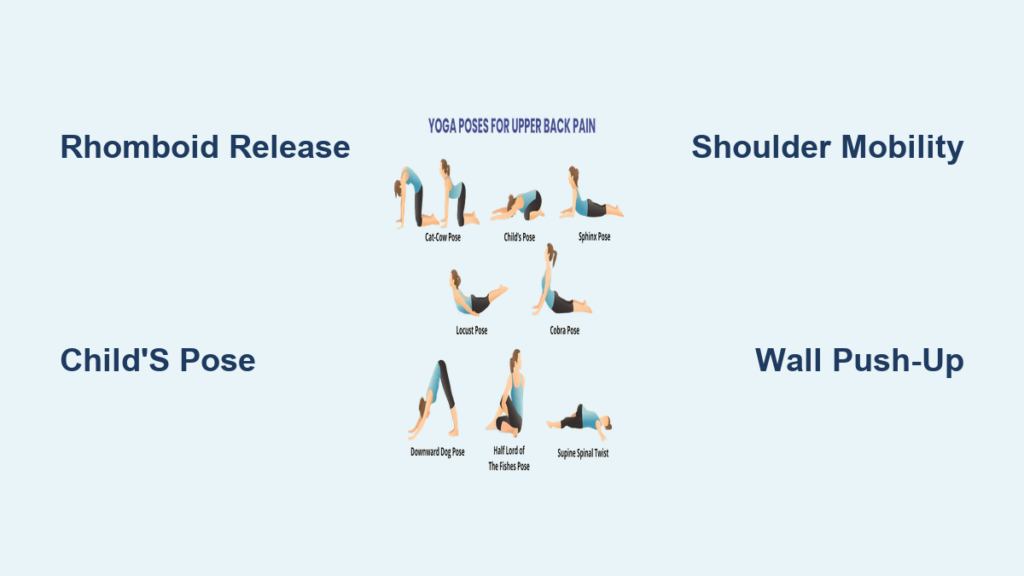
That nagging tightness between your shoulder blades after hours at your desk isn’t just annoying—it’s your body sending urgent signals. Upper back pain stretching isn’t merely about temporary relief; it’s your direct path to restoring mobility and preventing chronic discomfort that can derail your productivity. When tension builds in your rhomboids and trapezius from prolonged sitting, targeted stretching becomes your most powerful tool for immediate relief without expensive equipment or lengthy time commitments.
You’ve likely tried quick shoulder rolls or neck stretches that provided fleeting comfort, only to have the pain return within hours. The difference lies in knowing exactly which muscles need attention and how to stretch them properly. This guide reveals a scientifically-backed routine that specifically addresses the four key muscle groups responsible for 95% of upper back pain cases, with techniques you can perform during work breaks or before bed.
Within minutes of following this protocol, you’ll feel reduced tension and improved range of motion. More importantly, you’ll learn how to safely progress from gentle stretches to strengthening exercises that create lasting postural improvements—transforming your upper back from a source of constant discomfort to a foundation of strength.
Pinpoint Your Specific Upper Back Pain Pattern

Upper back pain rarely affects everyone the same way—your specific pain pattern determines which stretches will deliver fastest results. The four primary muscle groups responsible for most upper back discomfort each produce distinct pain signatures that help you target your stretching efforts precisely.
Desk Worker’s Between-Shoulder-Blade Tension
This common pattern starts as mild tightness that intensifies throughout your workday, often accompanied by neck stiffness. Your rhomboids—the muscles connecting your spine to your shoulder blades—become chronically shortened from hunching over keyboards. You’ll feel this as a deep ache precisely between your shoulder blades that worsens when reaching for your mouse or turning to check side monitors.
Morning Upper Back Stiffness Solution
If you wake with upper back pain that gradually improves within 30 minutes of movement, your thoracic erector spinae muscles have tightened overnight. These spinal stabilizers lose flexibility from poor sleeping posture or inadequate mattress support. Unlike desk-related pain, this stiffness feels more diffuse across your entire upper back region and improves with gentle movement rather than worsening.
Stress-Induced Neck and Shoulder Knots
When emotional tension translates to physical tightness, your levator scapulae muscles bear the brunt. Running from your neck vertebrae to your shoulder blades, these muscles shorten during high-stress periods, creating that familiar “knot” where your neck meets your shoulder. You’ll notice this pattern when deep breathing becomes difficult and turning your head causes sharp twinges—classic signs your stress response has hijacked your upper back muscles.
Critical Safety Checks Before Stretching
Starting stretches without proper assessment risks worsening your condition—especially if underlying issues require medical attention. These quick safety checks take less than two minutes but prevent common stretching mistakes that turn relief efforts into injury triggers.
The 30-Second Pain Assessment Test
Before attempting any upper back pain stretching, perform this immediate safety check: Gently rotate your head side-to-side while noting pain levels. If you experience numbness, tingling, or pain radiating down your arms during this simple movement, stop immediately and consult a healthcare provider. These symptoms indicate possible nerve compression requiring professional evaluation before stretching.
Proper Warm-Up Sequence for Cold Muscles
Jumping straight into deep stretches with cold muscles increases injury risk. Begin every session with this 60-second warm-up: Interlace your fingers behind your back while standing tall. Gently lift your arms away from your body while squeezing your shoulder blades together. Hold for 15 seconds, release, then repeat shoulder rolls—4 forward circles followed by 4 backward circles. This sequence increases blood flow to tight upper back muscles without straining them.
Rhomboid Release Stretch for Computer Users
This targeted upper back pain stretching technique delivers immediate relief for the between-shoulder-blade tension that plagues desk workers. Unlike generic shoulder stretches, this movement specifically addresses the shortened rhomboids responsible for that “I need someone to squeeze my shoulders” feeling.
How to Execute Properly: Sit upright in your office chair with feet flat on the floor. Clasp your hands together at chest height, palms facing away from your body. Gently tuck your chin toward your chest as if holding an egg under your chin. Now, reach your clasped hands forward while rounding your upper back, imagining you’re trying to spread your shoulder blades apart like opening a book. You should feel a distinct stretch across your upper back—not in your neck or lower back.
Time-Saving Office Modification: Perform this stretch while on conference calls—your colleagues won’t even notice. Hold for 20 seconds, release, and repeat three times. For maximum effectiveness, pair this with deep breathing: inhale for 4 seconds, hold for 4, exhale for 6 while maintaining the stretch position.
Critical Mistake to Avoid: Never force your head forward beyond your natural range. This common error shifts tension from your upper back to your cervical spine, potentially causing neck pain instead of relieving upper back discomfort. If you feel any neck strain, reduce your forward reach and focus on deepening your upper back curve instead.
Child’s Pose Upper Back Decompression
:max_bytes(150000):strip_icc()/ChildsPose_annotated-3bdcd72451e84925af5a9fe8118935ed.jpg)
This yoga-inspired stretch provides gentle spinal traction that decompresses vertebrae while releasing tension throughout your entire upper back region—perfect for reversing the compression caused by hours of sitting.
Knee-Friendly Setup: Kneel on a folded towel or yoga mat with your big toes touching and knees slightly wider than hip-width. If knee discomfort occurs, place a cushion between your calves and thighs. Sit back toward your heels while keeping your spine long. Place your palms on the floor shoulder-width apart, fingers pointing forward.
Precise Forward Reach Technique: Walk your hands forward until your arms extend fully, lowering your chest toward the floor. Keep your elbows slightly bent to avoid shoulder strain. Focus on reaching through your fingertips while allowing your shoulder blades to spread apart. Your forehead should rest comfortably on the floor or a folded towel.
Optimal Hold Duration: Maintain this position for 30-45 seconds while taking deep diaphragmatic breaths. For enhanced relaxation, place a weighted blanket across your upper back—this gentle pressure activates your parasympathetic nervous system, accelerating tension release. Repeat twice, resting 15 seconds between repetitions.
Dynamic Shoulder Mobility Sequence for Desk Recovery
Static stretching alone won’t reverse the movement restrictions caused by prolonged sitting—dynamic mobility exercises prepare your upper back for deeper stretching while restoring functional movement patterns.
The 4-Direction Shoulder Activation: Begin standing with excellent posture—ears over shoulders, shoulders over hips. Perform these movements slowly and deliberately:
1. Upward rotation: Lift shoulders toward ears (2 seconds)
2. Retraction: Pull shoulders straight back (2 seconds)
3. Depression: Lower shoulders away from ears (2 seconds)
4. Protraction: Round shoulders forward (2 seconds)
Complete 6 full cycles, focusing on smooth transitions between positions. This 48-second sequence improves scapular mobility more effectively than traditional shoulder rolls by isolating each movement pattern.
Desk Chair Modification: Perform this sequence while seated during your afternoon slump. Place hands on chair arms for support and reduce range of motion by 25% to accommodate limited space. The key is maintaining controlled movement quality rather than achieving maximum range.
Wall Push-Up Posture Corrector
Stretching alone won’t fix upper back pain caused by weakened postural muscles—this strengthening exercise rebuilds the rhomboids and lower trapezius that counteract forward head posture.
Perfect Wall Push-Up Form: Stand 18-24 inches from a wall with feet hip-width apart. Place hands slightly wider than shoulders at eye level. Maintain a straight line from head to heels as you bend elbows to 90 degrees, bringing your chest toward the wall. Focus on squeezing your shoulder blades together during the return phase—this activates the exact muscles that become weak from desk work.
Progression Timeline: Start with 2 sets of 8 repetitions daily. When you can complete 3 sets of 12 with perfect form, move to counter-height push-ups. Advance to chair push-ups within 2-3 weeks, building toward full floor push-ups in 6-8 weeks. This gradual progression prevents shoulder strain while rebuilding postural strength.
Daily Upper Back Pain Stretching Integration Strategy
Consistency beats intensity when addressing chronic upper back tension—these seamless integration techniques make relief part of your existing routine rather than an additional chore.
The 90-Second Office Reset: Every 90 minutes, perform this micro-routine:
– 30 seconds: Seated rhomboid release stretch
– 30 seconds: Dynamic shoulder mobility sequence
– 30 seconds: Deep breathing in child’s pose modification (seated forward fold)
Evening Wind-Down Protocol: Before bed, spend 7 minutes on:
– 2 minutes: Child’s pose with deep breathing
– 3 minutes: Gentle thoracic spine rotations (lying on side)
– 2 minutes: Resistance band rows with light tension
Weekend Maintenance Session: Dedicate 15 minutes Saturday morning to:
– 5 minutes: Comprehensive dynamic mobility
– 5 minutes: Stretches held for 30-45 seconds
– 5 minutes: Strengthening exercises at current progression level
When to Seek Professional Help for Upper Back Pain
While most upper back discomfort responds well to targeted stretching, certain symptoms require immediate medical evaluation. Stop all stretching and contact your healthcare provider if you experience:
- Numbness or tingling in your arms or hands during movement
- Pain that wakes you from sleep or prevents comfortable positioning
- Loss of bladder or bowel control (seek emergency care immediately)
- Fever accompanying your back pain
- History of cancer with new onset upper back discomfort
Your local healthcare system provides resources for non-emergency concerns—most provinces offer nurse advice lines (dial 811) for guidance on appropriate next steps. Keep a symptom journal noting pain patterns, stretching responses, and any changes in daily function to share with your provider.
Relief from upper back pain stretching isn’t about finding one magic move—it’s implementing a systematic approach that addresses both muscular tension and postural weakness. By dedicating just 10 minutes daily to this targeted routine, you’ll notice reduced stiffness within 48 hours and significant improvement in posture within two weeks. Start today with the rhomboid release stretch and dynamic shoulder sequence during your next work break—your future pain-free self will thank you. Remember, consistency with proper form delivers better results than occasional intense sessions, so build these techniques into your daily rhythm for lasting upper back health.