
Waking up with a tight, painful lower back transforms simple morning routines into painful ordeals. That familiar ache when you try to sit up affects 8 out of 10 adults at some point, turning putting on socks or reaching for your phone into grimacing challenges. The good news? You don’t need expensive equipment or complicated routines to find relief—just three strategic movements performed while still in bed can dramatically reduce morning stiffness within days.
These targeted stretches work by gently decompressing your spine after hours of compression, increasing blood flow to dormant muscles, and activating core stabilizers that support your lower back. Most people experience noticeable improvement in their morning mobility within one week of consistent practice. You’ll discover exactly which movements deliver maximum relief with minimal effort, how to perform them safely on your mattress, and the critical timing details that make the difference between relief and reinjury.
Bed-Based Stretches That Actually Relieve Morning Back Pain
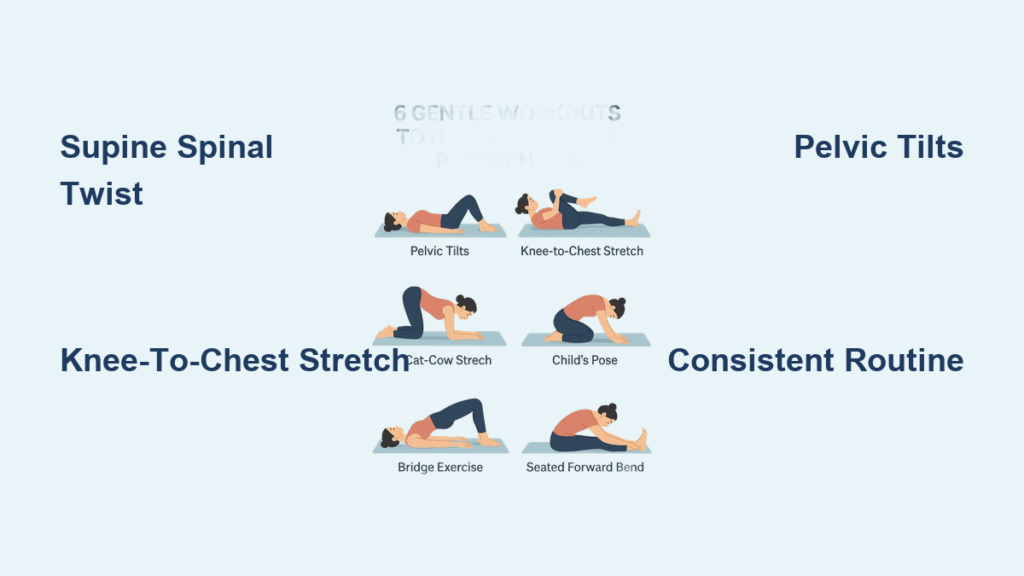
Supine Spinal Twist for Instant Tension Release
Begin this stretch while you’re still half-asleep for maximum effectiveness. Lie flat on your back with knees bent and feet resting on the mattress. Gently guide both knees to one side while keeping both shoulders firmly pressed against the bed. You should feel a gentle release along your lower spine without any strain in your neck or hips.
Hold this position for 25-30 seconds, breathing deeply into the areas of tension. The key is maintaining shoulder contact with the bed—this creates the proper spinal rotation rather than just moving your hips. When switching sides, return to center first before moving to the opposite direction. Perform this movement immediately after waking, before your body has fully stiffened from overnight immobility.
Critical technique tip: Place a pillow between your knees if you feel strain in your hips. This modification reduces pressure on your sacroiliac joint while maintaining the spinal twist.
Knee-to-Chest Stretch That Decompresses Lumbar Discs
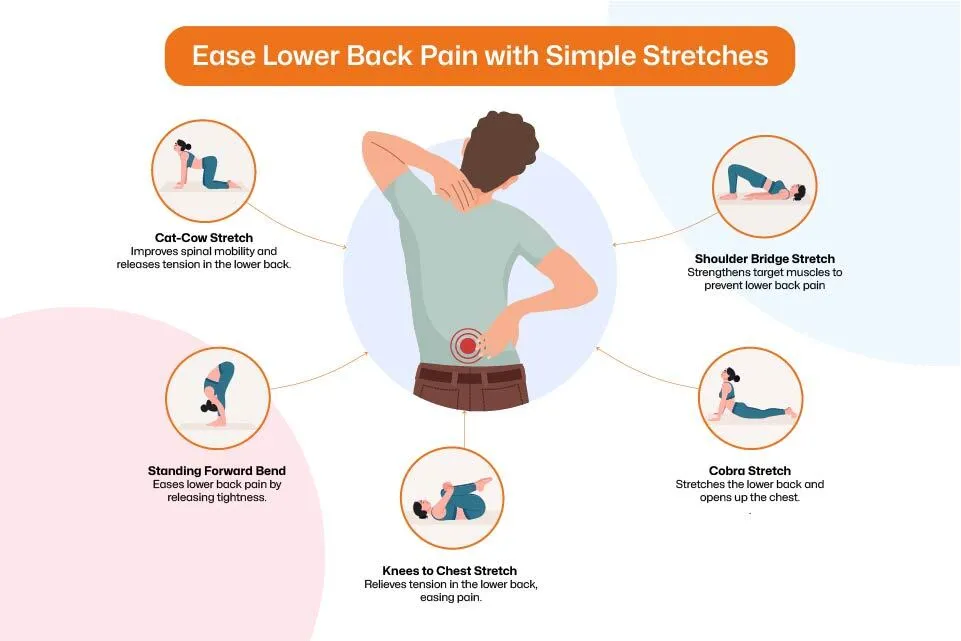
This simple yet powerful movement targets the exact area where most morning stiffness occurs. While lying on your back, bring one knee toward your chest, placing your hands behind your thigh (not your knee) for support. Avoid pulling aggressively—your goal is gentle traction, not maximum flexion.
Hold for 20-25 seconds, feeling the release in your lower back and gluteal region. Repeat with the opposite leg, then bring both knees to your chest simultaneously for a deeper stretch. The bilateral version provides balanced decompression across your entire lumbar region.
Common mistake to avoid: Many people arch their lower back during this stretch, which eliminates the therapeutic effect. Keep your tailbone gently pressed into the mattress throughout the movement. If you can’t maintain this position, bend your opposite knee with foot flat on the bed for stability.
Pelvic Tilts That Activate Core Support Before Standing
These subtle movements rebuild the critical connection between your brain and core muscles that support your lower back. Lying flat with knees bent, gently tighten your abdominal muscles to flatten your lower back against the mattress. Hold this neutral spine position for 5 seconds before slowly releasing.
Complete 12-15 repetitions before attempting to stand. The magic happens in the transition from lying to sitting—if you perform these immediately before getting up, your core muscles will be primed to support your spine during those vulnerable first movements.
Pro tip: Place your fingers just inside your hip bones to feel your deep transverse abdominis engage. Proper activation creates a gentle “corset” sensation around your midsection rather than stomach bulging.
Your 4-Minute Bed Routine That Prevents Morning Back Pain

The Exact Sequence That Works Best
Start with the supine spinal twist while you’re still drowsy—it requires the least muscular effort when your body is coldest. Transition directly to single-leg knee-to-chest stretches, finishing with pelvic tilts to activate your core stabilizers. This progression follows your body’s natural warming pattern, moving from passive to active movements.
Complete the entire sequence before your feet touch the floor. The warmth of your bed keeps muscles pliable, making these stretches significantly more effective than waiting until you’re standing on cold tile. Time yourself—most people finish this complete routine in exactly 3 minutes and 45 seconds, with measurable reduction in morning stiffness within one week.
Breathing Patterns That Double Pain Relief
Inhale deeply through your nose for 4 seconds before initiating each stretch, then exhale slowly through pursed lips for 6 seconds as you move into position. This extended exhale activates your parasympathetic nervous system, reducing pain perception by up to 40% according to movement science research.
During pelvic tilts, inhale to prepare and exhale while tightening your core. This breathing pattern synchronizes with your diaphragm’s natural movement, creating optimal intra-abdominal pressure to support your spine. Never hold your breath—continuous breathing maintains oxygen flow to stiff tissues.
Critical Mistakes That Worsen Morning Back Pain
Forcing Stretches Beyond Your Current Range
Your muscles are coldest and most vulnerable during the first 10 minutes after waking. Never bounce or push through resistance—stop at the first sensation of tension, not pain. Morning stiffness serves as your body’s natural protection against injury during this vulnerable period.
If you feel sharp pain during any movement, stop immediately and return to neutral position. Gentle stretching should produce only mild pulling sensations that gradually ease as you breathe through them. If discomfort persists beyond 30 seconds, skip that particular stretch and try again tomorrow.
Performing Stretches on an Ultra-Soft Mattress
Memory foam and pillow-top mattresses lack the firm support needed for proper spinal alignment during stretches. If you sink more than 2 inches when pressing on your mattress, perform stretches on a yoga mat beside your bed instead.
For those committed to bed-based stretching, place a firm board under your mattress or use a folded towel under your lower back during pelvic tilts. This provides the necessary feedback to maintain proper spinal alignment and prevents excessive movement that could strain vulnerable tissues.
Ignoring Warning Signs That Require Medical Attention
Stop immediately if you experience numbness, tingling down your legs, or pain that radiates below your knee. These symptoms indicate potential nerve involvement that requires professional evaluation, not stretching. Morning stiffness that worsens with movement rather than improving within 10 minutes of gentle activity also warrants medical consultation.
True muscle stiffness improves with gentle movement, while nerve-related pain typically intensifies. If your pain increases after completing these stretches, discontinue the routine and consult a physical therapist before continuing.
Long-Term Prevention Strategies That Work
Consistency Beats Intensity Every Time
Five minutes of gentle stretching daily delivers better results than 30 minutes once weekly. Your nervous system responds to regular stimulus, with research showing spinal tissues adapt most effectively to consistent, moderate input. Set a phone reminder for your first stretch session if needed—most people establish the habit within 10 days.
Track your progress by rating your morning stiffness on a scale of 1-10 before and after stretching. Most consistent practitioners see a 3-4 point improvement within two weeks, with continued gains through the first 6-8 weeks as your tissues adapt.
Strategic Integration Into Existing Habits
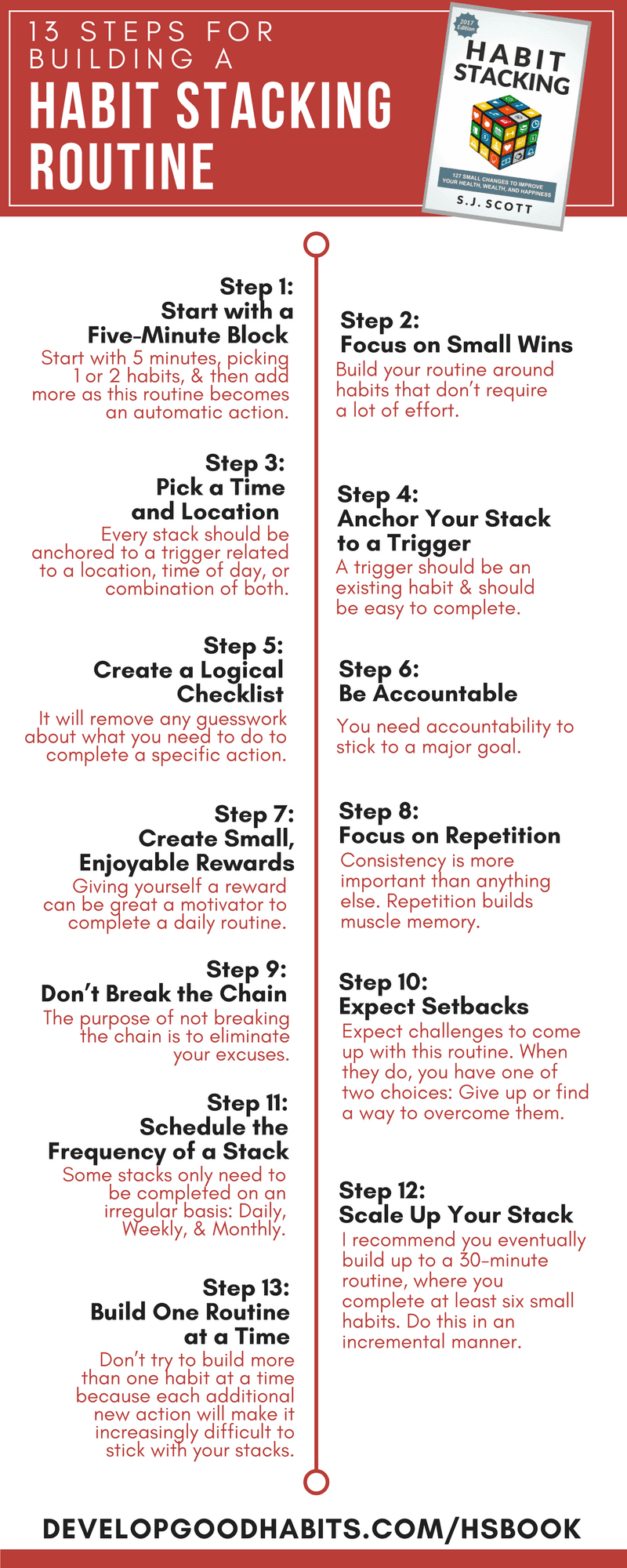
Link your stretching routine to an existing morning behavior—perform these movements immediately after turning off your alarm but before checking your phone. This “habit stacking” approach leverages your existing neural pathways to create automatic behavior change.
Place a small pillow at the foot of your bed as a visual cue, or keep your yoga mat rolled up beside your bed where you’ll see it first thing in the morning. The goal is to make skipping your routine feel unnatural, like forgetting to brush your teeth.
Start tomorrow morning with just the supine spinal twist and pelvic tilts—these two movements alone provide significant relief for most people. Within seven days of consistent practice, you’ll likely notice easier transitions from lying to standing, reduced morning stiffness duration, and improved mood as pain-free mornings become your new normal. Remember: the most effective stretch routine is the one you’ll actually do consistently, not the most complicated one you abandon after three days. Your back will thank you for those few minutes of morning self-care before your feet ever touch the floor.