

Seventy percent of adults will experience low-back pain at some point, making it one of the most expensive musculoskeletal issues in modern healthcare. When your spine aches after sitting at a desk all day or flares up lifting groceries, back pain massage therapy often tops your Google search. But between viral claims of “miracle cures” and skeptics dismissing it as placebo, what does actual evidence say? We analyzed the definitive 2015 Cochrane systematic review of 25 clinical trials involving 3,096 adults to cut through the noise. You’ll discover exactly how much relief to expect, which pain types respond best, and why timing your sessions correctly matters more than technique.
Don’t waste money on random spa treatments hoping for results. This guide reveals when back pain massage therapy delivers measurable improvement versus when you’d be better served by other approaches. We translate complex clinical data into clear action steps—so you can make informed decisions about your care without falling for marketing hype.
Why Your Chronic Back Pain Responds Better Than Acute Pain
Massage shows clear short-term benefits for back pain lasting over six weeks, but evidence for sudden injuries remains weak. The Cochrane review found sub-acute (6-12 week) and chronic (12+ week) pain sufferers gained moderate pain reduction—about 1.5-2.5 points on a 10-point scale—after 4-6 sessions. Crucially, this improvement only held against “inactive” options like waiting lists or sham therapy. When stacked against active treatments like exercise or acupuncture, massage’s advantage shrinks to barely noticeable levels (0.4-point difference).
Acute Pain: Proceed With Caution
Only one small trial (51 participants) examined massage for fresh back injuries under six weeks old. While it showed statistically significant pain relief compared to no treatment, functional improvement wasn’t proven. Translation: Your sore back might feel momentarily better after a massage following a weekend gardening injury, but don’t expect restored mobility. For acute pain, prioritize medical evaluation first—especially if you experience night pain or leg numbness.
How Many Sessions Before You Actually Feel Better?
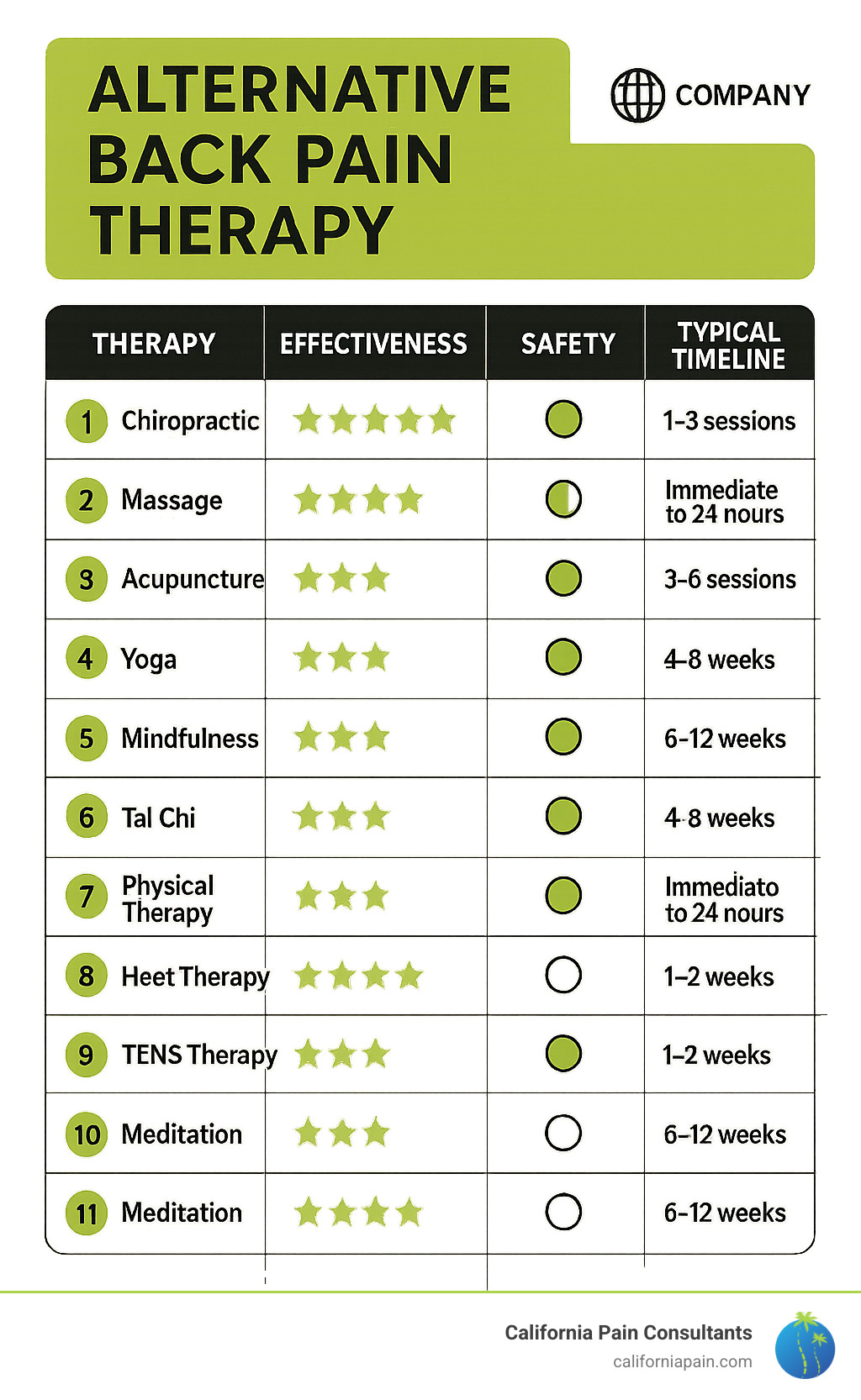
Stop booking single “tune-up” sessions expecting miracles. Clinical data proves noticeable relief requires consistent treatment: 4-6 sessions spread over 1-2 weeks delivers the sweet spot of 1.5-2.5-point pain reduction. Beyond 10 sessions, studies show no additional benefit—a critical insight for your budget. Since long-term data vanishes after one year, view massage as part of ongoing maintenance rather than a permanent fix.
Your Realistic Relief Timeline
| Sessions Completed | Expected Pain Reduction | Clinical Confidence |
|---|---|---|
| 1-2 | 0.5-1.0 points | Low (spotty results) |
| 4-6 | 1.5-2.5 points | Moderate (proven) |
| 10+ | No extra gain | Very low |
Spotting Dangerous Red Flags Before Booking

While back pain massage therapy carries minimal risks (no serious adverse events occurred across 3,096 trial participants), certain symptoms demand medical evaluation first. Skip massage and see a doctor immediately if you have:
– Unexplained weight loss or fever alongside back pain
– Numbness in both legs or loss of bowel/bladder control
– History of cancer or recent major trauma like a car accident
For most others, temporary soreness affects 1.5%-25% of users—usually resolving within 24 hours. Prevent this by telling your therapist: “If pressure exceeds a 5/10 on my pain scale, ease up immediately.” Good practitioners adjust depth based on real-time feedback, not predetermined routines.
Choosing Between Swedish, Deep Tissue, or Trigger Point
Surprise: The Cochrane review found no evidence that specific techniques like Swedish, myofascial release, or trigger point therapy outperform others. All 22 hands-on trials grouped diverse methods under “massage,” with mechanical devices (in 3 trials) showing similar results. What actually determines success:
– Therapist expertise: Seek providers with ≥2 years specializing in musculoskeletal pain
– Session length: 30-60 minutes consistently outperformed shorter visits
– Treatment frequency: 1-2 sessions weekly beats sporadic appointments
Critical Questions to Ask Your Therapist
- “How many weekly clients do you treat specifically for low-back pain?” (Ideal: 5+)
- “Will you coordinate notes with my physical therapist or doctor?”
- “Can you teach me self-massage techniques for between sessions?”
DIY Back Pain Massage Without Hurting Yourself
When professional sessions strain your budget, targeted self-massage works—but only if done correctly. Foam rollers and tennis balls help only when you avoid these common mistakes:
- Never roll directly over your spine—focus on muscles alongside it (quadratus lumborum, glutes)
- Move slowly: Hold tender spots 30 seconds max; rapid bouncing causes micro-tears
- Stop immediately if pain exceeds 5/10 or radiates down your leg
3-Minute Night Relief Routine
- Thoracic spine release: Lie sideways with foam roller under upper back, 30 seconds per side
- Glute activation: 15 bridge lifts holding 3 seconds at the top
- Hip flexor reset: Kneel in lunge position, gently press hips forward 30 seconds per side
Triple Your Results With These Therapy Combos
Massage alone rarely solves persistent back pain. The strongest evidence supports pairing it with:
– Progressive strength training: Maintains flexibility gains from massage
– Moist heat therapy: Apply 20 minutes pre-massage to loosen tight muscles
– Mindfulness meditation: Reduces “pain catastrophizing” that amplifies discomfort
Sample Weekly Integration Plan
| Day | Activity | Why It Works |
|---|---|---|
| Monday | 60-min professional massage | Resets muscle tension |
| Wednesday | 20-min core strengthening circuit | Builds supportive musculature |
| Friday | Self-massage + moist heat pack | Maintains progress between sessions |
| Sunday | 30-min walk + diaphragmatic breathing | Prevents stiffness recurrence |
What Insurance Actually Covers (No Surprises)
Despite common assumptions, most U.S. insurers don’t routinely cover back pain massage therapy. Typical out-of-pocket costs:
– Community clinics: $35-$50 for 60 minutes
– Private practices: $80-$120 per session
– Medical massage (with doctor’s referral): $0-$40 copay if covered
Boost approval odds by:
– Getting a prescription specifying “therapeutic massage for low-back pain”
– Verifying coverage for CPT codes 97124 (massage) or 97140 (manual therapy)
– Choosing therapists who bill under “physical medicine” rather than “wellness”
Why Long-Term Relief Requires More Than Massage
Here’s the uncomfortable truth: Clinical trials show massage’s benefits fade within months unless combined with movement-based therapies. The Cochrane authors flagged critical research gaps including:
– No large studies on acute back pain treatment
– Zero standardized protocols for technique, dosage, or therapist training
– Minimal data beyond one-year follow-up
– Complete absence of cost-effectiveness analysis
Until better evidence emerges, treat back pain massage therapy as one tool in your toolkit—not a standalone solution. Pair it with consistent core strengthening and ergonomic adjustments for lasting change.
If your back pain has lingered beyond six weeks, back pain massage therapy can realistically reduce discomfort by 1-2 points within 2-3 weeks when done correctly. But after 6-8 sessions without improvement, consult a spine specialist—your issue may require targeted interventions massage can’t address. Remember: The most effective approach combines professional sessions with daily mobility work and smart posture habits. Track your pain levels weekly; if you don’t see a 30% reduction within a month, pivot to evidence-backed alternatives like supervised exercise therapy. Your back deserves solutions that last, not temporary fixes.