
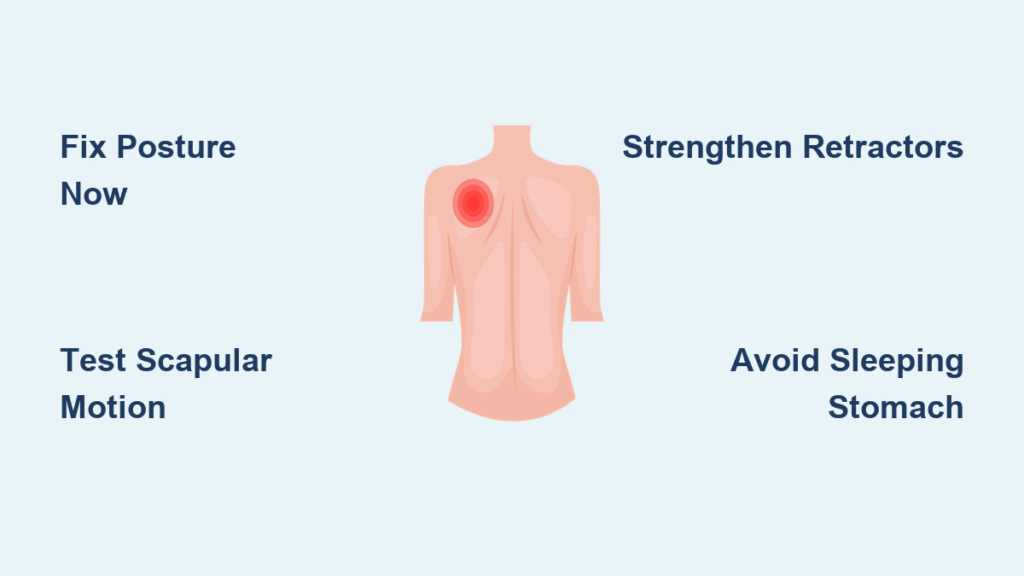
That sharp twinge when you reach for the top shelf, the dull ache that follows you through work meetings, the burning sensation that won’t quit even after lying down – back pain under your shoulder blade isn’t just uncomfortable, it’s a direct signal your body has lost its movement harmony. You’re not alone; millions experience this specific type of upper back distress, often misdiagnosed as simple muscle strain. The critical truth? This pain stems from disrupted scapular mechanics – and the solution lies in targeted corrections you can implement immediately. Forget generic back pain advice; this guide delivers precise strategies to identify why your shoulder blade hurts and how to restore pain-free movement within weeks.
Why Your Shoulder Blade Pain Won’t Go Away
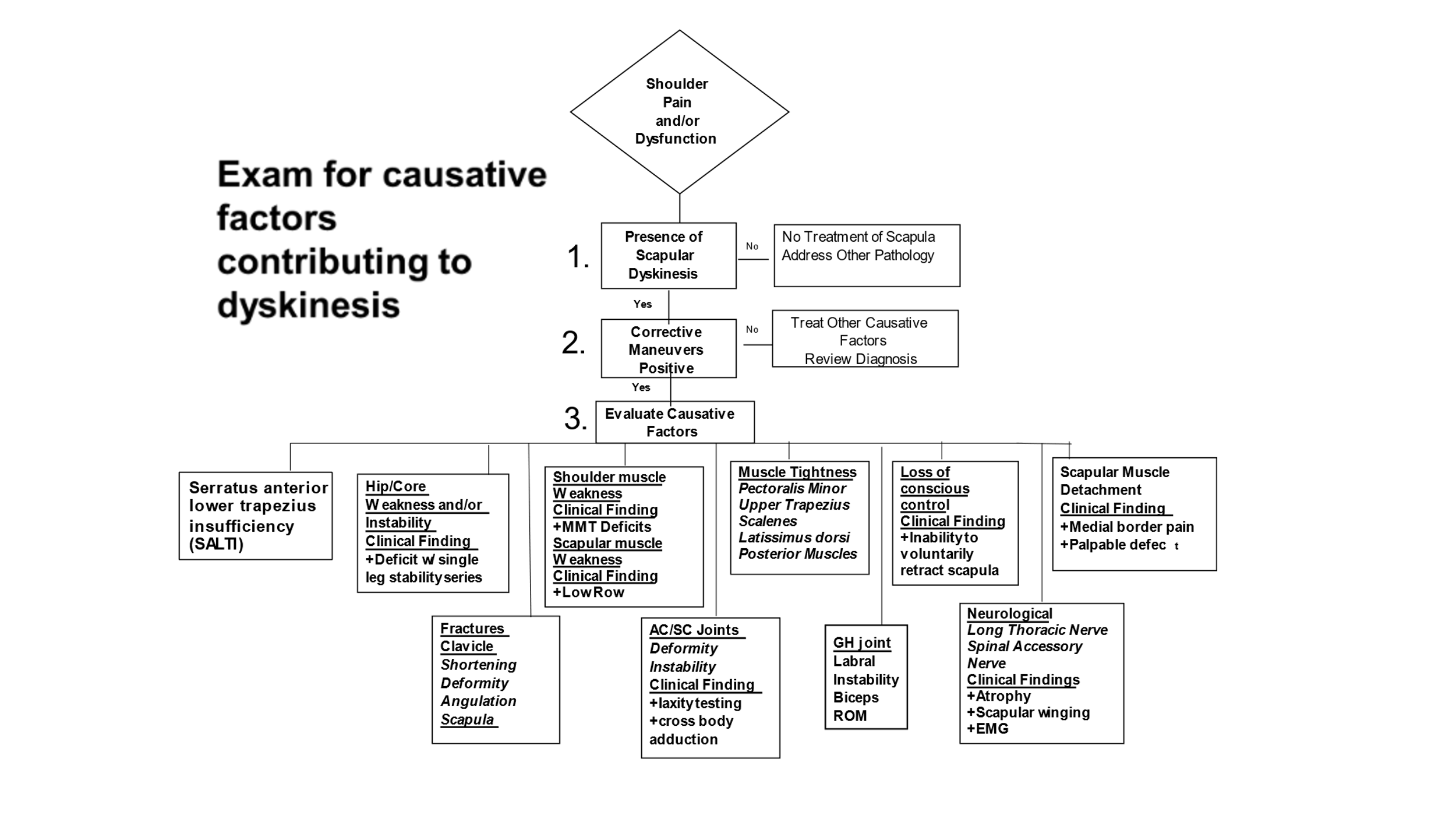
Your shoulder blade isn’t bolted to your ribcage – it floats dynamically, controlled by 17 muscles working in perfect concert. When this coordination fails (a condition called scapular dyskinesis), every arm movement strains overstressed tissues. The root problem isn’t the pain itself, but the altered position and motion of your scapula. This manifests as persistent tenderness along the top or inner border of your blade, or deep beneath it. Crucially, you’ll notice visual red flags: one shoulder blade protruding noticeably when viewed from behind, “winging” where the inner edge lifts off your ribs during arm movement, or uneven shoulder height at rest. These aren’t just cosmetic issues – they’re mechanical failures causing your pain.
The Muscle Imbalance Trap You’re Stuck In
Prolonged sitting creates a devastating cycle: your chest muscles (pectoralis major/minor) tighten from keyboard hunching, while critical stabilizers like your rhomboids, middle trapezius, and serratus anterior weaken from disuse. This imbalance pulls your shoulder blade forward and downward, straining its connection to the spine. The result? Up to 20 degrees of abnormal scapular positioning that multiplies stress on supporting muscles during everyday tasks like lifting a coffee cup or turning to check traffic. You feel this as deep, localized pain under your shoulder blade – your body’s alarm system for mechanical dysfunction.
Nerve Compression and Structural Triggers
While muscle imbalances cause most cases, nerve issues demand attention. Long thoracic nerve damage – from viral illness, trauma, or repetitive overhead motions – paralyzes your serratus anterior muscle, causing dramatic winging and pain. Structural problems like rib fractures, osteochondromas (benign bone growths), or shoulder joint injuries can also refer pain beneath your blade. Key differentiator: Nerve-related pain often includes numbness, tingling down your arm, or sudden weakness – immediate red flags requiring medical evaluation.
Three At-Home Tests to Pinpoint Your Cause
Wall Push-Up Assessment (Do This Now)
Stand facing a wall, arms extended at shoulder height. Perform 5 slow push-ups while observing your shoulder blades in a mirror. Abnormal findings signal scapular dyskinesis:
– Excessive winging: Inner blade border protrudes more than 1cm from your ribs
– Asymmetrical movement: One blade moves significantly less than the other
– Pain reproduction: Sharp ache under blade during the motion
Overhead Reach Diagnostic
Stand with your back flat against a wall, heels 6 inches from baseboard. Slowly slide arms up the wall. Warning signs reveal dysfunction:
– Loss of shoulder blade contact with wall before arms reach 90 degrees
– Inability to raise arms fully without arching your lower back
– Pain peaking between 90-120 degrees of elevation
Manual Strength Check
Sit tall, elbows bent at 90 degrees. Have someone gently press your elbows forward while you resist by squeezing shoulder blades together. Weakness indicators:
– Inability to hold position against light pressure (less than 1kg)
– Visible “winging” during resistance
– Pain localized under your shoulder blade
Immediate Relief Tactics That Work Tonight
Targeted Heat Application Protocol
Apply dry heat for 15 minutes directly to the painful area within 30 minutes of pain onset. Use a contoured microwaveable pad (not a standard heating pad) positioned precisely beneath your shoulder blade. Critical mistake to avoid: Never apply heat immediately after injury – wait 48 hours. Heat relaxes tight muscles but can increase inflammation if used too soon.
Strategic NSAID Timing
Take ibuprofen (400mg) 15 minutes before activities known to trigger pain (like overhead reaching), not when pain peaks. This preemptive approach blocks inflammation pathways before they activate. Never exceed 1,200mg daily without physician approval – prolonged use risks stomach and kidney damage.
The 30-Second Postural Reset
Set a timer every 30 minutes. When it chimes:
1. Roll shoulders up, back, and down firmly
2. Gently squeeze shoulder blades together (imagine holding a pencil between them)
3. Tuck chin straight back (like making a “double chin”)
4. Hold 5 seconds, repeat 3 times
This interrupts the forward-head posture cycle causing 80% of cases.
Your Step-by-Step Recovery Exercise Plan
Phase 1: Pain Reduction (Days 1-14)
Scapular Retractions (Do hourly)
– Sit against a chair back
– Squeeze shoulder blades together without shrugging
– Hold 5 seconds, relax 5 seconds
– 2 sets of 10 reps, 3x daily
Visual cue: Feel the space between shoulder blades narrow
Wall Slides (Daily)
– Stand back against wall, head/shoulders/buttocks touching
– Elbows bent 90 degrees, backs of hands on wall
– Slowly slide arms up while maintaining contact
– Stop if shoulder blades lose wall contact
– 3 sets of 8 reps
Phase 2: Strength Restoration (Weeks 3-6)

Prone Y-T-W Raises (Every other day)
– Lie face down on bed, arms hanging
– Lift arms to form Y (30° out), T (90°), W (elbows bent)
– Raise only 2-3 inches off surface
– 2 sets of 8 per position
Warning: Stop if lower back arches
Resistance Band Pull-Aparts (Daily)
– Hold band at chest height, hands shoulder-width
– Pull band apart while squeezing shoulder blades
– Keep elbows slightly bent, focus on mid-back contraction
– 3 sets of 15 reps
Phase 3: Functional Integration (Week 7+)
Single-Arm Rows (3x weekly)
– Kneel on bench, support with one hand
– Pull weight toward lower ribcage, elbow close to body
– Focus: Squeeze shoulder blade toward spine
– 3 sets of 10 reps/side
Serratus Anterior Punches (Daily)
– Lie on back, arms extended toward ceiling
– Press palms upward against resistance (light weight or band)
– Lift shoulder blades off floor without shrugging
– 2 sets of 12 reps
Daily Prevention Habits That Stop Relapse
Workstation Fixes You Need Today
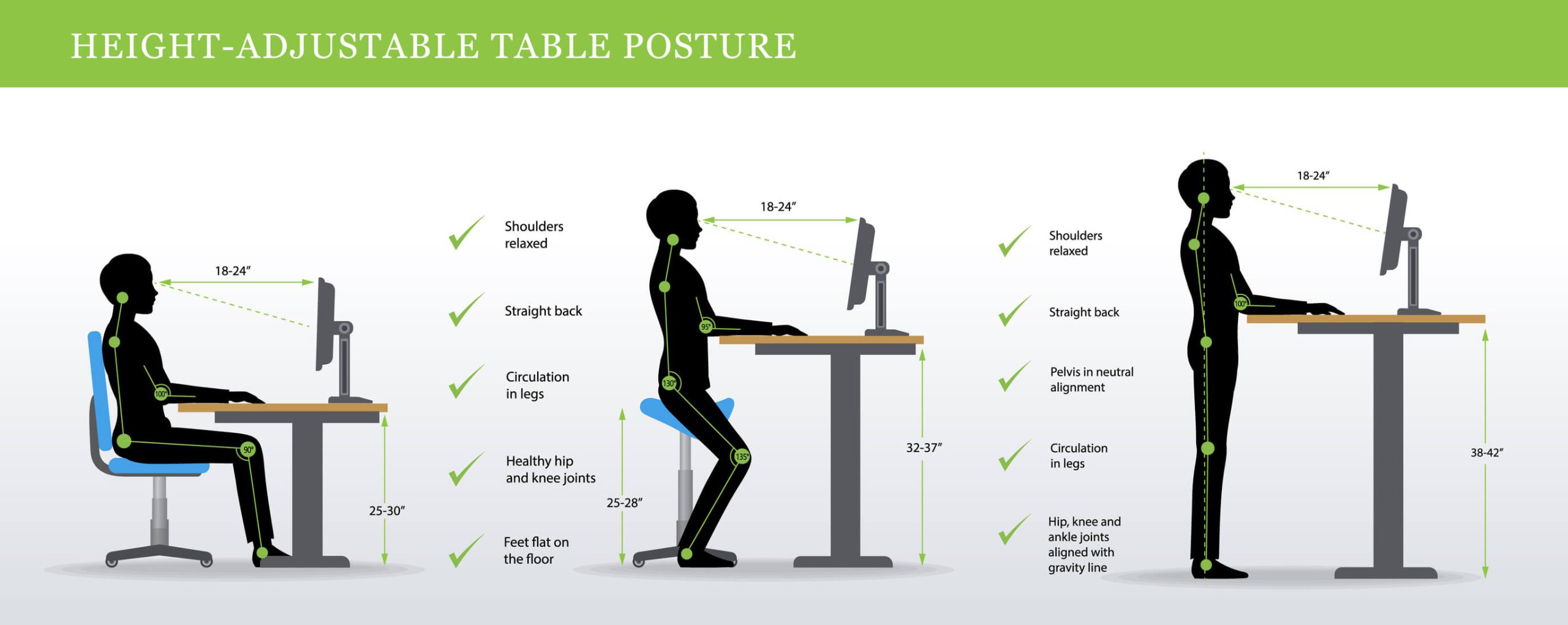
Position your monitor so the top third aligns with your eye level. Non-negotiable adjustments:
– Keyboard height allowing elbows at 90 degrees
– Feet flat on floor (use footrest if needed)
– Lumbar support maintaining natural spine curve
– Critical habit: Every 20 minutes, perform the 30-second postural reset
Sleep Position Strategy
Immediately stop sleeping on your stomach – it forces extreme neck rotation and scapular protraction. Optimal positions:
– Back sleepers: Pillow under knees, arms at sides
– Side sleepers: Pillow between knees, top arm supported
– Avoid: Sleeping with arm under pillow (compresses nerves)
The 2:1 Exercise Balance Rule
For every pushing movement (push-ups, bench press):
– Perform two pulling exercises (rows, pull-downs)
– Stretch chest muscles for 30 seconds minimum post-workout
– Example: After 10 push-ups, do 20 rows and 30 seconds of doorway pec stretch
When to See a Doctor Immediately
Seek emergency care if you experience:
– Numbness/tingling radiating down your arm
– Chest pain with shoulder blade discomfort
– Inability to lift arm above shoulder height
– Visible deformity of shoulder blade
Schedule within 48 hours for:
– Pain persisting beyond 10 days of consistent home treatment
– Night pain waking you from sleep
– Progressive arm weakness (e.g., dropping objects)
– Pain with fever or unexplained weight loss
Long-Term Pain Prevention Protocol
Continue these three critical exercises 3x weekly for life:
1. Scapular retractions (2 sets of 15)
2. Doorway pec stretches (30 seconds/side)
3. Prone Y raises (2 sets of 10)
Monthly self-check: Repeat the wall push-up test. Photograph your back monthly to track scapular symmetry. If winging increases by 20% or pain returns, restart Phase 1 exercises immediately.
Back pain under shoulder blade resolves for 90% of people with consistent, targeted intervention. The key isn’t just treating symptoms – it’s retraining the intricate muscle coordination your shoulder blade demands. Start tonight with the 30-second postural reset and wall slides. Within two weeks, you’ll notice reduced pain; by six weeks, most regain full function. Remember: your shoulder blade isn’t designed to anchor tension – it’s engineered for fluid motion. Restore that motion, and you reclaim pain-free movement for life.