
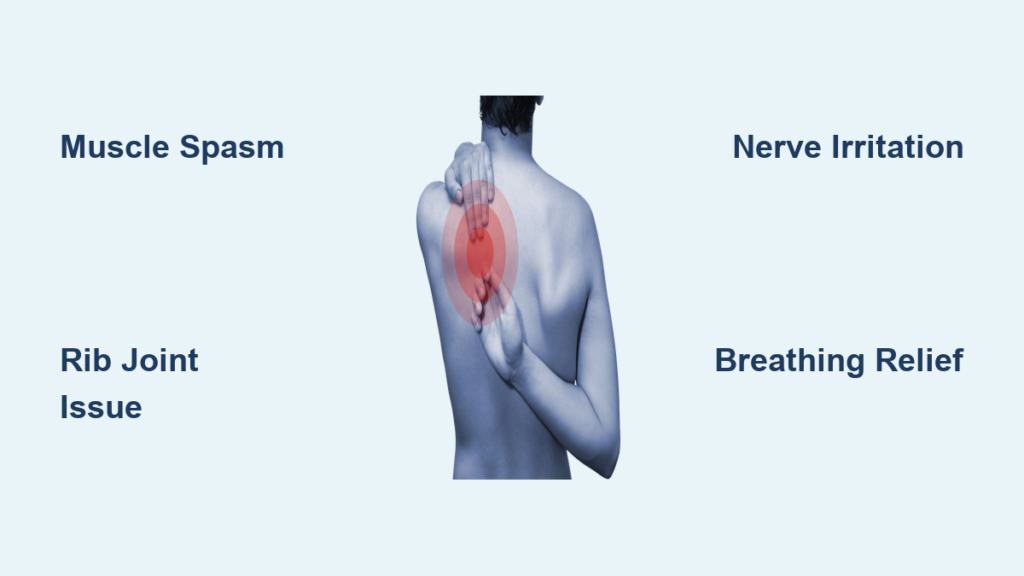
That sharp stab in your back when you take a deep breath—it’s more than discomfort. It’s your body’s alarm system flashing red. Whether it struck during your morning stretch, while reaching for that top shelf, or seemingly out of nowhere, this specific pain pattern demands attention. Unlike generic back aches, breathing-related back pain follows a distinct rhythm: inhale, pain spikes; exhale, relief returns. Understanding why this happens could be the difference between a quick fix and weeks of unnecessary suffering.
While medical literature provides extensive details about this symptom, the key insight is recognizing that breathing-related back pain rarely stems from one single cause. Your ribs, spine, muscles, and even internal organs all coordinate during respiration. When any part of this complex system malfunctions, pain becomes your body’s warning signal. This guide breaks down what you need to know to take immediate action.
Why Breathing Triggers Back Pain
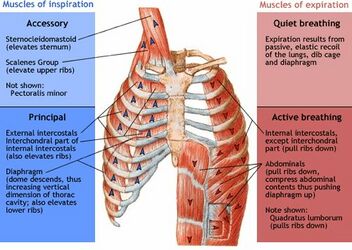
Muscle Spasm Patterns
Your back contains layers of muscles that expand and contract with every breath. The erector spinae group, running parallel to your spine, can seize up after sudden movements or prolonged poor posture. When these muscles spasm, deep breathing stretches the already-irritated tissue, creating that characteristic sharp pain.
Key indicators of muscle-related breathing pain:
– Pain localizes to one side of the back
– Movement worsens the sensation
– Massage or heat provides temporary relief
– Pain decreases with shallow breathing
Muscle spasms often occur after activities that strain your back, such as lifting heavy objects or maintaining awkward positions for extended periods. The pain typically intensifies when you twist or bend, and you might notice specific tender spots along your spine that hurt when pressed.
Rib Joint Dysfunction
Where your ribs connect to your spine—the costovertebral joints—can become irritated or slightly displaced. These tiny joints move every time you breathe. When inflamed, the mechanical stress of deep breathing creates localized, stabbing pain that’s often mistaken for spinal issues.
Rib joint pain characteristics:
– Pain focuses near the spine at rib level
– Twisting motions intensify discomfort
– Tenderness when pressing specific rib areas
– Pain may radiate along the rib
This condition frequently develops after minor trauma like coughing fits or sudden movements. You might hear or feel a slight “click” when the joint moves abnormally during breathing. The pain often remains in a very specific location rather than spreading broadly across your back.
Nerve Involvement
Breathing expands your rib cage, which can irritate nerves running between ribs. This creates a burning or shooting pain that follows the path of the affected nerve. The pain often has a distinct electric quality and may be accompanied by numbness or tingling.
Intercostal neuralgia occurs when nerves between your ribs become compressed or inflamed. Deep breaths force your rib cage to expand, pressing on these sensitive nerves. The pain might wrap around your side toward your chest or radiate along the path of the nerve. You may notice increased sensitivity in the skin over the affected area.
Immediate Pain Relief Strategies
Controlled Breathing Techniques
When back pain strikes during breathing, your natural response—shallow breathing—actually worsens the problem. Instead, use this modified breathing pattern:
- Place your hand on your abdomen
- Breathe through your nose slowly
- Focus on expanding your belly, not chest
- Hold for 2-3 seconds at comfortable depth
- Exhale slowly through pursed lips
This technique reduces stress on back muscles while maintaining oxygen levels. Practice this breathing pattern for five minutes every hour until the acute pain subsides. You’ll notice that your back muscles gradually relax as you avoid triggering the painful motion.
Positioning for Relief
Certain positions can dramatically reduce breathing-related back pain by taking pressure off irritated structures:
For muscle spasms:
– Lie on your back with knees bent
– Place a pillow under your knees
– Allow arms to rest at 45-degree angles
For rib joint pain:
– Sit upright with back supported
– Cross arms over chest like a hug
– Lean slightly toward the painful side
The pillow under your knees reduces tension in your lower back muscles, while the arm position creates gentle compression that stabilizes irritated rib joints. These positions minimize the movement required for comfortable breathing while the affected area heals.
Heat and Cold Applications
Heat therapy works best for muscle-related pain:
– Apply heating pad for 15-20 minutes
– Focus on the painful muscle group
– Repeat every 2-3 hours as needed
Cold therapy suits acute injuries or inflammation:
– Use ice pack wrapped in thin cloth
– Apply for 10-15 minutes maximum
– Allow skin to warm between applications
Alternating between heat and cold can be particularly effective for mixed presentations. Start with cold to reduce inflammation during the first 48 hours, then switch to heat to promote blood flow and muscle relaxation. Never apply ice or heat directly to skin to avoid tissue damage.
Warning Signs Requiring Medical Attention

Red Flag Symptoms
While most breathing-related back pain resolves within days, certain patterns indicate serious underlying conditions:
Seek immediate care if you experience:
– Pain accompanied by fever or chills
– Difficulty breathing beyond mild discomfort
– Chest pain or pressure
– Numbness or weakness in legs
– Pain following recent trauma
– Unexplained weight loss with back pain
These warning signs suggest conditions that require professional diagnosis and treatment. Pain that worsens when lying flat or that radiates to your jaw or left arm could indicate cardiac issues that need emergency evaluation.
When Pain Persists
If your symptoms don’t improve within 48-72 hours of home care, or if they’re progressively worsening, professional evaluation becomes necessary. Persistent breathing-related back pain could indicate:
- Pneumonia or pleurisy: Lung inflammation that refers pain to the back
- Spinal issues: Herniated discs or arthritis affecting nerve roots
- Gallbladder problems: Can cause right-sided back pain with deep breathing
Chronic pain that follows this pattern often requires imaging studies or specialized testing to determine the underlying cause. Don’t ignore persistent symptoms thinking they’ll resolve on their own.
Prevention Through Posture and Movement
Daily Posture Checks
Poor posture sets the stage for breathing-related back pain. Your breathing mechanics change significantly based on spinal alignment:
Standing posture correction:
– Roll shoulders back and down
– Tuck chin slightly without looking down
– Engage core muscles gently
– Distribute weight evenly on both feet
Sitting posture essentials:
– Feet flat on floor, knees at 90 degrees
– Back supported against chair
– Shoulders relaxed, not hunched
– Screen at eye level to prevent forward head posture
Simple posture adjustments throughout your day can significantly reduce strain on your back during breathing. Set reminders to check your posture hourly, especially if you work at a desk or drive frequently.
Strengthening Exercises
Building strength in key muscle groups prevents breathing-related back pain by improving spinal stability:
Diaphragm strengthening:
– Lie on your back with knees bent
– Place one hand on chest, one on belly
– Practice breathing only into your belly
– Progress to seated and standing positions
Back muscle conditioning:
– Perform gentle back extensions
– Include side planks for lateral stability
– Add bird-dog exercises for coordination
– Focus on endurance over heavy weights
Start with just five minutes of these exercises daily, gradually increasing as your strength improves. Consistent practice builds the muscular support your spine needs during normal breathing and physical activity.
Breathing Pattern Retraining
Many people develop inefficient breathing patterns that stress back muscles:
Identify poor patterns:
– Shoulders rising during inhalation
– Chest expanding more than belly
– Rapid, shallow breaths
– Holding breath during activity
Correct breathing habits:
– Practice 5 minutes twice daily
– Use apps or videos for guidance
– Focus on slow, controlled breathing
– Integrate into daily activities
Retraining your breathing pattern takes conscious effort but yields significant benefits. Proper breathing mechanics distribute the work of respiration across multiple muscle groups rather than overloading your back.
Quick Assessment Guide
Self-Evaluation Questions
Use these questions to better understand your condition:
- Where exactly does it hurt? (Specific location guides treatment)
- When did it start? (Acute vs. chronic changes approach)
- What makes it better or worse? (Movement, position, time of day)
- Any other symptoms? (Fever, cough, numbness indicate severity)
- Previous episodes? (Pattern recognition for prevention)
Pinpointing the exact location of your pain with one finger helps identify the affected structures. Note whether the pain is sharp, dull, burning, or aching, as this provides clues about the underlying cause.
Pain Scale Interpretation
Rate your pain 1-10, but focus on how it affects function:
– 1-3: Mild discomfort, can perform all activities
– 4-6: Moderate pain, some activities limited
– 7-10: Severe pain, significant activity limitation
Functional impact matters more than the number itself. If pain prevents you from sleeping or performing basic self-care, it warrants professional attention regardless of the numerical rating.
Next Steps Based on Severity
Mild (1-3): Home care with monitoring
Moderate (4-6): Home care plus medical consultation within 24-48 hours
Severe (7-10): Immediate medical evaluation, especially with red flags
Be honest with yourself about your pain level and its impact on daily life. Erring on the side of caution with breathing-related pain is always wise.
Back pain with deep breathing isn’t just an inconvenience—it’s your body’s sophisticated warning system in action. By understanding the mechanics behind this specific pain pattern, you’ve gained the power to respond appropriately rather than react with fear. Most cases resolve with simple interventions, but knowing when to seek help prevents minor issues from becoming major problems.
Remember, the goal isn’t just pain relief—it’s restoring your body’s natural breathing mechanics so every breath supports rather than sabotages your back health. Start with the immediate relief strategies, implement the prevention techniques, and trust your body’s ability to heal when given the right conditions.