
That sharp twinge in your lower back after your third hour at the desk. The stiffness that makes standing up feel like cracking concrete. If you’re an office worker battling back pain, you’ve probably wondered: “Will investing in an ergonomic chair actually fix this?” You’re not alone—millions of desk workers face this daily struggle, hoping a premium chair will be their pain solution. But what does the actual research say about the benefits of ergonomic chairs for back pain? Let’s examine the hard evidence so you can make informed decisions without falling for marketing hype.
After reviewing 14 scientific studies spanning four decades, researchers discovered something surprising about ergonomic chairs and back pain relief. The evidence isn’t as clear-cut as chair manufacturers would have you believe. In this article, we’ll unpack what the research actually reveals about whether these chairs deliver meaningful pain reduction, which features might genuinely help, and what you should realistically expect from your investment. Most importantly, you’ll learn why chairs alone won’t solve your back pain—and what strategies actually work.
The 40-Year Research Reality: What 14 Studies Actually Found
Researchers analyzed every relevant study published between 1980 and 2020 to determine if ergonomic chairs genuinely reduce lower back pain in office workers. This comprehensive systematic review examined 14 different studies using rigorous scientific methodology to cut through marketing claims and identify actual evidence. The collection included two randomized controlled trials (the gold standard), ten repeated-measures studies, and two prospective cohort studies—all focused specifically on how chair interventions affect back pain.
Why Evidence Quality Matters for Your Back Pain Decisions
When researchers applied the GRADE assessment methodology—a systematic approach to evaluating scientific evidence quality—they discovered a troubling pattern across all 14 studies. Every single investigation received “very low-quality to low-quality evidence” ratings. This doesn’t mean ergonomic chairs don’t help anyone; it means the scientific community lacks high-quality proof that they consistently reduce back pain in office settings.
What this means for your purchasing decision:
– Conflicting evidence exists about whether chairs actually reduce pain
– No clear connection between chair features and discomfort reduction
– Trunk muscle activation benefits remain unproven
– Current evidence cannot support clinical recommendations for chairs as primary treatment
How Chair Types Compare in Pain Reduction Effectiveness

Researchers didn’t stop at the big picture—they broke down results by chair type to see if certain designs performed better. Whether examining high-end ergonomic models with multiple adjustment points, basic chairs with lumbar support, or specialized orthopedic designs, the evidence quality remained consistently weak. No chair type demonstrated high-quality evidence of significant back pain reduction for office workers.
The systematic review stratified findings by chair category and found identical problems across all types: small sample sizes, short study durations, and inconsistent measurement methods. This means that despite dramatic marketing claims about “revolutionary” chair designs, no particular type has stronger scientific backing than others for treating back pain specifically.
Why Doctors Can’t Recommend Chairs as Primary Back Pain Treatment
Based on current evidence, major health organizations cannot recommend chair interventions as a primary treatment for lower back pain. The systematic review’s conclusion is clear: we lack sufficient high-quality evidence to support chairs as effective standalone solutions for office workers’ back pain. This doesn’t mean chairs are useless—it means they shouldn’t be your only strategy.
The review specifically states chair interventions aren’t recommended for reducing lower back pain, reducing discomfort, or activating trunk muscles based on current evidence. This professional position might surprise you given all the marketing hype, but it reflects the scientific community’s commitment to evidence-based recommendations rather than commercial claims.
What to Look for in Chairs Despite Weak Evidence

While the overall evidence remains weak, certain ergonomic features show potential for individual benefit when properly configured to your body. The key is understanding which adjustments genuinely matter and avoiding chairs making unrealistic promises.
The 4 Adjustable Features That Might Actually Help Your Back
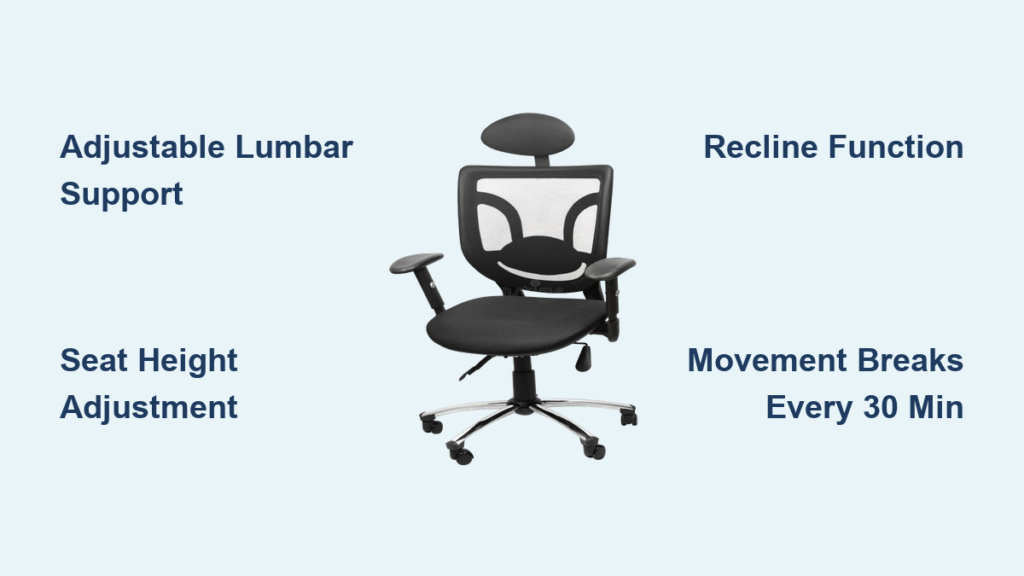
Despite the weak overall evidence, these four chair features deserve your attention when shopping:
- Customizable lumbar support: Properly positioned support matching your spine’s natural curve reduces disc pressure
- Seat height and depth adjustments: Ensures your feet rest flat while maintaining 90-110 degree hip angles
- Backrest recline capability: Reduces static loading on spinal discs during prolonged sitting
- Adjustable armrests: Prevents shoulder elevation that contributes to neck and upper back strain
These features work best when properly adjusted to your specific body dimensions—not as automatic “fix-alls” but as tools to maintain neutral spinal alignment.
Marketing Claims to Immediately Ignore When Chair Shopping
Protect your wallet by recognizing these red flags in chair marketing:
- “Cures chronic back pain” (no chair can cure underlying conditions)
- “Works for every body type without adjustment” (proper fit requires customization)
- “Eliminates need for movement breaks” (prolonged sitting harms regardless of chair quality)
- “Provides immediate pain relief” (real pain management requires comprehensive approaches)
If a chair claims to solve all your problems instantly, you’re looking at marketing fiction rather than evidence-based design.
Your Complete Back Pain Strategy: Chairs as Just One Piece
The most important insight from the research: ergonomic chairs work best as part of a comprehensive pain management strategy, not as standalone solutions. Even the perfect chair won’t counteract the negative effects of sitting all day without movement.
The 30-Minute Movement Rule That Beats Any Chair Design
Research consistently shows that regular movement breaks every 30 minutes provide more significant back pain relief than any chair feature. Set a timer and follow this simple protocol:
- Stand up and walk for 2-3 minutes every half hour
- Perform gentle spinal twists and forward folds at your desk
- Alternate between sitting and standing if you have a convertible desk
- Use distant printers or water coolers to force natural movement
This simple habit addresses the root cause of most office-related back pain—prolonged static positioning—more effectively than any chair feature alone.
When to See a Professional Instead of Buying Another Chair
Persistent back pain warrants professional evaluation rather than another chair purchase. Consult a physical therapist or occupational medicine specialist if you experience:
- Pain lasting more than two weeks despite chair adjustments
- Radiating pain down your legs (possible sciatica)
- Numbness or tingling in your extremities
- Pain that wakes you at night
A certified ergonomic specialist can assess your entire workstation setup and recommend targeted exercises, while a physical therapist can address specific muscular imbalances contributing to your pain.
Smart Chair Testing: How to Evaluate Before You Invest
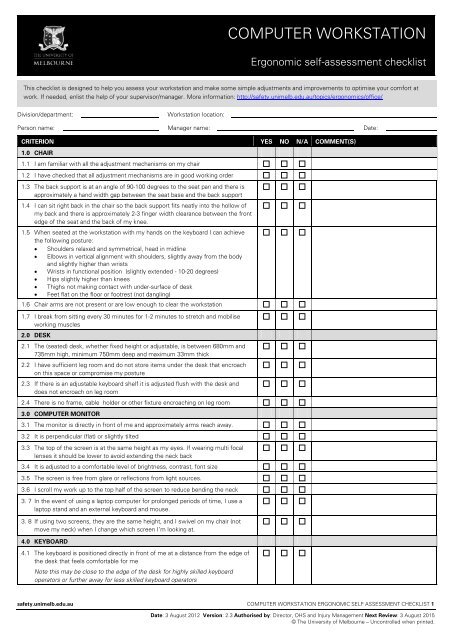
Given the uncertain evidence, approach chair purchases strategically:
- Request a minimum 30-day trial period before committing
- Document your pain levels daily using a simple 1-10 scale
- Test the chair with your actual work tasks, not just brief showroom sits
- Evaluate comfort during extended use, not just initial impressions
- Compare against your current chair’s performance metrics
Track productivity changes alongside pain levels—sometimes perceived comfort improvements don’t translate to actual pain reduction or work efficiency gains.
The Real Back Pain Solution: Movement Over Static Sitting
The strongest evidence from this research points to one undeniable truth: no chair, however ergonomic, can overcome the fundamental problem of prolonged sitting. Movement remains the most effective “ergonomic intervention” for back pain prevention and management.
Your spine functions best with frequent position changes, not perfect static posture. Focus on building movement into your workday through walking meetings, standing desk intervals, and simple desk stretches. Pair these with a properly adjusted chair that supports neutral alignment, and you’ll create a genuinely effective strategy for managing back pain.
The research is clear: while ergonomic chairs might provide comfort for some users, they shouldn’t be your primary solution for back pain. Invest in movement first, use chairs as supportive tools rather than magic cures, and seek professional guidance for persistent pain. Your back deserves evidence-based solutions, not marketing promises. By combining thoughtful chair selection with regular movement and proper workstation setup, you’ll build a sustainable approach to managing back pain that actually works—backed by science, not sales pitches.