

Lower back pain has become a global epidemic, affecting 619 million people worldwide with projections reaching 843 million by 2050. If you’re among the 85% who’ve experienced severe enough back pain to seek help, you know how this constant ache can derail your life—from struggling to lift your child to losing sleep night after night. While painkillers only mask symptoms and surgery carries significant risks, chiropractic care offers a scientifically backed, non-invasive solution that addresses the root cause of your discomfort. This guide reveals exactly how spinal adjustments work, which specific conditions respond best to treatment, and what you can realistically expect from your first visit to a chiropractor.
Why Your Lower Back Pain Needs Targeted Spinal Correction
How Misalignments Trigger Persistent Pain
Your lower back functions as a complex system of vertebrae, discs, muscles, and nerves working in harmony. When spinal joints become restricted or misaligned—a condition chiropractors call subluxation—it creates abnormal stress on surrounding tissues. This mechanical dysfunction causes inflammation, nerve irritation, and muscle guarding that manifests as the dull ache or sharp pain you feel.
Critical signs your pain stems from spinal misalignment:
– Pain worsening with specific movements like bending or twisting
– Stiffness that improves with walking or gentle stretching
– Discomfort concentrated along your spine rather than radiating
– Temporary relief when changing positions
Conditions That Require Chiropractic Intervention
Chiropractic care delivers the most dramatic results for mechanical lower back pain arising from everyday strain. If your pain began after:
– Lifting something improperly at work
– Sitting for extended periods at your desk
– A sudden twisting motion during sports
– Sleeping in an awkward position
Your condition likely involves joint dysfunction that responds exceptionally well to precise spinal adjustments. Research confirms chiropractic care effectively treats herniated discs, sacroiliac joint dysfunction, muscle strains, and sciatica without medications or surgery.
Spinal Adjustments That Actually Fix the Problem
Precision Adjustments vs. Random “Cracking”
Forget what you’ve seen in movies—the hallmark of professional chiropractic care is targeted spinal manipulation that restores proper joint motion. Your chiropractor uses their hands or specialized instruments to apply controlled force to specific vertebrae that aren’t moving correctly.
What makes professional adjustments different:
– Pre-adjustment testing to identify exactly which joints need correction
– Positioning that isolates the problematic segment while protecting surrounding areas
– Specific directional thrusts calculated to restore normal motion
– Immediate post-adjustment movement tests to verify improvement
Gentle Techniques for Sensitive Spines

If you’re concerned about forceful adjustments, modern chiropractic offers multiple low-force options that deliver results without dramatic “cracking” sounds:
Activator Method: A spring-loaded instrument delivers gentle impulses perfect for elderly patients or those with osteoporosis. This technique provides precise correction with minimal pressure.
Flexion-Distraction: Specialized table gently stretches your spine while the chiropractor mobilizes specific segments. Particularly effective for disc herniations causing leg pain.
Drop Table Technique: Sections of the table momentarily lower during adjustment, using gravity to assist correction with significantly reduced force—ideal for acute flare-ups.
What Happens During Your First Chiropractic Visit
The 30-Minute Diagnostic Process That Matters
Your initial appointment focuses on identifying the exact source of your pain, not rushing to adjustments. Expect:
- Comprehensive movement assessment: Your chiropractor watches you bend, twist, and walk to identify dysfunctional patterns
- Palpation examination: Precise touch to locate tender areas, muscle spasms, and joint restrictions
- Neurological screening: Simple tests checking reflexes, sensation, and muscle strength
- Postural analysis: Evaluating how your standing and sitting positions contribute to pain
Pro tip: Bring any recent X-rays or MRIs to your first appointment—they’ll help your chiropractor determine if chiropractic care is appropriate for your specific condition.
Your Personalized Recovery Roadmap
Based on findings, your chiropractor creates a treatment plan with clear milestones:
– Acute phase: 2-3 visits weekly for 2-4 weeks to reduce inflammation and restore mobility
– Recovery phase: Weekly visits while introducing targeted exercises
– Maintenance phase: Monthly check-ins to prevent recurrence
Your plan will include specific home exercises like pelvic tilts for core strengthening and knee-to-chest stretches to relieve pressure on lumbar discs—critical components that accelerate healing between visits.
How Quickly You’ll Experience Pain Relief

Realistic Timeline for Acute Pain Sufferers
If your pain started within the last 6 weeks, you’ll likely notice improvement after just 1-2 sessions. The groundbreaking 2018 JAMA study tracking 750 military personnel found:
- 67% reported significant pain reduction after 4 chiropractic visits
- 82% improved functional ability within 6 weeks
- Only 10% experienced mild, temporary soreness post-adjustment
Typical progress markers:
– Visit 1-2: Reduced pain intensity and improved morning mobility
– Visit 3-4: Decreased muscle guarding and ability to perform basic activities
– Visit 5-8: Return to most normal activities with minimal discomfort
Chronic Pain Management Strategy
For pain lasting longer than 3 months, treatment requires patience but delivers substantial results. Consistent care typically yields:
– 40-60% pain reduction within 4-6 weeks
– Improved sleep quality within 2-3 weeks
– Gradual return to exercise and recreational activities
Critical insight: Chronic pain often involves muscle memory patterns—your body needs time to relearn proper movement. Consistent visits combined with daily home exercises produce the most durable results.
Why Chiropractic Outperforms Other Treatments
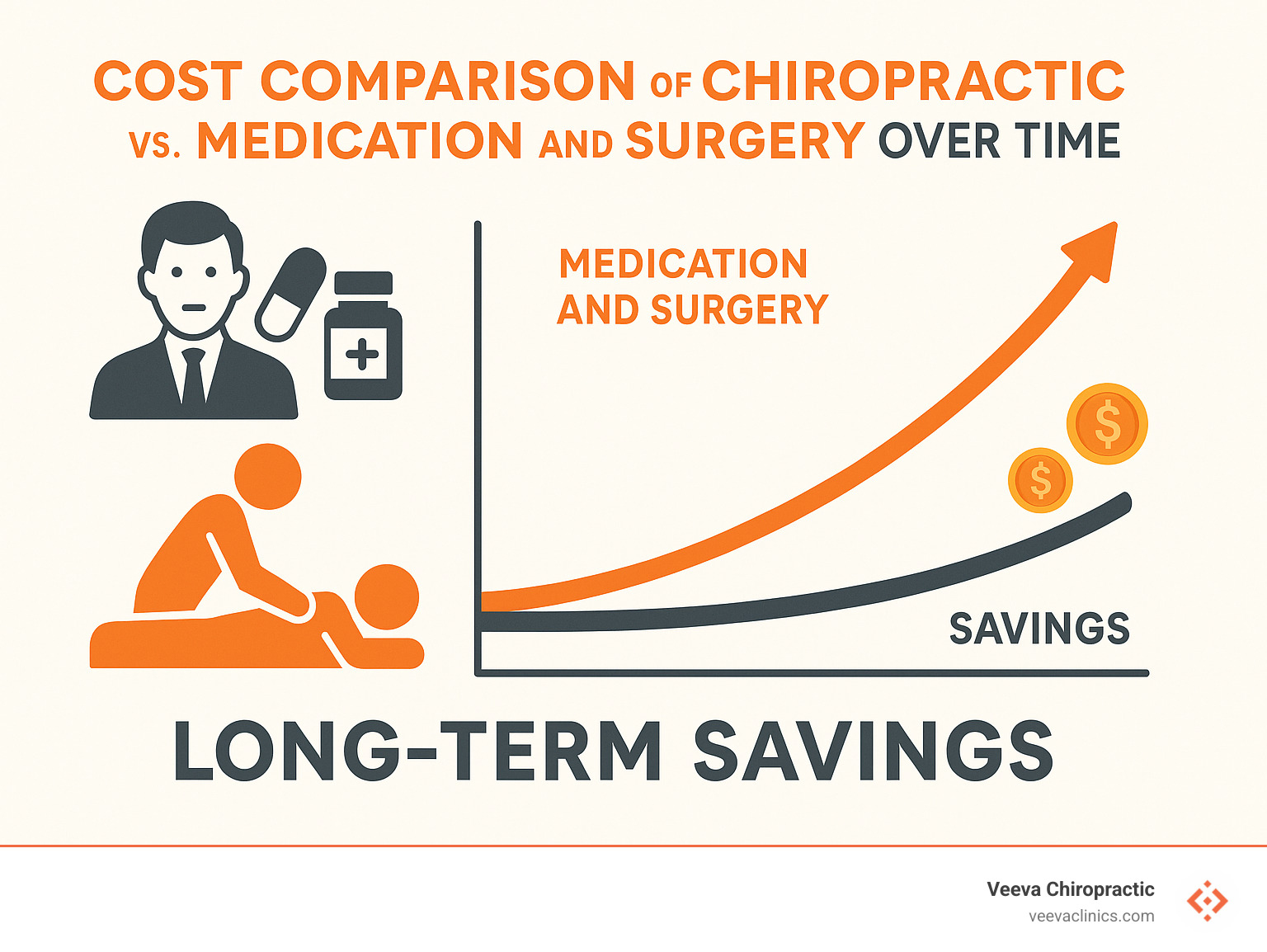
Cost and Risk Comparison You Need to See
When evaluating treatment options, consider these facts:
| Treatment Option | Average Cost | Recovery Timeline | Risk Level |
|---|---|---|---|
| Chiropractic Care | $65-150/session | 2-8 weeks | Very Low |
| Prescription Painkillers | $300+/year | Symptom masking only | Moderate (addiction risk) |
| Epidural Steroid Injections | $2,000-5,000 | Temporary relief | Moderate (infection risk) |
| Spinal Surgery | $50,000+ | 6-12 months recovery | High |
Insurance tip: 95% of private insurance plans now cover chiropractic care—verify your specific benefits before your first visit to avoid unexpected costs.
Research-Backed Results You Can Trust
Multiple studies confirm chiropractic care’s effectiveness:
– Patients with herniated discs show 90% improvement without surgery
– Sciatica sufferers experience better short-term relief than with medication alone
– Combining spinal adjustments with exercise reduces recurrence by 50%
Unlike painkillers that merely mask symptoms, chiropractic care addresses the mechanical dysfunction causing your pain—providing lasting relief by restoring proper spinal function.
Maximizing Your Chiropractic Results at Home
Critical Exercises You Must Do Daily
Your chiropractor will prescribe specific movements, but these three deliver universal benefits:
Pelvic Tilts: Lie on your back with knees bent, flatten your lower back against the floor by tightening abdominal muscles. Hold 5 seconds, repeat 10 times. Targets: Core stabilization and lumbar disc pressure relief.
Knee-to-Chest Stretch: Pull one knee toward your chest while keeping the other foot flat on the floor. Hold 20-30 seconds, repeat 3 times per side. Targets: Piriformis muscle and sacroiliac joint tension.
Cat-Camel Stretch: On hands and knees, alternate between arching your back upward and dipping it downward. Perform 10 repetitions slowly. Targets: Spinal mobility and disc hydration.
Workplace Modifications That Prevent Flare-Ups
Immediate changes to implement today:
– Position computer monitor at eye level to prevent forward head posture
– Place a small pillow behind your lower back while sitting
– Set phone timer for standing breaks every 30 minutes
– Use lumbar roll when driving longer than 20 minutes
Sleep position fix: Place a pillow between your knees when sleeping on your side—this maintains pelvic alignment and reduces morning stiffness.
Making Chiropractic Care Work Long-Term
The Maintenance Schedule That Prevents Recurrence
Once your pain resolves, continue these strategies:
– Monthly check-ups: Catch minor misalignments before they become painful
– Bi-weekly home exercises: Maintain core strength and spinal mobility
– Ergonomic workstation tune-ups: Every 3 months as habits drift
Think of these maintenance visits like dental cleanings—they prevent small issues from becoming major problems requiring intensive treatment.
When to Combine Chiropractic with Other Therapies
For optimal results, coordinate care with:
– Physical therapists for advanced strengthening protocols
– Massage therapists to address persistent muscle tension
– Primary care physicians for comprehensive health management
The most successful patients use chiropractic as the foundation of a multidisciplinary approach—addressing spinal mechanics while supporting overall health.
Chiropractic care offers a proven, non-invasive solution for lower back pain that targets the mechanical dysfunction causing your discomfort. With strong research backing, minimal risks, and growing insurance coverage, it’s a smart first-line approach before considering medications or surgery. If you’ve been struggling with lower back pain, schedule a consultation with a licensed chiropractor to determine if spinal adjustments can restore your mobility and improve your quality of life. Remember, most mechanical back pain responds exceptionally well to conservative care—don’t settle for temporary pain relief when lasting correction is within reach.