
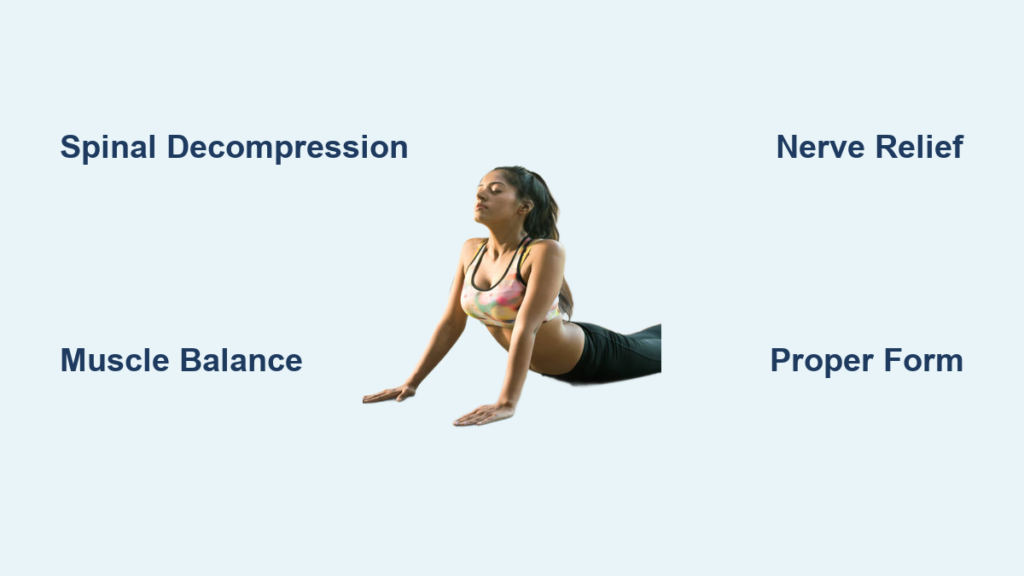
That sharp twinge when you stand up after hours at your desk. The dull ache that won’t quit after a long drive. If you’re one of the 80% of adults who experience back pain, you’ve probably tried everything from heating pads to painkillers. Yet the solution might be as simple as a yoga pose you’ve seen countless times—the cobra position.
This ancient backbend, known as Bhujangasana in yoga circles, has emerged as a science-backed therapy for various types of back pain. When performed correctly, it can decompress your spine, strengthen weak muscles, and restore natural movement patterns—all in under five minutes a day. Unlike expensive treatments or risky procedures, the cobra position gives you immediate control over your back pain relief with no side effects.
How Cobra Position Stops Back Pain

Spinal Decompression Effect
The cobra position creates natural traction along your spine using gravity and your body weight to gently separate compressed vertebrae. As you lift your chest, each vertebra creates space where compression once caused pain. This decompression reduces pressure on intervertebral discs—the shock absorbers between your spinal bones.
For those with herniated discs, this space creation can literally pull protruding disc material away from sensitive nerve roots. You’ll feel immediate relief as pressure lifts from nerve endings that have been sending pain signals to your brain for weeks or months. This is why physical therapists often prescribe extension exercises like cobra position for disc-related pain.
Muscle Balance Restoration
Your chronic back pain often stems from an imbalance: weak posterior muscles paired with tight anterior ones. The cobra position addresses both issues simultaneously while you hold the pose. Your erector spinae muscles—the long muscles running parallel to your spine—engage and strengthen. These are the exact muscles weakened by hours of sitting.
At the same time, your tight hip flexors and abdominal muscles receive a therapeutic stretch. This dual action restores balance to your core, addressing the root cause of many back problems rather than just masking symptoms. You’ll notice improved posture and reduced strain with every movement throughout your day.
Nerve Space Creation
Sciatica sufferers particularly benefit from the cobra position’s ability to open the intervertebral foramina—the small openings where spinal nerves exit. This increased space can reduce or eliminate nerve impingement, stopping radiating leg pain at its source. The backward extension movement counteracts the forward compression that typically occurs during prolonged sitting or standing.
When you perform the cobra position correctly, you’ll feel a gentle release along your entire spine as nerve roots regain their natural space. This is especially valuable for pain that shoots down your legs or causes numbness in your feet—classic signs of nerve compression.
Mastering Cobra Position Technique
Starting Position Setup
Lie face-down on a firm surface like a yoga mat or carpeted floor. Extend your legs straight back with feet hip-width apart, tops of feet pressing into the floor. Position your hands palms-down directly under your shoulders, elbows tucked close to your body.
Your forehead should rest gently on the floor with your neck in neutral alignment—neither cranked up nor pressed down. This starting position ensures proper alignment before you begin the movement. Check that your hands aren’t too far forward, which would force you to use arm strength instead of your back muscles.
Movement Execution Steps
- Engage your core gently to support your lumbar spine
- Press your pubic bone and feet firmly into the floor
- Begin lifting with your back muscles, not your arms
- Keep elbows pointing straight back, close to your sides
- Draw shoulder blades together and down your back
- Lift only to comfortable height—pain means you’ve gone too far
- Breathe naturally throughout the hold
Perform these movements slowly and deliberately. The entire motion should take 3-5 seconds. If you feel strain in your lower back immediately, you’re lifting too high—stay at a lower level where you feel engagement without pain.
Critical Alignment Points
The most common mistake? Creating a hinge in your lower back instead of distributing the bend throughout your spine. Focus on length before height—imagine someone gently pulling your head forward as you lift, creating space rather than compression.
Keep your glutes relaxed. Tension here compresses the lower back, defeating the pose’s purpose. Your arms should support, not power, the movement. If you find yourself pushing hard through your hands, you’re not ready for full cobra—start with the sphinx pose modification instead.
Cobra Position Variations for Every Pain Level
Beginner Modifications
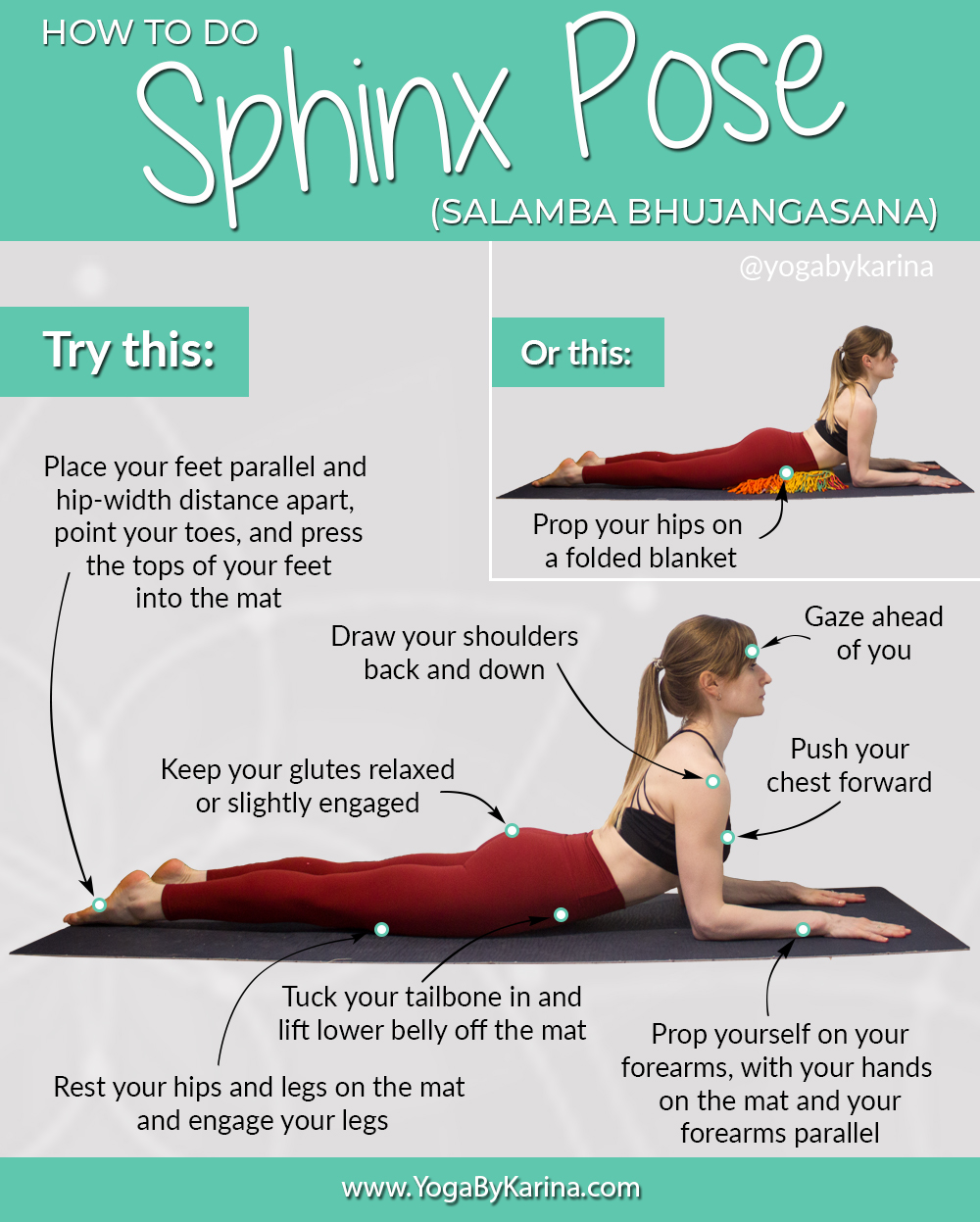
Sphinx Pose: Rest on your forearms instead of hands for a gentler backbend. This reduces the angle while still providing decompression benefits—perfect if you’re in acute pain.
Low Cobra: Lift just your head and upper chest while keeping your hands light on the floor. Ideal for days when even small movements cause discomfort.
Supported Version: Place a folded blanket under your hips for additional support, reducing pressure on your lower back while maintaining the pose’s benefits. This modification makes the pose accessible even during severe flare-ups.
Intermediate Progressions
Full Cobra: Once comfortable, straighten your arms completely while keeping your hips grounded. This creates maximum decompression effect for chronic issues.
Dynamic Cobra: Flow between low and high cobra positions with your breath—inhaling up, exhaling down. This adds gentle mobilization to the strengthening benefits, improving spinal flexibility.
Single-Leg Variation: While holding cobra, lift one leg at a time to engage your glutes and hamstrings, creating a more comprehensive posterior chain workout that supports long-term back health.
Frequency Guidelines by Pain Type

Acute Back Pain Protocol
During flare-ups, less is more. Perform 3-5 gentle repetitions, 2-3 times daily. Hold each pose for just 5-10 seconds, focusing on pain-free range of motion. Stop immediately if pain increases or radiates down your legs. This conservative approach prevents aggravation while beginning the healing process.
Chronic Pain Management
For ongoing issues, consistency trumps intensity. Practice daily, ideally twice—once in the morning to counteract overnight stiffness, and once in the afternoon to combat sitting effects. Perform 8-12 repetitions, holding each for 15-30 seconds. You’ll notice cumulative benefits within 2-3 weeks of consistent practice.
Preventive Maintenance
To prevent recurrence, include cobra position 3-4 times weekly as part of a comprehensive back care routine. Hold for 20-30 seconds per repetition, combining with other core-strengthening exercises. This maintenance protocol keeps your spine resilient against daily stressors.
Red Flags: When to Skip Cobra Position
Absolute No-Go Situations
- Recent spinal surgery (within 6-12 weeks)
- Spondylolisthesis (grade 2 or higher)
- Spinal stenosis with severe symptoms
- Acute vertebral fractures
- Active inflammatory conditions like ankylosing spondylitis flare-ups
In these cases, the cobra position could worsen your condition. Consult your physician before attempting any back exercises.
Warning Signs During Practice
Stop immediately if you experience:
– Sharp, shooting pain
– Numbness or tingling in legs
– Dizziness or lightheadedness
– Increased pain the following day
– Muscle spasms or cramping
These signals indicate you’re pushing beyond your current capabilities. Return to a gentler modification or consult a physical therapist for guidance.
Common Cobra Position Mistakes
The Overarching Error
Problem: Creating excessive lumbar extension, causing more pain
Fix: Focus on length over height. Imagine your tailbone reaching toward your feet as your chest lifts
The Arm Push Problem
Problem: Using arm strength instead of back muscles
Fix: Start with your hands light on the floor. If you can’t lift without pushing hard, you’re not ready for full cobra—stick with sphinx pose
Scientific Evidence Behind Cobra Position
Clinical Research Results
A systematic review in the Journal of Orthopaedic & Sports Physical Therapy found that directional preference exercises like cobra position produce superior outcomes compared to general exercise programs for disc-related back pain.
MRI studies reveal measurable increases in disc height and reduced disc bulge size in patients performing regular cobra positions. The pose reduces intradiscal pressure by up to 19% compared to sitting.
Long-term Success Rates
Longitudinal research shows individuals practicing extension exercises like cobra position experience:
– 50% lower recurrence rates of low back pain
– Reduced need for medical interventions
– Improved quality of life scores
– Better long-term functional outcomes
Final Note: Your back pain didn’t develop overnight, and it won’t disappear that quickly either. But with consistent, proper cobra position practice, you can expect noticeable improvement within 2-4 weeks. Start with just 2-3 minutes daily, focusing on perfect form rather than height. The key is beginning gently, respecting your body’s limits, and maintaining the practice even after pain subsides. Your spine will thank you for years to come—try incorporating cobra position into your morning routine starting tomorrow for the fastest results.