
If you’ve been wrestling with persistent back pain that won’t quit, you’re part of a massive club—up to 85% of people experience low back pain at some point. The burning question isn’t whether you’re suffering, but whether Pilates actually delivers real relief. After months of failed quick fixes, many wonder: does Pilates help with back pain in a meaningful, lasting way? The answer, backed by rigorous research, is a qualified yes—but only when implemented correctly and consistently.
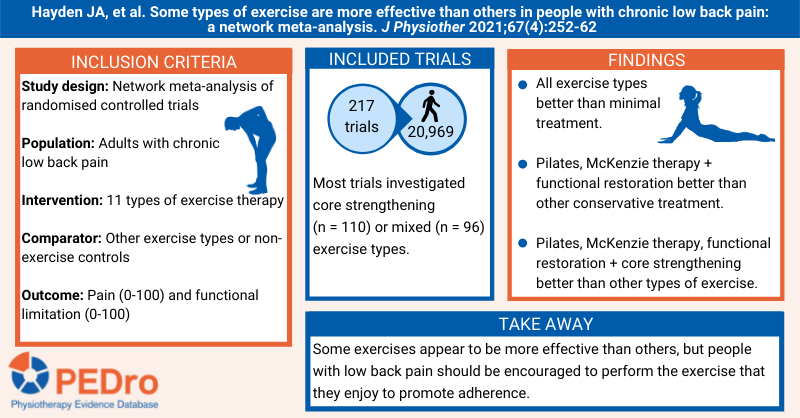
Recent systematic reviews analyzing eight high-quality studies reveal that Pilates significantly reduces pain and improves function for people with chronic non-specific low back pain. Unlike painkillers that mask symptoms temporarily, Pilates addresses the root causes of pain through targeted movement patterns. But crucially, these benefits require at least 20 cumulative hours of training—meaning sporadic mat classes won’t cut it for meaningful, lasting relief.
Why Most Back Pain Sufferers Keep Cycling Through Failed Treatments
Chronic low back pain isn’t simply prolonged acute pain—it’s a distinct condition where pain persists beyond 12 weeks without clear structural damage. This “non-specific” LBP (representing 75-85% of chronic cases) creates a vicious cycle where fear of movement leads to deconditioning, which worsens pain despite tissue healing. Traditional treatments often fail because they focus solely on structural issues that may no longer exist, ignoring the neurological retraining component essential for recovery.
Standard painkillers offer temporary masking without addressing movement dysfunction, while surgery remains extreme for non-specific cases. Physical therapy often lacks the specificity needed to retrain deep stabilizing muscles. This treatment gap explains why so many turn to Pilates as a potential solution—but without understanding the research-backed protocols, they often abandon it too soon when quick results don’t materialize.
The Critical 20-Hour Threshold You Must Reach
Research consistently shows that meaningful Pilates benefits for back pain require crossing the 20-hour training threshold. Studies tracking participants through 10-24 cumulative hours reveal that those completing less than 20 hours achieve only temporary symptom relief. The Natour study tracking participants over 180 days demonstrates why: pain scores dropped progressively from -0.46 at 45 days to -1.63 at 180 days, with functional improvements following the same trajectory. Your nervous system needs sustained retraining to unlearn pain patterns—sporadic sessions won’t rewire these pathways.
Mat vs Equipment Pilates: Why Equipment Delivers Lasting Back Pain Relief
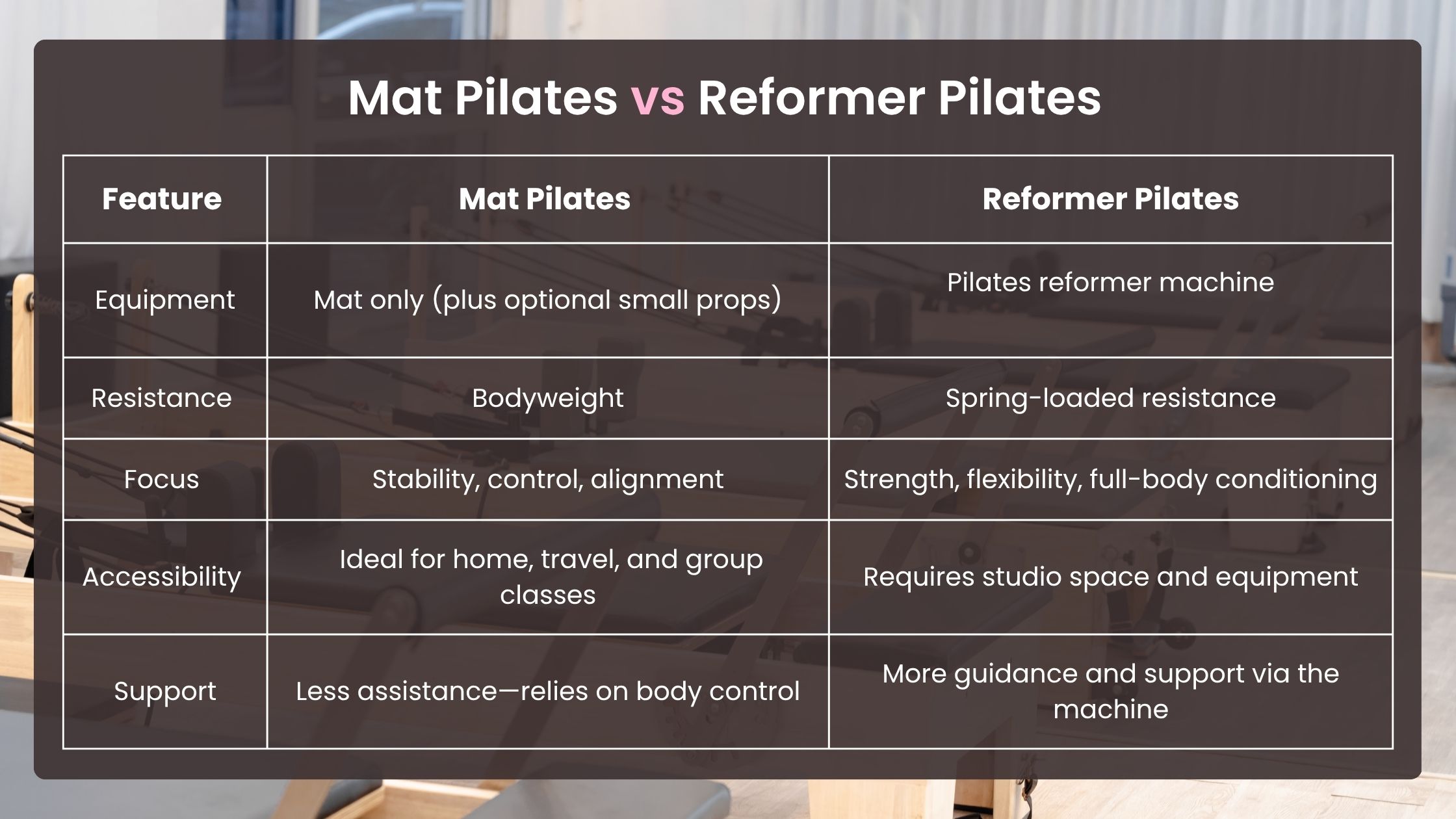
While both formats provide short-term pain reduction, equipment-based Pilates delivers superior long-term functional improvement. A direct comparison study found that after six weeks, both mat and equipment training produced similar results. However, at 24 weeks, equipment users maintained significantly better functional ability—with Roland Morris Disability Questionnaire (RMDQ) improvements 3.0 points greater than mat participants.
How Equipment-Based Training Targets the Root Cause
Ultrasonic imaging reveals why equipment wins long-term: it produces thicker transverse abdominal muscles, indicating deeper core activation. The Reformer and Cadillac allow precise resistance adjustments that progressively challenge stabilizing muscles without straining the spine. This targeted activation provides superior spinal segment stabilization—the missing piece in most back pain treatments. Equipment enables controlled movement through pain-free ranges while building the neuromuscular connections essential for lasting relief.
Your Evidence-Based Pilates Protocol for Back Pain Relief
The Minimum Effective Dose: 20 Hours Done Right
To achieve meaningful results, follow this research-backed protocol:
- Frequency: 2-3 sessions per week (consistency matters more than intensity)
- Duration: 60 minutes per session (shorter sessions won’t reach threshold)
- Total Commitment: 3-4 months minimum (20-24 cumulative hours)
- Format: Equipment-based preferred, but mat acceptable after technique mastery
Critical Components Your Sessions Must Include
Every effective Pilates session for back pain must incorporate waist or torso movement exercises that specifically target deep stabilizers. Start with basic stability exercises like pelvic tilts and abdominal breathing, progressing to dynamic movements only as tolerance improves. The transverse abdominis activation—often called “the body’s natural corset”—must be the foundation of every movement pattern. Without proper technique supervision, you risk reinforcing harmful movement patterns.
Common Pilates Mistakes That Worsen Back Pain
Starting Too Aggressively
Many jump into advanced exercises before establishing proper core activation, triggering pain flares. Begin with basic exercises under professional guidance, focusing on quality over quantity. Your first goal isn’t intensity—it’s relearning proper movement sequencing. Pushing through pain creates negative reinforcement that undermines long-term progress.
Ignoring the Equipment Advantage
Choosing convenient mat classes over equipment-based training limits your long-term potential. While mat Pilates offers accessibility, it lacks the resistance modulation and spinal support that makes equipment-based training superior for sustained functional improvement. If equipment access is limited, supplement mat work with resistance bands and stability balls under professional guidance.
Tracking Progress the Right Way
Don’t rely on daily pain fluctuations—use validated measurement tools consistently. Document baseline scores on the Visual Analogue Scale (VAS) and Roland Morris Disability Questionnaire (RMDQ) before starting. Reassess every four weeks: a 2-point RMDQ improvement or 18mm VAS reduction indicates meaningful progress. Pair these with simple functional tests like the sit-and-reach or one-leg balance to track real-world improvements.
Getting Started Safely: Your First 30 Days
Medical Clearance First
Rule out specific spinal pathology or nerve root involvement before beginning. Pilates is ideal for non-specific chronic LBP but contraindicated during acute flare-ups or with structural issues like disc herniation with radiculopathy. Your healthcare provider should confirm your pain qualifies as chronic non-specific LBP (>12 weeks duration without clear structural cause).
Finding the Right Instructor
Seek Pilates professionals with specific back pain rehabilitation experience—not just general certification. Ask about their experience with chronic LBP cases and observe how they modify exercises for pain limitations. The best instructors assess your movement patterns first rather than jumping into standard routines. Expect them to emphasize neutral spine positioning and proper breathing mechanics from day one.
Realistic Timeline: What to Expect Month by Month
First Month: Foundation Building
- Focus on basic core activation and breathing patterns
- 10-15% pain reduction possible with proper technique
- Increased body awareness becomes your primary metric
Second Month: Progressive Challenges
- Introduction of controlled spinal movement patterns
- 20-30% pain reduction as stabilizers strengthen
- Noticeable improvement in simple functional movements
Third Month and Beyond: Functional Transformation
- Pain reduction of 30-50% with consistent practice
- Significant improvements in daily activities (bending, lifting)
- Reduced fear of movement as confidence in spinal stability grows
Cost Considerations and Smart Investment Strategies
Equipment-based sessions typically cost $50-100 each, requiring 20-40 sessions to reach optimal benefit. Before committing, inquire whether your insurance covers Pilates for back pain rehabilitation—some plans do with proper medical documentation. For budget-conscious practitioners, consider starting with 8-10 supervised equipment sessions to master technique, then supplement with guided mat work using resistance bands and stability balls.
The Bottom Line: Does Pilates Help With Back Pain?
Yes—but with critical caveats. Pilates delivers statistically significant pain reduction and functional improvement for chronic non-specific low back pain when performed correctly for at least 20 cumulative hours. Equipment-based training provides superior long-term functional gains by building deeper core stabilization that mat work alone can’t match. The key isn’t just doing Pilates, but doing the right Pilates, with proper technique, sufficient frequency, and adequate duration.
If you’ve struggled with back pain for months, commit to a structured 3-4 month Pilates program under qualified guidance. Track your progress with validated tools, focus on quality movement over intensity, and remember that the real transformation happens after you cross that 20-hour threshold. While the journey requires patience, the research shows that those who complete the protocol experience meaningful, lasting relief that extends far beyond what typical treatments provide—breaking the cycle of chronic pain for good.