
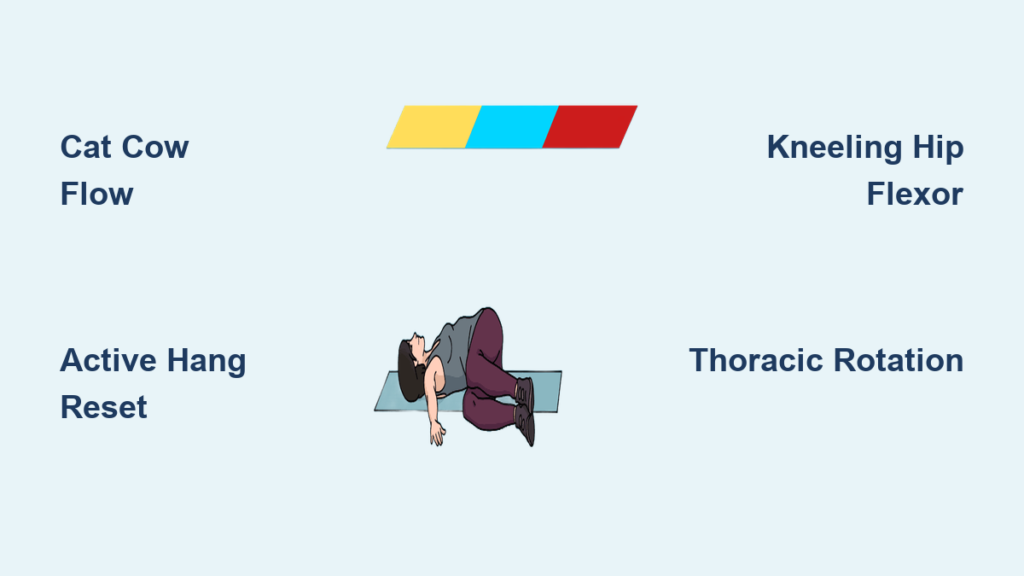
That persistent ache in your lower back isn’t just an inconvenience—it’s holding you hostage from living fully. Whether you’re recovering from an injury or battling chronic discomfort after hours at your desk, research shows 80% of adults experience lower back pain at some point. The breakthrough solution? Dynamic stretches for lower back pain that actively retrain your movement patterns instead of merely stretching tight muscles. Unlike static holds that provide temporary relief, these science-backed movements address the root cause: dysfunctional movement patterns that force your lumbar spine to compensate for tight hips and stiff thoracic segments.
Your lower back functions as the bridge between your upper and lower body, making it vulnerable to problems elsewhere. When your hip flexors shorten from prolonged sitting or your mid-back loses mobility from hunching over screens, your lumbar spine bears the brunt. Dynamic stretching combats this by teaching your entire kinetic chain to work harmoniously again. In this guide, you’ll discover exactly which movements deliver the fastest pain relief, how to perform them with perfect form, and when to incorporate them for maximum benefit—no equipment required.
Why Static Stretches Worsen Lower Back Pain
Your morning static stretch routine might be making your back pain worse, not better. Static stretching holds positions for 20-30 seconds without movement, which temporarily increases flexibility but fails to teach your nervous system new movement patterns. This creates a dangerous disconnect between your perceived range of motion and your actual functional capacity—like stretching a rubber band to its limit then expecting it to support weight.
Critical mistake: Many people perform static stretches like toe touches first thing in the morning when spinal discs are fully hydrated and most vulnerable to injury. The compression from forward bends can force disc material backward, aggravating sciatica or herniations.
When you stretch your hamstrings statically, you’re not addressing the real issue: your pelvis is likely stuck in anterior tilt from tight hip flexors. This creates constant tension through your lower back muscles as they fight to stabilize your compromised position. Dynamic stretches solve this by simultaneously mobilizing restricted areas while strengthening supporting muscles through their new range.
3 Science-Backed Benefits of Dynamic Stretching
Immediate Pain Reduction Through Spinal Hydration
Each controlled movement pumps fluid through your spinal discs like a sponge, rehydrating them and creating space between vertebrae. Unlike static stretching that pulls on tissues, dynamic movements generate internal pressure changes that actively draw nutrients into dehydrated discs. You’ll feel this as a “lightening” sensation in your lower back within minutes—your spine literally regaining height as discs rehydrate.
Prevention of Future Flare-Ups Through Movement Retraining
Your nervous system learns through repetition. Performing 8-10 quality repetitions of proper movement patterns rewires your brain’s motor programs, teaching your body to move safely during everyday activities. This is why dynamic stretches for lower back pain work better than passive treatments—the more you practice correct movement, the less your body compensates with painful patterns.
Enhanced Athletic Performance Without Compromise
Athletes who incorporate dynamic back stretches see measurable improvements in deadlift form, running efficiency, and rotational power. This happens because dynamic stretching maintains the muscle tension needed for force production while increasing range of motion. You’ll notice smoother transitions between positions, whether rising from a chair or swinging a golf club, because your body has learned to distribute load properly again.
Cat Cow: Your Lumbar Spine’s Daily Tune-Up
This foundational movement should be your first defense against morning stiffness. Many people rush through Cat Cow without proper segmental control, defeating its purpose. Warning: If you feel pinching in your lower back during Cow position, you’re overextending—reduce your range immediately.
Start precisely on all fours with wrists under shoulders and knees under hips. As you inhale for Cow, initiate the movement from your pelvis—tilt your sit bones upward first, then allow the wave to travel through each vertebra to your head. Your chin should lift last. In Cat position, begin rounding from the crown of your head, tucking your chin before drawing your navel toward your spine.
Pro tip: Place a foam roller horizontally across your mid-back during this stretch. As you move through the sequence, feel the roller gently mobilize each segment—it prevents cheating by forcing true segmental movement. Perform 10 slow repetitions for best results, taking 3-4 seconds per transition.
Active Hang: The 30-Second Spinal Reset
Most people underestimate how much compression daily activities place on your spine. Gravity alone creates 5-7% shortening of your height between morning and evening due to disc compression. The Active Hang reverses this in minutes by using your body weight to create gentle traction.
Critical form cue: Your shoulders should stay packed down away from your ears—imagine sliding coins between your shoulders and ears. If you feel strain in your wrists, try using fat grip attachments or rotating your hands to a neutral position (palms facing each other).
Start with 10-second hangs, resting 20 seconds between repetitions. Build to 30-second hangs as your grip strength improves. For immediate relief after long drives or flights, perform 5 repetitions before standing up. Warning: If you have shoulder impingement, reduce the hang time and focus on gentle shoulder retraction rather than full relaxation.
Kneeling Hip Flexor: Fix Your Sitting Damage in 10 Reps
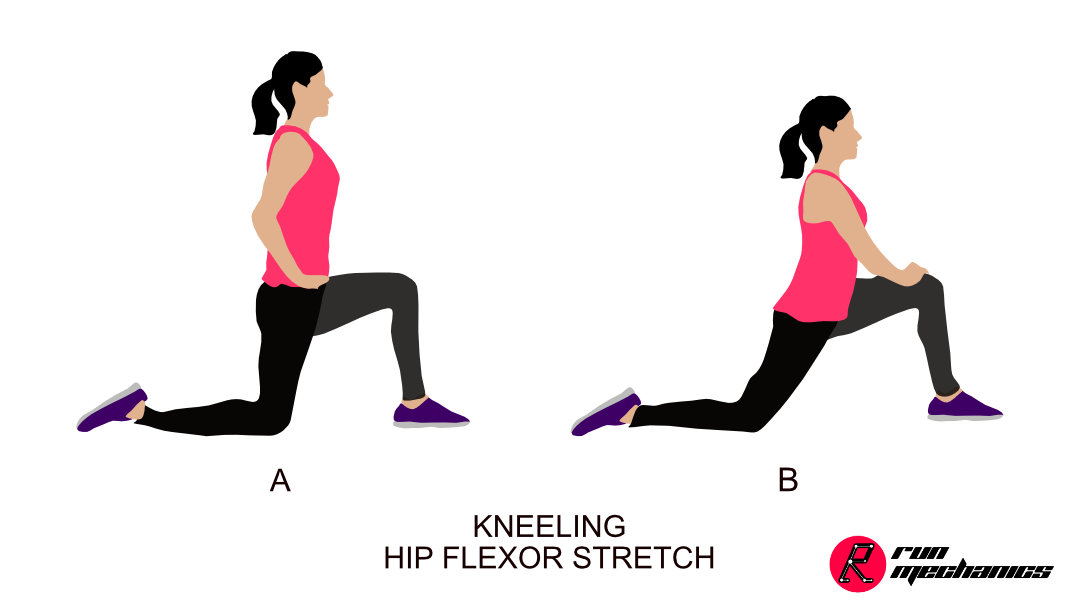
This dynamic version outperforms static lunges because it actively engages your glutes to counteract hip flexor dominance. Office workers should perform this stretch every 90 minutes—your hip flexors begin tightening within 20 minutes of sitting.
Visual cue: Check your torso position in a mirror. If your chest leans forward during the stretch, you’re cheating by extending through your lumbar spine instead of your hip joint. Your torso should remain perfectly vertical throughout the movement.
For maximum effectiveness, tuck your back foot’s toes under to activate your ankle dorsiflexors. This creates a chain reaction up your kinetic chain, enhancing hip extension. Perform 10 controlled repetitions per side first thing in the morning and before bed—this timing combats the two periods when hip flexors tighten most.
Lat Stretch: The Hidden Culprit Behind Back Pain
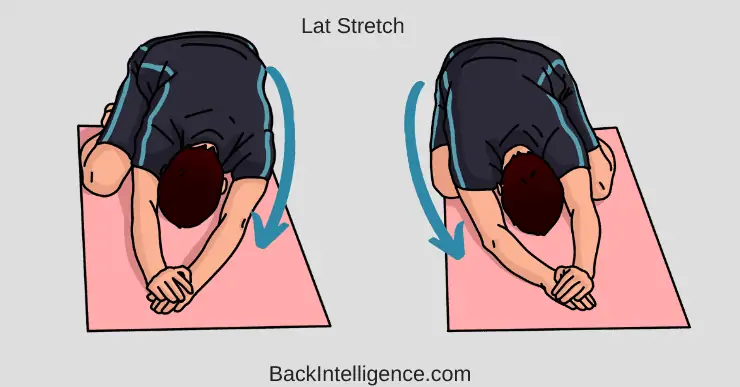
Tight lats force your lower back to compensate during overhead movements, creating a domino effect of dysfunction. This dynamic stretch simultaneously addresses thoracic mobility and proper hip hinge mechanics—two critical components often missed in back pain protocols.
Common mistake: People bend their standing knee during this stretch, shifting the work to their quads instead of maintaining a true hip hinge. Keep both legs straight with a micro-bend in the knees to isolate the lat stretch.
For desk workers, perform this stretch every time you stand up from your computer. The repetition builds muscle memory for proper movement patterns during daily activities. Hold each repetition for 3 seconds, feeling the stretch travel from your armpit down to your lower ribs—this confirms you’re targeting the entire latissimus dorsi rather than just the upper portion.
Knee Twists: Unlock Thoracic Mobility to Protect Your Lumbar Spine
Your mid-back should provide 40% of your spinal rotation—when it’s stiff, your lower back takes on dangerous extra rotation. This floor stretch safely mobilizes your entire spine while protecting your vulnerable lumbar segments.
Key visual: Your bottom shoulder blade should never lift off the floor during rotation. If it does, you’re compensating with your lower back instead of rotating through your thoracic spine. Reduce your range until you maintain full shoulder contact.
Perform this stretch immediately after waking—your discs are most hydrated then, making mobilization most effective. Complete 10 slow rotations per side, taking 4 seconds for each movement. For enhanced results, place a small towel roll under your knees to maintain the 90-degree angle consistently.
Standing Bicycle: The Functional Rotation Solution
Unlike seated twists that compress discs, this standing variation trains your body to rotate safely while maintaining spinal stability—a crucial skill for preventing back injuries during sports and daily activities.
Critical alignment: Keep your hips perfectly square to the front throughout the movement. Many people cheat by rotating their standing hip toward the moving knee, which shifts the work to the lower back instead of the intended thoracic rotation.
Start with just 5 repetitions per side at slow speed. Focus on initiating the movement from your ribcage, not your arms. As your control improves, gradually increase speed while maintaining perfect form. This stretch doubles as a balance challenge—closing your eyes during the movement further enhances proprioception and core activation.
Building Your 7-Minute Daily Back Pain Routine
Your nervous system thrives on consistency, not marathon sessions. Spend just 7 minutes daily performing these movements in this specific order for maximum cumulative effect:
- Cat Cow (1 minute): 10 slow repetitions to wake up your entire spine
- Kneeling Hip Flexor (2 minutes): 10 reps per side to address sitting damage
- Active Hang (1 minute): 5 repetitions of 10-second hangs
- Knee Twists (1.5 minutes): 10 rotations per side for thoracic mobility
- Standing Bicycle (1.5 minutes): 5-8 reps per side for functional rotation
Pro tip: Set a phone reminder for the same time daily—consistency matters more than duration. Morning is ideal when discs are most hydrated, but perform this routine whenever you can maintain regularity.
When to Expect Results and Warning Signs to Stop
Most people experience reduced stiffness within 3-5 days of consistent practice. Significant pain reduction typically occurs within 2-3 weeks as your movement patterns rewire. Track your progress by rating your morning stiffness on a 1-10 scale each day—you’ll see objective improvement.
Stop immediately and consult a professional if you experience:
– Sharp, localized pain during any movement
– Numbness or tingling down your legs
– Pain that worsens 24 hours after stretching
– Loss of bladder or bowel control (seek emergency care)
Your lower back pain didn’t develop overnight, and it won’t disappear instantly—but with these dynamic stretches for lower back pain performed consistently, you’ll rebuild the resilient, pain-free movement your body deserves. Start tomorrow morning with just the Cat Cow and Kneeling Hip Flexor stretches for 5 minutes total. That small commitment begins your journey back to effortless movement.