
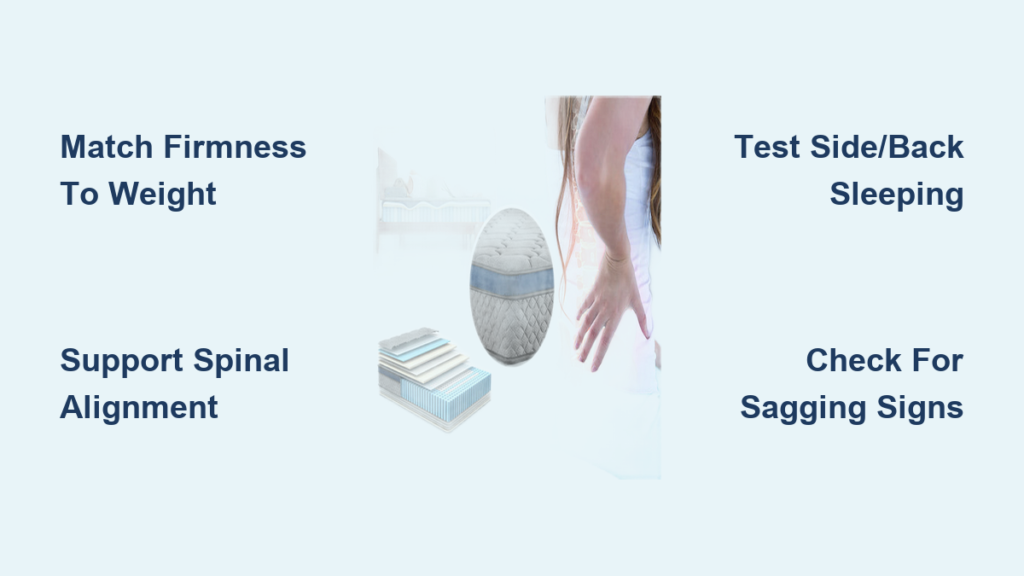
Waking up with stiff, aching lower back muscles shouldn’t be your morning ritual. Your mattress plays a silent but critical role in either easing or intensifying your back pain each night. Choosing how to select a mattress for lower back pain isn’t about finding the softest surface—it’s about creating the precise spinal support system your body needs to heal while you sleep.
Lower back pain affects approximately 80% of adults at some point, with poor mattress support often worsening the problem. During sleep, your spine undergoes crucial restorative processes, but only when properly aligned. The wrong mattress forces your muscles to work overtime maintaining spinal positioning, creating a vicious cycle where poor rest worsens pain and healing becomes impossible.
This guide shows you exactly how to choose a mattress for lower back pain based on your unique body type, sleeping position, and specific pain patterns. You’ll learn which firmness levels actually work, how to test mattresses like a professional, and which red flags signal inadequate support.
Why Your Current Mattress Might Be Worsening Lower Back Pain
Your spine’s natural S-curve requires specific support zones to maintain proper alignment while sleeping. A mattress that’s too soft allows your hips to sink excessively, creating torque on your lumbar region. One that’s too firm creates pressure points that force your spine out of alignment, triggering muscle tension throughout the night.
Critical alignment indicators to check:
– Ears, shoulders, and hips should form a straight line when lying on your side
– Your hand should fit with slight resistance under your lower back when lying on your back
– No shoulder or hip numbness should develop within 10 minutes of lying down
Morning stiffness that improves as you move throughout the day is a telltale sign your mattress fails to support proper spinal alignment overnight. This misalignment prevents the natural decompression your spine needs for healing.
Match Mattress Firmness to Your Body Weight and Pain Pattern
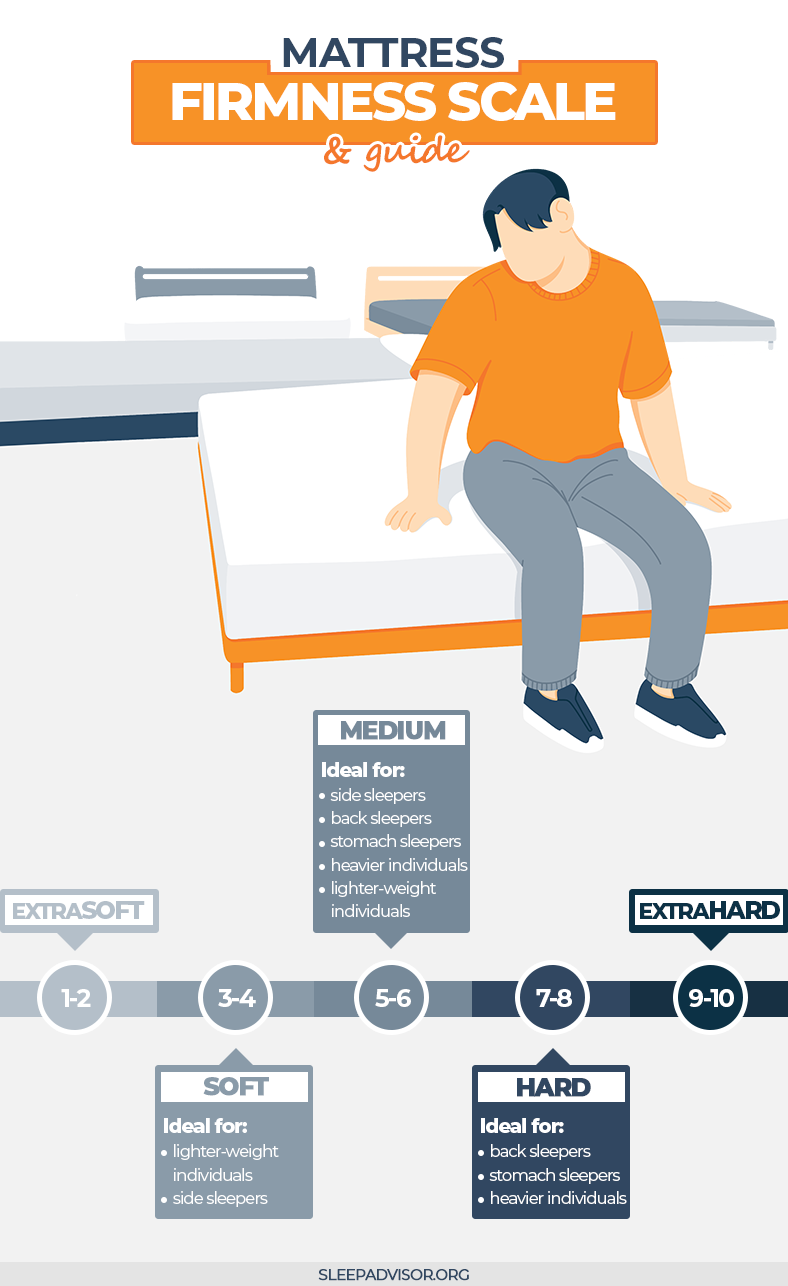
Firmness Level Breakdown for Back Pain Sufferers
Under 130 pounds: Medium surfaces (5/10) provide adequate support without creating pressure points that worsen pain. Soft mattresses often cause excessive sinkage that misaligns the spine.
130-230 pounds: Medium-firm (6-7/10) delivers the optimal balance of contouring and support. This range fills the lumbar gap while preventing hip sinkage that strains lower back muscles.
Over 230 pounds: Medium-firm to firm (7/10) prevents excessive sinkage that misaligns the spine. Extra-firm surfaces (8+/10) often create pressure points that intensify pain.
How to Test Firmness Effectively
Lie on potential mattresses for at least 15 minutes in your primary sleeping position. Bring your own pillow to maintain consistent neck alignment. Check for these critical signs:
- Good support: Your spine maintains neutral alignment with no gaps
- Poor support: You feel “stuck” or notice immediate pressure points
- Warning sign: Pain relief takes more than 20 minutes to develop
Best Mattress Types That Actually Relieve Lower Back Pain
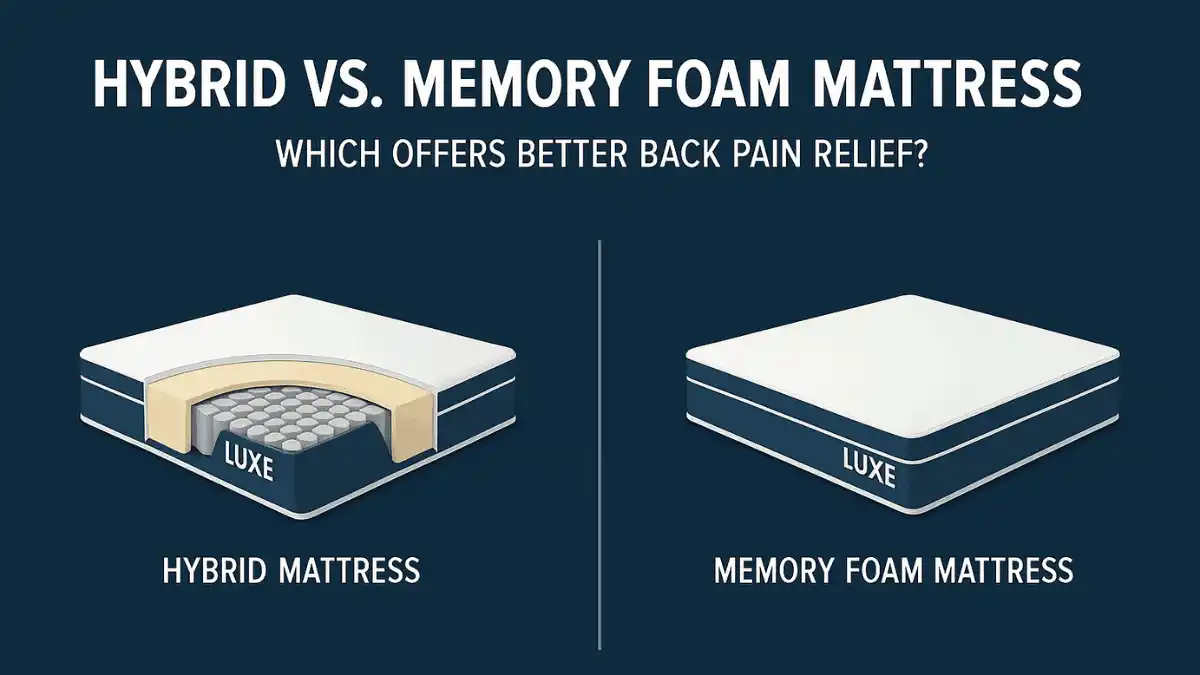
Memory Foam Mattresses for Targeted Lumbar Support
High-density memory foam (4-5 PCF) responds to body heat and weight, creating customized support that fills the lumbar gap. Look for these specific specifications:
- Minimum 10-inch thickness with 3+ inches of support foam
- ILD rating between 24-31 for optimal lumbar resistance
- Gel infusions that reduce heat retention by 20-30%
Avoid low-density foams under 3.0 PCF—they lose support within 2-3 years, worsening pain over time. High-density options maintain consistent support for 8-10 years without developing permanent indentations.
Latex Mattresses for Responsive Back Support
Natural latex provides the bounce needed to prevent the “stuck” feeling that aggravates back pain while maintaining spinal alignment. Dunlop latex (85-95 kg/m³) offers firmer lumbar support, while Talalay (65-75 kg/m³) provides softer pressure relief.
Latex maintains consistent performance across temperatures and offers exceptional durability (15-20 years). The material’s natural resilience helps maintain spinal alignment without creating pressure points that trigger morning stiffness.
Hybrid Mattresses for Zoned Lumbar Support

Combining pocketed coils with foam layers delivers targeted support exactly where you need it. Look for:
- 800-1200 pocketed coils (queen size)
- Zoned systems with firmer lumbar support
- 13-15 gauge wire in support zones
- 2-4 inch comfort layer thickness
The coil system provides responsive support while foam layers add pressure relief. This combination works especially well for combination sleepers who change positions throughout the night.
Optimize Mattress Selection for Your Sleeping Position
Side Sleepers with Lower Back Pain
Side sleeping requires 1-2 inches of shoulder and hip sinkage while maintaining level spinal alignment. Medium to medium-firm surfaces (5-6/10) fill the waist gap without creating pressure points.
Test potential mattresses by lying on your side for 10 minutes. Check alignment with a straight edge placed along your spine—your body should follow the edge without bowing downward or creating a hammock effect.
Back Sleepers Needing Lumbar Support
Medium-firm to firm surfaces (6-7/10) prevent hip sinkage while maintaining lumbar contact. Slide your hand under your lower back—slight resistance indicates proper support.
Place a pillow under your knees to reduce lower back strain by 25-30%. This slight elevation takes pressure off compressed discs while maintaining neutral spinal alignment throughout the night.
Stomach Sleepers: Critical Modifications
Stomach sleeping exaggerates the lumbar curve, requiring extra-firm support (7-8/10) to prevent hip sinkage. However, consider transitioning to side sleeping for long-term back health.
If you must sleep on your stomach, use no pillow or an extremely thin one. Place a pillow under your pelvis to reduce lumbar extension. These modifications provide immediate relief while you work on changing your sleeping position.
Identify Warning Signs of Inadequate Back Support
Red Flags During Mattress Testing
- Visible sagging exceeding 0.5 inches within the first year
- Morning stiffness that noticeably improves within 30-60 minutes of waking
- Feeling physically “stuck” in the mattress when trying to change positions
- Increased tossing and turning compared to your current mattress
- Partner disturbance from movement indicating poor motion isolation
Marketing Misconceptions to Avoid
- “Orthopedic” labels without specific design features for spinal alignment
- Universal firmness recommendations that ignore body weight differences
- Focus on comfort marketing over measurable support specifications
- Exaggerated durability claims without density or construction details
- Limited trial periods under 90 nights for proper back pain assessment
Budget Smartly for Long-Term Back Pain Relief
Entry-Level Options ($300-$800)
Basic memory foam provides temporary relief but may degrade within 3-5 years. Focus on medium-firm options with minimum 3.0 PCF foam density. These offer limited durability for chronic back pain sufferers.
Mid-Range Solutions ($800-$1,500)
Quality memory foam, latex, or hybrid options deliver 6-8 year performance with consistent support. This range provides excellent value for most back pain sufferers seeking reliable long-term relief.
Premium Investments ($1,500-$3,000+)
Advanced materials like organic latex and zoned coil systems provide 10-15 year solutions. Calculate cost per year rather than upfront expense—premium options often prove more economical long-term for chronic pain sufferers.
Final Mattress Selection Checklist for Back Pain
Before purchasing:
– Confirm 90+ night trial period for proper evaluation
– Verify 10+ year warranty covering sagging over 1 inch
– Match firmness specifically to your body weight and sleeping position
– Test edge support by sitting near the perimeter
– Calculate total cost including foundation and delivery
During the trial period:
– Allow 30-60 days for proper break-in period
– Track pain levels daily using a 1-10 scale
– Note improvements in morning stiffness and mobility
– Consider adding an adjustable base for enhanced lumbar positioning
Your mattress investment directly impacts daily pain levels and long-term spinal health. Take time to research thoroughly, test extensively, and choose based on specifications rather than marketing claims. The right mattress transforms sleep from a nightly struggle with pain into genuine healing time for your lower back.