
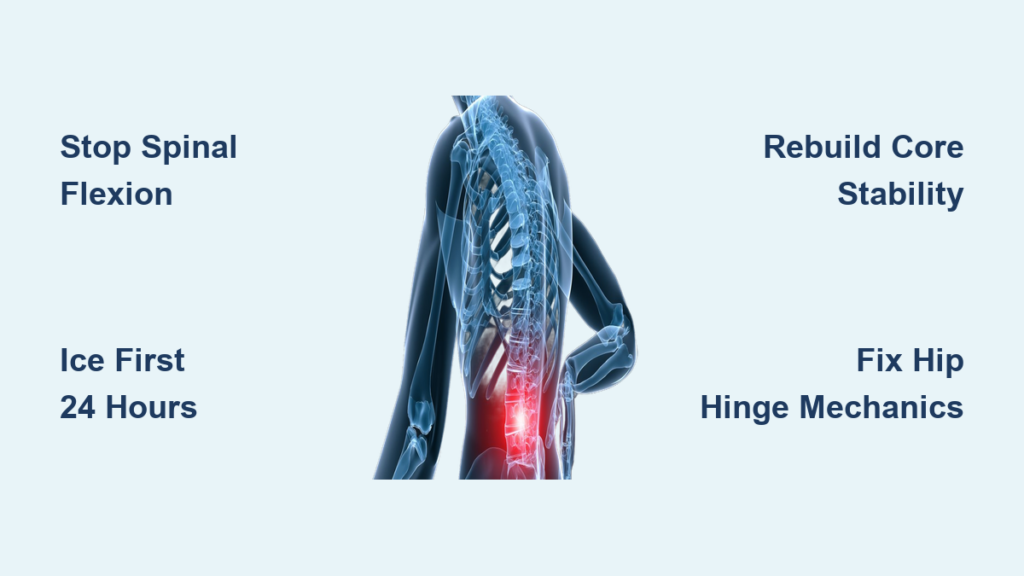
That sharp stab in your lower back as you drop the bar? It’s not “just soreness”—it’s your spine screaming for help. Most deadlift back pain stems from one critical error: losing lumbar neutrality under load. But here’s the good news: 85% of cases resolve within 3 weeks when you follow the right recovery sequence. This guide gives you the exact step-by-step protocol to fix deadlift back pain fast—while rebuilding a bulletproof foundation for heavier pulls. Skip the generic advice; we’re diving straight into what actually works based on biomechanics and injury rehab science.
Stop Wasting Time on Bed Rest (First 72 Hours)
Immediate action determines your recovery speed. Mistaking injury pain for normal soreness is the #1 mistake lifters make. Injury pain hits during or right after the lift—it’s sharp, localized, and may shoot into your glutes. DOMS (delayed soreness) feels dull, spreads across your lower back, and peaks 48 hours later. If you feel numbness, tingling, or leg weakness, see a doctor now—these signal nerve compression.
Follow this protocol immediately:
– Stop all loaded spinal flexion—no more deadlifts, squats, or even tying shoes bent over.
– Ice 15 minutes every hour for the first 24 hours (use a thin towel to prevent frostbite).
– Walk every 30 minutes for 2-3 minutes—gentle movement prevents stiffness without stressing healing tissues.
– Switch to moist heat by day 3 (20 minutes twice daily) to boost blood flow.
Pro Tip: Take 400mg ibuprofen only if medically cleared—it reduces inflammation but delays healing if overused. Never wear a lumbar brace beyond 48 hours; your core needs to re-engage.
Rebuild Core Stability Before Touching a Bar (Day 3-14)
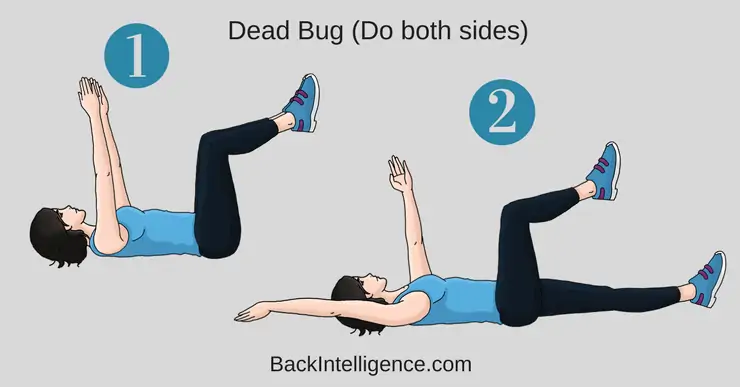
Pain-free movement is your green light. Start these exercises only when standing, walking, and lying flat cause zero sharp pain. Each move must stay completely pain-free—stop if you feel even slight discomfort.
Master These Core Reactivation Exercises
Perform 2 rounds daily. Focus on precision, not reps:
| Exercise | Why It Fixes Deadlift Pain | Execution Fix |
|---|---|---|
| Pelvic Tilts | Restores segmental spine control | Lie flat, flatten lower back to floor (3-sec hold), no rib flare |
| Dead Bugs | Trains anti-extension bracing | Press lower back into floor, move limbs slowly without arching |
| Glute Bridges | Reactivates posterior chain drive | Squeeze glutes at top until hamstrings burn—no lumbar hyperextension |
| Bird Dog | Stabilizes spine during rotation | Reach arm/leg fully while keeping hips glued to floor |
Add clamshells (15 reps/side) to fire weak hip abductors—they prevent pelvic shift during deadlifts. Avoid supermans—they compress lumbar discs. If any exercise triggers pain, return to walking and breathing drills for 48 hours.
Fix Your Hip Hinge Before Adding Weight
Your hinge mechanics caused the injury—don’t repeat it. Most lifters bend at the waist instead of hinging at the hips, dumping load onto the spine. Relearn the pattern without weight for 5-7 days.
Two Critical Drills to Groove Neutrality
- Dowel Rod Hip Hinge: Press a broomstick against your head, upper back, and tailbone. Hinge only until hamstrings tighten—stop if the stick loses contact anywhere. Do 3 sets of 10 reps daily. Your cue: “Push hips back like closing a car door with your butt.”
- Bodyweight Good Mornings: Hands behind head, soft knees, hinge to parallel. Key fix: Squeeze shoulder blades before moving—this locks your thoracic spine.
Film yourself laterally. If your lower back rounds before your hamstrings stretch, you’re hinging wrong. Reset and try again—quality over quantity.
Smart Weight Progression (No More Guesswork)

Add load ONLY when hinge drills feel automatic. Jumping back in too soon guarantees reinjury. Follow this exact sequence:
| Stage | Exercise | How to Do It Right | Warning Signs to Stop |
|---|---|---|---|
| 1 | KB Deadlift from blocks | Elevate KB to mid-shin height; bar MUST stay over mid-foot | Any lower back pinch |
| 2 | Dumbbell Romanian DL | Hinge to mid-shin, knees soft, chest up | Hamstring cramp = weak glutes |
| 3 | Trap-bar deadlift | High handles; drive through heels, not toes | Lower back fatigue before glutes |
| 4 | Rack pulls (below knee) | Set bar at knee cap; explode up, control down | Pain during lockout |
Every rep must pass this checklist:
1. Bar 1-2 inches from shins (tape your floor)
2. 360° core brace—like bracing for a punch
3. Hips drive forward before shoulders rise
4. Descent starts with hip hinge, not knee bend
Pro Tip: Record 45-degree videos. If the bar drifts forward past your knees during pull, your lats aren’t engaged—cue “bend the bar” to fix it.
Bulletproof Your Back Long-Term (7-Minute Daily Routine)
Prevention beats rehab every time. These evidence-backed moves cut deadlift back pain risk by 60%:
- Daily: 3 minutes walking + cat-camel stretches (5 reps)
- Pre-lift: 2 rounds of:
• Glute bridges ×15 (squeeze for 2 seconds)
• Band pull-aparts ×15 (elbows high)
• Farmer’s carries ×30m (heavy as possible) - Weekly: 2 sessions of:
• Reverse hypers ×15
• Pallof presses ×12/side (resist rotation)
Critical recovery rules:
– Never increase weekly deadlift volume >10%
– Deload every 5 weeks (cut weight 30%, sets 50%)
– Sleep 8+ hours—growth hormone repairs tissues overnight
– Wear flat shoes (Converse, deadlift slippers)
Warning: Belts weaken your core if overused. Only wear one for sets above 85% 1RM after mastering bracing.
When to See a Specialist (Don’t Ignore These)
Most pain resolves in 3 weeks—but seek help immediately if:
– Pain wakes you at night or comes with fever
– Numbness spreads down your leg past the knee
– Weakness makes stairs difficult
– Zero improvement after 10 days of strict protocol
Red flags needing ER care: Loss of bladder control or foot drop. These signal cauda equina syndrome—a surgical emergency.
Bottom line: How to fix deadlift back pain starts with stopping the damage now, not later. Most lifters heal fast by respecting the 72-hour window, rebuilding core control before reloading, and fixing hinge mechanics. Follow this sequence exactly, film every rep, and you’ll not only fix deadlift back pain—you’ll build a stronger foundation for lifetime lifting. Your next PR is waiting; fix the foundation first.