
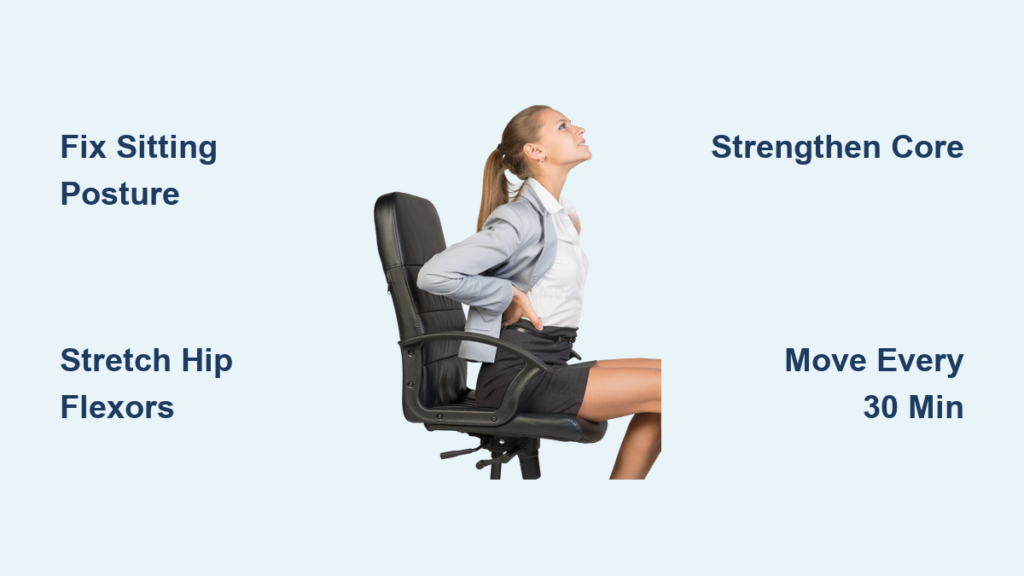
That persistent ache in your lower back after hours at your desk isn’t just annoying—it’s your body sounding an alarm. If you’ve ever winced when standing up from your chair or felt that familiar twinge creeping in by mid-afternoon, you’re experiencing the #1 occupational health issue worldwide. The good news? You don’t need expensive treatments or major lifestyle overhauls to fix lower back pain from sitting. This guide delivers science-backed solutions you can implement immediately, transforming your workspace from pain trigger to comfort zone.
Most people waste weeks hoping the pain will magically disappear while continuing the same sitting habits that caused it. But by understanding why sitting destroys your spine and applying these targeted fixes, you’ll experience relief faster than you thought possible. Let’s turn the tide on sitting-induced back pain once and for all.
Why Your Chair Is Sabotaging Your Spine
When you sit for prolonged periods, your lumbar curve flattens dramatically, increasing pressure on spinal discs by up to 40% compared to standing. This isn’t just uncomfortable—it’s destructive. Your hip flexors shorten like rubber bands left in a drawer, pulling your pelvis forward into anterior tilt, while your glutes literally “forget” how to activate—a condition doctors call “gluteal amnesia.”
The result? Your lower back muscles compensate for sleeping glutes, working overtime until they scream in protest. This muscular tug-of-war creates the dull, aching pain that intensifies as your day drags on. Recognize these common pain patterns: that sharp stab when standing up, radiating pain down your buttocks, or morning stiffness that makes you walk like you’re twice your age.
Pain Patterns You Need to Identify
Lower back pain from sitting follows predictable patterns. The most common is a dull, centralized ache across your lumbar region that worsens with sitting duration. Others experience one-sided discomfort that mimics sciatica or radiating pain down the back of the thigh. Some feel sharp pain when transitioning from sitting to standing, while others battle persistent morning stiffness that improves with movement. Identifying your specific pain pattern helps target the most effective solution.
Immediate Relief: Stop Pain in 2 Minutes
Fix Your Sitting Position Now
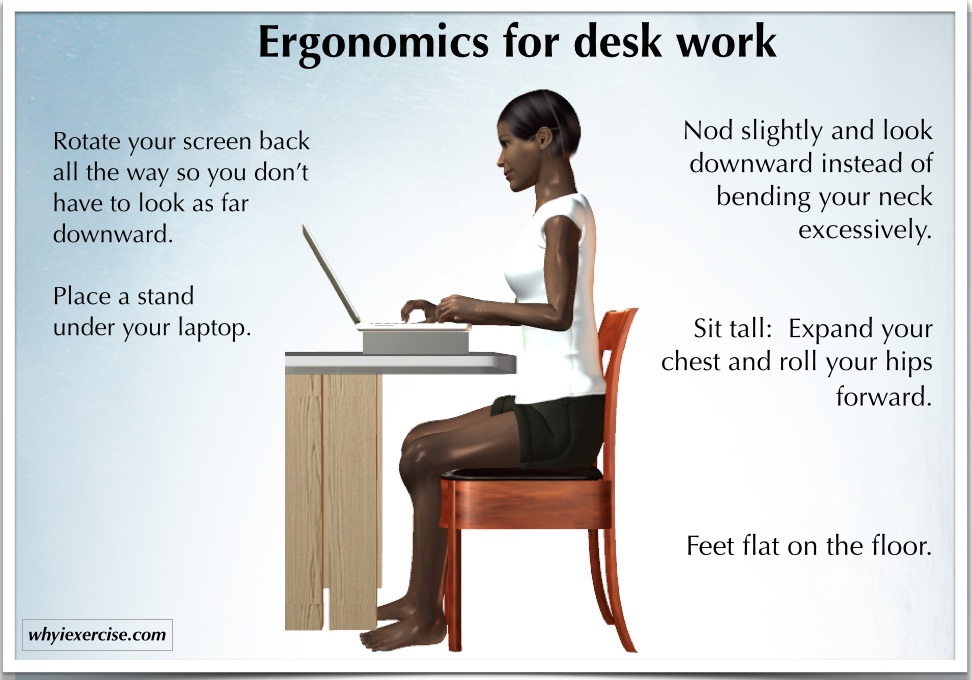
Stop everything and check your hips. Most people sit at 90 degrees, but your spine craves 110-120 degrees. Scoot forward, raise your chair, or grab a cushion—your hips should sit slightly above your knees. This single adjustment drops disc pressure instantly.
Plant both feet flat. No leg crossing, no leaning. If your feet dangle, grab a shoebox or stack of books. Your screen should hit eye level—no turtle-necking forward. Feel your sit bones pressing evenly into your chair. These micro-adjustments take 30 seconds but provide hours of relief. Warning: Crossing legs creates uneven pelvic alignment that doubles lower back strain.
Desk Stretches That Work
Seated Spinal Decompression (30 seconds):
Interlace fingers, reach overhead while inhaling. Feel your spine lengthen. Gently arch backward on the exhale, holding for 15 seconds. Repeat 3 times. This creates space between compressed vertebrae and provides immediate relief for most sitting-related back pain.
Hip Flexor Release (45 seconds each side):
Stand in a lunge position, tuck your pelvis slightly, then push forward until you feel the stretch across your front hip. This combats the hip flexor shortening that causes anterior pelvic tilt—the primary culprit behind most lower back pain from sitting.
Ergonomic Setup: Build Pain-Free Workspace
Chair Selection That Saves Your Spine
Your chair either supports your back or sabotages it. Look for these non-negotiables: adjustable height with pneumatic lever, lumbar support that maintains your natural curve, and seat depth allowing 2-3 finger spaces behind your knees. Armrests should position elbows at 90 degrees without hiking your shoulders.
If buying new isn’t an option, transform your current chair in under $20. Roll up a towel for lumbar support, add a seat cushion to raise hip height, or invest in an attachable lumbar pillow. These fixes often outperform expensive chairs. Pro Tip: Set phone alerts every 30 minutes to check your posture—consistency beats perfection.
Monitor and Desk Alignment
Your monitor should sit an arm’s length away, with the top edge 15-20 degrees below eye level. This prevents forward head posture—a major contributor to lower back pain from sitting. Stack books under your laptop, or grab a $30 monitor stand.
Keyboard positioning is critical. Keep it close enough that elbows stay at 90 degrees without reaching. Your mouse should sit adjacent—not forward—of the keyboard. Every inch of reach creates strain that compounds over hours, eventually manifesting as lower back pain.
Strengthen Your Core: 5-Minute Daily Program
Foundation Phase (Weeks 1-2)
Start with pelvic tilts: Lie on your back, knees bent. Flatten your lower back into the floor by tightening your abs. Hold 5 seconds, release. Do 15 reps, 2 sets. This wakes up your deep core muscles—the foundation for fixing lower back pain from sitting.
Progress to bridges: Same starting position. Lift hips until knees, hips, and shoulders form a straight line. Squeeze your glutes hard. Hold 5-10 seconds, 15 reps. This combats gluteal amnesia directly—the missing link in most back pain solutions.
Advanced Activation Sequence
Bird Dog: On hands and knees, extend opposite arm and leg simultaneously. Hold 5-10 seconds, keeping your back neutral. This builds spinal stability and coordination—essential for maintaining proper posture during long sitting sessions.
Wall Sits with Pelvic Tilt: Slide down a wall until knees hit 90 degrees. Perform small pelvic tilts to flatten your lower back against the wall. Hold 30-60 seconds. This builds endurance in your postural muscles, preventing the gradual slouching that leads to pain.
Micro-Movement Protocol: Move Without Leaving Your Desk
30-Minute Reset Routine
Set phone alerts for every 30 minutes. When it buzzes, stand and perform:
– 15 bodyweight squats (activates glutes)
– 20 seconds gentle spinal twists (mobilizes spine)
– 10 shoulder blade squeezes (counters forward posture)
– 15 calf raises (boosts circulation)
This 2-3 minute routine keeps your metabolism humming and prevents the stiffness cascade that causes lower back pain from sitting. Most people experience 30-50% pain reduction within the first week simply by implementing this protocol.
Phone Call Productivity Hack
Turn every phone call into movement therapy. Stand up automatically when your phone rings. Walk in circles, perform gentle stretches, or do wall push-ups. Wireless headsets transform you into a mobile productivity machine while saving your back. This simple habit adds 30-60 minutes of movement to your workday without “extra” time commitment.
Advanced Recovery: When Pain Persists

Self-Myofascial Release
Use a lacrosse ball on your glutes—specifically the piriformis and glute medius. Roll slowly for 30-60 seconds per area, pausing on trigger points. This releases the deep tension that stretching alone can’t touch—the hidden cause of stubborn lower back pain from sitting.
Spinal Decompression at Home
Hanging Decompress: Use a pull-up bar, relax your shoulders completely. Hang for 15-30 seconds. This creates space between compressed vertebrae—a game-changer for chronic sitting-related pain.
Child’s Pose: From hands and knees, sit back toward heels while extending arms forward. This gently traction your spine while relaxing your lower back muscles. Hold for 30-60 seconds whenever pain flares up.
Long-term Success: Make It Stick
Habit Stacking Strategy
Attach new habits to existing routines. After coffee, do 10 pelvic tilts. After lunch, take a 5-minute walk. These small commitments compound into lasting change. Within 21 days, these become automatic behaviors that prevent lower back pain from sitting before it starts.
Monthly Maintenance Check
Every month, reassess your workstation. Has your monitor drifted lower? Has your chair height changed? Small drifts create big problems over time. Use your phone to take a side-view photo of your sitting posture—visual feedback beats guessing. This simple practice catches problems before they cause pain.
Lower back pain from sitting isn’t inevitable—it’s a solvable problem. Start with one immediate relief technique today. Add one ergonomic fix this week. Begin the strengthening program next Monday. These small steps compound into dramatic transformation.
Your future self will thank you when standing up doesn’t involve a symphony of cracks and groans. When 5 PM arrives and your back feels as good as it did at 9 AM. When productivity soars because pain no longer hijacks your focus.
Take action now. Your spine is begging for relief, and you finally have the roadmap.