
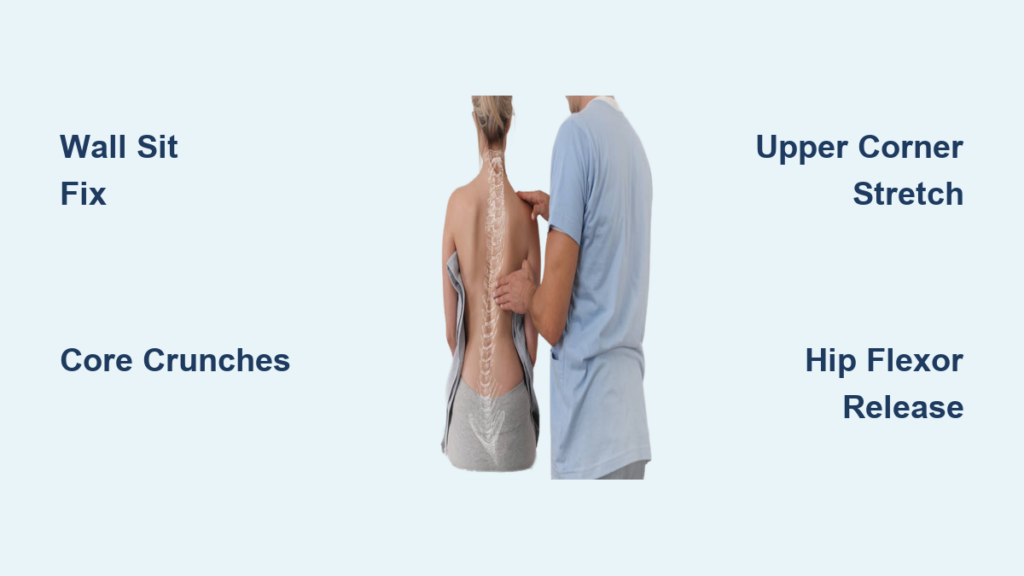
Your lower back aches before lunch. Your shoulders feel permanently hunched after hours at your desk. That afternoon headache? It’s not just stress—it’s your spine paying the price for poor posture. The good news: you can break these damaging patterns starting today with simple, science-backed techniques that require no special equipment or hours at the gym.
Research confirms that targeted postural correction significantly reduces back pain within six weeks for most people. This guide delivers the exact exercises, daily habits, and workspace adjustments physical therapists prescribe to their patients—condensed into a manageable 5-minute daily routine you can implement immediately.
Why Poor Posture Causes Your Back Pain
Slouching creates a domino effect of muscular strain that explains your daily discomfort. When your spine falls out of alignment, supporting muscles and ligaments must work overtime to keep you upright, creating the stiffness and pain you feel by midday. Your body adapts to these positions until poor posture feels “normal,” while your back bears the consequences.
Daily Habits Wrecking Your Spine
- Phone hunching adds up to 60 pounds of pressure to your neck, pulling your entire spine forward
- Carrying bags on one shoulder creates muscular imbalances that twist your pelvis
- Sitting for 45+ minutes straight weakens the core stabilizers that support your lower back
- Sleeping in unsupportive positions reinforces poor spinal curves overnight
These seemingly minor actions accumulate throughout your day, explaining why your pain worsens as hours pass. The solution starts with understanding your specific postural weaknesses.
The 30-Second Posture Assessment That Reveals Your Problem
Stand against a wall with your heels, hips, and shoulders touching the surface. This quick test identifies whether you need to focus on core strengthening or hip flexibility:
- Optimal alignment: Minimal space between lower back and wall (just enough for your hand)
- Anterior pelvic tilt: Large gap indicates weak abdominal muscles and tight hip flexors
- Flat back posture: No gap suggests tight hamstrings and weak lower back muscles
This assessment shows why you’re experiencing pain in specific areas and directs your correction efforts where they’ll have the most impact.
Core Strengthening Exercises That Actually Fix Back Pain
A weak core forces your lower back to overcompensate, creating the pain patterns you experience daily. These three exercises target deep stabilizers in under 3 minutes:
The 20-Second Wall Sit Fix
Slide down a wall until your thighs are parallel to the floor with knees at 90 degrees. Press your lower back firmly against the wall while actively engaging your core. Hold for 20 seconds, rest for 10, and repeat three times. This builds both leg strength and spinal stability simultaneously—perfect for doing during phone calls.
Pro tip: Place a small towel between your lower back and the wall. Maintain contact with the towel throughout the exercise to ensure proper spinal alignment.
Partial Crunches Without Neck Strain
Lie on your back with knees bent and feet flat. Cross arms over your chest and slowly lift shoulders just until shoulder blades clear the floor. Hold for one second while pulling your belly button toward your spine. Perform 15 repetitions daily.
Critical mistake to avoid: Never pull on your neck. The movement must come from your core muscles, not momentum or neck strain.
Daily Stretching Sequence for Immediate Relief
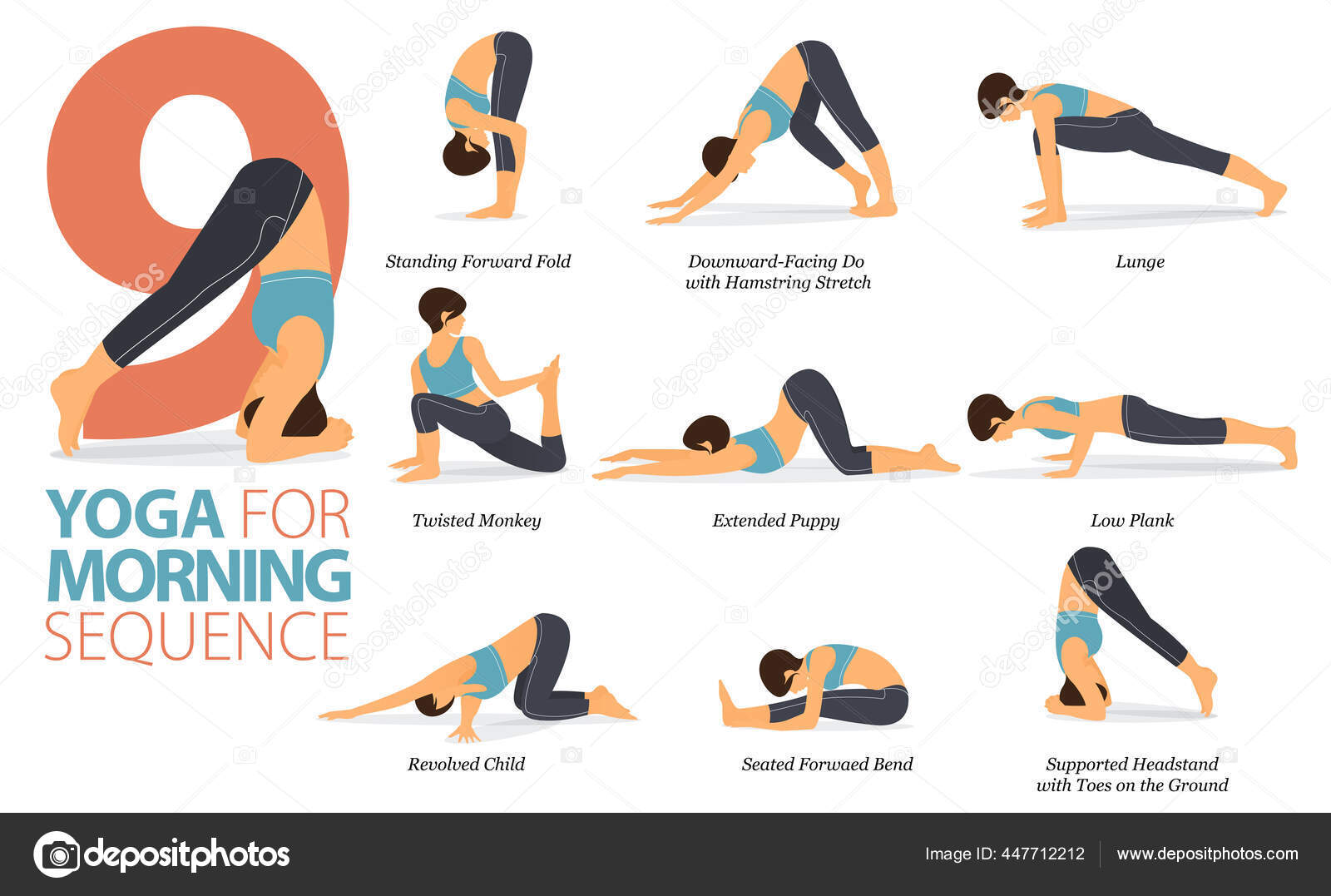
Tight chest and hip muscles pull your spine out of alignment throughout the day. These three stretches reverse those patterns in under 2 minutes:
Upper Corner Stretch for Desk Workers
Stand facing a corner with arms raised to shoulder height, hands flat against adjacent walls. Lean forward until you feel a stretch across your chest and shoulders. Hold for 30 seconds while maintaining a straight back and elevated chest. Perfect for coffee breaks or after prolonged sitting.
Hip Flexor Release While Brushing Teeth
In lunge position with back knee down, sink hips forward while keeping torso upright. Hold for 30 seconds per side while performing your morning routine. Tight hip flexors from sitting directly contribute to lower back pain—address them during existing habits.
Reverse High Five Reset
Stand tall and position arms like you’re giving a double high five behind you. Press backward while squeezing shoulder blades together. Hold for 3 seconds. Repeat 15 times whenever you stand up from your desk to counteract rounded shoulders.
Your Workspace Overhaul Checklist

Your desk setup determines your posture for 8+ hours daily. Make these three critical adjustments today:
Monitor Position Fix
Position the top of your screen at eye level—use books or a monitor stand if needed. Maintain a distance of 20-26 inches from your face with the screen tilted 10-20 degrees back. This prevents forward head posture that strains your neck and upper back.
Chair Setup Essentials
Ensure lumbar support maintains your natural lower back curve—use a rolled towel if your chair lacks proper support. Keep hips slightly higher than knees with feet flat on the floor. Position armrests to support elbows at 90 degrees without raising shoulders.
Phone and Keyboard Alignment
Keep your phone at chest or eye level during use—never look down. Position keyboard and mouse at elbow height with wrists straight, not bent up or down. These small adjustments prevent cumulative strain that causes afternoon pain.
The 5-Minute Daily Protocol That Works
Morning (2 minutes)
- Cat-Cow Sequence: On hands and knees, alternate between arching your spine up (cat) and dropping belly down (cow) for 10 repetitions. This mobilizes your entire spinal column.
- Shoulder Blade Squeezes: While seated, draw shoulders backward while squeezing shoulder blades together. Hold for five seconds, repeat five times to counteract sleeping in fetal position.
Midday (2 minutes)
- Upper Corner Stretch: 30 seconds per side to release tight chest muscles
- Reverse High Fives: 15 repetitions to reset rounded shoulders
- Standing Break: Walk for 60 seconds to reset your posture
Evening (1 minute)
- Child’s Pose: Kneel on floor, sit back on heels, and stretch arms forward for 30 seconds to lengthen your spine
- Hip Flexor Stretch: 30 seconds per side to release tension from sitting
When to Seek Professional Help
Contact a physical therapist if you experience:
– Numbness or tingling in legs
– Pain that worsens despite 4 weeks of consistent effort
– Significant limitation in daily activities
– Pain radiating down the leg
Most postural back pain improves significantly with dedicated home programs. Your body adapts to whatever positions you practice—make good posture your new normal through consistent daily action.
Remember: Consistency beats intensity. These small daily actions compound into significant postural improvement and lasting back pain relief. Start today with just one exercise and build from there—your spine will thank you by 3 PM tomorrow.