
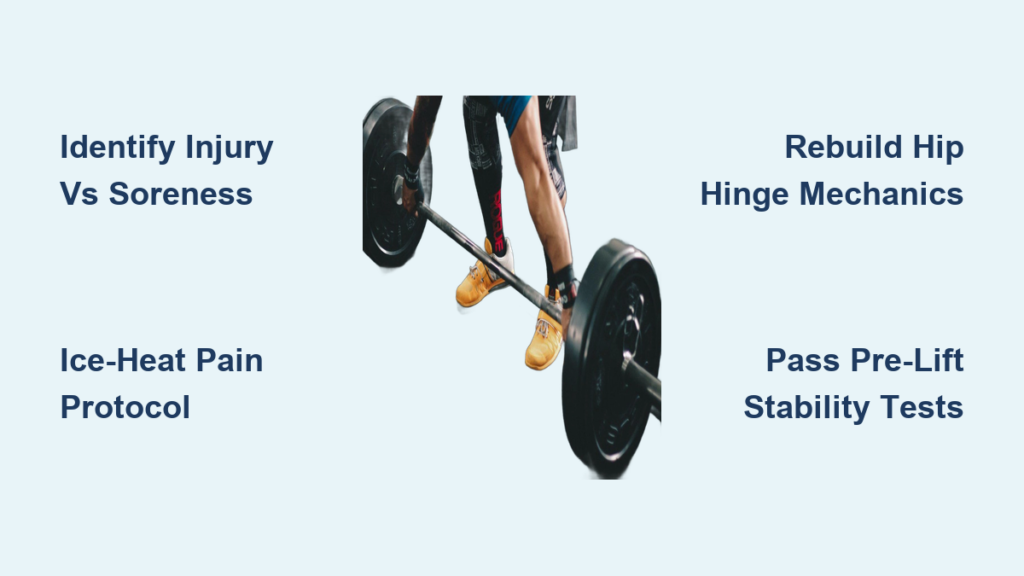
That sharp twinge in your lower back after deadlifts can turn your strongest lift into days of discomfort. Whether it’s a minor strain or something more serious, knowing exactly how to bounce back safely determines if you’ll return stronger—or keep repeating the same painful cycle. This guide walks you through the proven recovery sequence, from immediate symptom control to loading the bar again without fear. Most deadlift back pain resolves completely with targeted intervention, but skipping critical steps risks chronic issues.
Ignoring deadlift back pain often leads to compensatory movement patterns that weaken your foundation. Yet rushing back too soon guarantees reinjury. The solution? A methodical approach that respects tissue healing timelines while rebuilding movement integrity. You’ll learn to distinguish dangerous red flags from normal soreness, implement precise symptom control, and reprogram your hip hinge—all before touching a barbell again.
Pinpoint Your Pain Type: Injury vs. Normal Soreness

Stop guessing—your recovery timeline depends on this critical distinction. Delayed-onset muscle soreness (DOMS) hits 24-72 hours post-lift as a diffuse ache across your glutes or hamstrings. It eases with light movement and vanishes within 5 days. True injury announces itself instantly: sharp, stabbing pain during the lift, especially with burning or electric sensations radiating down your leg.
Never ignore these neurological warning signs:
– Pain shooting below your glutes into your calf or foot
– Numbness in your inner thigh (“saddle anesthesia”)
– Weakened knee extension (trouble lifting your foot)
– Unexplained urinary urgency or retention
Perform this emergency self-check: Stand upright and cough sharply. If it triggers shooting leg pain, assume disc involvement. Immediately halt lifting and consult a sports physical therapist—this isn’t DOMS. Waiting risks permanent nerve damage.
Shut Down Acute Pain in 72 Hours (Without Complete Rest)
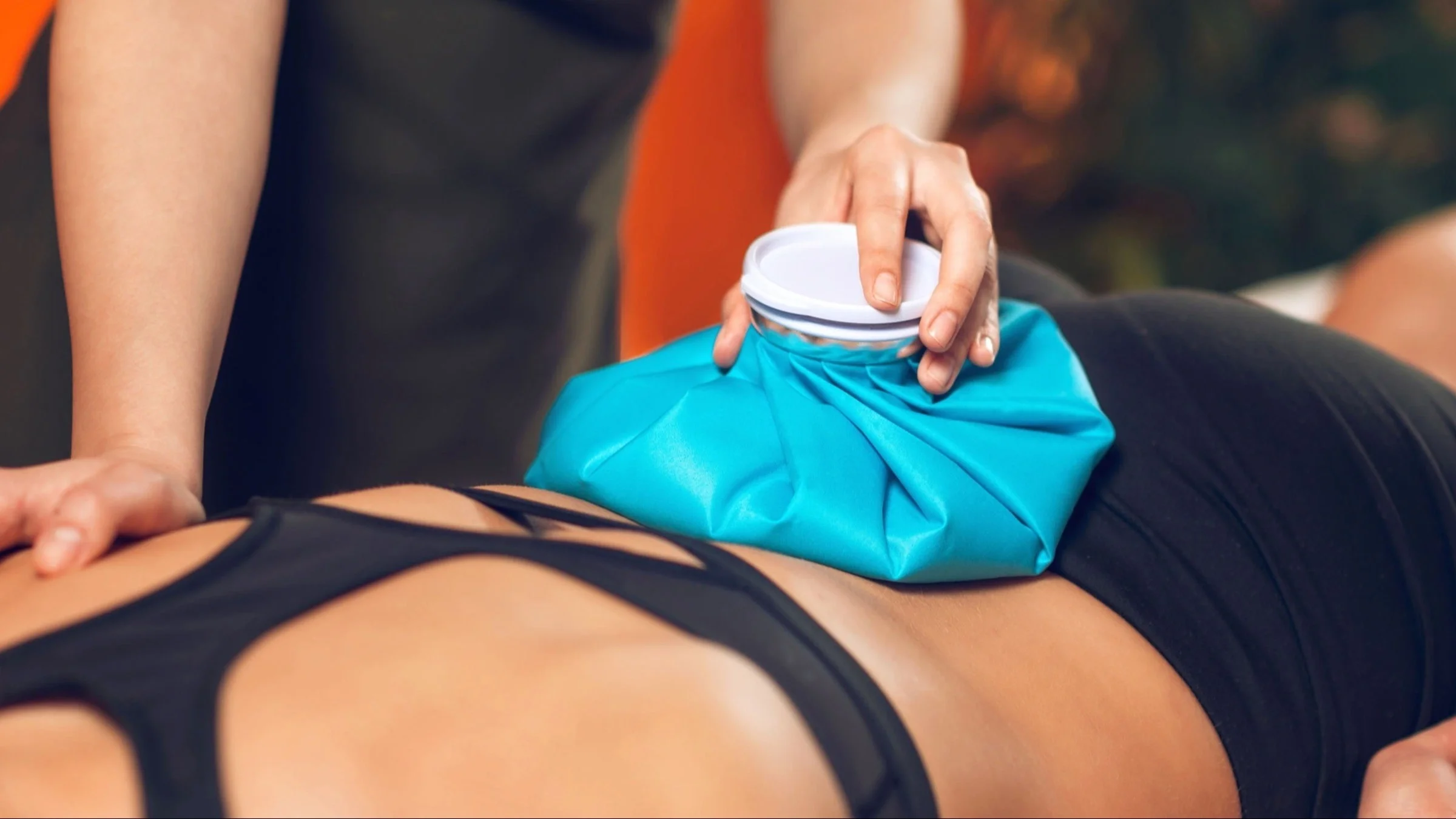
Ice-to-Heat Transition Protocol
Apply ice packs for 15 minutes every 2 hours during the first 48 hours to constrict blood vessels and limit inflammation. Wrap the ice pack in a thin towel to prevent skin damage—never apply directly. On day 3, switch to moist heat (a warm shower or microwavable rice bag) for 20-minute sessions to relax tight paraspinal muscles. This dual-phase approach reduces swelling while restoring blood flow.
Avoid these common medication mistakes:
– ❌ Taking NSAIDs beyond 5 days (increases gut/renal risks)
– ❌ Combining ibuprofen with blood thinners
– ❌ Using painkillers to mask symptoms during activity
Instead, pair acetaminophen with topical diclofenac gel for localized relief. Never lift while medicated—you’ll override pain signals and worsen damage.
Movement-Based Recovery Tactics
Stay active with these pain-free options:
– 10-minute walks every 2 hours (no hills or uneven terrain)
– Pool walking in chest-deep water (reduces spinal load by 50%)
– Stationary cycling with high seat position (minimizes lumbar flexion)
Critical rule: Change positions every 25 minutes. Set phone alarms to avoid prolonged sitting—the #1 aggravator of discogenic pain. Wear a flexible lumbar brace like the Serola SI belt only during essential upright tasks (grocery shopping, cooking), and ditch it after 5 days to prevent core muscle weakening.
Rebuild Movement Integrity Days 3-14
Precision Mobility Drills (Do Daily)
Target your weakest links with this sequence:
1. Cat-Camel on all fours: Move slowly through full lumbar flexion/extension (8 reps)
2. Supine pelvic tilts: Flatten your low back into the floor, hold 3 seconds (12 reps)
3. Half-kneeling hip flexor stretch: Tuck pelvis under, reach overhead (30 seconds/side)
Watch for these visual cues:
– ✅ Smooth spinal motion during Cat-Camel (no “sticking points”)
– ✅ Pelvic tilt achieved without pressing lower ribs into floor
– ❌ Avoid arching your lower back during hip flexor stretch
Stop if you feel nerve pain—this isn’t stretching muscle tightness.
Core Activation Circuit That Actually Works
Skip useless crunches. Build resilient stability with:
– Dead Bug: Lie on back, knees bent 90 degrees. Alternate lowering opposite arm/leg while maintaining pelvic tilt. Start with 2 sets of 10 reps.
– Bird Dog: Extend opposite arm/leg to hip height, hold 5 seconds. Focus on keeping hips square to floor—no twisting.
– Glute Bridge Progression: Begin double-leg, advance to single-leg once you hit 15 pain-free reps.
Pro Tip: Place your fingers just inside hip bones during Dead Bugs. If you feel your obliques engage when you exhale, you’re bracing correctly. No engagement? Restart with shallower movements.
Hip Hinge Retraining (Week 2 Focus)
Master these progressions before deadlifting:
1. Dowel Rod Drill: Balance a broomstick along your spine. Hinge until it loses contact with sacrum—stop immediately if it slips from head/thoracic points.
2. Kettlebell Deadlift from Blocks: Elevate weight 4 inches. Push hips back until shins touch KB, then drive through heels.
3. Rack Pulls: Start bar just below knees. Pull shoulders down (not back) to engage lats before lifting.
Key checkpoint: Can you maintain ribcage-down positioning throughout? If your chest flares up, you’re compensating with spinal erectors instead of glutes.
Pass These Tests Before Deadlifting Again
Don’t touch a bar until you clear all four benchmarks:
1. Pain-free dowel hip hinge for 15 consecutive reps
2. 30-second side plank on both sides without hip sag
3. Single-leg glute bridge holding position for 15 seconds/side
4. Zero pain during 30-second bodyweight good-morning hold
Follow this reloading schedule strictly:
| Week | Exercise | Sets × Reps | Load | Critical Focus |
|---|---|---|---|---|
| 3-4 | Trap-bar from blocks | 3 × 5 | 30-40% 1RM | Keep ribs down during pull |
| 4-5 | Conventional reset DL | 3 × 4 | 40-50% 1RM | 3-second descent, full reset |
| 5-6 | Conventional DL | 4 × 3 | 50-60% 1RM | Add 2.5kg only if pain-free |
Warning: Skip trap-bar work if you have SI joint issues—neutral grip increases shear forces. Stick with rack pulls.
Prevent Future Deadlift Back Pain Forever
Form Fix Checklist for Every Rep
Stop these technique killers immediately:
– Bar drift: Keep bar touching shins/thighs (use long socks for feedback)
– Rib flare: Maintain “ribs down” position—imagine zipping a tight shirt
– Lat disengagement: “Bend the bar” sideways before lifting to activate lats
– Knee-first descent: Hinge hips back FIRST when lowering, then bend knees
Pro Tip: Film your deadlifts weekly. If your lower back rounds at any point, reduce weight by 20% and rebuild.
Non-Negotiable Maintenance Routine
Spend 5 minutes daily on:
– World’s Greatest Stretch: 30 seconds/side for hip flexor/T-spine mobility
– Thoracic foam rolling: 45 seconds while breathing deeply into upper back
– Ankle dorsiflexion rocks: 15 reps/side to fix heel lift during setup
Pair this with smart programming: Never increase deadlift weight more than 5% weekly. After 4 weeks of heavy pulls, take a deload week with 30% less volume. Prioritize Romanian deadlifts and hip thrusts—they build posterior chain resilience without spinal compression.
When to Demand Advanced Medical Help
Seek immediate imaging if you experience:
– Foot drop (tripping when walking)
– Numbness in groin area
– Night pain that wakes you up
– Unexplained weight loss with back pain
For stubborn pain beyond 6 weeks:
– Get an MRI to rule out disc herniation
– Ask about epidural steroid injections for nerve inflammation
– Consider microdiscectomy only if neurological deficits progress
Red Flag: Don’t trust “wait-and-see” advice if symptoms worsen. Disc injuries heal poorly without precise intervention.
Bottom line: Deadlift back pain isn’t your body failing—it’s your movement system signaling a breakdown. By methodically controlling symptoms, rebuilding hip hinge mechanics, and enforcing form non-negotiables, you’ll return stronger within 6 weeks. The lifter who respects tissue healing timelines while reprogramming movement patterns transforms pain into power. If neurological symptoms appear, act fast—your lifting future depends on today’s decisions. Start with the mobility reset drills now, and you’ll stand tall at the bar again.