
That sharp twinge in your lower back after deadlifts isn’t just annoying—it’s your body’s urgent warning signal. While weightlifting athletes face 23-59% of all injuries in the lower back, most post-workout back pain stems from preventable issues like form breakdown and muscle imbalances. The good news? You can slash recovery time and prevent future episodes with targeted strategies backed by sports medicine research. This guide delivers your exact roadmap to reduce back pain after workout sessions—from immediate relief protocols to permanent prevention tactics that keep you lifting pain-free.
Stop guessing whether that ache is normal soreness or something serious. You’ll learn to distinguish everyday muscle fatigue from red-flag symptoms requiring medical intervention, plus implement a step-by-step recovery system proven to get you back in the gym faster. No more wasted training days or fear of lifting heavy again.
Identify Normal vs. Dangerous Pain

Skip this critical step and you risk turning a minor strain into a chronic injury. Normal post-workout discomfort hits 12-24 hours after exercise as mild-to-moderate soreness that improves within days with light movement. This delayed onset muscle soreness (DOMS) results from healthy muscle adaptation during your workout. Dangerous pain, however, demands immediate attention—it often strikes during activity and worsens with rest.
When to Stop Training Immediately
- Electric-like pain shooting down your leg (possible nerve compression)
- Inability to stand upright without support
- Numbness or weakness in legs/feet (signaling nerve involvement)
- Pain that intensifies at night or while resting
Quick action test: If walking normally feels impossible or pain persists beyond 7 days, consult a physical therapist immediately. Ignoring these signs risks herniated discs or permanent nerve damage—conditions that sideline lifters for months.
Immediate Relief: First 48 Hours
Your first move determines whether recovery takes days or weeks. During the initial 24 hours, apply ice packs for 20 minutes every 2 hours to reduce inflammation around stressed tissues. After 48 hours, switch to moist heat therapy to boost blood flow and relax tight muscles. Crucially, avoid complete rest—maintain light activity like walking for 5-10 minutes hourly to prevent stiffness without aggravating the injury.
Rapid Recovery Checklist
- [ ] Ice therapy: 20 minutes on, 40 minutes off cycle
- [ ] NSAIDs like ibuprofen (as directed) to control inflammation
- [ ] Sleep with a pillow between knees to maintain spinal alignment
- [ ] Wear supportive footwear during daily activities
Pro tip: After day two, Epsom salt baths accelerate muscle relaxation by delivering magnesium transdermally—studies show this can cut recovery time by nearly 30% compared to passive rest alone.
Essential Back Pain Stretches
Perform these three stretches immediately when pain strikes. They target the exact muscle groups that pull your spine out of alignment during lifting sessions, providing relief within minutes when done correctly.
Back Rotation Release
Lie on your back with knees bent and feet flat. Gently drop both knees to one side while pressing shoulders into the floor. Hold 30 seconds until you feel tension release in your lower back, then repeat on the opposite side. This maneuver resets rotational stress from deadlifts or rows.
Child’s Pose Recovery
Kneel and sit back on your heels while stretching arms forward. Lower your chest toward the floor and breathe deeply into your lower back for 30 seconds. This decompresses vertebrae compressed during overhead presses or squats.
Cat-Cow Mobility Sequence
On hands and knees, alternate between arching your spine upward (cat) and dipping your belly toward the floor (cow). Complete 15 slow repetitions to restore spinal fluidity lost during heavy lifting. Stop if you feel pinching.
Frequency: Perform this trio 3x daily during acute pain phases, holding each stretch 20-30 seconds. Never force movement into painful ranges.
Fix Your Form to Prevent Recurrence
Poor lifting technique causes 80% of workout-related back pain. Before adding weight, master these non-negotiable fundamentals that protect your spine under load.
- Brace your core by tightening abdominal muscles as if preparing for a light punch—this creates intra-abdominal pressure that stabilizes your spine
- Maintain neutral spine by aligning your head, shoulders, and hips in a straight line during all lifts
- Hinge at hips when bending forward—push your glutes backward like closing a car door with your hip
- Control movement speed—never jerk weights during lifts or lowers
- Progress weight gradually—increase by 5-10% weekly max to allow tissue adaptation
Quick Form Check
Before any lift, ask: “Could I maintain this position if someone gently pushed me?” If your form collapses, reduce weight immediately. Film your lifts weekly to catch subtle breakdowns.
Build a Bulletproof Core
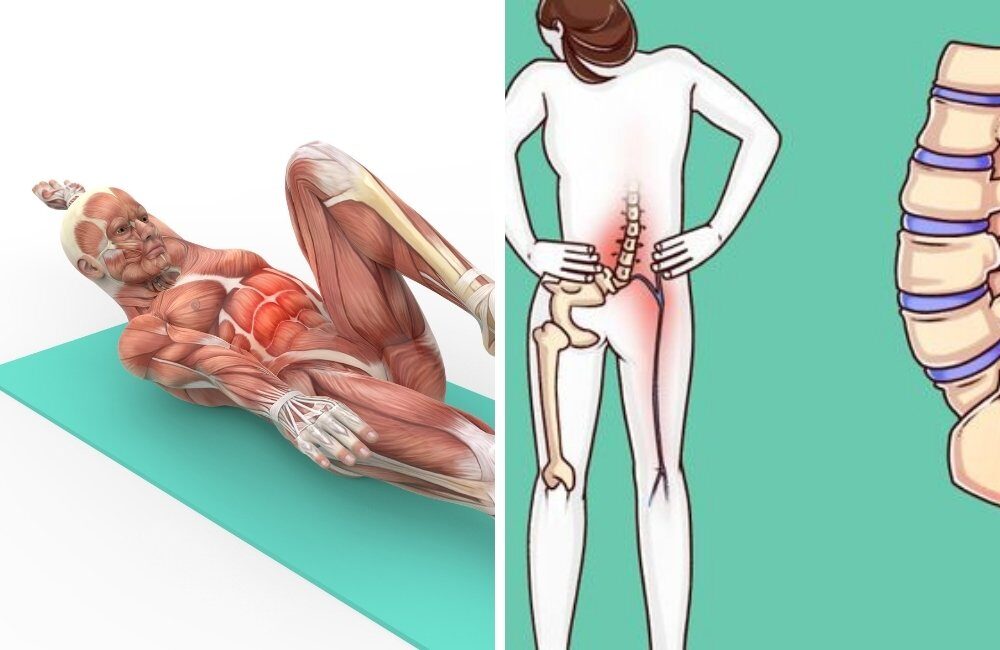
Weak core muscles force your lower back to bear loads it shouldn’t handle. Integrate these exercises 3x weekly to create a natural weightlifting belt around your spine.
Primary Core Builders:
– Planks: 3 sets of 30-60 seconds (keep hips level with shoulders)
– Bird-dogs: 3 sets of 10 reps per side (extend opposite arm/leg while stabilizing spine)
– Dead bugs: 3 sets of 12 reps (lower opposite limbs while pressing lower back into floor)
– Glute bridges: 3 sets of 15 reps (squeeze glutes at top to prevent lumbar hyperextension)
Progression tip: Start with shorter holds and fewer reps. Perfect form trumps duration—stop immediately if you feel lower back strain.
Dynamic Warm-Up Protocol
Static stretching before lifting reduces power output by up to 8%. Instead, prime your spine with this 5-minute movement sequence before every strength session.
Pre-Workout Activation Sequence
- Leg swings: 20 front/back per leg (loosens hip flexors)
- Walking lunges: 10 per leg with torso twist (activates core)
- Hip circles: 15 clockwise/counter-clockwise per leg (mobilizes pelvis)
- Bodyweight squats: 15 reps focusing on hip hinge (engages posterior chain)
Critical note: Perform these movements at 50% intensity initially, gradually increasing range. Cold muscles resist stretching—dynamic motions prepare tissues for load.
Recovery Timeline Expectations
Rushing back too soon guarantees reinjury. Follow this evidence-based progression to return stronger:
Days 1-2: Focus solely on pain management and light walking. Zero lifting.
Days 3-5: Introduce bodyweight movements like glute bridges if pain-free during daily activities.
Week 2: Resume light training (50% normal weight) only if you pass the “stair test” (no pain climbing stairs).
Week 3-4: Gradually rebuild to full intensity with mandatory form checks.
Safe Return Checklist
- [ ] Pain-free during prolonged sitting and walking
- [ ] Full spinal rotation without discomfort
- [ ] No pain during bodyweight squats
- [ ] Confidence maintaining neutral spine under light load
Professional Support Options
Don’t gamble with recurring pain. Seek help if you experience:
– Pain lasting beyond 7 days despite home care
– Multiple episodes after different workouts
– Uncertainty about proper deadlift or squat form
Virtual physical therapy now offers game-changing solutions: licensed therapists analyze your lift videos in real-time, prescribe personalized exercises, and often bill through insurance. For immediate needs, certified trainers specializing in corrective exercise provide form assessments that prevent $5,000+ injury treatments down the road.
Long-Term Prevention Strategy
Make these non-negotiable habits to eliminate post-workout back pain permanently:
Daily Maintenance Routine:
– 5 minutes of core activation (planks/bird-dogs) before workouts
– Post-workout stretching targeting hip flexors and hamstrings
– Hourly posture checks during desk work (imagine a string pulling your head upward)
– Hydration tracking (aim for half your body weight in ounces daily)
Key insight: Consistent attention to progressive loading and form precision transforms back pain from an inevitable part of lifting to a preventable anomaly. Your spine isn’t fragile—it’s engineered for heavy loads when properly supported. Implement these protocols for just 30 days, and you’ll likely never again wonder how to reduce back pain after workout sessions. The strongest lifters aren’t those who push through pain, but those who listen to their bodies and build resilient movement patterns that last decades.