
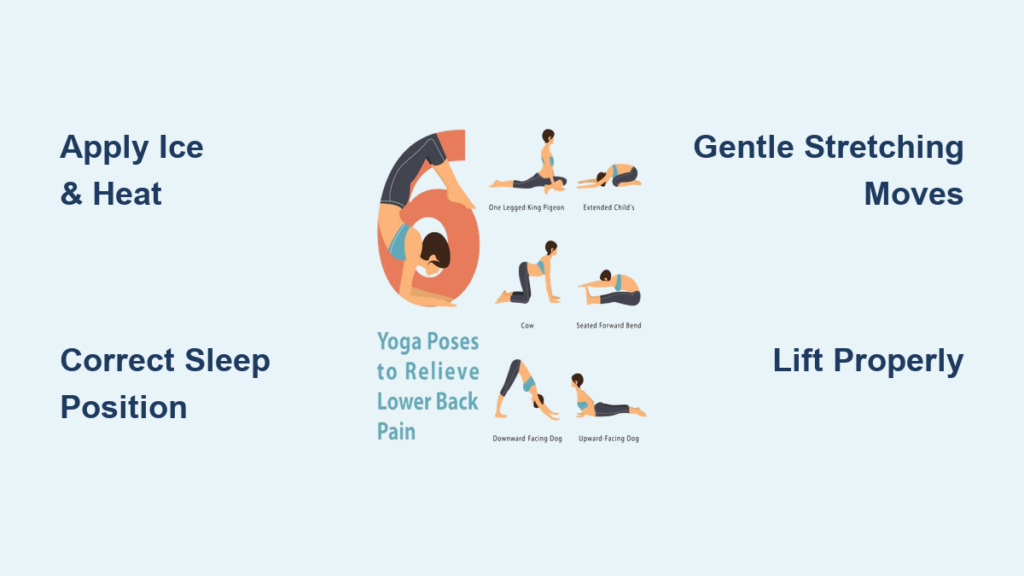
Your back locks up, and suddenly even reaching for your coffee mug feels like climbing Mount Everest. Whether you woke up with a twinge after sleeping wrong or felt that ominous “pop” while lifting groceries, back pain strikes without warning and stops you in your tracks. The good news? Most back pain responds quickly to the right combination of immediate relief strategies and simple exercises you can do at home—no expensive treatments required.
This guide delivers exactly what you need to know to stop back pain fast and prevent future flare-ups. You’ll learn why your back hurts, how to relieve back pain immediately using techniques backed by physical therapists, and proven strategies to keep your spine strong for the long haul. Stop suffering through another day—let’s get you moving again.
Stop Your Back Pain Within Minutes
Apply Ice and Heat for Maximum Effectiveness
For fresh pain (less than 48 hours old), ice is your first line of defense against inflammation. Wrap an ice pack in a thin towel and apply for exactly 20 minutes—any longer risks skin damage. Repeat every 2-3 hours while you’re awake. After the initial 48-hour window, switch to heat therapy. A heating pad on medium heat for 20 minutes relaxes tight muscles and boosts blood flow to accelerate healing.
Pro tip: Keep a reusable ice pack frozen and your heating pad plugged in near your favorite chair. When pain strikes, you won’t waste valuable recovery time searching for supplies. Alternate between cold and heat every two hours for stubborn pain that won’t quit.
Choose Pain Relief That Targets Your Specific Pain
Skip the medicine cabinet roulette. For most back pain, you need either an anti-inflammatory or pain reliever—not both. Take 400mg of ibuprofen (Advil) every 6-8 hours to combat inflammation at its source. If NSAIDs aren’t an option, acetaminophen (Tylenol) provides general pain relief but won’t reduce swelling. For localized soreness, apply topical creams containing lidocaine or menthol directly to your back muscles.
Warning: Never exceed 3,200mg of ibuprofen daily or combine different NSAIDs. Your digestive system will pay the price with potential ulcers or bleeding.
Correct Your Sleep Position Tonight
Your mattress isn’t the culprit—your sleep position is. Back sleepers: slide a pillow under your knees immediately to maintain natural spinal alignment. Side sleepers: hug a pillow between your knees to prevent pelvic tilt that strains your lower back. Stomach sleepers: you’re causing unnecessary spinal stress—transition to side sleeping with a full-body pillow for support.
Tonight’s hack: When getting out of bed hurts, roll to your side first, swing both legs off the edge, then push up with your arms. Avoid the painful “sit-up” motion that aggravates your back.
Move Smarter While Healing

Start Your Day with These 5-Minute Back Pain Relief Moves
Staying in bed all day actually prolongs your pain. Instead, begin with gentle movement while still lying down: pull one knee to your chest for 5 seconds, then switch legs. Repeat 3 times per side. This simple stretch decompresses spinal discs without strain.
Key rule: Movement should feel like relief, not torture. Stop immediately if you experience sharp pain—your body is signaling you’ve gone too far.
Transform Daily Activities to Protect Your Back
Modify your routine with these instant fixes:
– Sitting: Set phone alarms every 30 minutes to stand, walk to get water, or do shoulder rolls at your desk
– Driving: Move your seat closer to the wheel so elbows bend at 90 degrees, reducing lower back strain
– Standing: Place one foot on a small step or box, switching feet every few minutes to relieve pressure
– Phone use: Hold your device at eye level—looking down adds 60 pounds of pressure to your spine
15-Minute Daily Back Pain Relief Program
Morning and Evening Relief Sequence
Perform these 7 exercises twice daily to rebuild spinal mobility. Start with 2 repetitions each, building to 10 as pain decreases:
Knee-to-Chest Stretch: Lie on your back with knees bent, pull one knee to your chest with both hands. Hold 5 seconds, then switch legs. This gently stretches lower back muscles without straining discs.
Lower Back Rotational Stretch: While lying down with knees bent, keep shoulders flat and roll both knees to the right. Hold 5 seconds, return to center, then repeat on the left. This mobilizes stiff spinal joints without dangerous twisting motions.
Bridge Exercise: With knees bent and feet flat, tighten your core and lift your hips until your body forms a straight line from knees to shoulders. Hold for three deep breaths. This strengthens glutes that support your lower back.
Cat Stretch: On hands and knees, arch your back up like a Halloween cat, then let it sag toward the floor. Repeat 5 times slowly. This lubricates spinal joints and improves flexibility.
Core Strengthening Moves That Actually Help Back Pain
Strong core muscles act like a natural back brace. Start with these three foundational exercises:
Modified Plank: Hold a forearm plank position for 10 seconds, working up to 30 seconds. Keep your body straight from head to heels. This builds endurance in deep core muscles that stabilize your spine.
Bird Dog: On hands and knees, extend your right arm and left leg simultaneously. Hold 5 seconds, then switch sides. This improves spinal stability while challenging your balance.
Wall Sits: Slide down a wall until your thighs are parallel to the floor, like sitting in an invisible chair. Hold for 15 seconds. This strengthens legs and core without stressing your back.
Progression tip: Master 10 perfect repetitions before adding more. Quality beats quantity when relieving back pain through exercise.
Prevent Future Back Pain Without Major Lifestyle Overhauls
Transform Your Workspace in 10 Minutes
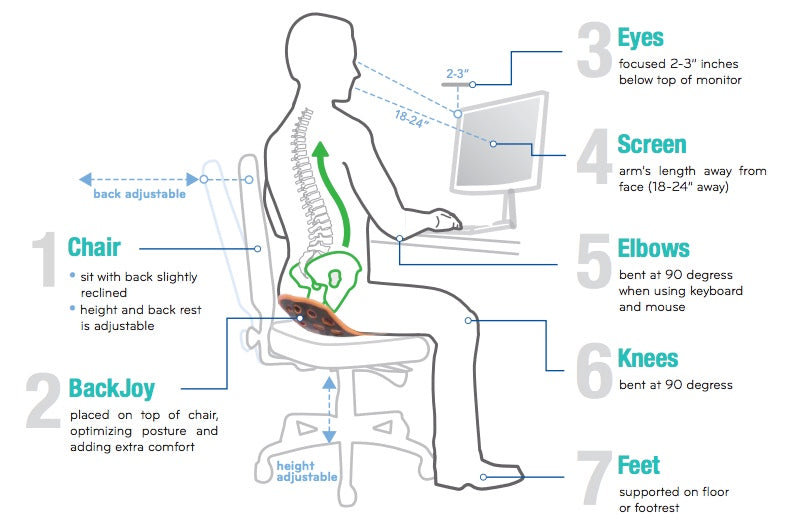
Create a back-friendly desk setup with these immediate changes:
– Adjust chair height so feet rest flat with thighs parallel to the floor
– Position monitor at eye level, arm’s length away
– Keep keyboard close so elbows bend at 90 degrees with wrists straight
– Add lumbar support using a rolled towel if your chair lacks proper support
Daily habit: Set a “posture check” alarm every hour. Roll shoulders back, tuck chin slightly, and engage your core for 30 seconds to reset your alignment.
Lift Heavy Objects Without Hurting Your Back
Save your spine with this six-step lifting formula:
1. Get close to the object—no reaching across your body
2. Bend your knees deeply, not your waist
3. Keep your back straight with chest forward
4. Hold items close against your body
5. Lift using your leg muscles while exhaling
6. Never twist while lifting—pivot your entire body instead
Remember: If you’re thinking “this might be too heavy,” it definitely is. Ask for help without hesitation.
Build Back Resilience with Consistent Small Actions
Long-term back health comes from consistency, not perfection:
Weekly activity targets:
– Walk 30 minutes daily at a comfortable pace
– Swim twice weekly for low-impact cardio
– Perform core exercises 3 times per week
– Stretch for 5 minutes every morning
Anti-inflammatory eating: Reduce processed foods and sugar while adding salmon, berries, and leafy greens to naturally fight inflammation that contributes to back pain.
When to Seek Professional Help for Back Pain
Recognize These Medical Emergency Signs
Contact your doctor immediately if you experience:
– Numbness or tingling in legs or feet
– Pain shooting down one leg (possible sciatica)
– Loss of bladder or bowel control
– Fever accompanying back pain
– Pain that worsens at night or remains constant
– Weakness in legs or feet
Critical situation: Sudden severe pain after a fall or accident requires immediate medical evaluation—don’t wait.
Effective Professional Treatment Options
When home remedies aren’t enough, these treatments provide real relief:
Physical therapy: A therapist creates a personalized exercise program targeting your specific pain source. Expect 6-12 sessions focusing on movement patterns and strength building.
Medications: Beyond OTC options, doctors may prescribe muscle relaxers for severe spasms or duloxetine for nerve-related pain. Epidural steroid injections provide targeted relief for disc issues.
Alternative therapies: Acupuncture, massage therapy, and chiropractic adjustments help many people. Try 3-4 sessions to gauge effectiveness for your specific pain pattern.
Realistic Recovery Timeline Expectations
Most acute back pain improves within 72 hours with proper care. Subacute pain (4-12 weeks) needs consistent exercise and lifestyle modification. Chronic pain (12+ weeks) requires a comprehensive management plan combining medical care, exercise, and lifestyle changes.
Key insight: Your recovery speed depends more on consistent daily habits than any single treatment. Small actions repeated daily create lasting change when you’re learning how to relieve back pain effectively.
Your Next Step: Start with the immediate relief strategies today. Tonight, begin the gentle exercise routine. This weekend, optimize your workspace. Most importantly, listen to your body—pain is a signal, not an enemy. With these tools, you’re equipped to handle back pain whenever it strikes and prevent it from returning.