
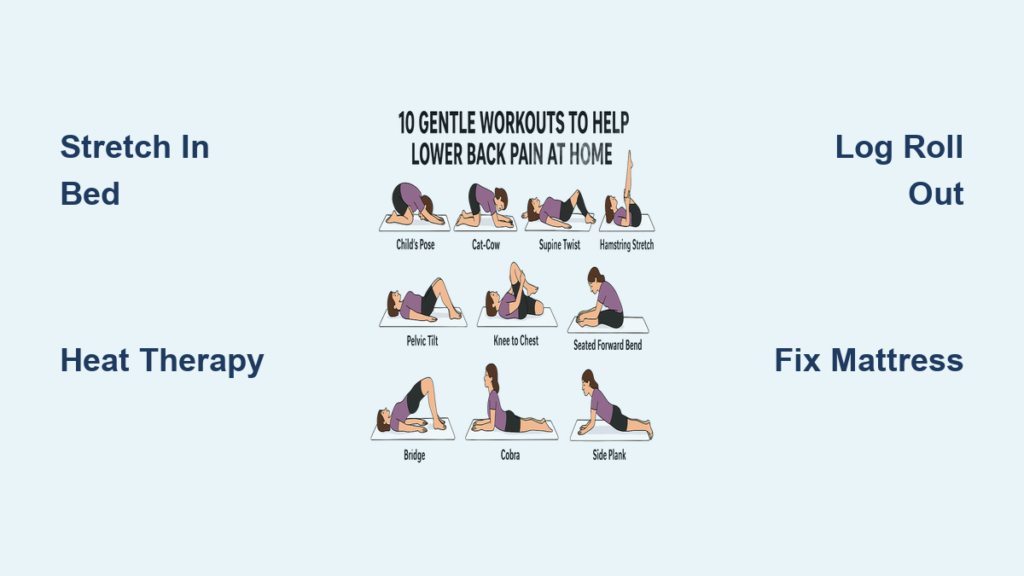
You roll over, reach for your phone, and immediately freeze as a sharp ache radiates from your lower back. That familiar morning stiffness transforms a fresh start into a painful struggle before your day even begins. If you’ve experienced this daily ritual of back pain after waking up, you’re not alone—over 80% of adults encounter back pain at some point, with morning stiffness being one of the most common complaints.
This frustrating pattern isn’t something you have to accept as normal. Most morning back pain stems from correctable issues with your sleep environment, posture, or routine. The right combination of immediate relief techniques and long-term adjustments can transform your mornings from painful to pain-free within weeks.
Why Your Back Screams When You Wake Up
Your spine endures 6-8 hours in a fixed position while you sleep, and when that position compromises your natural alignment, muscles tighten and joints stiffen. Unlike daytime movement that continuously lubricates your joints, overnight immobility causes fluid to redistribute in your spinal discs, leaving them less hydrated and more vulnerable to pain upon waking.
How Your Mattress Sabotages Your Spine
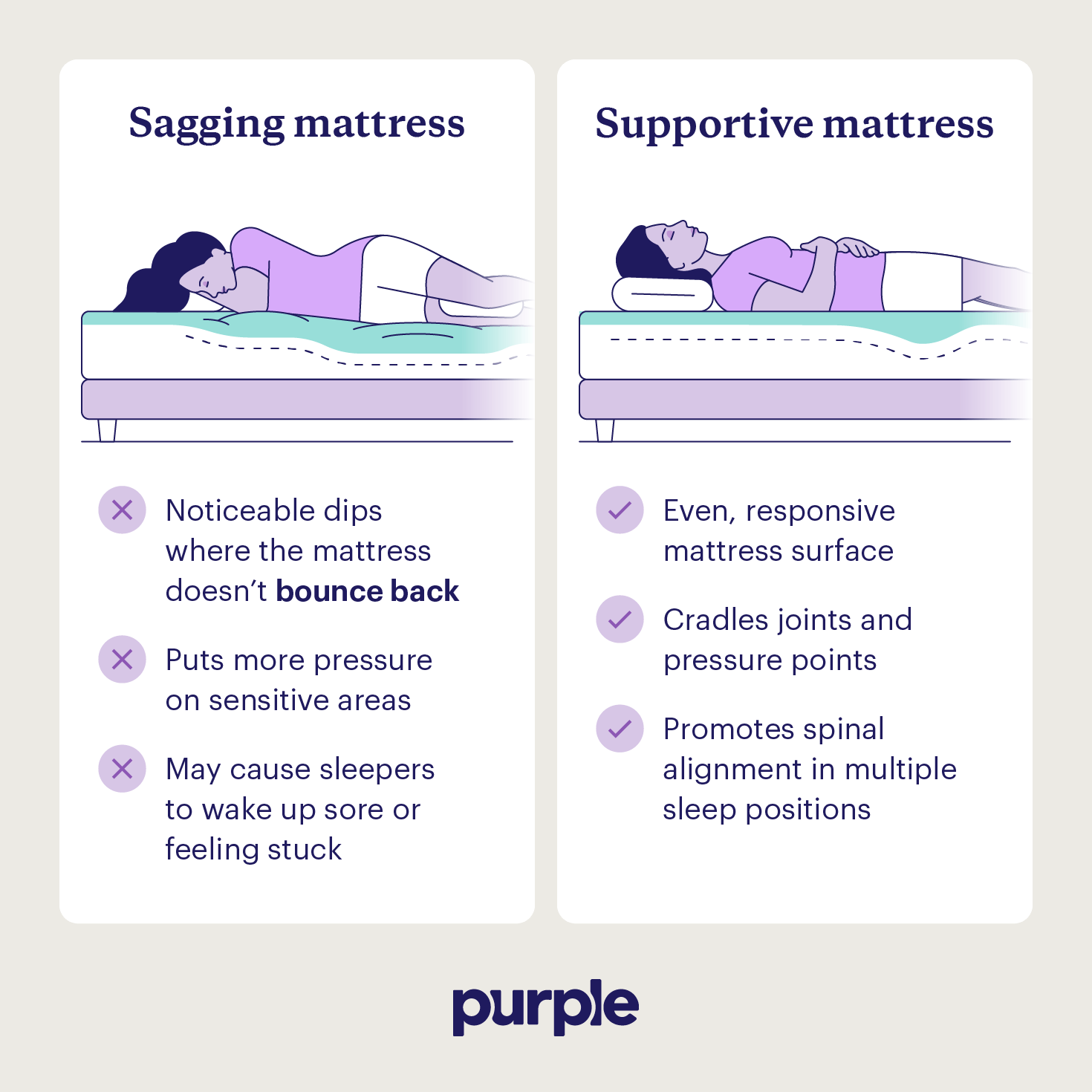
Sagging mattresses create a hammock effect that forces your spine into unnatural curves while you sleep. If you can see visible dips or your mattress is older than 7 years, it’s likely contributing significantly to your back pain after waking up. Pillow height matters more than you think—too thick or too thin throws off neck alignment, creating a domino effect of tension that travels down your entire spine to your lower back.
Sleep Position Damage Control
Side sleeping without proper support twists your spine into a C-shape that strains your lower back muscles all night. Stomach sleeping hyperextends your lumbar region, putting excessive pressure on your discs. Even back sleeping can cause problems if your knees aren’t properly supported, allowing your pelvis to tilt and flatten your natural spinal curve. Your sleeping position determines exactly which muscles tighten overnight.
Immediate Relief: First 5 Minutes in Bed
Don’t jump out of bed when back pain hits you first thing in the morning—that sudden movement can worsen stiffness and increase pain. Instead, perform these gentle movements while still lying down to restore circulation and prepare your spine for movement.
Progressive Wake-Up Sequence
Start with ankle circles: Rotate each foot 10 times in both directions to stimulate blood flow. Then move to single knee hugs: Pull one knee to your chest while keeping the opposite leg extended, hold for 15 seconds, and switch sides. Finish with gentle twists: Keep your shoulders flat on the mattress while slowly dropping both knees to one side, holding for 20 seconds before switching. These movements gently reintroduce mobility without shocking your system.
Bed-Based Heat Therapy
Grab your heating pad before you get up and place it directly on your lower back for 10 minutes while performing the stretches above. The warmth increases blood flow to tight muscles, melting away stiffness before you even stand up. No heating pad? Fill a sock with uncooked rice, microwave for 30-45 seconds, and use it as a makeshift warm compress—just test the temperature first to avoid burns.
Supported Roll Out of Bed
Use the log roll technique to minimize spinal strain when getting up:
– Roll onto your side with both knees bent
– Slide your feet to the edge of the bed
– Push up using your arms while keeping your spine straight
– Pause in a seated position for 10 seconds before standing
This method maintains spinal alignment throughout the transition, preventing that sharp pain spike when you first stand.
10-Minute Morning Routine That Works
Bathroom Counter Stretches
Turn your morning bathroom routine into therapy time with these simple counter-supported stretches:
Forward fold: Place hands on the counter edge, walk your feet back until your torso forms a 90-degree angle, and let your chest drop toward the floor while keeping your back flat. Hold for 30 seconds to gently stretch your hamstrings and lower back.
Hip circles: With hands on hips, rotate your pelvis slowly—10 circles clockwise, then 10 counterclockwise. This releases tension in your hip flexors that contributes to back pain after waking up.
Shower Therapy That Targets Stiffness

Direct warm water specifically at your lower back for 3 minutes while performing these movements:
– Shoulder blade squeezes: Pull shoulder blades together and hold for 5 seconds (repeat 10 times)
– Side reaches: One arm overhead, gently lean to the opposite side, hold for 15 seconds per side
The combination of heat and movement loosens tight muscles faster than stretching alone and provides immediate relief from morning back pain.
Fix Your Sleep Environment for Good
Mattress Assessment Checklist
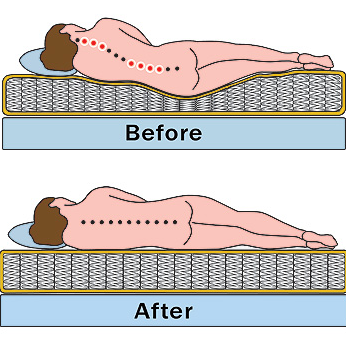
Replace immediately if:
– You see visible sagging or lumps
– Your mattress is older than 7-10 years
– You wake up sleeping in the mattress’s dip
Test new mattresses properly: Lie in your typical sleep position for at least 15 minutes. Medium-firm options typically provide the best support for back pain sufferers, conforming to your body without creating pressure points.
Pillow Strategy by Sleep Position
Back sleepers: Use a cervical pillow that supports your neck’s natural curve, plus a small pillow under your knees to maintain spinal alignment.
Side sleepers: Choose a pillow that fills the space between your shoulder and ear (typically 4-6 inches thick), plus a pillow between your knees to prevent hip rotation.
Stomach sleepers: Seriously consider switching positions—this is the worst for back pain. If you must continue, use an extremely thin pillow or none at all.
Long-Term Prevention Plan
Core Strengthening That Works While You Sleep
Perform this simple circuit 3x weekly to build the muscles that maintain spinal alignment all night:
Dead bugs: 3 sets of 10 reps each side—lie on your back with arms extended toward ceiling, knees bent at 90 degrees. Slowly extend opposite arm and leg while keeping your lower back pressed to the floor.
Bird dogs: 3 sets of 10 reps each side—start on hands and knees, extend opposite arm and leg while keeping your spine stable. Imagine balancing a glass of water on your lower back.
Side planks: 3 sets of 30-60 seconds each side—builds the lateral stabilizers that prevent spinal twisting during sleep.
Anti-Inflammatory Morning Nutrition
Start your day with these inflammation-fighting strategies:
– Add 1 teaspoon of turmeric to your morning smoothie or oatmeal
– Drink 16oz of water immediately upon waking to rehydrate spinal discs
– Include omega-3 rich foods like chia seeds or walnuts in your breakfast
Avoid inflammatory triggers like processed breakfast foods and excess sugar that worsen morning stiffness.
When to Call Your Doctor
Red Flag Symptoms Requiring Immediate Attention
Seek medical care immediately if you experience:
– Numbness or tingling in your legs
– Severe pain that worsens with simple movements
– Loss of bladder or bowel control
– Fever accompanying your back pain
These symptoms could indicate serious conditions like cauda equina syndrome or infection that require urgent treatment.
Pain Pattern Tracking Strategy
Before your appointment, track these details for 2 weeks:
– Exact pain location and type (sharp, dull, burning)
– Pain level 1-10 upon waking and evening
– Sleep position and mattress age
– Activities that worsen or improve pain
This data helps your doctor distinguish between mechanical pain (which improves with movement) and inflammatory conditions (which often worsen with activity).
Essential Morning Tools for Pain-Free Mornings
Temperature Therapy Kit
Heating pad: Choose one with auto-shutoff and multiple heat settings for safe morning use.
Gel packs: Keep reusable hot/cold packs in your bedroom for immediate application.
Heated mattress pad: Dual controls allow consistent overnight warmth that prevents morning stiffness—set it to turn off 30 minutes before your alarm.
Sleep Accessories That Make a Difference
Cervical pillow: Specifically designed to maintain neck alignment for back sleepers.
Knee pillow: Memory foam version for side sleepers that prevents hip rotation.
Body pillow: Full-length support for position changers who wake up in different spots each morning.
Lumbar cushion: Keep one at your desk to maintain support throughout your day.
Key Takeaway: Consistency beats intensity when learning how to relieve back pain after waking up. Start tomorrow morning with the bed-based stretches and log roll technique, then gradually implement the sleep environment changes. Most people experience noticeable improvement within 2 weeks of addressing their mattress and adding these simple morning movements. Your back doesn’t have to hurt when you wake up—these evidence-based strategies will help you greet each morning with relief rather than pain.