
Back pain plagues 50-70% of pregnant women, transforming what should be restorative sleep into hours of uncomfortable tossing and turning. You’re not imagining things when sharp pains shoot through your lower back each time you shift positions, or when morning stiffness makes getting out of bed feel like a major accomplishment. The perfect storm of relaxin hormones loosening your joints, 25-35 pounds of extra weight, and your shifting center of gravity creates relentless nighttime discomfort that leaves you exhausted before your day even begins.
This guide delivers immediate relief strategies you can implement tonight. You’ll discover the exact pillow placements that provide instant comfort, learn which positions to avoid at all costs, and master pre-bed routines that prepare your body for deeper, pain-free sleep. No more settling for restless nights—your solution starts with understanding how pregnancy changes your body’s needs during sleep.
Left-Side Sleeping Position for Immediate Back Relief
Master the Perfect Side-Lying Alignment
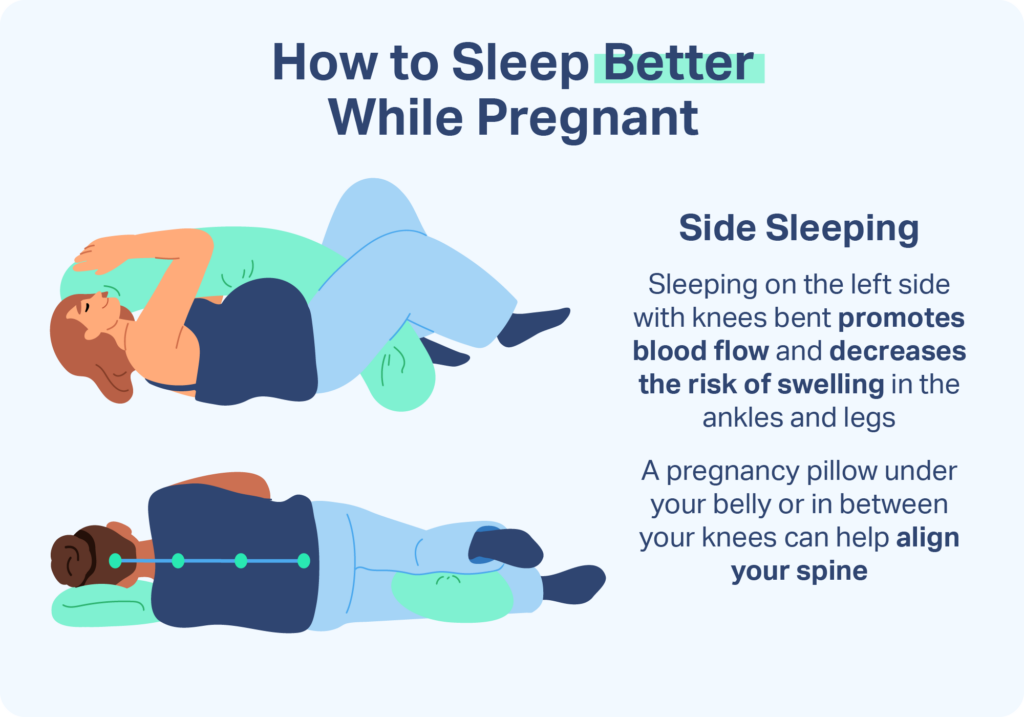
Left-side sleeping isn’t just recommended—it’s your most effective weapon against pregnancy back pain. This position maximizes blood flow to your baby while minimizing pressure on your spine. When you sleep on your left side, you keep your uterus off major blood vessels, reducing swelling and preventing the compression that intensifies back pain.
Critical alignment points to check:
– Stack your hips directly on top of each other
– Bend knees at a comfortable 90-degree angle
– Keep shoulders relaxed and parallel
– Align ears with shoulders to prevent neck strain
Strategic Pillow Placement That Works
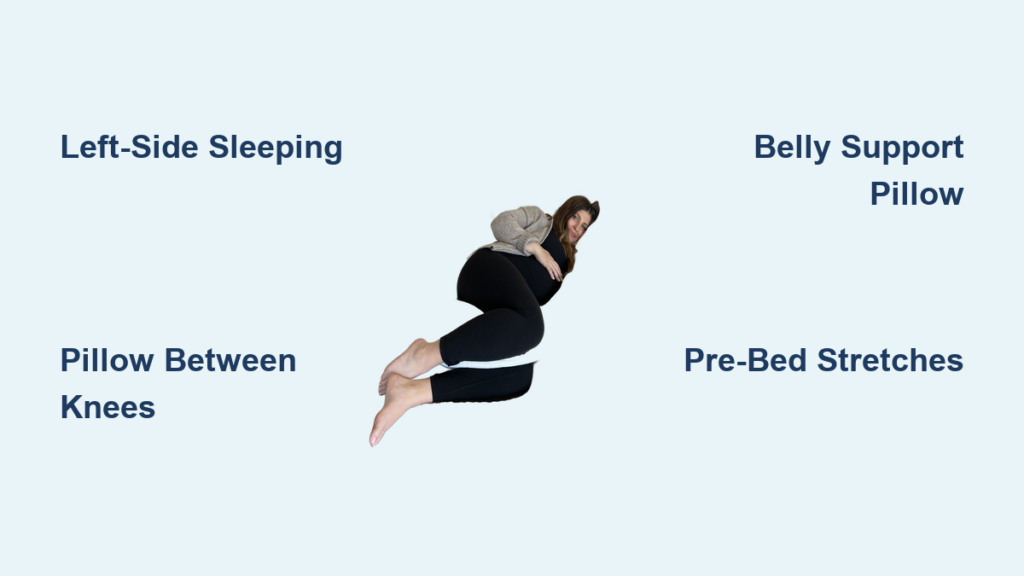
Between Your Knees: Slide a firm pillow between your knees to prevent your top leg from pulling your spine out of alignment. This single adjustment eliminates up to 60% of nighttime lower back strain by maintaining proper hip positioning throughout the night.
Under Your Belly: Position a small wedge pillow beneath your growing bump starting at 20 weeks. This prevents your abdomen from creating a downward pull on your spine, reducing the “twisting” sensation that causes sharp pains.
Behind Your Back: Place a firm pillow along your spine’s natural curve. This creates both a barrier against rolling onto your back and provides crucial lumbar support that your weakened abdominal muscles can no longer provide.
Full-Body Support: A C-shaped pregnancy pillow replaces 3-4 regular pillows, supporting knees, belly, and back simultaneously. The investment pays off in hours of uninterrupted sleep as your body stays properly aligned all night.
Positions That Worsen Pregnancy Back Pain
Back Sleeping: Lying flat on your back causes your uterus to compress the vena cava, cutting off blood flow and intensifying back pain. This position can trigger dizziness, breathing difficulties, and increased back strain—avoid it completely after the first trimester.
Stomach Sleeping: Beyond being physically impossible in later pregnancy, stomach sleeping forces your neck into extreme rotation, creating new pain points from your head to your hips. Even early in pregnancy, this position strains your lower back as your growing belly pulls you forward.
15-Minute Pre-Bed Stretching Routine for Back Pain Relief
Cat-Cow Stretch Sequence
Start on hands and knees with shoulders over wrists and hips over knees. Inhale while arching your back downward (cow position), lifting your head and tailbone. Exhale while rounding your spine upward (cat position), tucking your chin and pelvis. Repeat this fluid motion 8-12 times to release tension throughout your spine and prepare your body for side-sleeping.
Pelvic Tilts for Core Support
Lie on your side with knees bent (after first trimester) or on your back with knees bent (first 4 months). Tighten your abdominal muscles, pressing your lower back toward the mattress. Hold for 6 seconds, then release. Repeat 12 times to strengthen the muscles that support your spine and reduce nighttime pain.
Child’s Pose for Full-Body Relaxation
From hands and knees, sit back on your heels while folding forward. Extend arms ahead or alongside your body. Rest your forehead on the mattress and breathe deeply into your lower back for 30-60 seconds. This gentle stretch releases tension in your spine, hips, and shoulders—key areas that contribute to pregnancy back pain.
Optimal Sleep Environment Setup for Back Pain Relief
Mattress Modification Techniques

Firmness Fix: If your mattress feels too soft, slide a piece of plywood between the mattress and box spring. This simple hack provides instant firmness without the cost of a new mattress. Avoid overly soft surfaces that let your spine sink into unnatural curves.
Temperature Control: Pregnancy increases body temperature by 1-2 degrees. Keep your bedroom at 65-68°F using breathable, moisture-wicking sheets. Layer blankets you can adjust throughout the night as hot flashes strike—discomfort from overheating exacerbates back pain.
Strategic Nighttime Lighting
Install motion-activated night lights along your path to the bathroom. This prevents falls during groggy midnight trips and eliminates the need to turn on harsh overhead lights that disrupt your return to sleep. Frequent bathroom trips are inevitable, but proper lighting ensures you can reset your pillow positions safely without aggravating back pain.
Daytime Habits That Improve Nighttime Back Pain
Exercise Timing for Better Sleep
Morning Movement: Light walking or swimming early in the day strengthens back muscles without interfering with sleep. These gentle activities improve circulation and reduce stiffness that would otherwise worsen at night.
Evening Cutoff: Stop vigorous exercise 4 hours before bedtime to prevent increased alertness when you need to wind down. Gentle stretching is fine, but intense workouts can leave you too energized for restful sleep.
Hydration and Nutrition Strategy
Water Distribution: Drink most fluids before 6 PM to reduce nighttime bathroom visits while staying hydrated. Dehydration can worsen muscle cramps that contribute to back pain.
Evening Snack Formula: Include calcium and magnesium in your pre-bed snack—these minerals support muscle relaxation. Try a small serving of yogurt with almonds or a banana with a sprinkle of pumpkin seeds to reduce cramping and back spasms.
When Pregnancy Back Pain Requires Medical Attention

Red Flags That Need Immediate Care
Contact your healthcare provider immediately if back pain comes with:
– Vaginal bleeding or spotting
– Fever above 100.4°F
– Pain during urination
– Regular, timed contractions
– Sudden, severe pain that stops you in your tracks
– Numbness or weakness in your legs
– Pain that travels down both legs simultaneously
Safe Pain Management Options
Over-the-Counter Relief: Acetaminophen (Tylenol) is generally considered safe during pregnancy for occasional back pain relief. Never take ibuprofen, aspirin, or naproxen without explicit approval from your healthcare provider.
Professional Therapies: Prenatal massage from a certified therapist, physical therapy with pregnancy-specialized techniques, or acupuncture from practitioners experienced with pregnancy can provide significant relief when home remedies aren’t enough.
Creating Your Personalized Sleep Plan
Week-by-Week Implementation Strategy
Week 1: Master basic side-sleeping position with one pillow between knees
Week 2: Add belly support pillow and practice pre-bed stretching
Week 3: Incorporate upper body elevation if experiencing heartburn
Week 4: Fine-tune your complete system with temperature control
Partner Integration for Maximum Support
Teach your partner the exact pillow arrangement so they can help during late-night position changes. This becomes especially valuable in your third trimester when mobility decreases. Have them learn the “30-second reset” technique for bathroom trips—knowing how to quickly restore proper alignment prevents hours of discomfort.
Long-Term Back Pain Prevention During Pregnancy
Progressive Pillow Adjustment System
First Trimester: Focus on knee support with 1-2 pillows
Second Trimester: Add belly support and begin upper body elevation
Third Trimester: Implement full pregnancy pillow system with temperature control
Heat Therapy Protocol
Apply a heating pad on low for 15 minutes before bed. Focus on your lower back, hips, and upper buttocks. Always wrap the heating pad in a towel to prevent burns—pregnancy makes your skin more sensitive to temperature changes. The warmth relaxes tight muscles and prepares your body for rest, reducing the intensity of nighttime pain.
Final Note: Pregnancy back pain follows a clear timeline—it will improve after delivery. Until then, these strategies provide the relief you need for restorative sleep. Start with just one or two techniques tonight, then systematically build your personalized system. Your future self (and your baby) will thank you for prioritizing quality rest during this crucial time. Remember that consistent implementation of proper sleeping positions and supportive techniques can transform restless nights into restful recovery periods that support both your health and your baby’s development.