
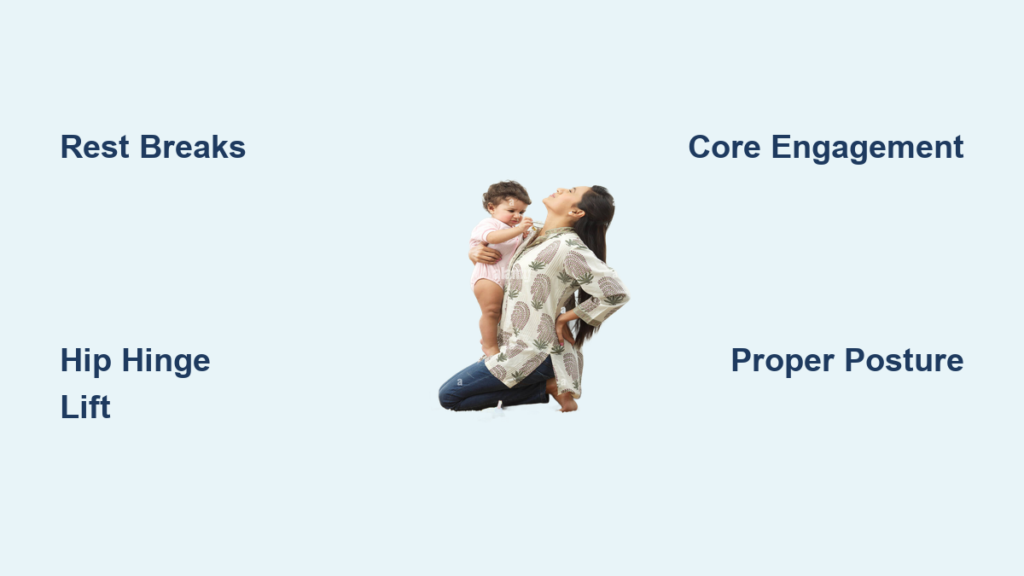
That persistent throb in your lower back after holding your newborn isn’t just “part of the job”—it’s your body signaling serious strain. Most new parents develop back pain within weeks of bringing baby home, whether from hunching over during breastfeeding or twisting to lift a sleeping infant from the crib. The constant forward-leaning position required for baby care shifts your center of gravity, forcing your spine to bear unnatural pressure. But here’s the truth: you don’t have to endure months of discomfort. This guide delivers immediate relief strategies and prevention techniques specifically designed for parents, so you can care for your baby without sacrificing your own health.
Why Your Lower Back Screams After Baby Holding Sessions
Deep Ache in Lower Back or Buttocks During Daily Care
Most parents describe a stubborn ache that settles into their sacrum or radiates into one buttock, worsening as fatigue sets in throughout the day. This pain typically develops from repetitive forward-leaning positions during breastfeeding or carrying—especially when propping baby on one hip. Unlike sudden injuries, this strain builds gradually as weak core muscles fail to support your spine against baby’s shifting weight. You’ll notice it intensifies when standing to soothe your infant or lifting heavy car seats, often feeling like a dull pressure that refuses to ease even when lying down.
Tingling Leg Sensations Indicating Nerve Compression
If you feel burning, numbness, or electric-like zaps traveling down one leg—usually the left leg for right-handed carriers—it signals nerve compression similar to sciatica. This referred pain occurs when spinal discs press on nerves during improper lifting, creating sensations far from the actual problem site. Many parents mistake this for leg issues, but the root cause is your compromised spinal alignment during baby care. Critical warning: These symptoms mean nerve damage is occurring—don’t ignore them as “normal parenting pain.”
Weakness That Hinders Basic Parenting Tasks
Struggling to carry laundry baskets or stand steadily while rocking your baby? This weakness stems from both muscle fatigue and disrupted nerve signals preventing proper muscle activation. When your glutes and core remain underused during lifting, your spine bears excessive load, causing muscles to “shut down” as protective measure. If you find yourself bracing against furniture to stand or unable to lift your baby without wincing, it’s time for immediate intervention—this isn’t temporary soreness.
Immediate Pain Relief Tactics That Work Tonight
Schedule Strategic Rest Breaks With Baby Handoffs
Complete rest provides fastest relief, but “putting baby down” isn’t always possible. Instead, coordinate precise 15-minute handoff intervals with your partner where they take over holding duties while you lie flat with knees bent. During these breaks, place a pillow under your knees to reduce spinal pressure—this position decompresses discs strained from hours of forward bending. Pro tip: Set phone alarms labeled “BACK BREAK” to ensure consistency, even during nighttime feedings.
Apply Targeted Pain Management That Actually Helps
Skip generic ice/heat advice—use this precise approach: Apply ice packs for 15 minutes immediately after intense lifting sessions to reduce inflammation, then switch to heat before bed to relax tense muscles. For medication, take ibuprofen before known strain periods (like morning car seat transfers) rather than waiting for pain to peak. Most importantly, book a physiotherapy session within 48 hours of noticing nerve symptoms—early intervention prevents chronic issues.
Recognize When to Call Professionals Immediately
Seek help now if you experience:
– Numbness spreading down your leg during feeding sessions
– Inability to stand from a seated position without hand support
– Pain that wakes you at night despite rest
– Weakness causing you to drop objects (including baby bottles)
These indicate potential disc injuries requiring specialized care. Waiting weeks “to see if it improves” risks permanent nerve damage—your ability to parent depends on your physical health.
Fix Your Lifting Technique in Under 5 Minutes
Maintain Your Spine’s Natural Curve During Lifts
Forget “stand straight”—your spine needs its natural S-curve for optimal support. Find your neutral position by gently arching then rounding your back (like cat-cow yoga), stopping in the middle range where tension releases. When lifting baby, maintain this slight curve by engaging your abs as if bracing for a light punch. Visual cue: Your ears should align over shoulders, not jut forward toward baby.
Master the Hip Hinge: Your New Lifting Secret
This movement shifts strain from spine to powerful glutes. Practice by standing 6 inches from a wall and touching your buttocks to it without bending your waist. As you bend, push hips straight back like closing a dresser drawer with your rear. When lifting baby, initiate all movements from your hips—not your spine—with chest lifted and knees slightly bent. Test your form: Can you pick up a toy without your shirt riding up your back? If yes, you’re hip-hinging correctly.
Lift Baby From Floor Without Back Strain
Deep Squat Method (Best for Open Spaces):
– Straddle baby with feet wider than hips
– Keep chest up and spine neutral
– Lower by pushing hips back while bending knees
– Grab baby close to your chest before standing
– Rise using leg strength, not back muscles
Kneeling Method (For Tight Spaces):
– Drop one knee to ground, front foot flat
– Keep torso upright throughout movement
– Lift baby to chest level first
– Push through front foot to stand, glutes engaged
Handle Cribs and Car Seats Safely

For crib transfers, sit back on your heels instead of bending forward—this prevents the dangerous “hunch over” position. Use a step stool if you’re under 5’6″ to eliminate excessive leaning. With car seats, squat with straight back and grab the handle from the side at stomach level. Carry it close to your front body (not dangling at your side), engaging core muscles to stabilize the weight. Critical mistake: Never lift car seats while twisting—face the direction of movement first.
Prevent Pain During Daily Baby Care
Balance Baby Weight Across Your Core

Stop propping baby on one hip—this uneven loading causes spinal curvature and muscle imbalances. Instead, hold baby centered in front of your body with both arms, shoulders relaxed down (not creeping toward ears). Imagine a string pulling the crown of your head toward the ceiling to maintain alignment. Key check: Can you walk steadily without swaying? If not, reset your posture.
Alternate Sides Every Single Feeding Session
Train yourself to switch arms during every bottle or breastfeeding session. Set a phone timer for 10 minutes as reminder—this prevents one-sided strain that leads to chronic pain. When rocking baby, shift weight evenly between both legs rather than favoring one side. Practice feeding on both sides even if baby prefers one position; your long-term mobility depends on this discipline.
Optimize Your Environment for Pain-Free Care
Invest in a structured baby carrier that distributes weight across hips and shoulders (not just shoulders), freeing hands while maintaining posture. Use nursing pillows to support baby’s weight during feeds—your arms shouldn’t bear the load. Position diaper stations at waist height and keep essentials within arm’s reach to eliminate painful reaching. Game-changer: Place a step stool by every crib—you’ll use it more than you think.
Strengthen Critical Muscles While Parenting
Engage Your Core During Baby Holding
Turn every cuddle session into core training: Gently draw your belly button toward your spine as if zipping a tight pair of jeans, maintaining light abdominal tension while holding baby. This “micro-engagement” builds endurance without extra time. Pro tip: Practice while rocking baby—notice how it stabilizes your posture during transitions.
Activate Glutes During Everyday Movements
Your glutes are lifting powerhouses weakened by pregnancy. While standing with baby, consciously squeeze your buttocks for 5 seconds, releasing slowly. Do this 10 times every time you stand from the couch. When lifting baby, focus on feeling glute activation—not back strain—as you rise. This builds functional strength exactly where you need it.
Long-Term Prevention Strategies That Stick
Retrain Your Brain for Proper Lifting
Attach a small reminder (like a colored rubber band) to your car seat handle. Every time you see it, perform a hip hinge before lifting. Within two weeks, this becomes automatic—replacing dangerous bending habits with spine-protecting movements. Crucial: Practice without baby first to build muscle memory.
Address Your Specific Mobility Restrictions
Don’t stretch blindly—tight hip flexors or restricted ankles often contribute to back pain. Sit cross-legged on the floor: If your knees sit higher than hips, you need hip-opening stretches. Stand against a wall: If you can’t touch toes without rounding back, address ankle mobility first. Consult a physiotherapist for personalized assessments—they’ll identify your specific restrictions.
Build Sustainable Habits Through Environment Design
Make proper posture the easiest choice: Keep step stools permanently positioned by cribs, use armrests on all feeding chairs, and store baby essentials at waist level. These small changes reduce reliance on willpower when exhausted. Key insight: Your environment should support good mechanics 24/7—not just during conscious effort periods.
Back pain from carrying baby isn’t inevitable—it’s a preventable injury caused by repetitive strain on unprepared muscles. Start tonight with strategic rest breaks and immediate posture corrections, then gradually implement proper lifting mechanics during daily care. Within 72 hours, you should notice reduced inflammation and improved mobility. If nerve symptoms persist beyond 48 hours despite these measures, seek specialized physiotherapy immediately—your long-term parenting capability depends on it. Remember: Caring for yourself isn’t selfish; it’s the foundation for caring for your child. You deserve pain-free cuddles, not chronic aches that rob you of joyful moments with your baby.