
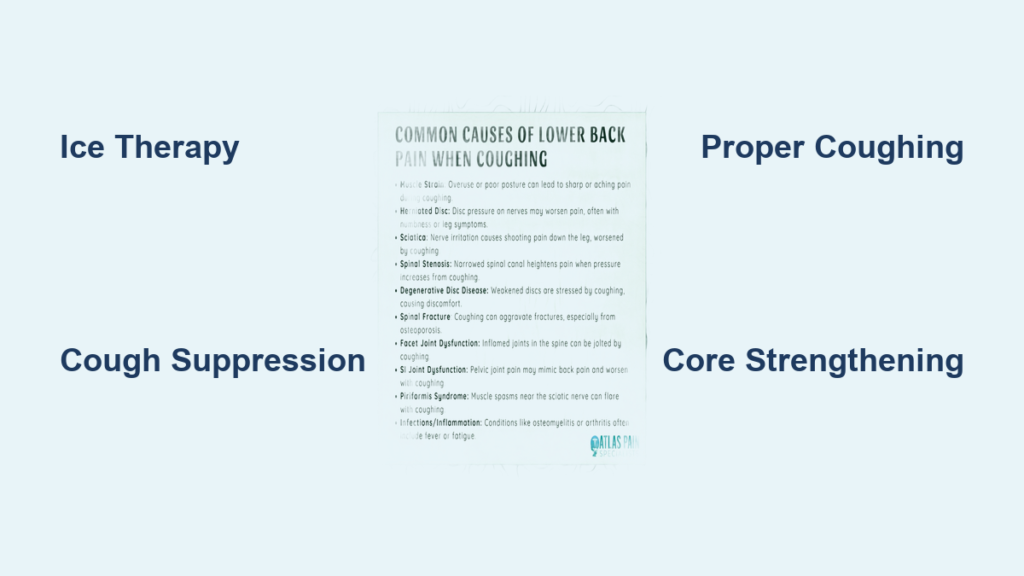
You’re in the middle of a coughing fit when suddenly—sharp pain shoots through your lower back. Sound familiar? That searing sensation isn’t just uncomfortable; it’s your body’s way of screaming that something’s wrong. When cough-induced back pain strikes, every sneeze feels like torture, and even basic movements become challenging. The mechanical stress from violent coughing creates pressure comparable to heavy lifting, compressing your lumbar spine while your natural forward-leaning motion adds insult to injury.
The good news? Most cough-related back pain resolves quickly with the right approach. This guide walks you through immediate relief techniques, proven recovery strategies, and prevention methods to stop the cycle of pain before it starts. By understanding why coughing wrecks your back and implementing these targeted solutions, you’ll regain comfort faster than you thought possible.
Why Coughing Wrecks Your Back
Coughing isn’t just a throat reflex—it’s a full-body explosion. Your diaphragm, abs, rib muscles, and even your voice box all fire simultaneously, creating pressure comparable to lifting heavy weights. This force compresses your lumbar spine while your natural forward-leaning motion adds insult to injury. The coordinated effort creates significant intra-abdominal pressure that strains your lumbar spine and surrounding muscles.
For those without back issues, this temporary stress usually causes no lasting damage. But if you’re already vulnerable due to previous injuries, pregnancy, or age-related changes, that innocent cough can trigger days or weeks of agony. Muscle strain occurs when fibers stretch beyond capacity or tear from sudden forceful contractions, while ligament sprains involve the tough bands connecting spinal bones. Both produce localized pain, spasms, and stiffness that can persist if repeatedly aggravated by coughing fits.
Quick Pain Relief Strategies
Stop the Cough First
Cough suppressants work fast: Dextromethorphan-based medications or prescription cough suppressants reduce the mechanical stress on your back within 30-60 minutes. Keep quality menthol drops nearby—they provide immediate throat soothing and reduce coughing frequency by suppressing the cough reflex.
Timing matters: Take suppressants at the first sign of a coughing fit rather than waiting for severe symptoms. This prevents the pain-inflammation cycle from escalating. High-quality medicated cough drops deliver immediate relief by soothing throat irritation—keep them by your bedside and workstation for quick access during coughing episodes.
Temperature Therapy Protocol
First 48 hours—Ice only:
– Wrap ice pack in thin cloth, apply 15-20 minutes
– Repeat every 2-3 hours while awake
– Focus on the most tender spot in your lower back
– Stop immediately if skin becomes numb
After day 3—Heat helps:
– Switch to heating pad or warm compress
– 15-20 minute sessions, 2-3 times daily
– Warm baths work wonders for full-body relaxation
– Pro tip: End with 2 minutes of cold to prevent inflammation
NSAID Strategy
Ibuprofen timing: Take 200-400mg with food every 4-6 hours during acute phase. These medications work by inhibiting prostaglandin production, decreasing the inflammatory response in strained muscles. Never exceed 1200mg daily without medical supervision.
Naproxen alternative: 220mg every 8-12 hours provides longer-lasting relief but takes longer to kick in initially.
Warning signs: Stop NSAIDs immediately if you experience stomach pain, black stools, or unusual bruising—these indicate potential gastrointestinal complications.
Proper Coughing Technique

Believe it or not, there’s a right way to cough when your back hurts:
The support method:
– Place one hand on a stable surface (table, counter)
– Keep feet shoulder-width apart
– Maintain your natural lower back arch—don’t hunch
– Press gently against your lower back with your free hand
– Cough through pursed lips to reduce force
Pillow technique: Keep a small, firm pillow handy. When coughing strikes, press it against your lower back while maintaining upright posture. This provides instant support and reduces spinal compression. Proper body mechanics during coughing episodes prevents further injury by distributing force more evenly across your torso.
Gentle Movement for Healing
When to start: Begin gentle movement only when acute pain subsides—usually day 2-3.
Safe Stretches
Child’s pose variation:
– Kneel with big toes touching, knees apart
– Sit back on heels, arms extended forward
– Lean right, then left, holding 20 seconds each
– Stop if pain increases
Knee-to-chest relief:
– Lie on back, bend both knees
– Pull one knee toward chest gently
– Hold 15-30 seconds, switch legs
– Keep opposite foot flat on floor
Cat-cow mobilization:
– On hands and knees, alternate between arching and rounding your back
– Move slowly, breathe deeply
– 10-15 repetitions, several times daily
Core Strengthening Basics

Start immediately: Even simple breathing exercises strengthen your core and support your spine.
Diaphragmatic breathing:
– Lie on back, one hand on chest, one on belly
– Breathe deeply, making belly rise more than chest
– Practice 5-10 minutes, 3 times daily
– This directly strengthens your deep core muscles
Pelvic tilts:
– Lie on back, knees bent
– Flatten lower back against floor by tightening abs
– Hold 5 seconds, release
– Build to 2-3 sets of 10 repetitions
When Pain Needs Medical Attention
Red flags—call your doctor today if you have:
– Numbness, tingling, or weakness in legs
– Loss of bladder or bowel control
– Fever over 101°F with back pain
– Pain lasting longer than 2-3 weeks
– History of cancer or recent trauma
Yellow flags—schedule appointment within 48 hours:
– Pain radiating down one or both legs
– Muscle weakness affecting daily activities
– Night pain that wakes you from sleep
– Pain unchanged after 7 days of home treatment
Recovery Timeline Expectations
Week 1: Acute pain should significantly decrease with proper treatment. Most people can resume light activities as inflammation subsides.
Weeks 2-4: Gradual return to normal activities. Focus on maintaining good posture and avoiding re-injury while continuing therapeutic exercises.
Weeks 4-8: Full recovery for muscle strains. Disc-related issues may require longer rehabilitation with ongoing physical therapy.
Prevention Strategies That Actually Work

Environmental Fixes
- Mattress check: Replace if older than 7 years or showing sagging
- Workstation audit: Monitor at eye level, chair with lumbar support
- Footwear matters: Supportive shoes with cushioning reduce spinal stress
Daily Habits
- Break cycle: Stand and stretch every 30-45 minutes when sitting
- Hydration: Drink adequate water to thin respiratory secretions
- Weight management: Even 10 extra pounds increases spinal stress significantly
Cough Prevention
- Humidifier use: Maintain 30-50% humidity to reduce respiratory irritation
- Irritant avoidance: Stay away from smoke, strong chemicals, and allergens
- Hand hygiene: Prevent infections that trigger coughing fits
Special Populations
Pregnancy Modifications
- Use pregnancy pillows for side-sleeping support
- Switch to acetaminophen for pain relief (avoid NSAIDs)
- Focus on prenatal yoga stretches
- Always consult OB-GYN before new treatments
Elderly Considerations
- Healing takes 20-30% longer due to age-related changes
- Fall prevention becomes critical—remove loose rugs, install grab bars
- Modified exercise programs essential
- More frequent check-ins with healthcare providers
Long-term Spine Health
Core maintenance routine (15 minutes daily):
– 5 minutes diaphragmatic breathing
– 5 minutes gentle stretching
– 5 minutes core strengthening exercises
Posture awareness checkpoints:
– Shoulders down and back
– Chin parallel to floor
– Natural lower back curve maintained
– Feet flat on floor when sitting
Back pain from coughing doesn’t have to derail your life. Start with immediate relief techniques—ice therapy, proper coughing mechanics, and strategic NSAID use. Progress through gentle movement and strengthening as pain subsides. Most importantly, listen to your body and seek help when red flags appear. Your spine supports everything you do. When coughing threatens that support system, quick action prevents temporary pain from becoming chronic misery. Implement these strategies today, and you’ll be back to pain-free living within days, not weeks.