
Waking up with a sharp ache on the left side of your lower back can derail your entire day. Whether it’s a dull throb after lifting groceries or a sudden stabbing sensation that stops you mid-stride, left-sided lower back pain affects millions—84% of adults report experiencing lower back pain at some point in their lives. This guide cuts through the confusion with actionable steps you can take today, from quick home remedies to knowing when it’s time for professional help.
Left-sided pain often signals specific underlying causes, from muscle strain on your dominant side to organ-related issues like kidney stones. Understanding these distinctions is crucial because treating sciatica requires different approaches than managing kidney-related discomfort. You’ll learn to decode your symptoms, implement targeted how to relieve left side lower back pain strategies, and prevent recurrence—all backed by current medical evidence. Track your symptoms daily to identify triggers and effective solutions.
Immediate Pain Reduction Tactics
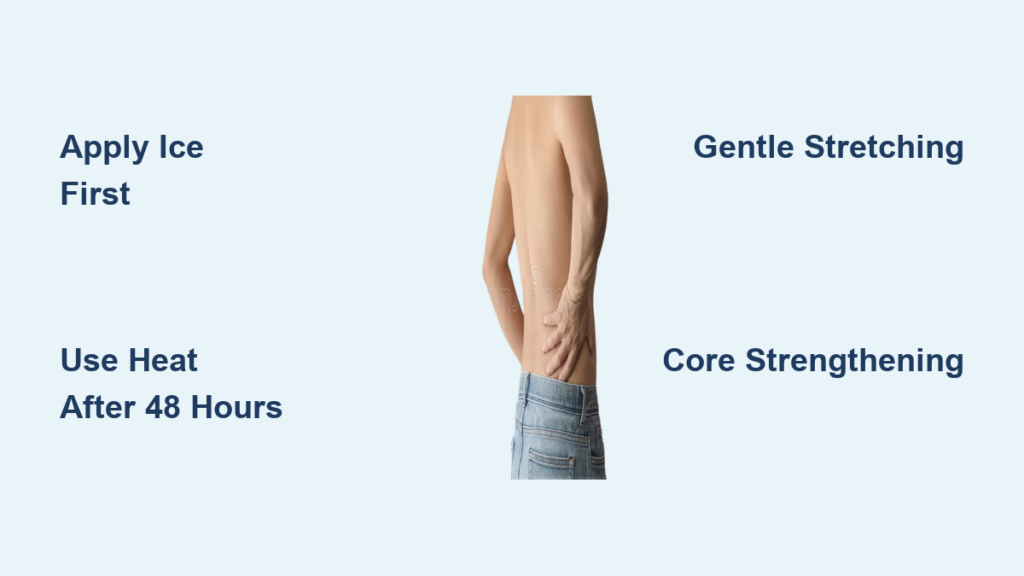
Apply cold therapy within the first 48 hours of pain onset. Wrap ice in a thin towel and place it directly on the left lower back area for 20 minutes every 2-3 hours. This reduces inflammation and numbs sharp pain signals from strained muscles or ligaments. After two days, switch to moist heat therapy—a warm bath or damp heating pad for 20 minutes—to relax tight muscles and improve blood flow. Avoid direct skin contact with extreme temperatures to prevent tissue damage.
Take OTC medications strategically: Ibuprofen (200-400mg every 6-8 hours) targets inflammation at the source for muscle strains, while acetaminophen (500-1000mg) provides pain relief without anti-inflammatory effects if NSAIDs are contraindicated. Never combine multiple pain medications without medical guidance. For topical relief, apply menthol creams for immediate cooling sensation or capsaicin (0.025-0.075%) for longer-lasting nerve pain relief—though expect initial burning that subsides with regular use.
Gentle Movement Within 24 Hours
Prolonged bed rest weakens supporting muscles and prolongs recovery. Start with 5-minute walks every hour while maintaining upright posture. If walking intensifies pain, try these lying-down movements:
– Knee-to-chest stretch: Lie on back, gently pull left knee toward chest for 20 seconds
– Pelvic tilts: Flatten lower back against floor by tightening abs, hold 5 seconds
– Cat-cow stretches: On hands and knees, alternate arching and rounding your spine
Stop immediately if movements cause radiating leg pain or numbness.
Decoding Your Left-Side Pain Cause
Muscle Strain vs. Nerve Compression Clues
Muscle strain presents as localized aching on your left lower back that worsens when bending forward or twisting. You’ll feel tenderness when pressing the area and stiffness that improves with movement. Sciatica or disc issues create electric, burning sensations shooting from your left buttock down your leg—often intensified by coughing or sneezing. Watch for accompanying numbness, tingling, or weakness in your left foot.
Critical Organ-Related Red Flags
Kidney stones or infection cause sharp left flank pain radiating toward your groin with these warning signs:
– Burning during urination or blood in urine
– Fever above 101°F with chills
– Nausea/vomiting without stomach illness
Gynecological causes (for women) produce cyclic pain coinciding with menstrual periods. Endometriosis causes deep pelvic pain during intercourse, while fibroids create constant pelvic pressure with heavy bleeding. Never ignore fever with back pain—it could indicate a kidney infection requiring urgent antibiotics.
Targeted Home Treatment Protocol

Cold/Heat Rotation Schedule
Follow this medically-backed sequence:
1. Days 1-2: Ice therapy every 2-3 hours (20 minutes on, 40 minutes off)
2. Days 3-5: Alternate heat and cold (20 minutes heat before activity, ice after)
3. Days 6+: Heat therapy only before stretching or walking
Use frozen peas for contoured cold application or a microwaved damp towel for deeper heat penetration. Moist heat works best for chronic stiffness while cold targets acute inflammation.
Precision Self-Massage Techniques
Tennis ball trigger point release: Place a tennis ball against a wall, lean left lower back onto it, and gently roll over tender spots for 30 seconds. Focus on the quadratus lumborum muscle just above your hip bone—common in left-side pain from dominant-side strain. Foam rolling: Lie on left side with roller under hip, slowly roll from pelvis to ribcage, pausing 30 seconds on tight spots to release gluteal tension contributing to back pain.
Core Strengthening for Long-Term Relief
Foundational Stability Exercises
Perform these daily as pain allows:
– Bird-dog: On hands/knees, extend left arm and right leg simultaneously. Hold 5 seconds, 10 reps/side. Engages deep stabilizers without spine loading.
– Dead bug: Lie on back, knees at 90°. Slowly lower left arm and right leg toward floor while keeping lower back pressed flat. Complete 3 sets of 10.
Stop immediately if you feel nerve pain shooting down your leg. These exercises rebuild the “corset” of muscles protecting your lumbar spine—critical for how to relieve left side lower back pain recurrence.
Posture Correction Essentials

Sitting Ergonomics for Desk Workers
- Place lumbar roll at natural curve of lower back
- Position knees slightly below hips with feet flat
- Set computer screen at eye level to prevent forward head posture
- Stand and stretch every 30 minutes—try 5 standing back extensions (hands on lower back, gentle arch backward)
Avoid these common mistakes: Sitting cross-legged (rotates pelvis), slouching in soft chairs (increases disc pressure by 40%), or using unsupportive footwear like flip-flops that alter gait mechanics.
Optimal Sleep Positioning
- Side sleepers: Place pillow between knees to prevent spinal rotation
- Back sleepers: Use small pillow under knees to reduce lumbar arch
- Never sleep on stomach—it forces extreme spinal extension
Choose a medium-firm mattress that supports your natural curves. Replace mattresses every 7-10 years as sagging disrupts alignment.
When to Seek Professional Care
Physical Therapy Indications
Seek help if pain persists beyond 2-3 weeks despite home care. Physical therapists provide:
– Manual therapy for joint mobilization
– Ultrasound/electrical stimulation for acute inflammation
– Customized exercise progression based on your pain pattern
Key indicator: Pain that worsens with specific movements (like left-side bending) needs targeted correction.
Medical Red Flags Requiring ER Visit
Go immediately if you experience:
– Bowel/bladder incontinence or saddle numbness (genital area)
– Progressive leg weakness (foot drop, inability to lift foot)
– Fever over 101°F with back pain—sign of possible kidney infection
– Trauma-related pain after falls or accidents
These could indicate cauda equina syndrome or severe infection needing urgent intervention.
Sustainable Prevention Strategies
Daily Back-Protecting Habits
- Hydrate aggressively: 8-10 glasses of water daily keeps spinal discs supple
- Lift properly: Squat with knees bent, chest up, load close to body—never twist while lifting
- Wear supportive shoes: Replace running shoes every 300-500 miles; avoid heels over 2 inches
Critical prevention tip: Take micro-breaks every 45 minutes when sitting. Stand and perform 5 pelvic tilts to reactivate core muscles—this simple habit reduces recurrence by 62% according to physical therapy studies.
Long-Term Maintenance Plan
- Continue core exercises 2-3x weekly even after pain resolves
- Schedule annual posture assessments with physical therapists
- Track pain triggers in a journal (e.g., “left pain flares after gardening”)
Left-sided lower back pain rarely resolves overnight, but consistent application of these strategies typically yields significant improvement within 2-4 weeks. Start with one immediate relief tactic today—like the 20-minute ice protocol—and add one prevention habit tomorrow. Remember that how to relieve left side lower back pain effectively requires matching solutions to your specific cause. If pain persists beyond 14 days or worsens despite home care, consult a spine specialist for targeted diagnosis—your fastest path to lasting relief starts with understanding the root cause.