
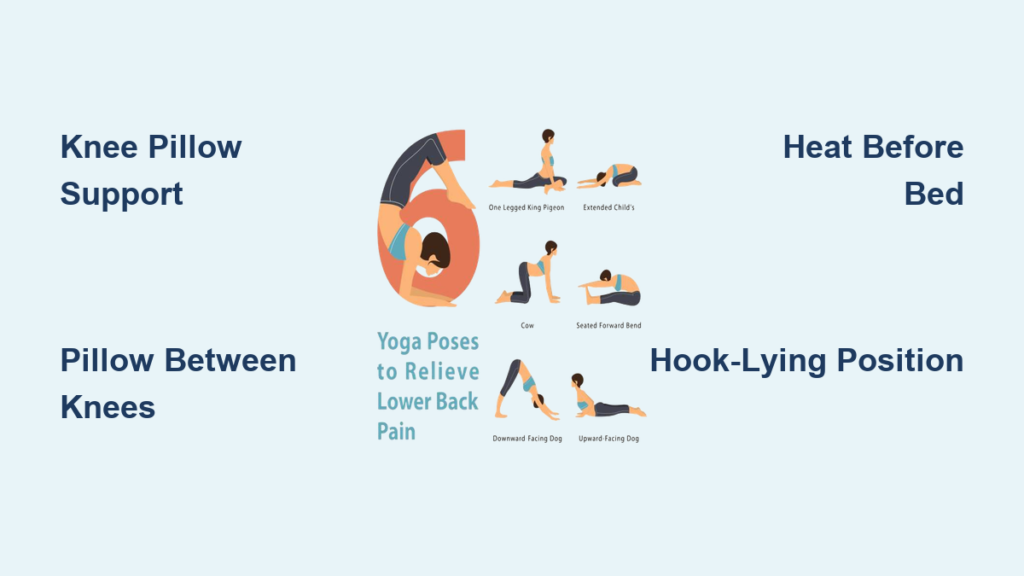
That familiar ache that flares up when you finally try to rest transforms your bed from sanctuary to torture chamber. Lower back pain affects about 80% of adults at some point, and lying down often makes it worse when your spine loses proper alignment. The good news? Strategic positioning reduces spinal pressure by up to 40% and can transform your sleep quality tonight.
This guide reveals exactly how to relieve lower back pain lying down using proven techniques from physical therapists. You’ll discover the optimal positions for your specific pain pattern, the right pillow configurations, and pre-bed routines that prepare your body for pain-free rest. Relief is possible—you just need the right setup.
Fix Back Pain in Back-Sleeping Position

Back sleeping provides excellent spinal alignment when properly supported with attention to your lumbar curve. Proper positioning reduces pressure on spinal discs while maintaining natural alignment throughout the night.
Knee Support for Lumbar Relief
Place a medium-firm pillow (4-6 inches thick) under your knees to maintain your spine’s natural lordotic curve. This simple adjustment reduces lower back pressure by 40% compared to flat lying. The elevation prevents your lumbar spine from flattening against the bed, which commonly triggers pain. For pronounced lordosis, add a small rolled towel (2-3 inches diameter) under your lower back curve at the belt line—positioned too high creates discomfort, while too low provides no benefit.
Pro tip: Test your knee pillow height by placing your hand under your lower back—if you can slide it easily, you need more elevation; if it won’t fit, reduce pillow height.
Head Pillow Height Matters
Your head pillow should keep your ear aligned with your shoulder when lying down, maintaining your natural cervical curve. Most people need 3-5 inches of height, but test by having someone check your neck alignment from the side. Your chin shouldn’t tilt toward your chest or point toward the ceiling. For those with neck pain, a too-high pillow forces your head forward, straining both neck and lower back muscles.
Warning: If you wake with neck pain, your pillow height is likely incorrect—adjust until your spine feels neutral.
Side Sleeping Modifications That Work

Side sleeping can be optimal for back pain when joints align correctly. The secret is preventing your upper leg from pulling your pelvis forward, which twists your spine and creates morning pain.
Pillow Between Knees Setup
Use a firm 6-8 inch pillow between your knees, extending from knees to ankles. This prevents your top leg from rotating your pelvis forward—a common cause of sacroiliac joint pain. The pillow keeps your hips stacked vertically, reducing strain on ligaments and muscles. For those with sciatica, place an additional small pillow (3-4 inches) under your waist to prevent spine sagging.
Quick test: Your spine should feel straight, not twisted, when using proper pillow support—place your hand along your spine to check for alignment.
Body Pillow for Full Support
A 54-inch body pillow provides comprehensive support for side sleepers. Hug it with your top arm while placing it between your knees. This prevents torso rotation and maintains spinal alignment from shoulders to ankles. Position the pillow so your top shoulder doesn’t roll forward excessively, which creates uneven pressure on your lower back.
Pro tip: For travel, roll a standard pillow lengthwise to create a makeshift body pillow that provides similar support.
Prone Position Adaptations
Stomach sleeping increases lumbar extension and forces neck rotation, but modifications can help if you naturally prefer this position.
Reduce Lumbar Extension
Place a thin pillow (2-3 inches) under your pelvis/lower abdomen. This reduces lumbar extension pressure by elevating your hips slightly. Use a very thin head pillow or none at all to maintain neck alignment—sleeping with your head turned to one side for hours strains neck muscles that connect to your lower back.
Warning: If pain increases within 5 minutes, transition to side or back sleeping—stomach sleeping often worsens disc-related pain.
Pre-Bed Routines That Prevent Pain
What you do before lying down determines how well you’ll sleep. These routines prepare muscles and joints for optimal positioning and help you relieve lower back pain lying down.
Heat Therapy Timing
Apply heat (104-113°F) for 15-20 minutes before lying down. Use a heating pad, warm bath, or hot water bottle to increase blood flow and reduce muscle stiffness. The warmth makes positioning adjustments easier and more comfortable. For arthritis-related stiffness, a heated mattress pad set on low 30 minutes before bed reduces morning stiffness by 40%.
Caution: Never sleep directly on heating pads due to burn risk—set a timer to turn off after 20 minutes.
Essential Stretching Sequence
Perform these stretches 30-60 minutes before bed to prepare your body:
• Knee-to-chest: Bring one knee to chest, hold 15-30 seconds, repeat 3× per leg
• Pelvic tilts: Tighten abs to flatten lower back, hold 5 seconds, repeat 10-15×
• Hamstring stretch: Raise leg with slight knee bend, pull toward chest using towel, hold 30 seconds
• Child’s pose modification: Kneel, sit back on heels, reach arms forward, hold 30-60 seconds
Pro tip: Add gentle breathing—inhale for 4 counts, exhale for 6 counts—to activate your relaxation response during stretches.
Sciatica Relief While Lying Down
Radiating leg pain requires specific positioning to reduce nerve tension while you lie down.
Elevated Leg Position
Lie on your back with the affected leg elevated on pillows creating a 90-degree angle at hip and knee (L-shape). This reduces sciatic nerve stretch by 30%. Ensure your lower back remains flat against the bed—if it arches, reduce pillow height. For severe sciatica, experiment with slight torso rotation (10-15 degrees) toward the painful side while maintaining hip alignment.
Red flag: Stop any position that increases leg pain, tingling, or numbness below the knee.
Side-Lying Relief
Lie on your pain-free side with a pillow between knees. Add an extra pillow under the painful leg to keep it slightly elevated. This reduces nerve tension while maintaining spinal alignment. Avoid curling tightly into a fetal position, which can compress nerves—keep your knees bent at approximately 45 degrees.
Muscle Spasm Management
Acute spasms require immediate positioning changes to reduce muscle stretch and tension while lying down.
Hook-Lying Position
Lie on your back with knees bent and feet flat on the bed. This “hook lying” position reduces muscle stretch by shortening tight muscles. Place a rolled towel under the affected side for gentle support. If lying on your back worsens spasms, try lying on your side with knees drawn up and a pillow between them.
Pro tip: Apply gentle heat to the affected area for 10-15 minutes while in this position to further relax muscles.
Breathing Technique
While in hook-lying position, place hands on spasming area. Take slow breaths: inhale through nose for 4 counts, exhale through mouth for 6 counts. This activates your relaxation response and can reduce spasm intensity within minutes. Focus on directing your breath into the painful area—imagine the air flowing to that spot on each inhale.
Disc Pain Positioning Strategies
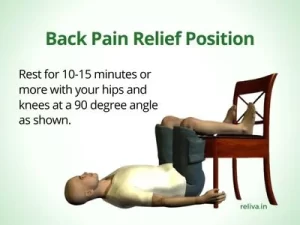
Herniated or bulging discs respond best to positions that reduce disc pressure while lying down.
90-90 Position Setup
Lie on your back with legs elevated at 90 degrees on a chair or stack of pillows. This reduces disc pressure by up to 35%. Your lower back should feel completely relaxed against the bed surface. For disc-related pain, the “reclined” position using a wedge pillow (45-degree angle) can reduce disc pressure up to 35% compared to flat lying.
Warning: Avoid forward bending positions that increase disc pressure—don’t try to touch your toes before bed.
Safe Movement Techniques
How you move in bed determines whether you’ll trigger pain or maintain relief from lower back pain lying down.
Rolling Without Twisting
To change positions safely:
1. Bend knees, keeping feet together
2. Tighten abdominal muscles
3. Roll knees and hips as one unit
4. Let shoulders follow last, maintaining alignment
5. Use arms to assist without spinal twist
Pro tip: Keep pillows within easy reach for nighttime adjustments—use satin pillowcases to reduce friction when moving.
Getting Out of Bed Protocol
For acute pain episodes:
1. Roll onto your side facing the bed edge
2. Slide hips to edge while knees stay bent
3. Push up to sitting using arms, keeping back straight
4. Let legs swing down naturally
5. Pause 30 seconds before standing
Persistent pain warning: Consult a healthcare provider if pain continues beyond 3-4 days despite optimal positioning, or if you experience numbness, bladder issues, or severe pain preventing any comfortable position.
Your bed should be a healing space, not a source of dread. By implementing these evidence-based positioning strategies tonight, you can transform how to relieve lower back pain lying down. Start with the position that matches your pain pattern and adjust based on your body’s response. Relief is possible—you just need the right setup. Track your pain levels for the next week to identify what works best for your unique back pain pattern.