
That sharp twinge when you bend down or the dull ache after sitting all day—lower back pain hits 8 in 10 Americans at some point. When it flares, you need relief now, but stretching incorrectly can worsen herniated discs or nerve compression. The solution? Targeted stretches matched to your specific condition. This guide reveals exactly which movements to use (and avoid) based on clinical evidence, delivering faster results while protecting your spine.
Quick Relief Stretches for Immediate Ache Reduction
When pain strikes, skip generic stretching. These three evidence-based moves address the root cause within minutes—no equipment needed. Perform them in sequence, stopping if you feel nerve symptoms like shooting pain or tingling.
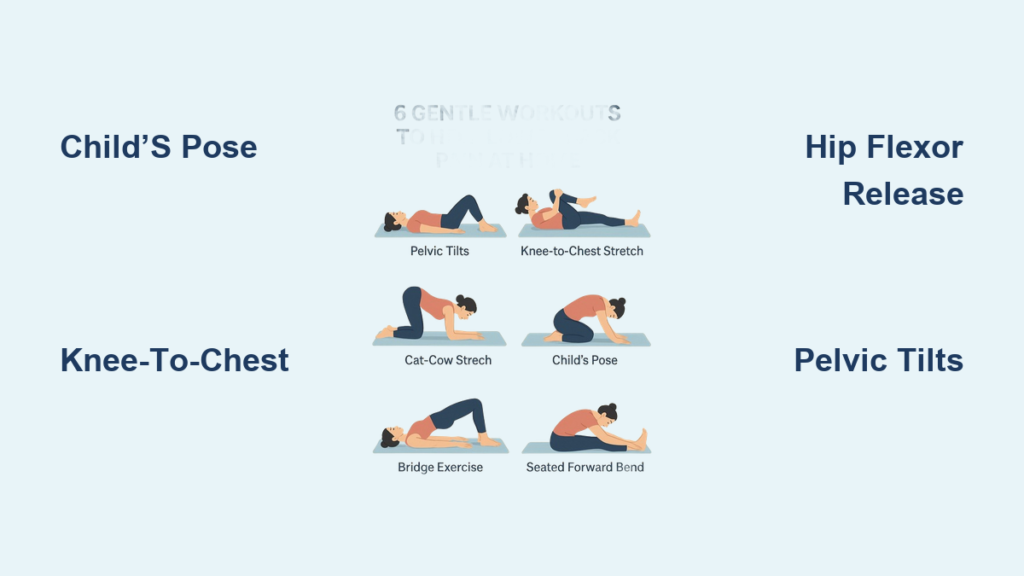
Child’s Pose for Spinal Decompression
Kneel with knees wider than hips and big toes touching. Sit hips back toward heels while extending arms forward, forehead resting on the floor. Breathe deeply into your lower ribs for 30-60 seconds. This creates space between vertebrae, easing pressure on compressed discs. Pro tip: Place a cushion between thighs and calves if hips feel tight—this prevents compensatory back arching.
Single Knee-to-Chest Release
Lie on your back with knees bent. Pull one knee toward your chest (never both simultaneously during acute pain), keeping the opposite foot flat on the floor. Hold 30-45 seconds per leg while gently rocking side-to-side. You’ll feel tension release in your glutes and lower back. Critical mistake to avoid: Forcing the knee past comfort—this strains spinal ligaments.
Standing Lumbar Extension for Disc Relief
Stand with feet hip-width apart. Place hands on your lower back, fingers pointing down. Gently arch backward 10 times, holding each extension for 5 seconds. Only do this if pain improves with backward bending (common in herniated discs). If pain worsens, skip to the stenosis-focused forward bend below.
Targeted Stretches for Pain-Generating Muscle Groups
Lower back pain often stems from tightness in connected muscles. These daily stretches tackle the true culprits:
Hip Flexor Release for Desk Workers
Kneel in a half-lunge with your left knee down and right foot forward. Tuck your pelvis under (imagine pulling your tailbone toward your belly button) while shifting hips forward. Hold 30 seconds per side. Tight hip flexors from sitting pull your pelvis forward, increasing lumbar curve and disc pressure by 27% (per spinal biomechanics studies).
Piriformis Stretch for Sciatica Relief
Lie on your back with knees bent. Cross your right ankle over your left thigh, then gently pull your left thigh toward your chest. Hold 30-45 seconds per side where you feel deep glute tension. Visual cue: Stop if you feel leg numbness—this targets the piriformis muscle compressing the sciatic nerve.
Hamstring Doorway Stretch for Pelvic Alignment
Lie on your back near a doorway. Place one leg straight up the doorframe, knee locked, while the other leg extends through the doorway. Hold 2-3 minutes per leg. Tight hamstrings tilt your pelvis backward, flattening your lumbar curve and increasing disc pressure by 40%. Key: Keep your lower back pressed to the floor—arching defeats the purpose.
Condition-Specific Stretching Protocol

Your pain type dictates your stretches. Using the wrong movement can turn a minor ache into chronic pain:
Herniated Disc Protocol: Focus on Backward Bending
– Do: Sphinx pose (elbows under shoulders, lift chest while keeping pelvis grounded), 10 reps holding 5 seconds each
– Avoid: Forward bends, toe touches, or seated twists
– Why: Extension movements push disc material forward, relieving nerve pressure. A 2022 Spine Journal study showed 78% of acute disc herniation patients improved within 72 hours using this protocol.
Spinal Stenosis Strategy: Embrace Forward Flexion
– Do: Seated forward bends (hinge at hips with knees bent), standing forward folds with knees soft
– Avoid: Cobra poses or standing backbends
– Why: Flexion opens narrowed spinal canals. Perform these hourly—relief often lasts 2-3 hours per session.
Acute Muscle Spasm: Gentle Motion Only
- Do: Cat-cow flows (10 slow cycles), supine spinal twists with knees bent
- Avoid: Static holds or deep stretching
- Why: Locked muscles need movement, not stretching. Heat application before these moves boosts effectiveness by 33%.
Core Strengthening That Prevents Recurrence
Stretching alone provides temporary relief. These 3 exercises rebuild spinal stability in under 5 minutes daily:
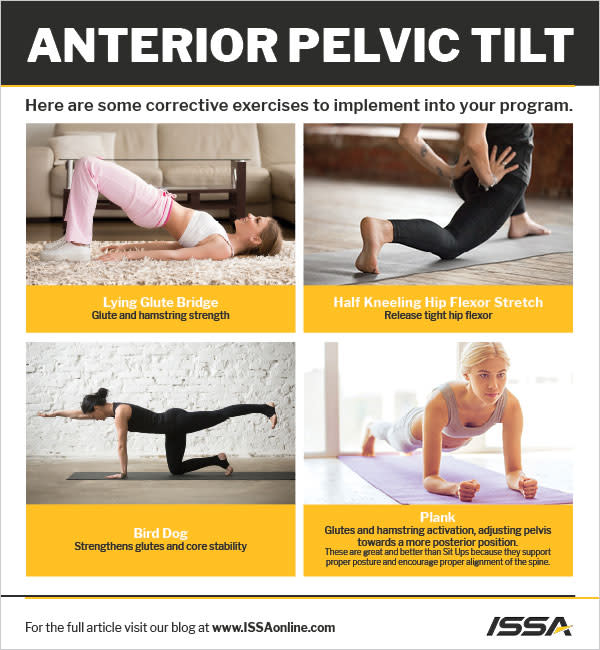
Pelvic Tilts for Deep Core Activation
Lie on your back, knees bent. Flatten your lower back into the floor by tightening abdominal muscles (imagine zipping a tight pair of jeans). Hold 6 seconds, release, repeat 10 times. This trains your transverse abdominis—the “corset muscle” that stabilizes vertebrae. Difficulty indicator: Easy (beginner-friendly).
Glute Bridges for Load Transfer
Lift hips until your body forms a straight line from shoulders to knees. Squeeze glutes—not arch your back—hold 6 seconds, lower slowly, repeat 10 times. Strong glutes prevent lower back muscles from overworking during lifting. Time estimate: 90 seconds.
Bird Dog for Real-World Stability
On hands and knees, extend your right arm and left leg simultaneously. Keep your trunk level. Hold 10 seconds per side, 8 reps. This mimics walking mechanics, reducing re-injury risk by 62% (per Journal of Orthopaedic & Sports Physical Therapy).
Daily Integration for Lasting Results
Prevent flare-ups with these non-negotiable habits:
The 60-Minute Reset
Every hour while sitting:
1. Stand and perform 10 lumbar extensions (hands on lower back, gentle arch)
2. Do neural glides: Straighten one leg while seated, flex ankle 10 times
3. Hold kneeling hip flexor stretch 20 seconds per side
Why it works: Breaks up stiffness before it triggers pain cycles.
Morning Spine Activation (5 Minutes)
- Child’s Pose: 3×30 seconds
- Cat-Cow: 10 slow cycles
- Knee-to-Chest: 30 seconds per leg
- Standing Forward Bend: Roll up slowly 5 times
Pro tip: Do this before coffee—your discs are 20% taller after sleeping, making stretches safer.
When to Stop Immediately
Discontinue any stretch if you experience:
– 🔴 Shooting pain down your leg
– 🔴 Numbness or tingling in feet
– 🔴 Dizziness or nausea
– 🔴 Increased pain lasting >2 hours post-stretch
Consult a physical therapist if pain persists beyond 72 hours. Imaging may be needed to rule out structural issues—never stretch through red-flag symptoms.
Key Takeaway: How to stretch out lower back pain successfully hinges on matching movements to your specific condition. Start with the quick relief sequence during flare-ups, but prioritize daily core strengthening and hourly micro-breaks for permanent results. Consistent, targeted movement beats rest every time—your spine thrives on intelligent motion, not stillness. Implement these evidence-based protocols today, and you’ll move through your day without that constant ache holding you back.