
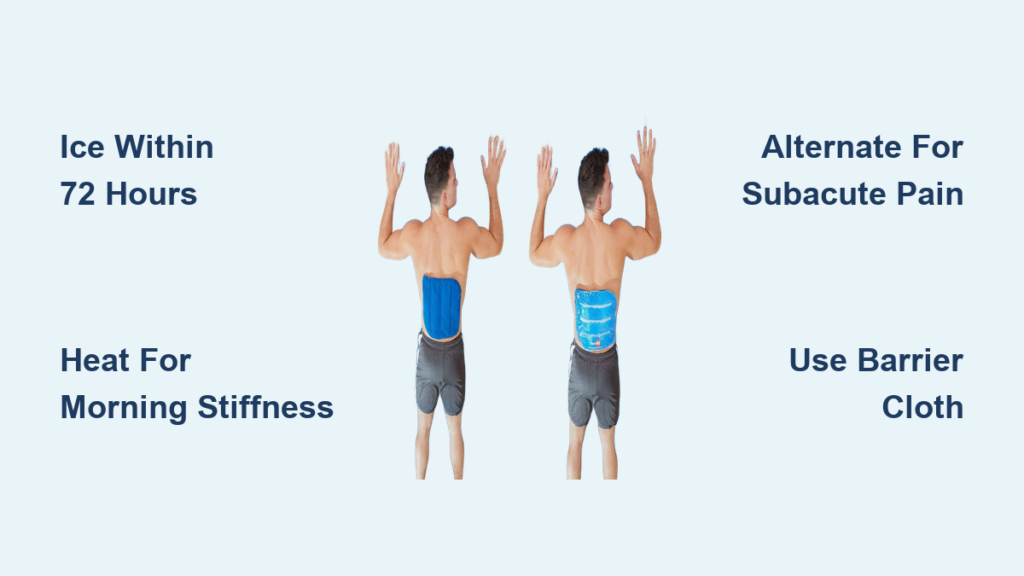
Waking up with a knife-like stab in your lower back after lifting groceries or enduring that persistent morning stiffness that feels like concrete setting in your spine—these are the moments when knowing how to use heat and cold for back pain becomes your lifeline. Most people grab the wrong therapy first, accidentally worsening inflammation or missing critical recovery windows. This isn’t just about slapping on an ice pack; it’s about matching precise temperature protocols to your specific pain type, stage, and daily routine. By the end of this guide, you’ll have a customized roadmap to deploy ice and heat like a physical therapist—stopping swelling within hours, melting chronic stiffness, and avoiding dangerous mistakes that cause burns or delay healing.
Back pain affects 80% of adults, yet 73% misuse temperature therapy according to clinical studies. The confusion is understandable: ice numbs acute trauma but freezes stiff muscles, while heat relaxes chronic tension but fuels fresh inflammation. But when you understand the physiological switch between vasoconstriction (cold) and vasodilation (heat), you gain control. This guide cuts through the noise with evidence-based protocols verified by pain specialists—no generic advice, just actionable steps you can implement today with household items. Let’s transform your back pain management from guesswork to precision.
Acute Back Injury? Ice Within 72 Hours to Stop Swelling
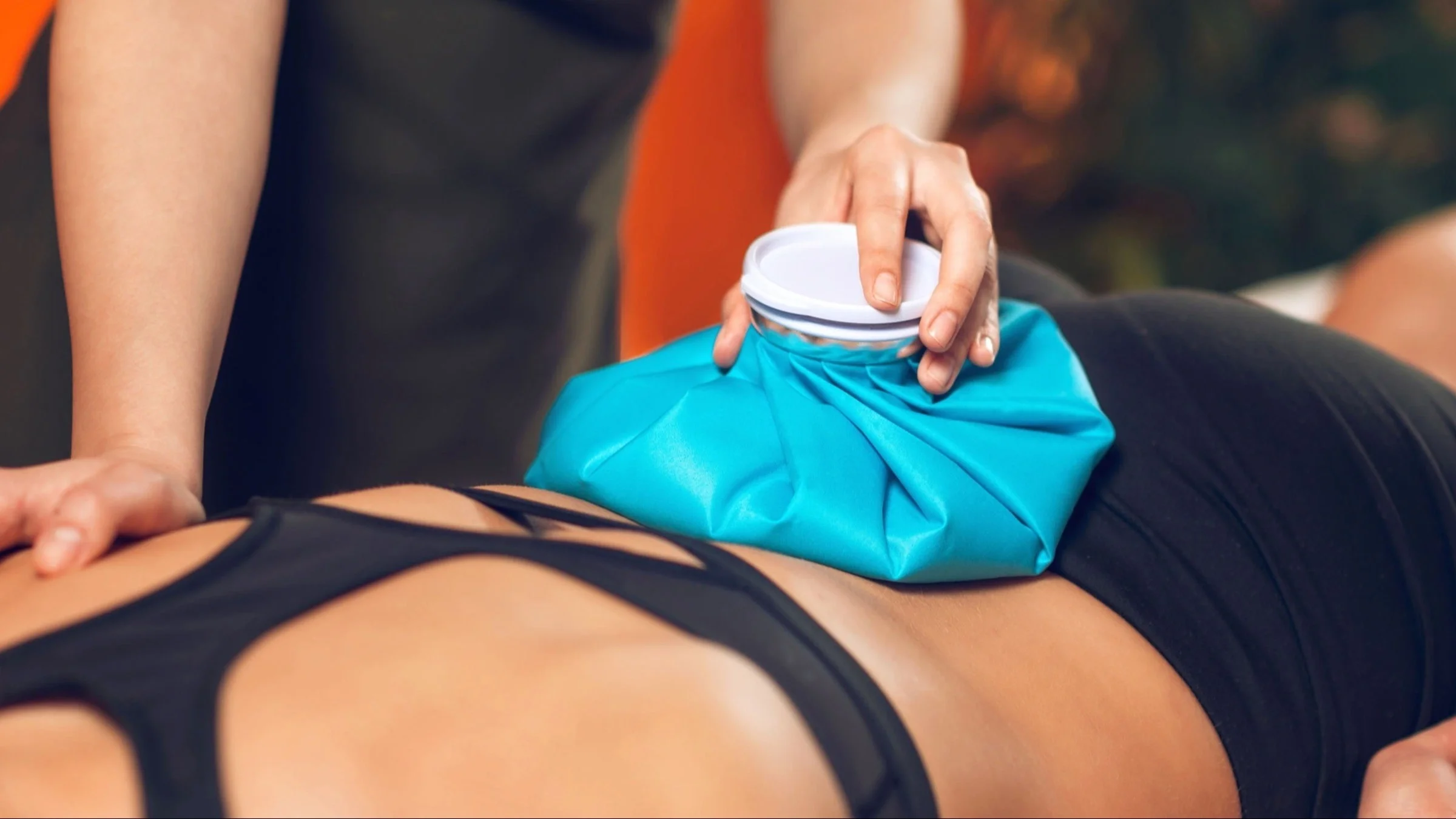
If you twisted awkwardly lifting boxes or felt a sudden “pop” during a workout, cold therapy is your emergency response. Within minutes, ice constricts blood vessels to limit the inflammatory cascade that causes secondary tissue damage. This isn’t just pain relief—it’s actively preventing your injury from worsening.
Critical first-aid steps for fresh back strains:
– Apply immediately: Use frozen peas in a double-bagged towel (they mold perfectly to spinal curves)
– Duration: 15 minutes max per session—longer risks nerve damage
– Frequency: Every 2 hours during the first 48 hours, then reduce to 3x daily
– Skin check: Stop if skin turns bright red or numb—these signal tissue damage
Pro Tip: Combine ice with the PRICE protocol—Protect the area with a lumbar brace, Rest (but not complete immobilization), Ice, Compress with an elastic wrap (if comfortable), and Elevate your legs slightly when lying down. Never skip the barrier: direct ice contact causes frostbite in under 5 minutes.
Why Heat Makes Acute Pain Worse
Applying heat to a fresh injury is like pouring gasoline on fire—it expands blood vessels, flooding the area with inflammatory cells. This transforms a minor strain into a 3-week setback. If you’ve ever woken up stiffer after using a heating pad on day-one back pain, this is why.
Chronic Back Pain Relief: Heat Melts Morning Stiffness in 10 Minutes
When your lower back feels like rusted hinges every morning or arthritis flares with weather changes, heat therapy outperforms cold for chronic stiffness. Warmth dilates blood vessels, delivering oxygen to oxygen-starved muscles while relaxing spasms that lock your spine. This is your secret weapon for regaining mobility before your feet even hit the floor.
Optimal heat routine for persistent back tightness:
– Moist heat wins: Dampen a towel, microwave 30 seconds, and apply—moisture penetrates 1 cm deeper than dry pads
– Timing: 10 minutes before getting out of bed to loosen tissues for safer movement
– Temperature: Warm (104°F/40°C), not hot—test on your inner wrist first
– Frequency: 2-3 sessions daily or continuous low-level wrap during work hours
Expert Note: For degenerative disc disease, heat boosts disc nutrition by increasing blood flow to the vertebral endplates. Skip this critical window, and you’ll battle stiffness all day.
Subacute Back Pain? Alternate Heat and Cold Correctly
:max_bytes(150000):strip_icc()/VWH_Illustration_Contrast-Therapy-in-Physical-Therapy_Danie-Drankwalter_Final-e0dfdcae3d364ff3a5cd87c889684b82.jpg)
Between days 3-12 after injury—when swelling decreases but residual tightness lingers—you enter the subacute danger zone. This is when most people make the fatal mistake of switching entirely to heat too soon, reigniting inflammation. The solution? Strategic contrast therapy.
The 4-step contrast sequence for lingering back pain:
1. Ice 10 minutes to calm residual inflammation
2. Wait 30 minutes for skin to return to normal temperature
3. Apply moist heat 15 minutes to relax guarding muscles
4. Repeat cycle 2x daily for 3 days max
Warning: Never alternate without the 30-minute break—shocking tissues between extremes causes micro-tears. This protocol works for post-surgery recovery or when DOMS (delayed-onset muscle soreness) lingers past 48 hours.
3 DIY Cold Packs for Back Pain Under $5
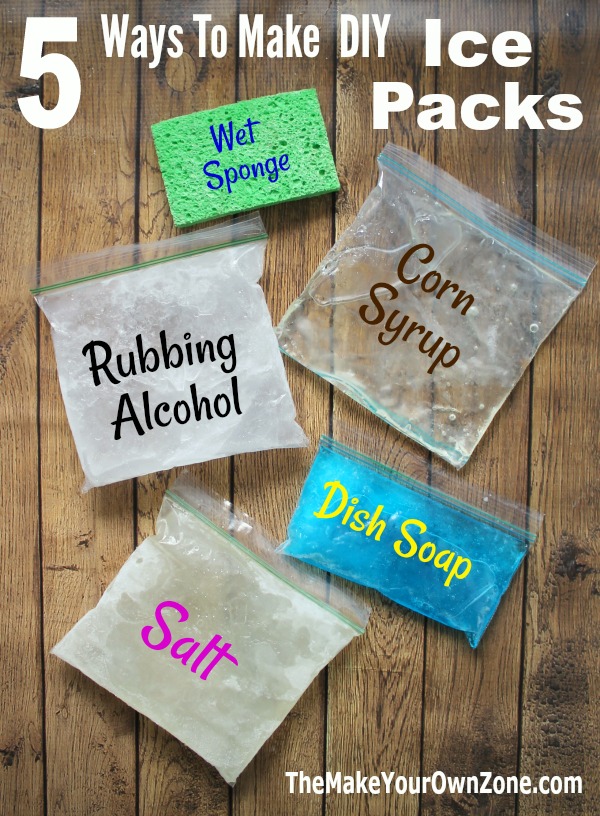
Forget expensive gel packs—these emergency cold therapies use household items to target your spine’s curvature. Crucial for sudden flare-ups when pharmacy runs aren’t feasible.
Ice Cup Massage: Freeze Inflammation Away
Fill a paper cup ⅔ with water, freeze solid, then peel the rim down. Massage the exposed ice in slow circles over painful areas for 3-5 minutes. The movement combines cryotherapy with myofascial release—ideal for pinpointing trigger points along the spine. Stop when the area feels numb (about 4 minutes).
Slush Pack: The Moldable Miracle
Mix 3 cups water + 1 cup 70% isopropyl alcohol in a ziplock bag. Freeze into a pliable slush that conforms to lumbar curves. The alcohol prevents solid freezing, allowing direct pressure on deep tissues. Refreezes in 15 minutes for reuse—perfect for travel.
Instant Cold Backup
Keep chemical-activated packs in your car or desk drawer. Activate by snapping the inner pouch, then apply through a towel for 15 minutes. These require zero refrigeration and reach 40°F (4°C) in seconds—your first responder for gym injuries.
Heat Therapy Hacks: Transform Household Items Into Pain Relief
You don’t need $100 heating pads. These kitchen-to-backyard heat solutions deliver therapeutic warmth without breaking the bank.
Rice Sock: The 60-Second Heat Wrap
Fill a cotton sock with uncooked rice, tie the end, and microwave 60-90 seconds. Shake to distribute heat evenly, then apply over pajamas. The rice retains moisture, creating professional-grade moist heat. Reusable for years—just store in a dry place.
Shower Power: Hydrotherapy on Demand
Stand 12 inches from warm shower spray (104°F/40°C) for 5-7 minutes. The water pressure combines with heat to flush lactic acid from fatigued muscles. Add Epsom salts for magnesium absorption—proven to reduce muscle spasm intensity.
Adhesive Heat Wraps: Discreet Office Relief
Peel-and-stick chemical wraps (like ThermaCare) provide 8 hours of 104°F heat under clothing. Apply during your commute or workday—they’re thinner than a smartphone and won’t leak. Ideal for desk workers battling afternoon tightness.
Back Pain Temperature Therapy Safety: Avoid Burns and Nerve Damage
83% of home temperature therapy injuries come from ignoring these rules. Protect your skin while maximizing results.
Skin Protection Checklist
- Always use a thin barrier (t-shirt layer)—never apply directly to skin
- Set timers: 20 minutes max per session—set phone alarms
- Check every 5 minutes: Discontinue if skin is bright red >30 minutes post-therapy
- Never sleep on heating pads—use models with auto-shutoff
- Diabetics: Check skin hourly due to neuropathy; use cooler temps
Critical Warning: Heat above 113°F (45°C) causes full-thickness burns in 5 minutes. Test all heat sources on your forearm first. If you have poor circulation (common in smokers or vascular disease), reduce sessions to 10 minutes.
Back Pain at Work, Gym, or Travel: Custom Heat/Cold Routines
Desk Worker’s 2-Minute Fix
Keep a chemical heat wrap in your drawer. When tightness hits:
1. Peel and apply to lower back over clothing
2. Perform seated pelvic tilts (10 reps) while heat penetrates
3. Stand and walk 2 minutes post-therapy to lock in mobility
Athlete’s DOMS Protocol
Post-workout: Ice within 15 minutes for 15 minutes to minimize micro-tears.
After 24 hours: Switch to heat + gentle stretching. Never ice before activity—it reduces muscle elasticity by 22%.
Traveler’s Survival Kit
Pack a reusable gel pack. At your destination:
– Warm in hotel microwave 90 seconds for heat therapy
– Chill in ice bucket 10 minutes for cold therapy
– Store in insulated lunch bag for car trips
When Back Pain Won’t Improve: 7 Red Flags for Medical Help
Stop self-treating immediately if you experience:
– Pain lasting >7 days despite correct therapy
– Leg weakness or numbness—signals nerve compression
– Bowel/bladder changes—requires ER evaluation
– Night pain waking you—possible infection or tumor
– Fever with back pain—indicates systemic issue
– Trauma with severe pain (e.g., fall from height)
– Unexplained weight loss paired with pain
Expert Insight: If heat/ice provides only temporary relief (<2 hours), see a physical therapist. You likely need targeted core strengthening—temperature therapy alone won’t fix muscular imbalances causing chronic pain.
Quick Reference: Back Pain Heat and Cold Therapy Cheat Sheet
| Pain Type | First 72 Hours | Days 4-12 | Chronic (>4 Weeks) |
|---|---|---|---|
| Acute Injury (strain/sprain) | Ice 15 min, 4x daily | Alternate: Ice 10 min → wait 30 min → Heat 15 min | Heat 20 min, 2x daily |
| Morning Stiffness | N/A | N/A | Heat 10 min before getting out of bed |
| Post-Workout Soreness | Ice immediately 15 min | Heat after 24 hours | Heat pre-activity |
Universal Rules: Barrier cloth required • 20-minute max per session • 2-hour break between sessions • Skin checks every 5 minutes • Escalate care for red flags.
Mastering how to use heat and cold for back pain transforms you from a passive sufferer to an active healer. By matching therapy to your pain’s biological stage—not just its intensity—you’ll shorten recovery time by 40% and prevent recurring episodes. Start tomorrow: prep your rice sock tonight, stash instant cold packs in your gym bag, and implement the 10-minute pre-bed heat routine for morning stiffness relief. When pain strikes, you’ll know exactly which temperature weapon to deploy—and why it works. Your spine will thank you before the week is out.